
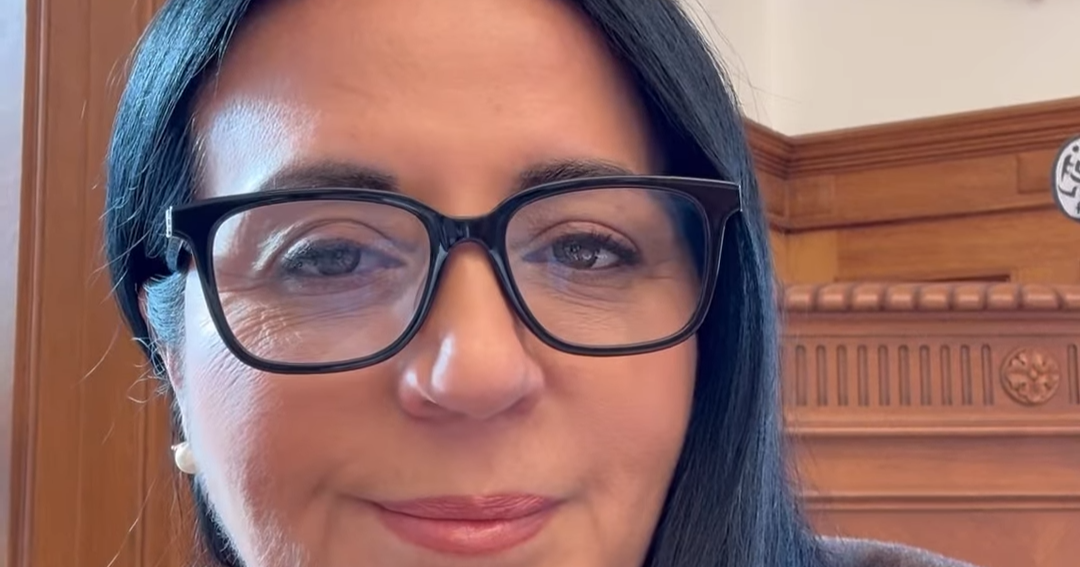
On her Instagram and other social media, Montreal mayor Soraya Martinez Ferrada answers questions sent in by Montrealers. Mostly she answers French questions in French, but sometimes she’ll answer a few in English. That detail is important in the context of a recent post in which she answered the question “Will Montreal ever become a bilingual city?”
“Montreal is the Francophone city of North America,” the mayor responded, “and we need to preserve that.” Indeed, one of the last things former mayor Valérie Plante did toward the end of her mandate was to create the Bureau de la langue française, the city’s very own language watchdog, with an allocation from the province of $1.5 million, and Aurélie Arnaud as its directrice.
But there hasn’t been much news coming out of the Bureau since then.
“We also need to recognize,” Martinez Ferrada went on in her video, “that we have a very important Anglophone community that helped construct and build the foundation of the city. And even the Anglophone community understands today that we need to preserve and promote the fact that Montreal is the largest and the only Francophone city of North America.”
The largest, yes. The only, not at all. Perhaps she misspoke. But that is beside the point.
“Many of us speak two languages,” the mayor went on, “and we are bilingual. But the city of Montreal,” she repeats emphatically, “is a Francophone city of North America.”
Reaction to her video was mixed. “That’s a lot of words to say ‘no,’” said one Montrealer, and Anglophone, while a Francophone The Suburban spoke to scoffed at the fuss. “Ottawa has a sizeable French minority and no one questions why it’s not considered bilingual.”
Andrew Caddell is president of the Task Force on Linguistic Policy, whose raison d’être is to promote linguistic equality. He says the reality in Montreal is markedly different than what provincial or municipal leaders would like to believe. “Montreal is a bilingual and multilingual city, and it always has been.” In fact, Montreal is considered to be one of the most linguistically diverse cities in North America. The mayor herself is trilingual – she is fluent in French, English, and Spanish, coming from Santiago, Chile.
After French and English, Arabic, Italian, and Spanish are the most-spoken languages in Montreal.
The oft-quoted argument is that Montreal – indeed, the province – is surrounded by English, and French is thus threatened. “I don’t think that’s true,” Caddell says. “And I don’t think any real linguist would argue that.”
Caddell is less concerned about the mayor’s insistence on the city’s official language status. In fact, he applauds her vision. “She’s a breath of fresh air, because she’s looking at things from a different perspective rather than holding fast to what was done before. And, so, I think, given that kind of approach to things, we’ll see a lot more flexibility.”
He cites the recent relaxing of the rules on Montreal’s unofficial hockey cheer. Last year the OQLF outlawed “Go Habs Go”, particularly on the signs on the front of STM buses. French language minister Jean-Francois Roberge ran to the chant’s defence, and now the OQLF has officially installed the word “go” in its lexicon of non-French words that are acceptable in certain contexts.
Not that he is giving Martinez Ferrada credit for that. But he is hopeful that, as “the whole tenor of the administration is changing,” common sense will prevail over the letter of the language laws. n