
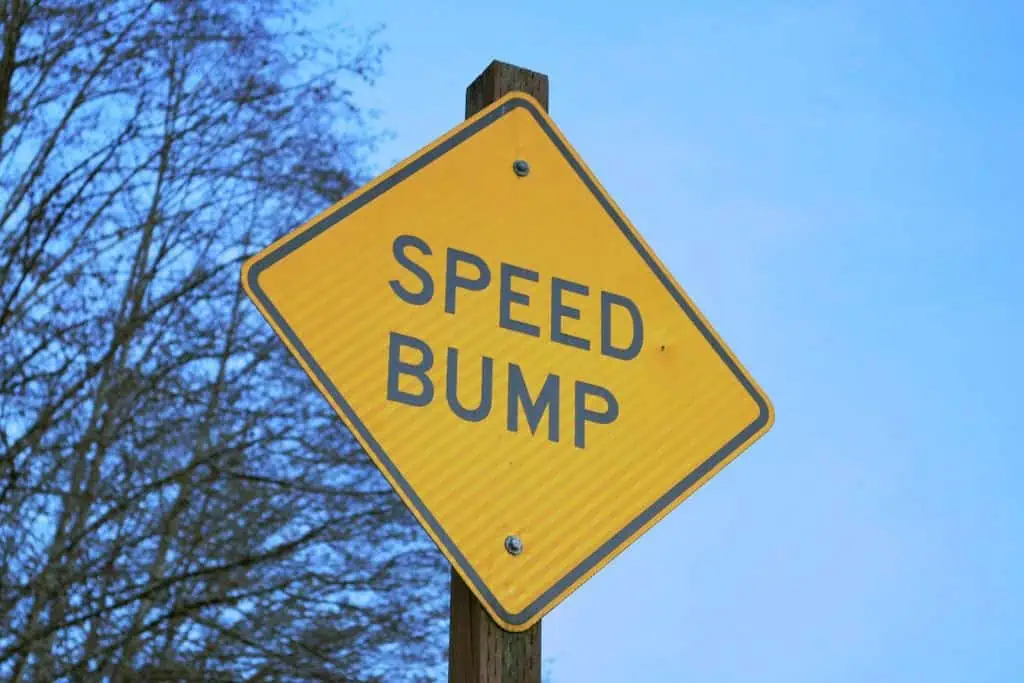
Additional provincial funding of nearly $9 million has been set aside for Mississauga to install speed bumps and other traffic calming measures with the goal of improving road safety in school zones and other areas of the city.
That money follows a $2.2-million cheque from the province delivered last November to the City of Mississauga to help with immediate road/traffic safety needs after the Ontario government scrapped the automated speed enforcement camera program in all municipalities.
The initial funding late last fall was provided to Mississauga and other towns and cities via the first phase of a new Road Safety Initiatives Fund created by the province that will divvy up $210 million among Ontario municipalities over the next two years.
A report brought to Wednesday’s general committee meeting by senior city staff recommends the $2.2 million be distributed evenly among Mississauga’s 11 wards and focus on “physical traffic calming (measures) where appropriate.”
Essentially, the money is to be used to target school zones where Mississauga’s 22 speed cameras had been located before the province-wide ban took effect Nov. 14 under new provincial legislation.
Physical traffic calming measures include features such as speed bumps, speed humps, raised crosswalks, raised medians, roundabouts and enhanced high-visibility signage all geared toward slowing down fast drivers — particularly in school zones populated by large numbers of children.


The additional $8.93 million from the Ontario government “will be available to Mississauga for road safety improvements” moving forward and will be reimbursed to the city after the costs are incurred, Sam Rogers, the city’s transportation and works commissioner, said in his report.
Rogers added staff will report back to general committee in April or May with details on road/traffic safety projects to be funded by the $8.93 million.
Municipalities must also report to the province how funds are spent or planned to be spent and all initiatives paid for by the RSIF must be completed by March 31, 2028.
“Staff will develop plans and arrange to construct physical traffic calming and other safety enhancements within school zones and Community Safety Zones where ASE (cameras were) deployed in accordance with the province’s guidelines and stated deadline,” Rogers offered in the report’s conclusion.
Last November’s province-wide ban immediately removed more than 700 speed cameras that had been set up since 2019 in 40 municipalities.
Of those ASE cameras, 22 were in Mississauga. The devices had been rotated between numerous Mississauga school zone locations between 2021 and November 2025 in attempts to slow down speedy drivers.
All of Mississauga’s speed cameras stopped operating end of the day on Nov. 13 and they were all physically removed from Mississauga roads by Nov. 17.
The province’s RSIF is intended to battle speeding — particularly in school and other community safety zones — by having towns and cities implement various traffic calming measures in place of now-banned automated speed enforcement cameras, which were viewed by Ontario Premier Doug Ford and his government as a “cash grab.”
Prior to the ban, Mississauga’s mayor and city officials repeatedly pointed out to the provincial government that speed cameras saved lives in Mississauga since the city launched its program in 2021 (the strategy reduced school zone speeds an average of 9 km/h, according to the city).
Mississauga officials noted earlier that 169,109 fines were dished out in the city under the speed camera initiative between its launch in June 2021 and August 2025.
INsauga’s Editorial Standards and Policies
Last 30 Days: 44,164 Votes
All Time: 1,248,964 Votes
1378 VOTES
Should Ontario keep daylight saving time year-round?
WIN A $100 GIFT CARD
Subscribe to INsauga’s daily email newsletter for a chance to win a $100 Amazon gift card.