
Brian Tanquilut, equity analyst on healthcare services equity research at Jefferies, joins BNN Bloomberg to share his Hot Picks in healthcare services.
Long-term demand for oncology treatments, diagnostic imaging and prescription drugs is helping support growth across several healthcare services companies.
BNN Bloomberg spoke with Brian Tanquilut, healthcare services equity research analyst at Jefferies, about opportunities in the sector and why he sees upside in BrightSpring Health Services, McKesson Corp. and RadNet.
Key TakeawaysRising cancer treatment demand is driving growth for specialty pharmacy providers that supply oncology medications directly to patients’ homes.Patent expirations for major drugs could create margin opportunities as distributors and pharmacies sell lower-cost generic versions.An aging population is increasing prescription drug usage and overall healthcare utilization across the sector.Diagnostic imaging demand is rising due to greater screening and treatment of cancer, heart disease and neurological disorders.Artificial intelligence is increasingly being used to analyze medical imaging, potentially improving efficiency and scaling diagnostic services. Brian Tanquilut, equity analyst on healthcare services equity research at Jefferies Brian Tanquilut, equity analyst on healthcare services equity research at Jefferies
Read the full transcript below:
ANDREW: On Hot Picks, we are drilling into healthcare. Our guest covers names like Merck and then another couple of companies that I’m not familiar with — BrightSpring Health, for example. We’re joined by Brian Tanquilut. I’m very sorry, Brian. He’s a healthcare services equity research analyst at Jefferies. Brian, how do you say your second name? My apologies.
BRIAN: Hi, Andrew. How you doing? I’m Brian Tanquilut, equity analyst here at Jefferies.
ANDREW: Thank you. Brian Tanquilut — and I’m very sorry. Start off with this company, BrightSpring, if you would. Just remind us what they do and why you like to look at the stock.
BRIAN: Yeah, no. BrightSpring Health is one of the largest specialty pharmacies here in the U.S. What they do is mail primarily oncology or cancer drugs to patients’ homes. So if a patient is undergoing chemotherapy at a hospital or at a clinic, when they get home they still need a lot of other drugs to help in their cancer care. And so what BrightSpring does is they actually send those drugs to the patient’s homes.
Because of the fact that cancer is such a big growth area here in the U.S., and even globally, we’re seeing outsized growth for BrightSpring on one hand. We’re seeing very robust top-line growth — think mid-teens to mid-20 per cent organic growth range on revenues. On the flip side of that, we’re seeing some of these drugs that they’re selling lose their patents. So now we’re seeing generic introductions for some of these medications. What that’s doing is driving margin significantly higher.
When you look at EBITDA growth here, this is a company that continues to beat and raise and show margin expansion. We’re seeing at least high-teens to mid-20s organic growth rates here. The stock’s trading at about 12 times EBITDA — still pretty inexpensive for a company with that kind of growth profile.
ANDREW: And you may have mentioned this already, but KKR private equity selling some of its stake — that’s removing part of the overhang.
BRIAN: That’s really a good point. KKR took this thing private a few years ago. We IPO’d this back in 2024. What we’ve seen over the last year and a half is that KKR has pared down their ownership of the name. So that overhang from the idea that private equity will dump stock in the market in an open-market transaction is starting to dissipate.
Their ownership is down to about 22 per cent of the stock. They sold stock on Tuesday this week and we didn’t really see much movement in the name. I think what that shows is that investors are now, number one, ready and prepared for this and don’t view private equity sales as a negative. If anything, there’s enough demand in the market to absorb a 20-million-share secondary offering for the private equity group.
ANDREW: And your next idea — better known — McKesson. Massive in drug distribution.
BRIAN: Yeah. So McKesson is one of the top distributors of pharmaceuticals here in the U.S. It’s kind of the same thesis. Oncology really is the big driver of the McKesson thesis.
Number one, we have an aging U.S. population. We’re seeing increased use of drugs just because more seniors are using medications, and we’re seeing that growth translate into strong results for McKesson.
But the real thesis here is threefold. Number one, this is a company that is no longer in the crosshairs of the government. So regulatory risk here is very, very low. At a time when we’re worried about changes in health care here in the U.S., this has become a very good defensive position for a lot of investors.
Second, we’re seeing that demographic shift that I mentioned. So the fundamentals of the business are really strong and translating to mid-teens to high-teens EPS growth.
And then the last piece here is that, as we look out to 2028 and beyond, the world’s largest drug, Keytruda — which is a cancer medication — will lose its patent protection around 2028. That should be a benefit for McKesson, who incidentally also operates the largest network of cancer clinics in the U.S. They will benefit from that drug losing patent protection because they’ll start selling generic versions of it, which should drive margin expansion and earnings growth acceleration beginning in 2028 on top of already a very healthy growth rate in the mid-teens for EPS.
ANDREW: And then finally RadNet — RDNT. What do they do?
BRIAN: RadNet is the largest operator in the U.S. of diagnostic imaging clinics. Think of X-ray, ultrasound, MRI, PET scans and CT scans. They’re heavy on the East Coast and heavy in California.
That business is also growing in the low double-digit range organically. We are seeing a lot of growth. Again, an aging population is driving a lot of health-care utilization here in the U.S. But the other side of that is these advanced imaging modalities — MRI, CT scanning and PET scanning — related to cancers, heart disease and neurological disorders like Alzheimer’s. All these things are driving a lot of demand for these high-end imaging modalities.
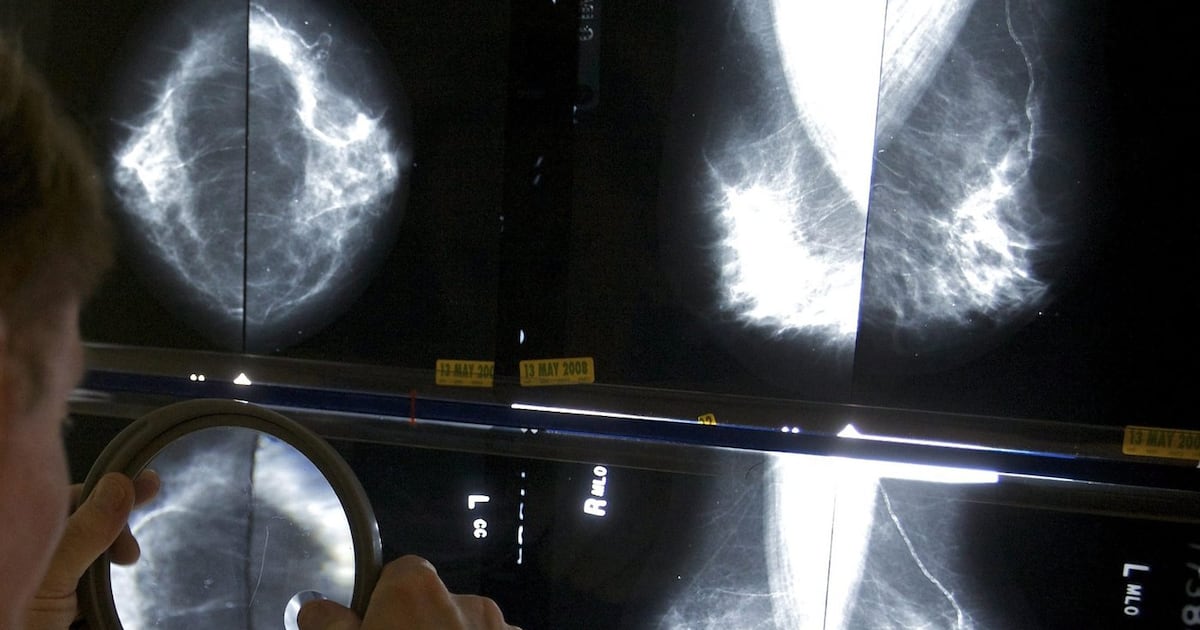
That’s the core business of RadNet. The other side of RadNet, which is really exciting, is the fact that they are the largest owner of clinical AI assets in the diagnostic imaging space. They have developed or acquired assets that can read imaging scans using AI. In theory, you don’t need a doctor anymore to read these X-rays, ultrasounds, MRIs and mammography scans.
They own the largest collection of those technologies, and that is going to drive significant growth going forward, in addition to upside to numbers over the next two to three years.
ANDREW: Oh, I bet the doctors are coming up with reasons why you couldn’t do that anyway. We better not go there. Actually, I do remember reading a while ago AI was being tested in scans and it was finding problems — tumours or whatever it was — and they didn’t know how it was doing it. So AI, the mystery continues. Thank you very much.
BRIAN: Just on that point, Andrew — as we think about how AI could disrupt clinical delivery and health care, this is a company that should actually be a beneficiary from the development of AI. Number one, but also the fact that they own the assets. They are going to be the winner in this AI shift as we see more health care incorporate AI.
ANDREW: Thank you very much. Brian Tanquilut is a healthcare services equity research analyst at Jefferies.
DISCLOSUREPERSONALFAMILYPORTFOLIO/FUNDBTSG NASDAQNNYMCK NYSE NNNRDNT NASDAQ NNN
—
This BNN Bloomberg summary and transcript of the March 4, 2026 interview with Brian Tanquilut are published with the assistance of AI. Original research, interview questions and added context was created by BNN Bloomberg journalists. An editor also reviewed this material before it was published to ensure its accuracy and adherence with BNN Bloomberg editorial policies and standards.