
On the fourth of March in 1886, 1960, and 1961, three boxers would enter the world who, in different epochs and weight classes, came to define heart and excellence. Their trajectories trace the sweep of the sport itself: from the Jim Crow era’s hidden geniuses to the bright lights of televised heavyweight regional pride to the global rise of African boxing on the Olympic stage.
These are their stories.
Sam Langford — The Uncrowned Giant of the Early 20th Century
Born March 4, 1886 (some records show 1883) in Weymouth Falls, Nova Scotia, Samuel Edgar Langford emerged from modest beginnings to become one of the most formidable and, in many respects, most wronged figures in boxing history. Known variously as “The Boston Tar Baby,” “Boston Terror,” and “Boston Bonecrusher,” Langford’s professional career stretched from 1902 to 1926, an extraordinary span during which he fought men from the lightweight ranks all the way to heavyweights.
Langford relocated to Boston as a youth. Standing roughly 5-foot-7 and often conceding both height and weight, he possessed concussive punching power in either hand, along with a craftsman’s understanding of angles and leverage. His compact frame concealed a ferocious offensive arsenal. Langford was ranked among the greatest punchers in boxing history; historians credit him with well over 200 professional bouts, including 127 knockouts, though exact totals vary due to inconsistent record-keeping in that era.
Langford’s résumé reads like a census of early 20th-century standouts. He fought and defeated men such as Joe Gans in a non-title contest, and engaged in repeated, bruising encounters with heavyweight contenders including Joe Jennette, Sam McVea, and Harry Wills.
Entrenched racial barriers of the time known as the “color bar” kept Langford from opportunities to fight for a recognized world championship. Even Jack Johnson, who broke barriers as the first Black world heavyweight champion, declined to give Langford a title shot after having previously faced him earlier in their careers. Johnson acknowledged Langford’s danger; the risk-reward equation was unfavorable. The politics of the time proved as formidable as any opponent.
Langford did capture versions of the World Colored Heavyweight Championship and other regional distinctions, but the universally recognized crown eluded him. It is one of boxing’s enduring injustices that a fighter of such breadth, competitive from lightweight through heavyweight, never received a clear opportunity to secure the lineal heavyweight title, first held by John L. Sullivan through today’s lineal champion Oleksandr Usyk.
Langford lost sight in his left eye during a 1917 fight, yet continued boxing for nine years. He had a successful, though temporary, eye operation in 1924 to repair his remaining “good” eye, but his vision eventually failed again.
He retired in 1926, completely blind. He lived modestly in Harlem, as the purses that once sustained him had dwindled. Later, in 1944, a fundraising effort by fans allowed for a second, successful surgery that restored some of his sight later in life. Langford died on January 12, 1956, in Cambridge, Massachusetts.
Today, Sam Langford stands as both titan and cautionary tale. His achievements testify to his durability and power and the opponents on his ledger confirm his willingness to meet all comers.
Note: Sam Langford was voted the #2 greatest puncher of all time (The Ring 2003) just behind Joe Louis.
Happy 140th, you un-crowned, beyond legendary monster, you.
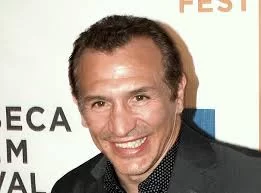
Ray “Boom Boom” Mancini — Youngstown’s Warrior
Three quarters of a century after Langford’s birth, Raymond Michael Mancini, known to the boxing world as Ray “Boom Boom” Mancini, arrived on March 4, 1961, in Youngstown, Ohio. Pennsylvania and Ohio boxing lore often trace its modern roots to the heart of Midwestern mill towns; Mancini’s story is inseparable from that world.
Ray embraced the competitive sport as an identity. He turned professional in 1979 and quickly became one of the most visible boxers of his era; a lightweight champion with an aggressive, fan‑friendly style that made him a staple of early‑1980s televised boxing.
Mancini’s first title attempt came on October 3, 1981, against Alexis Arguello, with the WBC World Lightweight title on the line. At the tender age of twenty, Mancini entered the ring with a record of 20-0 and 15 KOs. Arguello entered the bout with a record of 67-5. Going into the fourteenth round, Mancini was ahead on the scorecards by margins of 5, 3, and 2 rounds. Arguello’s expertise shined through and he was able to finish Ray before he could get to the finish line.
Mancini captured the WBA Lightweight title in 1982 by stopping Arturo Frias at 2:54 of the first round and earning the title belt that Ray had promised his father, Lenny “Boom Boom” Mancini. A highlight came on July 24, 1982, when he successfully defended his belt with a sixth‑round stoppage of Ernesto España in front of an estimated 17,500 to 20,000 fans at Mollenkopf Stadium in Warren, Ohio on a Top Rank promotion. The outdoor match was held close to Mancini’s hometown.
Mancini’s career was not without tragedy. On November 13, 1982, he defended his title against South Korean challenger Kim Duk-koo in what would become one of the most consequential bouts in boxing history. Kim, a determined and aggressive challenger, pressed forward relentlessly, absorbing heavy punishment while continuing to throw punches. Mancini met him with sustained combinations and body work. By the later rounds, both men had endured tremendous physical toll, but Kim’s resolve never wavered.
In the 14th round, Mancini unleashed a prolonged barrage along the ropes that left Kim defenseless, prompting the referee to stop the contest and award Mancini a technical knockout victory. Moments later, Kim collapsed in his corner. He was rushed to a hospital, where doctors discovered a subdural hematoma. Emergency surgery was performed, but he never regained consciousness. Kim Duk-koo died five days later, on November 18, 1982. He was 23 years old.
Mancini was devastated by the incident and considered retirement, explaining “No matter what you get paid, millions, maybe, it’s a cheap price for your life. I have to wonder if I want that. I’m not talking retirement now but I have to decide if I want to go on.”
The tragedy reverberated far beyond the ring. In the months that followed, major sanctioning bodies moved to reduce championship fights from 15 rounds to 12. Ringside medical protocols were strengthened, and pre-fight screening procedures became more rigorous in many jurisdictions. The human consequences were also profound. Kim’s mother died by suicide several months after his death. The referee, Richard Green, died by suicide the following year. Mancini himself has spoken openly about the emotional burden he carried in the aftermath. The bout stands as a stark reminder of boxing’s inherent risks and a turning point that reshaped modern safety standards within the sport.
Mancini retired in 1992 with a record of 29–5 with 23 knockouts and having had defended his title multiple times. He was inducted into the International Boxing Hall of Fame in 2015, cementing his place among the sport’s memorable champions.
In his later years Mancini has contributed to boxing culture as a commentator, actor, and mentor, and he channeled his legacy into charity through the Ray “Boom Boom” Mancini Foundation. He remains a visible ambassador for the sweet science.
Happy 65th, Champion!
John “The Beast” Mugabi — Uganda’s Ferocious Puncher
On March 4, 1960, in Kampala, Uganda, John Paul Mugabi was born into a landscape far removed from the bright lights and global arenas where he would later make his name. Nicknamed “The Beast” for his ferocious power and relentless style, Mugabi grew into one of the most feared punchers of his generation and a central figure in boxing’s celebrated middleweight and light-middleweight ranks of the 1980s. Standing 5 ft 8½ in with a long 74-inch reach and an orthodox stance, he combined physical compactness with brutal offensive ferocity.
Mugabi excelled early in his amateur career, including a silver medal at the 1976 Junior World Championships and a bronze at the 1978 All-Africa Games. He first captured international attention as an amateur when he represented Uganda at the 1980 Olympic Games in Moscow, winning the silver medal in the welterweight division, the only Olympic medal earned by Uganda that year.
Mugabi made his professional debut on December 5, 1980, knocking out Oemer Karadenis in the first round in Cologne, Germany, launching a career that would span nearly two decades. Known for an exceptional knockout ratio, he finished his career with an outstanding record of 42 wins, 7 losses, and 1 draw, with 39 of those wins coming by knockout, for a KO percentage of 78%.
After establishing himself with a string of sensational early victories, Mugabi’s first shot at global prominence came on March 10, 1986, when he challenged Marvelous Marvin Hagler for the undisputed middleweight championship. Mugabi went into that bout with a record of 25-1. Hagler came in with a record of 61-2-2. The fight took place at Caesars Palace Outdoor Arena, in Las Vegas, NV. The battle, fought with unbelievable intensity and punch output, is frequently cited as one of the fiercest middleweight title fights of the decade. Mugabi was stopped in the 11th round; even in defeat, his performances commanded respect for their ferocity and tenacity.
Mugabi would find success one division lower. On July 8, 1989, he won the WBC super-welterweight title with a first-round TKO of René Jacquot, capturing a world crown that he would hold until 1990.
After losing the super-welterweight crown to Terry Norris in 1990 and later challenging for the WBO middleweight title against Gerald McClellan in 1991, Mugabi continued fighting into the late 1990s, including a stretch in the Australasian boxing scene before retiring. His final bout came on January 16, 1999, when he was stopped by Glen Kelly in Sydney, Australia, marking the end of a significant career.
Mugabi retired in 1999. Sixteen of his fifty fights (32%) ended in Round 1. His career was marked by eye-catching knockouts, world title glory, and unforgettable championship rounds.
Happy 66th Birthday, Champ!
To comment on this article in the Fight Forum, please CLICK HERE