
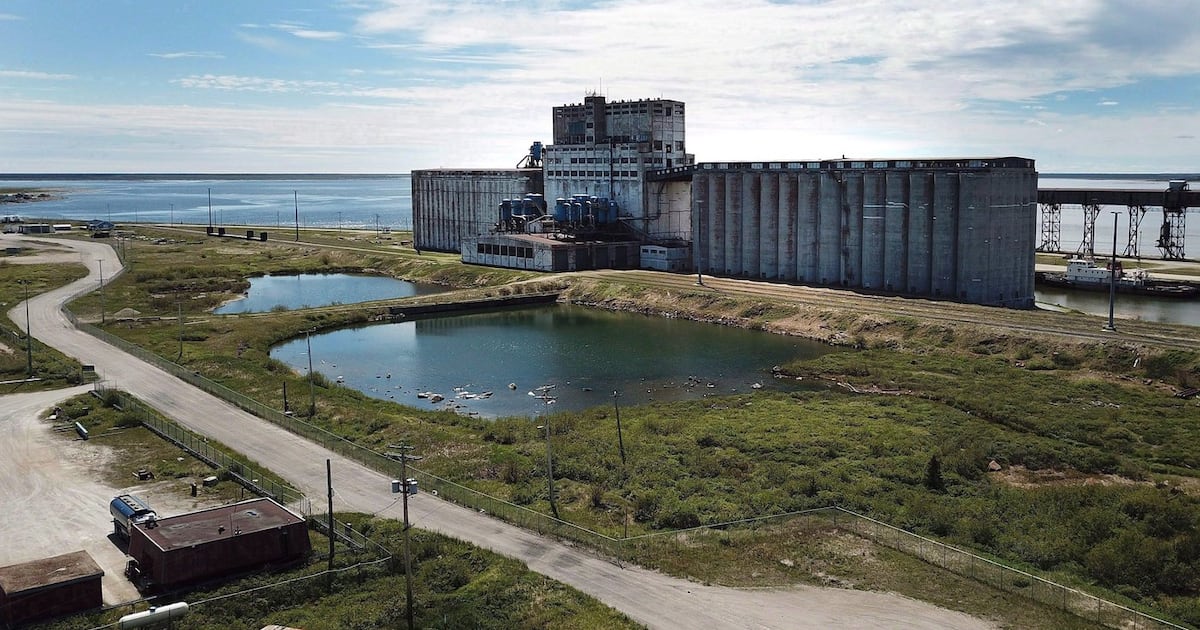
The operator of the Port of Churchill in northern Manitoba has signed an agreement with the Port of Antwerp-Bruges International in Belgium, one of the largest cargo-shipping hubs in the world.
The agreement establishes a strategic framework for collaboration in port development, intermodal transportation, and the identification and expansion of cargo flows between Western Canada and Europe.
Key priority sectors include critical minerals, energy products, fertilizer inputs, containerized goods, and agricultural commodities.
Chris Avery, who is the president and CEO of Arctic Gateway Group (AGG), which runs and operates the Port of Churchill, says the agreement is a beneficial one.
“By working with Port of Antwerp-Bruges International, we are building a reliable, diversified trade corridor that strengthens supply chains, attracts long-term investment, and delivers measurable economic benefits to Indigenous and northern communities, Manitoba, and industry across Western Canada,” he said.
Premier’s monthly chat Premier Wab Kinew discusses healthcare pressures, budget day plans and an update on the Port of Churchill.
The Port of Antwerp-Bruges moves nearly 300 million tonnes of cargo every year. Avery says partnering with a port of that scale connects Churchill directly with one of the most powerful logistics and industrial networks in Europe.
“We think there is a huge opportunity for us to establish more trade between Western Canada and abroad through this agreement,” he said.
Through this agreement, both parties will:
Build deeper collaboration, long-term partnership, and potential future investment in the Port of Churchill;exchange information on port infrastructure, connectivity, and logistics;engage in strategic dialogue on the long-term development vision for the Port of Churchill; andexplore current and future trade flows between Churchill, Antwerp-Bruges, and the broader European market.
In a statement, the CEO of the Port of Antwerp-Bruges says the European Union (EU) is speeding up efforts to secure sustainable critical resources for industry and clean energy.
“Canada is a trusted partner, and the Port of Churchill is a strategic Arctic gateway with significant long-term potential for the exchange of valuable resources between Europe, Manitoba, and the Canadian West,” said Kristof Waterschoot.
Diversifying trade valuable: Economist
Shiu-Yik Au from the University of Manitoba says Europe is looking to rely on other markets around the world, and Canada presents a good option for them.
“The Iran war is really highlighting how valuable Canadian energy and other commodities are,” he said. “We are a reliable trading partner in a stable government with an excellent legal system. We are very reliable.”
He calls this agreement a win-win situation for both Canada and the EU.
“A win for Canadians, particularly those in the north, getting access to better markets and more jobs, and a win for Europeans, because now they can get access to Canadian goods without having to worry about geopolitical issues,” he said.
Au argues Canadians should be pushing Prime Minister Mark Carney and the Liberal government to invest more into the Port of Churchill.
“We need a dollop of federal support to build these things in the short term so we can get benefits in the long-term,” he said. “Regular Canadians and regular Manitobans should be pushing this to one of the highest infrastructure concerns for the federal Liberals.”
Talks to expand, revitalize Churchill ongoing
Last month, Ottawa said it’s considering a major expansion of the Port of Churchill that would transform the northern Manitoba facility into a year-round, multi-commodity trade hub.
Ottawa said that upgrading the port is still of interest, but the plan needs more development.
CTV National News: Manitoba premier visits Churchill as Ottawa weighs major Hudson Bay expansion Manitoba Premier Wab Kinew is in Churchill to hear local concerns as Ottawa considers expanding the area into a year-round Hudson Bay hub, bringing new jobs.
The Port of Churchill handles commodities like critical minerals and serves as a vital link for northern communities and trade through the Arctic. The conversation around revitalizing it has been brewing for years.
The Port of Churchill, which sits on the shores of Hudson Bay, currently operates just four months of the year, from July to October.
Research suggests climate change has likely made the port usable for six months of the year, and with the use of icebreakers it has potential to be operational year-round.
‘Very encouraging’
Longtime Churchill resident Joe Stover said the recent agreement between the two ports is another positive step forward into realizing the port’s potential.
He worked at the port for 10 years.
While he is happy to see interest, he hopes these words and agreements will turn into real action.
“We’ve seen lots of documents signed, and MOUs and things like that, so those are all good of course, but the next step, obviously, is putting action towards these agreements,” he said. “Once summer comes, I think we are going to see some tires kicked.”
“I’m interested to see the timeline of a lot of these things, including this deal that was reached,” he said.
Building momentum
The Port of Churchill has shipped critical minerals from Western Canada to EU markets for two years. Avery says those shipments will continue when the shipping lanes open up this summer.
He says the port is perfectly positioned to support Canada’s national goals.
“Really to diversity our trade, to re-establish ourselves as an energy superpower, to assert our sovereignty in the north, and also to advance Indigenous economic reconciliation,” he said. “We feel we check all those boxes.”