
Harrowing situation
I experienced something in downtown Winnipeg on Tuesday that has left me shaken and deeply concerned.
I was making a delivery to a client’s new offices on Broadway. There was no loading zone at the front of the building, but there was one located in the back lane. As I approached the loading area, I noticed what appeared to be a discarded white sheet lying on the ground. I thought little of it — assuming it was garbage or a piece of cardboard.
Thankfully, my daughter, who also works downtown, was with me and suddenly screamed for me to stop. Under that sheet was a homeless person sleeping.
I have not been able to stop thinking about what could have happened. Had I continued forward, I might have seriously injured or even killed someone. No driver should ever unknowingly find themselves in that position, and no human being should be sleeping in a loading zone where their life is at risk.
I reported the situation to my client, who told me they would contact Street Links to assist the individual. I am grateful that support services exist, but this experience made it painfully clear how vulnerable many people in our city truly are.
Drivers in downtown areas need to be aware that people may be sheltering in places we would never expect. At the same time, this cannot simply be a warning to motorists. The larger issue is that too many individuals are living in desperate and unsafe conditions. More needs to be done to provide safe shelter, mental health support, and meaningful long-term solutions.
No one should be at risk of being run over simply because they have nowhere else to sleep.
Michèle Lécuyer-Hutton
Winnipeg
Complicated problem
Re: Security guard arrested in assault (March 4)
I watched the recent video from the downtown Dollarama and, like many people, I was disturbed. When force appears to be excessive, we quickly lose trust in the systems providing safety. But this incident didn’t happen in a vacuum.
Over the past several years, theft and street-level aggression have become more common in our city. That’s not political commentary, it’s what many people see first-hand every day. Retail staff talk about it. Security guards talk about it. Frontline workers in all kinds of roles talk about it. What once was taboo and unacceptable is now commonplace, and confrontations that were once rare are now routine.
Now, none of that excuses excessive force and professionalism matters most when things are tense and situations become potentially violent.
But if we ignore the environment people are operating in, we aren’t being honest. Years ago it was dangerous to work as security in a bar or nightclub. Now it’s working in a grocery store.
Private security has become a regular part of downtown life. In many locations, guards are the first ones dealing with repeat theft, intoxication, mental health crises and situations that can turn physical in seconds.
It is difficult to find people willing to do those jobs. That in itself posses a problem. Manitoba requires licensing and training, and there is a provincial regulator. Many people might assume the standards and oversight mirror policing. Trust me when I say they do not, and its becoming increasingly unfair to put people in the situations where they need to deal with the things they are dealing with.
When force is used by private security, the public usually only hears about it if police are called or a video surfaces online. This lack of transparency fuels distrust and supports a patchwork of professionalism.
The reality is theft and disorder have increased, and the people dealing with it are human and under pressure. They need to be able to use force to protect themselves, others and property. Still, the use of force must be controlled, lawful and accountable.
If we are going to continue to support policing-style functions with private security, then the standards need to match that. This is not simply a training issue: it’s much bigger than that. There is an entire piece around oversight reporting that needs to be in place. It’s not a simple problem and we won’t fix it by pretending it is.
Marc Robichaud
Winnipeg
Bad move by B.C.
Re: Last spring forward for B.C. as it moves to permanent daylight time (March 2)
The announcement from British Columbia Premier David Eby that his province is following Yukon in moving to permanent daylight time is cause for concern. To be clear, dropping time changes that disrupt our sleep and health is a positive move, but we must not replace it with year-round daylight time that will affect our health even worse.
If Manitoba follows suit in adopting a single time year-round, it is imperative that we move to year-round standard time. This is what is needed during the dark winter months to allow our bodies to wake up in the mornings. Many of us suffer from seasonal affective disorder or depression and require morning sunlight to function, including commuting safely to work or school. Teenagers already struggle with a circadian rhythm that makes it challenging to wake up on winter mornings. We can’t ask their bodies to wake up an hour earlier and expect them to learn effectively.
It doesn’t really matter when our abundant daylight shines in the summer. It does matter greatly when our precious daylight shines in the winter. Medical experts strongly support using standard time in the winter.
Remember the common sense of the adage “early to bed, early to rise, makes us all healthy, wealthy, and wise.”
Adam Prokopanko
Winnipeg
Living and learning from others
Re: Religious exemption refusal firm: division (March 4)
Maggie MacIntosh’s article causes me to write this letter. Living in China for nearly 15 years taught me much about other cultures and in no way impacted my Christian beliefs. In fact, it taught me to appreciate positively that other culture. The devout Catholic family’s argument, that its grade 5 and 7 children learning about Indigenous beliefs is disrespectful of the family’s Catholic faith, is completely off the mark and borders on racism.
Indigenous culture has been in our midst for longer that the Catholic religion has existed and is a significant and important part of Manitoba’s and Portage la Prairie’s culture.
The Portage la Prairie School Division is not trying to convert students to Indigenous beliefs or in any way challenging this family’s religious faith. The curriculum is educating students about the culture of a large group of people who are our neighbours, which includes people from many other cultures living near and around us. Children in grades 5 and 7 are of an age where they are able to at least begin to appreciate other cultures. Students should be exposed to other cultures that actually have an impact on the community in which they both live, without in any way negatively impacting either culture’s spiritual beliefs and practices.
Learning about Canadian Indigenous culture and spiritual beliefs will broaden the lives of these two children and reduce or remove any ideas that this education is a way to negatively impact their Catholic faith. Cultural education probably strengthens their appreciation of people in other cultural groups.
Robert Dick
Winnipeg
So much for input
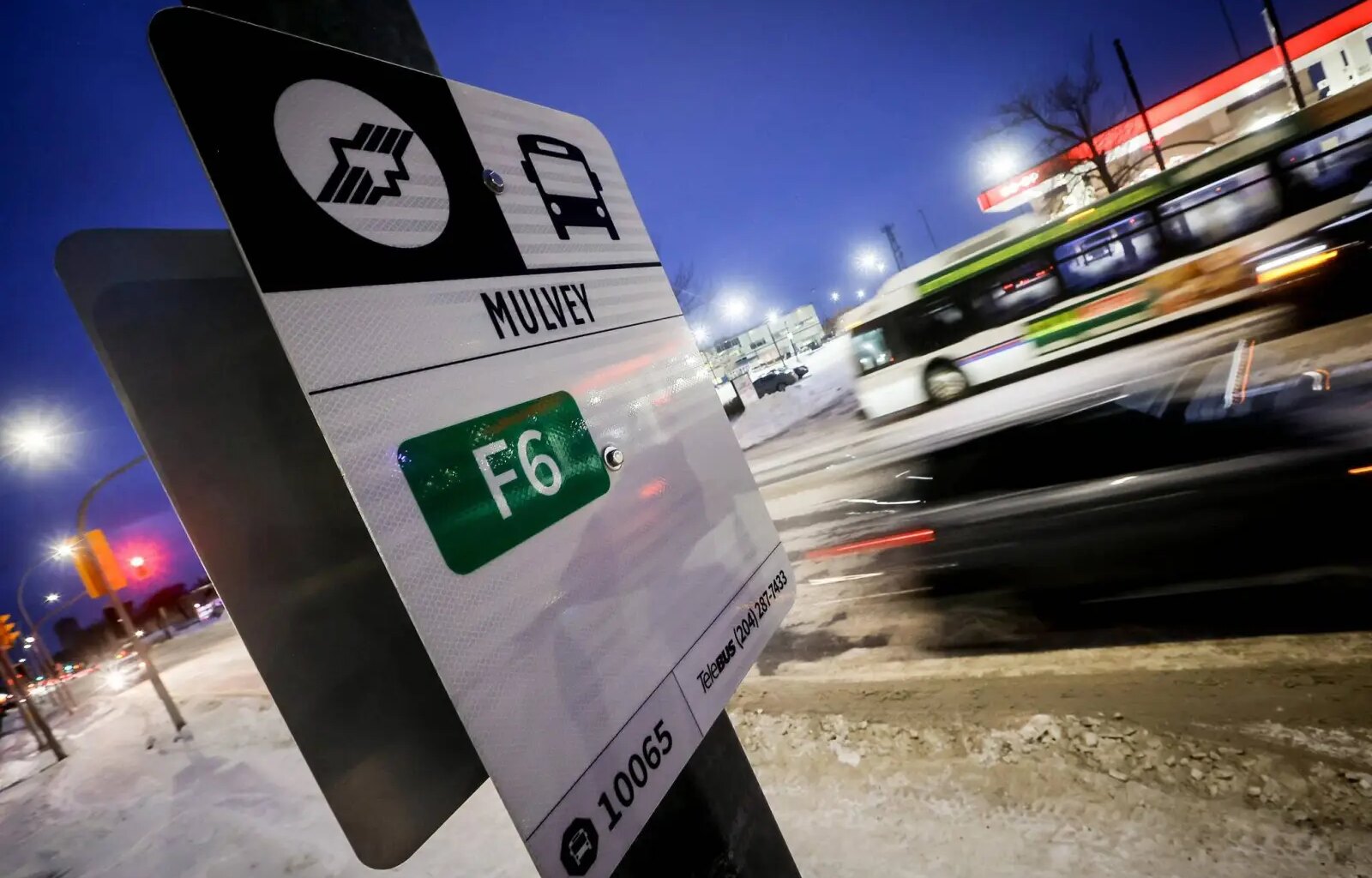
Re: Transit system overhaul a disaster (March 4)
Tom Brodbeck adds yet another voice to the complaints about Winnipeg Transit. So many voices all saying the same thing but no one is listening. This is not new.
In 2019, a number of community open houses were held to allow the public to learn about the proposed plan and to give feedback. Maps were on display and personnel were available to answer questions.
As we stood waiting our turn to approach the display, we heard numerous people asking for explanations of the new routes and system. Answers were vague and couched in rosy terms to hide the reality of what was to come.
When we were able to ask someone what was happening with the direct route from the corner of our street to the University of Manitoba, we were informed that the route changes were already decided and were not up for discussion. Feedback indeed!
Community input and transparency? Dream on!
Ellen Karr
Winnipeg