
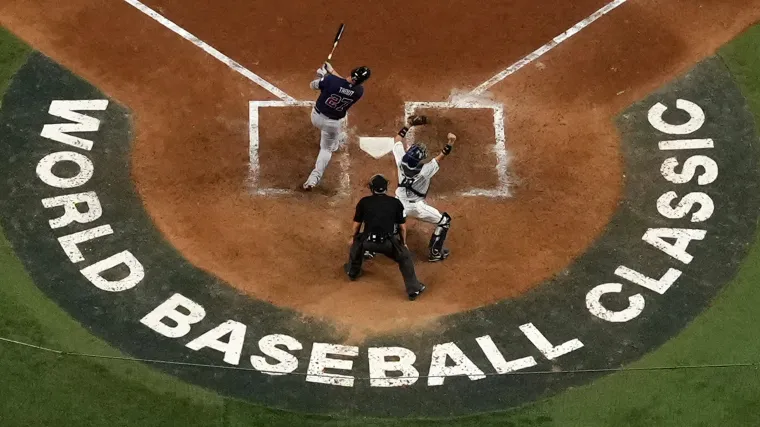
While international baseball is known for its tradition and flair, the 2026 World Baseball Classic is bridging the gap between global ceremony and the brisk efficiency of the modern big-league game. With the tournament taking place just as Major League Baseball begins its 2026 season, organizers have aligned several key regulations to ensure consistency for the world’s top stars. While games remain a standard nine innings in length, the introduction of a pitch clock and unique mercy rules means the pace of play in Milan, Tokyo and Miami will feel more like a sprint than the marathons of years past.
Here’s everything you should know about the 2026 World Baseball Classic rules.
MORE: World Baseball Classic rosters 2026
How many innings are there in the World Baseball Classic?
World Baseball Classic games are scheduled for the traditional nine innings, but the tournament utilizes an extra-innings rule designed to prevent the marathon contests that can deplete a pitching staff early in the bracket.
If a game remains tied after the ninth inning, a runner is automatically placed on second base at the start of the 10th inning and every subsequent frame to encourage a faster resolution. This “ghost runner” rule mirrors the current MLB format and ensures that games reach a decisive conclusion without placing undue physical strain on the athletes.
To further prevent lopsided contests from dragging on, a mercy rule remains in effect specifically during the pool play portion of the tournament. Under these regulations, a game will be ended early if a team establishes a lead of 15 runs after five innings or 10 runs after seven innings.
However, fans should note that these mercy rules are removed entirely during the knockout stages, where teams must play the full nine innings regardless of the score to ensure a standard competitive environment for the quarterfinals and beyond.
MORE: The nine worst renditions of ‘Take Me Out to the Ballgame.’
World Baseball Classic pitch clock
For the first time in the tournament’s history, a pitch clock has been officially enforced to maintain a crisp, engaging tempo. This mirrors the updated MLB standard, requiring pitchers to deliver a ball within 15 seconds with the bases empty and 18 seconds when runners are on base.
This change represents a significant adjustment for international play, particularly for powerhouse teams from leagues like the NPB in Japan or the KBO in South Korea that have not historically used a clock. Batters must also remain alert and in the box with eight seconds remaining on the timer, or they risk an automatic strike, a rule that has significantly reduced the “dead time” between pitches.
Finally, because the tournament occurs during the traditional Spring Training window, strict pitch counts are enforced as a primary safeguard for player health. Managers must navigate the tournament with a limited inventory of arms, as pitchers are restricted to 65 pitches per game in the first round, 80 pitches in the quarterfinals, and 95 pitches during the championship round. If a pitcher reaches these limits in the middle of an at-bat, they are permitted to finish facing that specific hitter before being removed.
MORE: Which MLB players have had more than 3,000 career strikeouts?
What was the longest World Baseball Classic game?
The longest game in World Baseball Classic history occurred during the 2017 tournament in a second-round matchup between Japan and Cuba.
Played on March 14, 2017, at the Tokyo Dome, the game lasted 11 innings and took 4 hours and 40 minutes to complete. Japan ultimately walked away with an 8–5 victory, but the contest is remembered for its high tension and the sheer endurance required under the tournament’s strict pitching rules.
At the time, the WBC’s “extra-innings rule” (placing runners on first and second base) did not kick in until the 11th inning. Japan managed to score three runs in the top of the 11th to finally break the stalemate before Cuba could capitalize on the same advantage.