
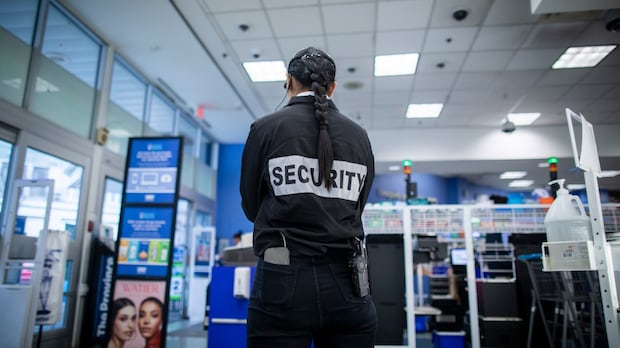
Manitoba is facing calls to update its regulations for security guards, including changing a temporary licence that allows them to work without training, after a video emerged this week showing a guard at a retail store beating an alleged shoplifter with what police say were brass knuckles.
“The expectations of security have gone way beyond what we ever were,” said Peter de Beer, general manager of Tataskweyak Security Inc., a private security company based in northern Manitoba.
“If they’re not properly trained, you’re going to see a lot of things happen, and people will get injured.”
To work in Manitoba, a security guard needs a licence, which is issued following an application process that includes showing proof of having completed a valid security guard training program.
However, a person who hasn’t completed that training can apply for a temporary licence, valid for six months.
A spokesperson for the province told CBC News temporary licence holders can work as security guards, but the temporary licence cannot be extended or renewed.
Issued only in exceptional cases: province
During the 2024-25 fiscal year, 161 temporary licences were issued, according to the province.
Temporary licences are granted only in exceptional circumstances and are intended for hard-to-fill positions where a company is at an immediate need of guards, the province said.
The temporary licences are only issued when the registrar is satisfied there are no security concerns and no reasonable alternatives exist, the spokesperson said.
But Tataskweyak Security’s de Beer said temporary licences can allow someone who has no experience or knowledge about being a security guard to work as one, making them a potential public safety risk.
“The demand that we have on security, it’s got to start catching up with the times,” he said. “It’s getting a lot more serious.”
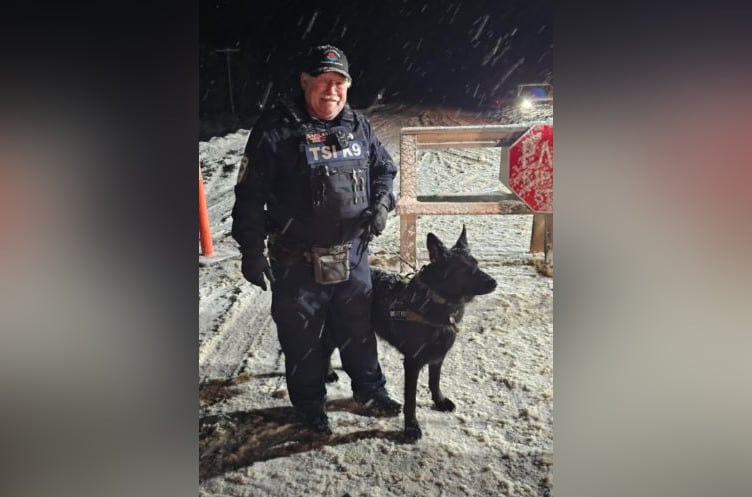 Tataskweyak Security Inc. general manager Peter de Beer says he would like the province to change temporary licensing rules for security guards. (Submitted by Peter de Beer)
An untrained guard may not know, for example, “are you allowed to use force, or you’re not allowed to use force? And if you are allowed, when does it come that you use force?” he said. “This would cause a huge problem.”
Temporary licences have been used to make it easier for candidates with background in law enforcement to transition into working as security guards, de Beer said.
They have also been used as an incentive to encourage people to pursue a career in the field by reducing the delay between finishing training and getting certified to work, which can be useful to fill staffing gaps.
De Beer said a company can choose not to hire a security guard without training, but temporary licences give them the option to do so.
That can put untrained guards “right in front line and centre … not knowing or understanding what to do,” he said.
“Sometimes this is where you’re going to have a lot of problems happening. It’d be really nice if they would change it.”
LISTEN | An expert explains what powers security guards have in Manitoba:
Up To Speed10:48What can security guards legally do/not do in the course of their duties?
A video circulating of a violent incident between a shopper and security inside a downtown Dollarama is promoting a further Winnipeg Police investigation. Guest host Julie Buckingham speaks with Jack Ewatski, academic chair for the Manitoba Public Safety Institute at Assiniboine Community College, about what powers the guards you see in stores actually have.
Eric Robinson, a board member with the advocacy organization Indigenous Peoples Alliance of Manitoba, would like to see temporary licences scrapped unless training becomes a requirement.
Robinson, a former Manitoba MLA whose organization lobbied the province to make changes on security guard legislation in 2024, said anyone in a position of authority who may resort to force needs to be educated on how and when to use it.
When asked Wednesday about the recent incident involving a security guard at the downtown Winnipeg Dollarama — who now faces charges including assault with a weapon — Premier Wab Kinew said his government is not ruling out changes to regulations governing security guards, but changes will likely start with looking at how training is done.
Updating the training curriculum
The province lists 24 approved security guard training program providers in Manitoba.
Jack Ewatski, the academic chair for the Public Safety Institute at Assiniboine Community College — which delivers one of the approved programs — says his program follows provincial regulations that outline the contents that should be covered.
Students generally receive classes on their powers and limitations under the law, as well as how to perform duties like reporting incidents, controlling access and interacting with the public.
“A lot of training is geared towards effective communication,” said Ewatski, who was Winnipeg’s police chief from 1998 to 2007.
De-escalation is paramount to ensure safety, and Ewatski argues trainers could probably still emphasize it more.
“Use of force should always be looked at as a last-ditch effort to gain compliance,” he said.
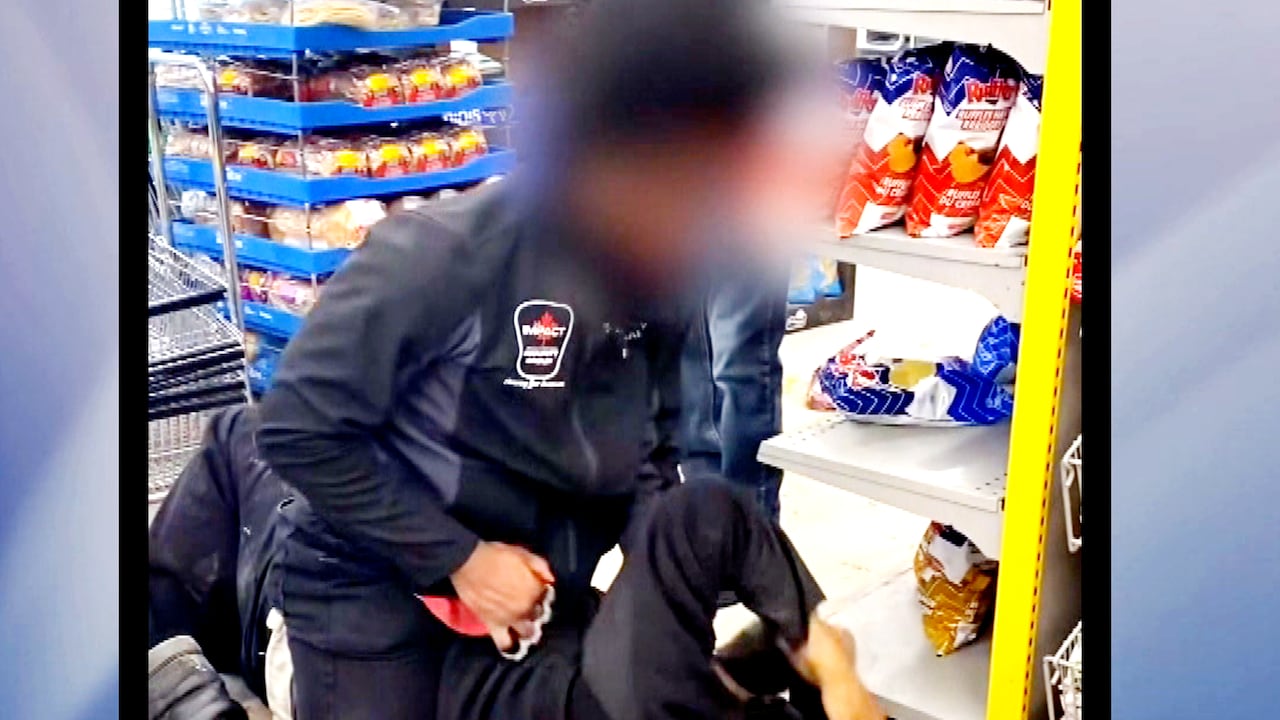 A security guard at a Dollarama in Winnipeg is facing several charges after police say he used brass knuckles to assault an alleged shoplifter. The incident has First Nation leaders and security guard trainers calling for change on regulations governing the profession. (Eileen Guimond/Facebook)
But in the wake of the Dollarama incident, the chief of Dauphin River First Nation, who has worked in law enforcement, says there are gaps in training for conflict resolution.
“When I was an RCMP officer, I was assaulted,” said Chief Lawrence Letander.
“I understand how adrenaline can probably get the best of somebody. You can develop tunnel vision. You can kind of lose your sense of direction of what’s going on,” he said. “This is where you have to be trained properly.”
The Dollarama incident sets the stage for security companies to improve training and for legislation to change, said Letander.
Currently, the province’s manual for security guards says they may take additional first aid or conflict resolution courses. Letander said those should be mandatory.
He also argues field placements to put skills to test should be part of the standard training.
“You should know how to deal with the public, because not everybody’s going to comply,” he said.
Culturally responsive training
Letander said training also needs to include a course on dealing with Indigenous people and should be more culturally sensitive.
For many First Nations people, resistance to authority stems from the trauma left by being forced to attend residential school, he said. Security guards should be mindful of that context to avoid mistaking that resistance for a personal attack, said Letander.
Former MLA Robinson said it is important security guards also go through that kind of training to avoid stereotyping that may lead to First Nations people being profiled by security.
“Training is only a start of it, but we have to create an atmosphere where there’s a level of trust” between security companies and Indigenous people, he said.
That could be achieved by enabling more Indigenous people to become security guards.
“We’re all in this together, and we have to find solutions,” said Robinson.
A spokesperson for the province said it’s expected that an updated training program will include a newly developed code of conduct, as well as units on Indigenous awareness.
The province is also introducing a one-day Indigenous awareness session for security guards that will be offered three times per year, the spokesperson said.