
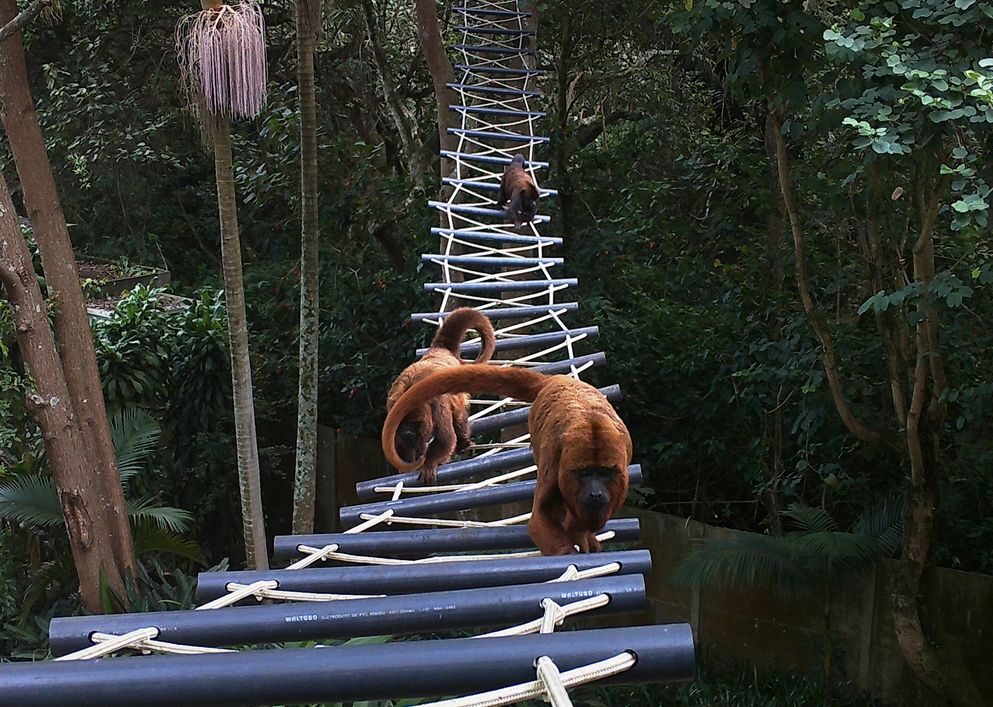
In the Amazon and Atlantic forests, field research is seeking new ways to understand the behavior of mammals like monkeys and sloths that depend on the treetops to move around and survive in different types of vegetation.Using photographic equipment on artificial bridges — whose ropes, nets and platforms are intertwined with trees to protect wildlife — researchers are mapping fauna in both continuous forests and fragmented areas, providing new scientific insights.Experts working to reduce the risks of roadkill and species’ isolation in fragmented forest areas say studies are crucial to improving the installation of artificial crossings over highways.
See All Key Ideas
Throughout the Amazon Rainforest, forest fragmentation represents an escalating and existential threat to the preservation of fauna. Driven by intensive economic development, the expansion of agribusiness and large-scale infrastructure projects — such as highways, railways, power transmission lines and gas pipelines — continues carrying profound environmental risks.
Foremost among these ecological pressures are the geographic isolation of animal populations and high mortality rates resulting from roadkill and other related accidents. Arboreal mammal species, including primates, sloths and porcupines, are among the most affected by this confinement, as their survival is strictly dependent on canopy connectivity.
Paradoxically, these specialized tree-dwelling animals often benefit the least from standard environmental mitigation measures, such as the implementation of artificial crossings.
To address critical gaps in understanding animal behavior and habitat use, biologists Justin Santiago and Lindsey Swierk from the State University of New York at Binghamton, U.S., conducted pioneering research in the heart of the Peruvian Amazon. The study site was located at the Amazon Conservatory for Tropical Studies (ACTS) Field Station within Napo-Sucusari Biological Reserve, a 1,674-hectare (4,137-acre) protected area near the city of Iquitos, in the northern region of Loreto.
The researchers deployed a sophisticated system of canopy bridges that used a combination of nets, thick ropes and platforms situated at varying heights. These elements were integrated to form extensive suspended corridors designed to facilitate safe movement for wildlife from one treetop to another.
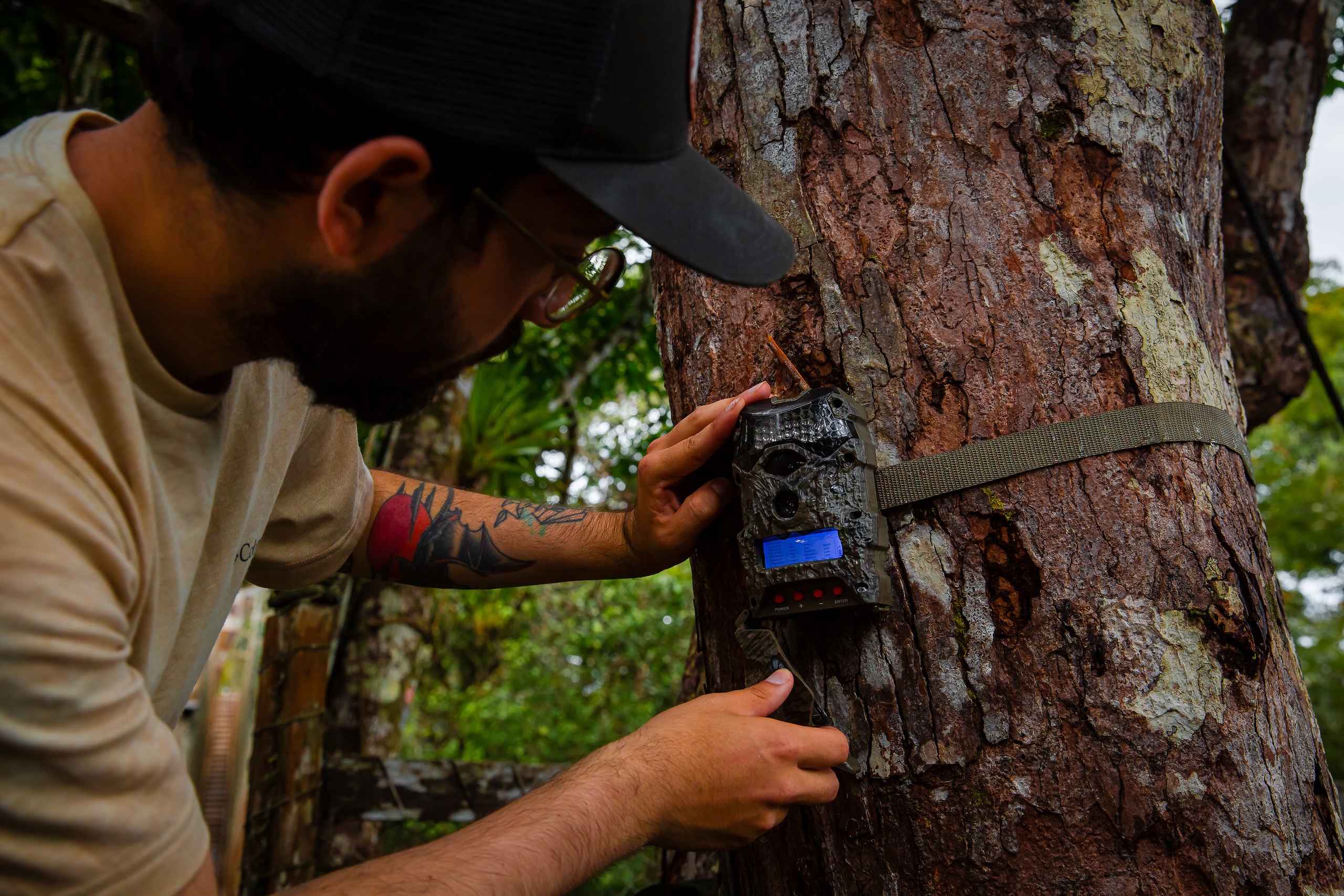 A specialist installs a camera on a tree connected to the canopy bridge system in the Peruvian Amazon. Image courtesy of Elizabeth Benson.
They also installed camera traps, which they used over a 21-day monitoring period to document the movements of several key species, including Linnaeus’s two-toed sloth (Choloepus didactylus), saki monkeys (Pithecia spp.), and the Amazonian long-tailed porcupine (Coendou longicaudatus), a species that was only formally described in 2021.
Their findings were published in the journal Neotropical Biology and Conservation in September 2025.
The scientists emphasize that understanding how animals use bridges within continuous, undisturbed forests is a prerequisite for implementing effective connectivity strategies in fragmented landscapes where environmental risks are far higher.
Santiago told Mongabay that there’s “much to learn” about artificial bridges. He also praised the scientific work focused on the use of new techniques for mapping fauna in different South American forest contexts.
“Previously, studies were conducted through field surveys and with the help of tree climbers. The suspension bridge, as well as [proving useful] for the species studied, allows researchers to explore behaviors in a much more effective way,” he said.
According to Santiago, progress has been perceived over time. “Internationally, suspension bridges have proven their effectiveness in various habitats, providing connectivity between them, increasing gene flow for endangered species [which keeps populations genetically healthy], and reducing mortality in areas near power lines and highways.”
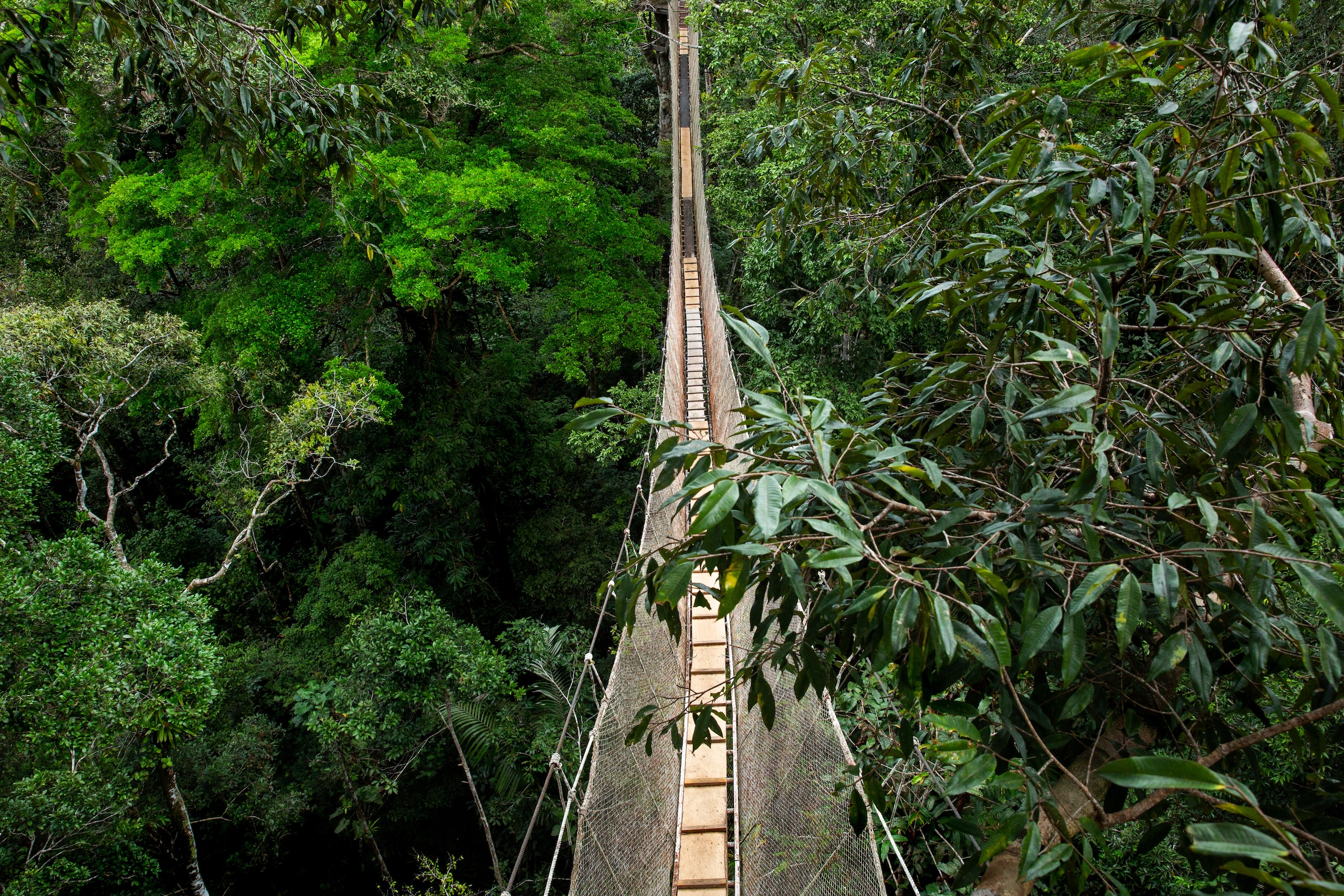 An artificial bridge for animal crossing, used in the Peruvian Amazon study. Image courtesy of Justin Santiago.
Saki monkeys’ to-and-fro
Fernanda Abra, a wildlife management specialist and postdoctoral researcher at the U.S.-based Smithsonian Institution, said the study in Peru provides vital scientific benchmarks for future bridge installation and monitoring.
Abra, who wasn’t involved in the study, specifically highlighted the unprecedented observation of saki monkeys, known in Brazil as parauacus, using these artificial structures. “Saki monkeys are considered an extremely sensitive primate genus and have never been recorded using man-made canopy bridges before this research,” she said.
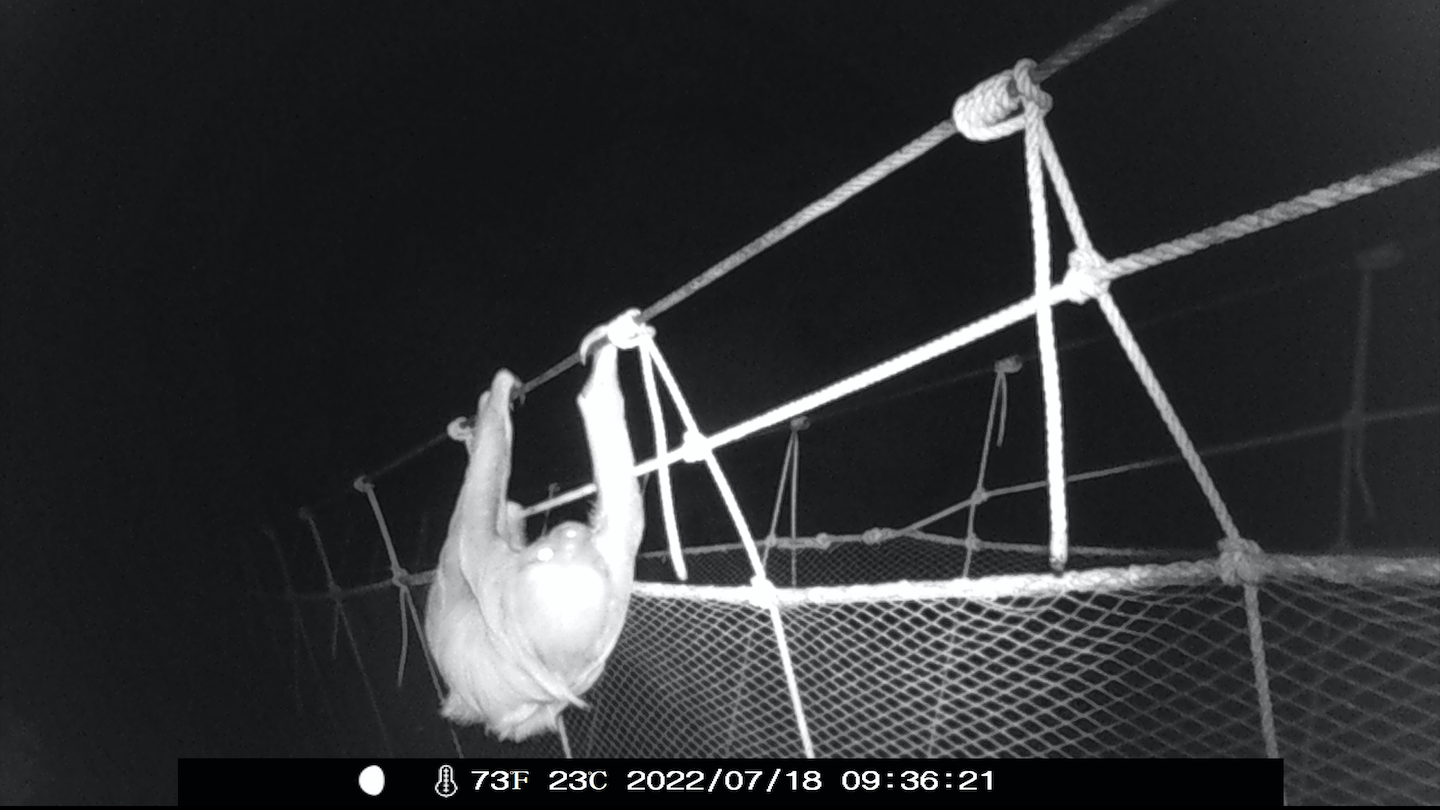 A sloth crosses a canopy bridge in the Amazon. Image obtained through a camera trap system. Image courtesy of Justin Santiago.
Abra said that even when situated in well-preserved environments, these systems reveal “crucial data” that informs the technical work of specialists in regions heavily impacted by forest fragmentation.
Abra is herself a world-renowned expert on wildlife canopy bridges. In 2024, she received the Whitley Award, presented by the U.K. nonprofit Whitley Fund for Nature and popularly known as the “green Oscars.” As Mongabay reported at the time, the award recognized Abra’s work on forest canopy bridges in the Waimiri-Atroari Indigenous Territory, which connects the Brazilian cities of Manaus (capital of Amazonas state) and Boa Vista (capital of Roraima) via the controversial BR-174 highway.
“The work is interesting and has practical applications. Today, in our area of impact mitigation for arboreal fauna, we seek to understand basic things,” Abra said. “For example, which artificial bridge designs are most suitable for different types of locomotion: some monkeys move by brachiation [from branch to branch], some monkeys jump, and some monkeys are more terrestrial than arboreal. Therefore, understanding bridge design — its appearance, shape, and materials to be used — is essential for us to grow in this area.”
The challenges to reconnect the forest
Experts have long identified two primary impacts on forest species from the presence of roads and other infrastructure: direct mortality from vehicle collisions, and the more insidious “barrier effect.” The latter occurs when animals become inhibited from crossing the open spaces created by infrastructure, leading to population isolation. This can result in cases of inbreeding, which degrades genetic health and can trigger rapid population decline, among other perils.
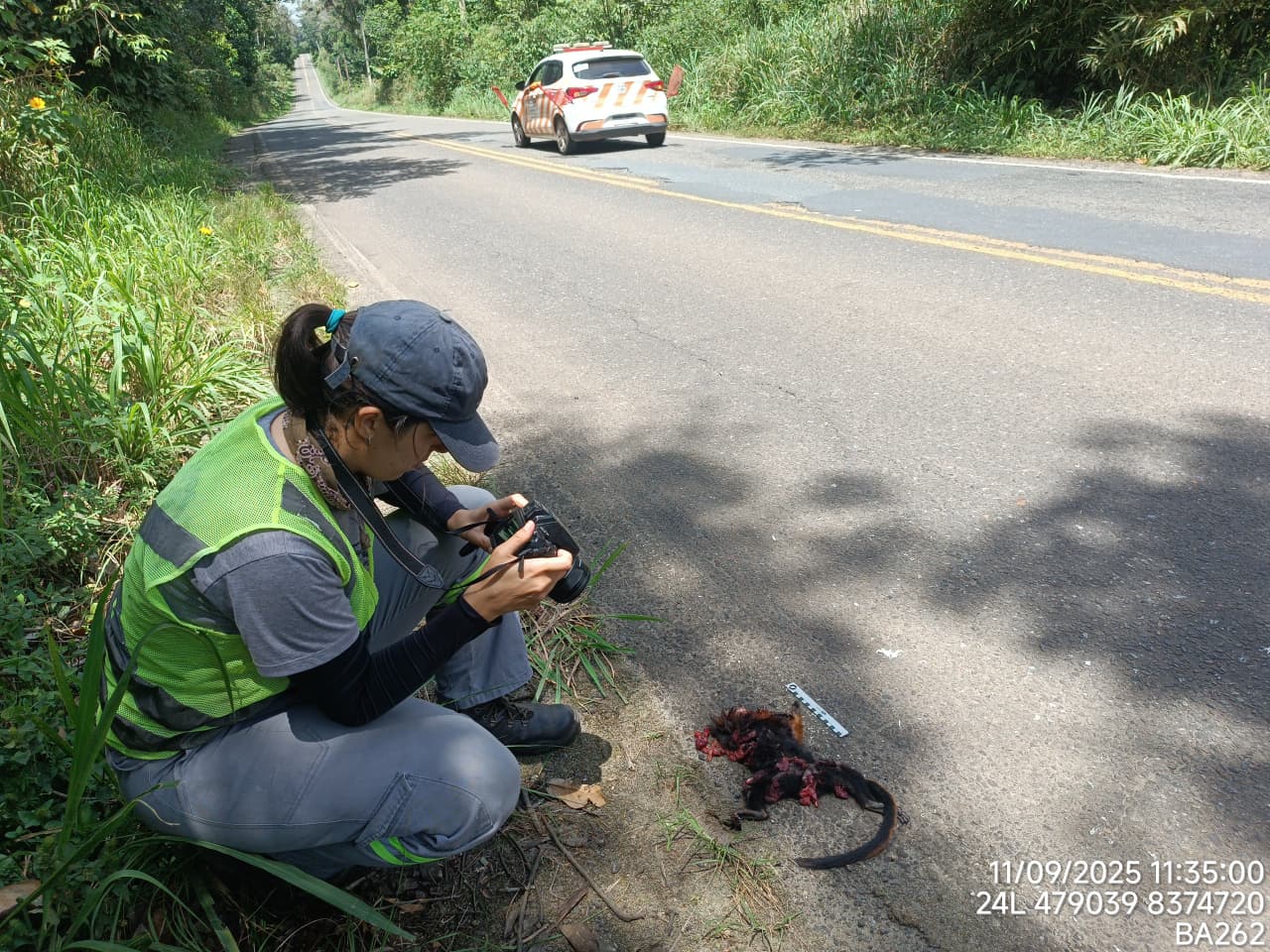 A researcher photographs an animal killed in a vehicle strike in the Amazon. Image courtesy of Patrício Rocha.
In an interview with Mongabay, Abra mentioned a recommendation by Brazil’s National Department of Transport Infrastructure (DNIT), which is set to convert her Whitley Award-winning canopy bridge project into a standard model to be employed across the country.
However, she said challenges persist nationwide, as Brazil combines a vast biodiversity of tree species with the world’s fourth-largest road network — more than 1.7 million kilometers (1.1 million miles) of roads and highways, according to the country’s National Transportation Confederation (CNT).
“Several Amazonian and Atlantic Forest primates — such as the spider monkey and the woolly monkey — would be unlikely to climb down from trees to cross a highway,” Abra said. “Artificial canopy bridges are a solution. They are simple, replicable, effective, and low-cost when compared to other measures, such as wildlife underpasses or vegetated overpasses.”
Other studies seek to follow the same course. One of them comes from the doctoral work of Ana Rubia Rossi, who holds a master’s degree in ecology from the State University of Santa Cruz (UESC) in Brazil. Published in October 2022 and developed under Abra’s guidance, the research has since helped save the lives of endemic and threatened primates in Ilhéus, a region in the southern part of Brazil’s northeastern Bahia state.
The study was conducted on the state highway BA-262, dubbed the “Chocolate Road” as it’s located in a cacao-growing area. In this region, fieldwork has created a census of sound and visual records, enabling the monitoring and installation of canopy bridges for endemic species such as Wied’s marmoset (Callithrix kuhlii) and the golden-headed lion tamarin (Leontopithecus chrysomelas).
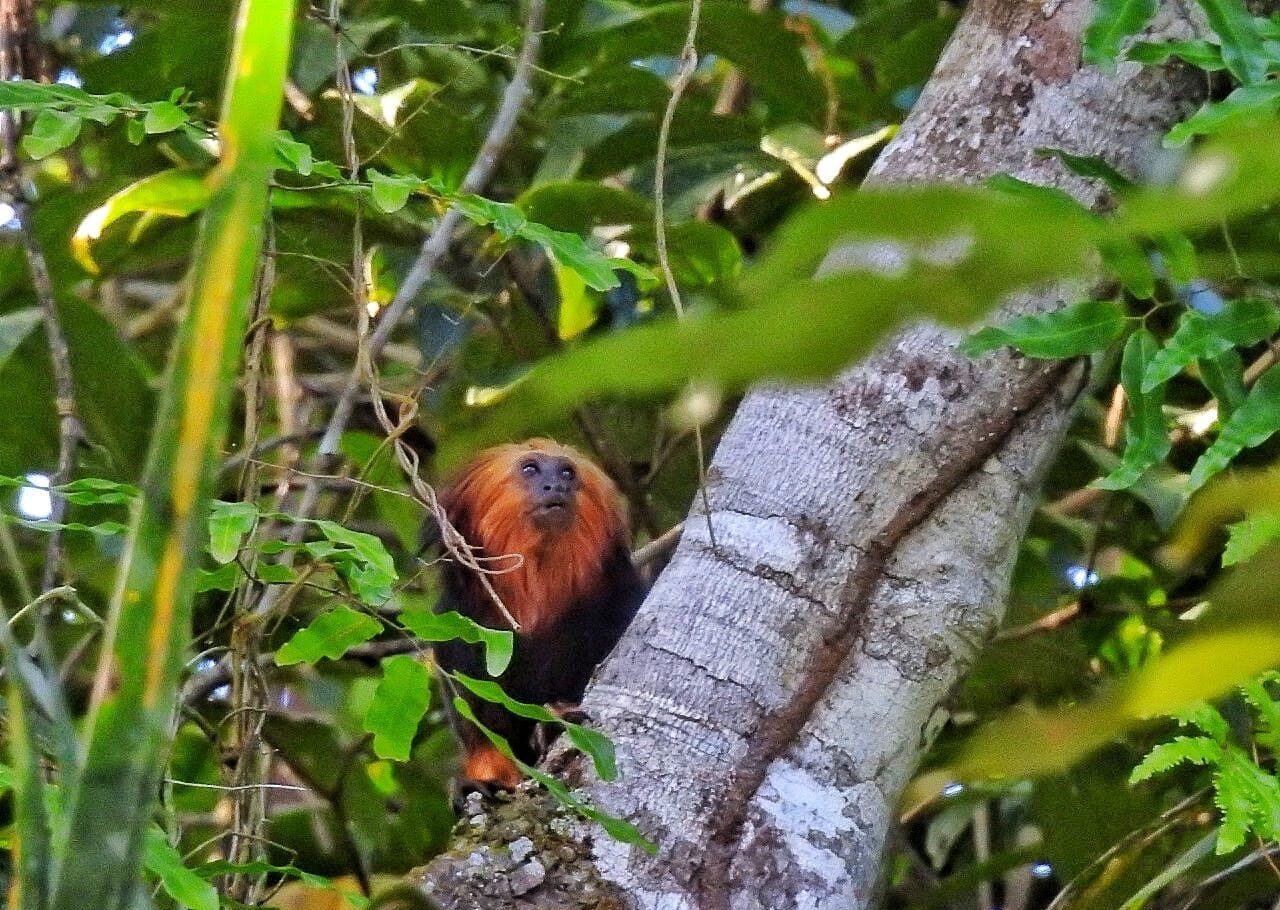 A golden-headed lion tamarin spotted in the region of Ilhéus, Bahia state. Image courtesy of Ana Rúbia Rossi.
In 2021, Rossi identified more than 50 natural canopy connection points along a 48-km (30-mi) stretch of the BA-262, in a preserved part of the Atlantic Forest relying on the environmental management of agroforestry systems, such as cabrucas, in which farmers plant cacao trees and other crops without clearing native forest. In this section of the biome, records of arboreal animals being run over are low.
But this might change soon. The highway is increasingly becoming one of the main access routes to a new port under construction in the Ilhéus region, which has led to changes in the road layout and the remodeling of the structure of power lines running alongside it.
Experts say the consequences are already noticeable, making the installation of new structures urgent. “I was waiting for funding for new bridges when I saw two male lion tamarins run over on consecutive days,” Rossi said. “It was when I thought: I can’t wait any longer, I need to do something now, even with limited resources. So, we installed ropes on chains, connecting the trees directly in six locations where we were watching the animals die.”
To her surprise and relief, just 11 days after adopting the temporary measure, it was already possible to observe primates using the bridges. “It was a record.”
“My work needs social support,” Rossi added. “And the bureaucracy to approve the installation of fixed structures on the highway is the most difficult [part]. Since I know the routes of arboreal animals, the idea of using ropes connecting one tree to another was a great insight — and a quicker measure. That’s why I called my project ‘Bridges for Conservation.’ I need to build bridges beyond their installation itself; I need to build bridges with people.”
Banner image: Howler monkeys using an artificial bridge at Fontes do Ipiranga State Park in São Paulo. Image courtesy of the São Paulo State Secretariat of Infrastructure and Environment (SEMIL).
Citation:
Santiago, J., & Swierk, L. (2025). Arboreal mammal use of canopy walkway bridges in an Amazonian forest with continuous canopy cover. Neotropical Biology and Conservation, 20(3), 281-294. doi:10.3897/neotropical.20.e154791
