

Listen to this article
Estimated 4 minutes
The audio version of this article is generated by AI-based technology. Mispronunciations can occur. We are working with our partners to continually review and improve the results.
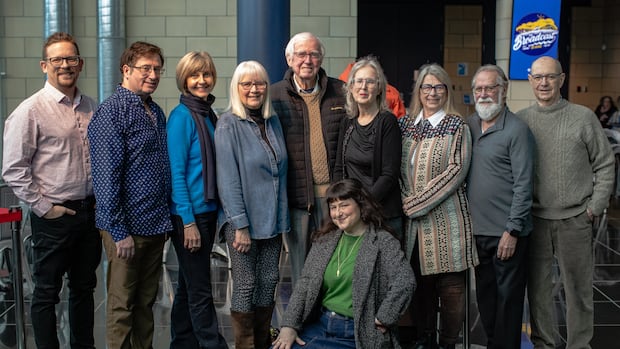
For 75 years, The Broadcast has been reeling in listeners on CBC Radio with stories about the ocean surrounding Newfoundland and Labrador and the people who make a living there, making it the longest-running daily radio show in Canada.
To mark the occasion, the program held a celebration at The Rooms in St. John’s, hosted by the current team to take the show to air — host Paula Gale and producer Todd O’Brien.
The official anniversary of the first time the show went to air is March 5, 1951.
Anne Budgell, the voice of the show from 1980 to 1985 and its first female host, said The Broadcast played a “vitally important” role in the province.
“Everybody listened to it, without a doubt,” she said.
“I quickly learned, whenever I went out into the field, went anywhere, you went to a union meeting or you got in the car and drove and went to communities, all you had to do was say your name and say who you were working for, [people would say] ‘Come on in,’ you know?”
However, Budgell said, the show wasn’t always held with the same esteem inside of the CBC. When the host job became available, she recalled, not many of her colleagues applied.
WATCH | Former hosts, longtime listeners celebrate Canada’s longest-running daily radio show: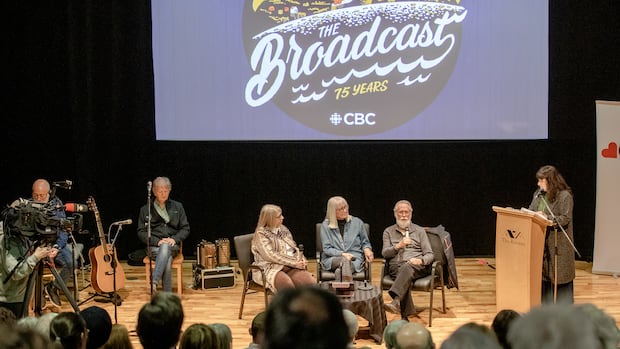
Quite the catch: The Broadcast marks 75 years on CBC Radio
The Broadcast is marking a milestone. It first hit the airwaves on March 5, 1951, and remains the longest-running daily radio show in Canada. Former hosts and longtime listeners marked the occasion with a special event at The Rooms. The CBC’s Madison Taylor was there.
Many of the former staffers have moments that stand out during their time with the show.
Kathryn King, who hosted from 1990 to 1998, remembers being at the Newfoundland Hotel when then federal fisheries minister John Crosbie announced the cod moratorium.
The Broadcast was covering it live.
“It was just chaos,” King said.
“It wasn’t too long before there was this banging on the door and it was just banging and banging and banging.”
She said that day had a long lasting impact on the province.
“It was like everything turned upside down and all of a sudden, you know, you were seeing a fundamental shift in the society, the culture, everything about this province, everything about things that we knew. And then that was just over,” King said.
And just a few years after that historic announcement, King said, The Broadcast was almost cancelled, and the case for its existence had to be made.
From farm to fish
Dedicated listener, retired Capt. Wilfred Bartlett, said he believes he’s called and written into the show more than anyone in the province.
“You knew what was happening in your next community. You know what’s happening in Fogo or Twillingate,” he said.
Jim Wellman, who was the host in the early 1980s and wrote The Broadcast: The story of CBC Radio’s Fisheries Broadcast, told the audience when Newfoundland and Labrador joined Canada, that deal came with the CBC. At the time, he said, farm broadcasts were popular.
Internal discussions about a program based in Newfoundland meant it would need to also cover the fishery.
“So the fish broadcast was sort of an afterthought in that sense,” said Wellman, adding in time the program began to focus more on fish.
Over the years, the program has had a few names, like The Fishermen’s Broadcast to The Fisheries Broadcast and now, simply, The Broadcast.
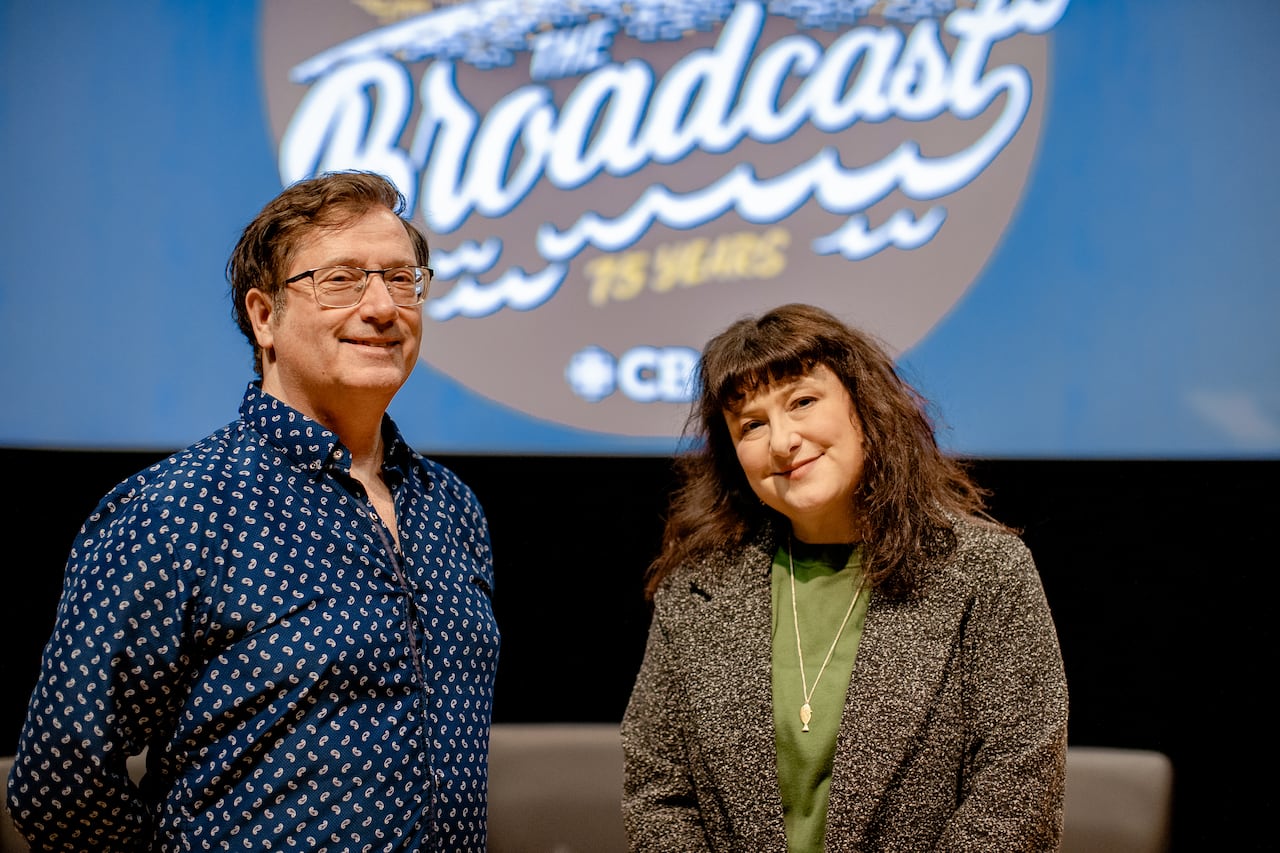 Paula Gale and Todd O’Brien hosted a celebration at The Rooms. (Submitted by Terry Day)
Wellman credits the program’s success to how it gave a voice to fish harvesters, and the teams who worked hard to convince the harvesters this was their program.
“It didn’t take too long before they accepted that,” said Wellman. “And when they took a hold of it, they wouldn’t let go.”
Dave Quinton, who began hosting in 1964, said he helped bring the fishery aspect into the farm broadcast. He remembers the team having to learn what he called “basic facts” about the fishery.
“I saw parts of Newfoundland I would never have seen. I saw just about every cove and I met a lot of interesting people,” he said. “So that was to me a blessing. I had the best job in the world.”
Download our free CBC News app to sign up for push alerts for CBC Newfoundland and Labrador. Sign up for our daily headlines newsletter here. Click here to visit our landing page.