

Listen to this article
Estimated 4 minutes
The audio version of this article is generated by AI-based technology. Mispronunciations can occur. We are working with our partners to continually review and improve the results.
After undergoing a cardiac stress test at Kingston General Hospital, all Brian Olner wanted to do was rest. Instead he spent the night lying on a bed pushed against the wall in a busy hallway.
He was left without peace and the dignity of privacy, according to his daughter Amanda, with only a curtain between him and passersby as he used the washroom or tried to sleep.
“He was very upset, which is understandable. He was extremely tired after the heart test,” she said.
“It’s super hard to see your family members go through that and know that there’s really nothing that you can do.”
Record number of patients
The Kingston Health Sciences Centre (KHSC) has spent the past few weeks under “extraordinary pressure” that’s pushed the number of people it’s caring for far beyond its 570-bed capacity.
One day last week saw 636 patients admitted — the highest number ever recorded, according to CEO Dr. David Pichora.
“We had a lot of patients in sun rooms, [the] gym. Storage rooms were all full. And we had more patients in hallways than we really liked, but that’s what we had to do,” he said.
That’s not counting the roughly 800 people KHSC also cares for in the community.
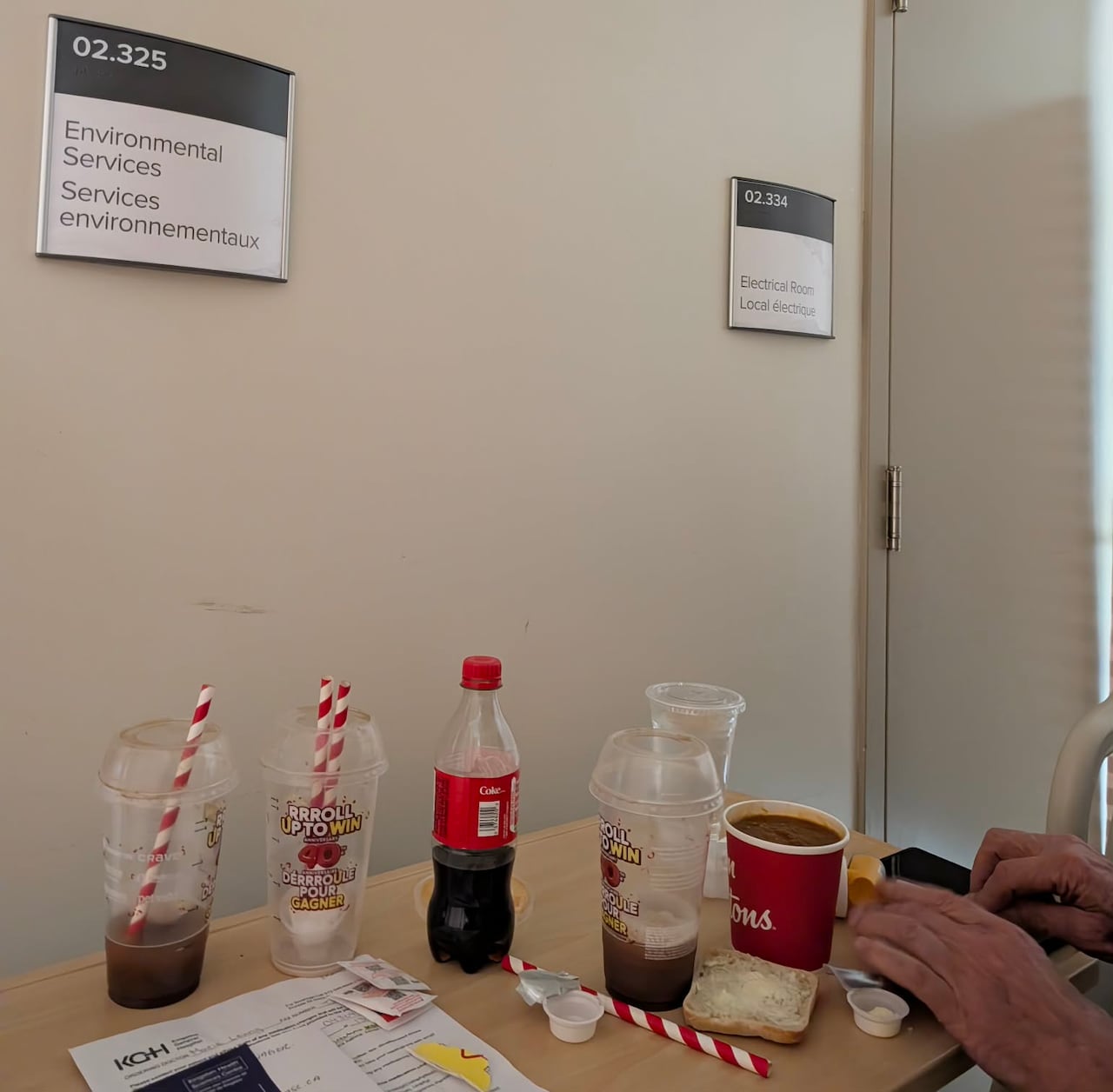 This photo gives a sense of the cramped quarters for Brian Olner when he was placed in the hallways at Kingston General Hospital. (Submitted by Amanda Olner)
The latest surge follows year-over-year patient volume increases, and the problem can’t be pinned on a single factor, Pichora said.
Cases of the flu or COVID-19 can cause seasonal spikes, but the general trend is coming from population growth, an aging population and KHSC’s role as a referral centre for complex cases from across eastern Ontario, he explained.
There are plans for a future hospital near Highway 401, but that’s still at least a decade off, said Pichora. In the short term, KHSC is looking into moving offices off-site into rented space to free up room for an estimated 45 surgical and 11 ICU beds.
“We’re literally out of space,” he explained. “We have no choice.”
Employees continue to “soldier on” and have been “amazingly positive” despite the stress, the CEO said.
“[We’re] asking the public to be patient, to be grateful for the care they’re getting, grateful for the staff we have here.”
Behind closed doors, tears and burnout
Angela Hodgson, a registered practical nurse and president of CUPE 1974, which represents more than 2,800 healthcare workers at KHSC, said the overcrowding causes “heartache” for those on the front line.
“When the doors are closed, when you’re by yourself, that’s when you see the frustration, you see the burnout, you see the tears, you see the utter moral distress of all staff within the organization,” said Hodgson, adding she’s not sure how much longer staff can keep it up.
In a statement to CBC, Ema Popovic, a spokesperson for Ontario’s Minister of Health, said the provincial government has invested more than $91.5 billion in healthcare this year and increased funding to KHSC by “over 43%” since 2018, along with investments meant to help people in Kingston connect with primary care.
But Hodgson said more is needed, adding the two per cent annual increase proposed by the province needs to be tripled to make a difference.
“Nobody should be receiving a procedure or having a talk with a physician in the middle of a hallway with a curtain pulled around them,” she said.
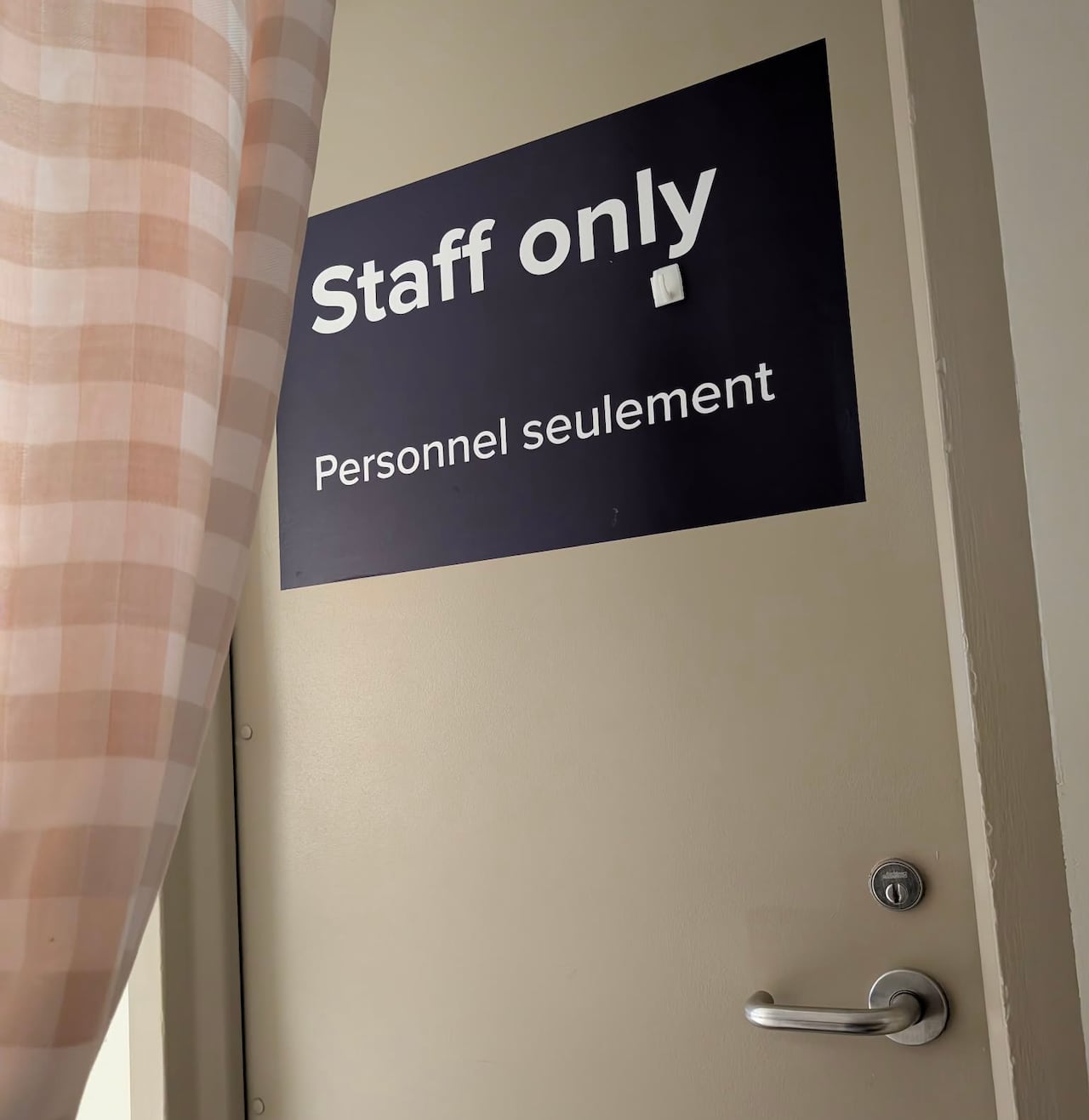 This photo shows a staff door just outside the curtain that surrounded Brian Olner’s bed in the hallways at Kingston General Hospital. (Submitted by Amanda Olner)
Amanda Olner said her father was twice placed in a hallway, first for more than five hours and a second time overnight after his stress test. He was released from hospital Wednesday.
A post she made on Facebook about her family’s experience has been shared and commented on more than 750 times, which she said speaks to the seriousness of the issue and the struggle healthcare staff face every day.
Workers shouldn’t have to provide care in hallways and patients deserve dignity, she wrote. “This is not simply an inconvenience; it is a matter of patient well-being and respect.”