
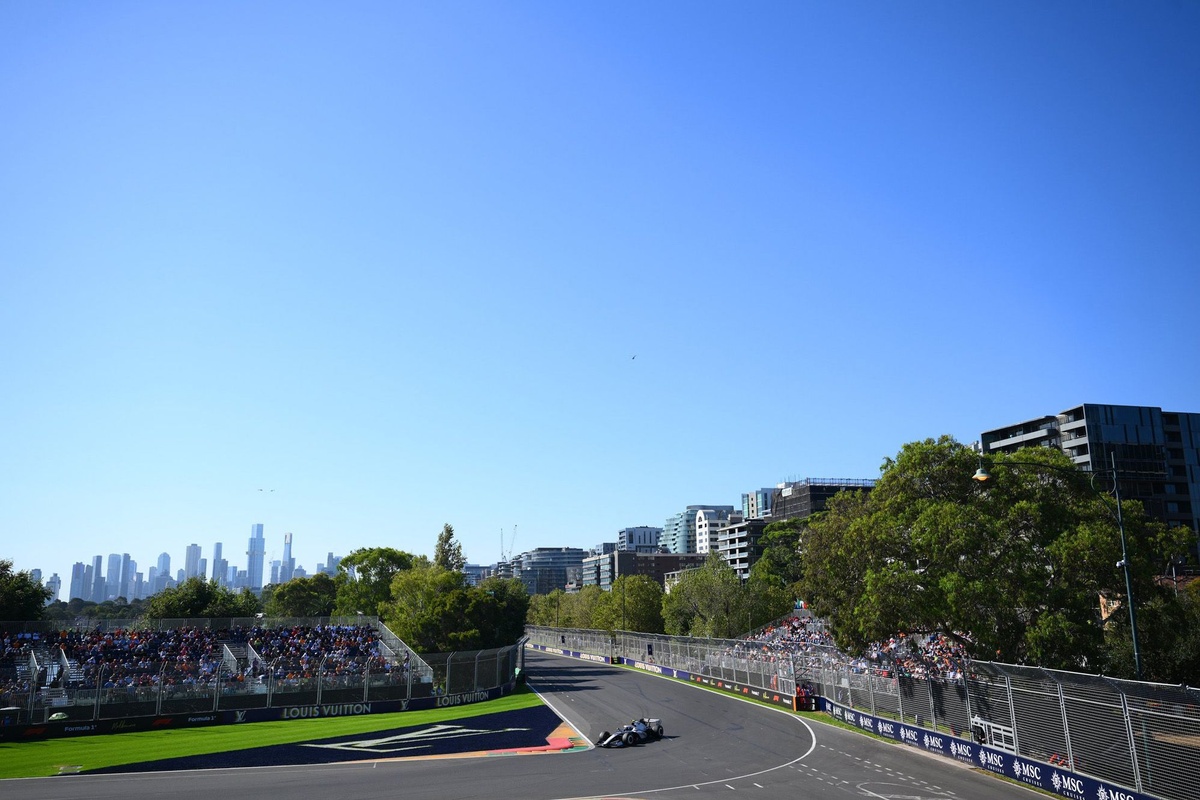
They said Melbourne would be a baptism of fire for 2026’s new cast of Formula 1 chariots – they, of course, being the teams charged with running them. They weren’t wrong.
One of the biggest questions entering the 2026 curtain-raiser in Australia largely pertained to how the teams would contend with energy harvesting, given the plethora of acceleration zones around the Albert Park circuit, and thus practice was always going to be important. Yet, there was another circumstance that the drivers had to grapple with: the reduced aerodynamic grip was always expected to force them into more errors, and the addition of deployment and active aero also made the approach to the small collection lower-speed corners a difficult task.
As a result, there were myriad lock-ups at Turn 3 and wide moments at Turn 10, producing more than a handful of gravel-bothering antics that became something of a set-back. Max Verstappen found this to his detriment, and his excursion chipped away at more than a few vital components of his floor to instigate a lay-off in his planned longer runs.
But he wasn’t the only one struggling to string a race simulation together; most of the drivers suffered some degree of interruption to their harder-tyre data logging exercises – be it through their own off-track moments, or through traffic as different drivers were running to differing deployment plans.
Despite the proliferation of rules changes, many of which had been cast in a somewhat negative light, the practice sessions were generally as you’d expect. That’s not to say that there weren’t teething problems with the new powertrains, as both Max Verstappen and Arvid Lindblad endured pitlane exit stalls, and others encountered a few glitches on and off the track, but that’s to be expected with a new formula.
Even though many of the race runs were piecemeal in nature, especially when interrupted by a VSC period for Sergio Perez‘s stopped Cadillac, there’s something we can glean from the longer stints that the teams put together in FP2. As expected, there’s a bit more of a spread in lap times – and a few changes in the expected order versus that seen in testing.
Has Mercedes taken the sandbags off?
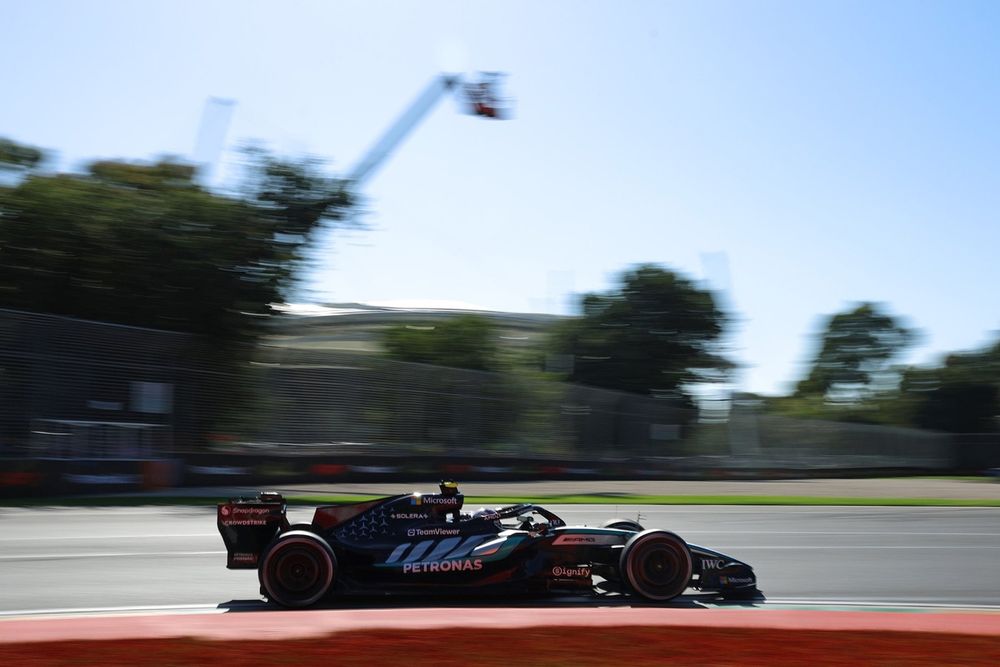
Mercedes picked up the pace in FP2
Photo by: Steven Tee / LAT Images via Getty Images
Neither of the two Mercedes drivers made a play for the headline time in either free practice session, but they ultimately didn’t need to – their race pace did the bulk of the Silver Arrows’ talking. Both George Russell and Andrea Kimi Antonelli pulled together consistent stints on the hard tyre across the second half of FP2, and the early signs of pace will have placed fear into the hearts of the other 10 teams.
Position
Team (Driver)
Av. time
Laps
Tyre
1
Mercedes (RUS)
1m23.714s
11
H
2
Ferrari (HAM)
1m24.412s
7
H
3
Red Bull (HAD)
1m24.571s
11
M
4
McLaren (PIA)
1m24.848s
7
S
5
Audi (HUL)
1m25.502s
12
M
6
Racing Bulls (LAW)
1m25.836s
12
M
7
Alpine (COL)
1m25.847s
8
M
8
Haas (BEA)
1m26.192s
12
H
9
Williams (ALB)
1m26.644s
7
H
10
Cadillac (BOT)
1m28.324s
12
M
11
Aston Martin
–
–
–
Russell’s average lap across a 12-lap stint on hards was almost 0.7 seconds per lap quicker than Lewis Hamilton‘s race-adjacent stint across FP2, a stint that pretty much correlated to an equal stint from Antonelli. The caveat here is that Ferrari did not string much of a race stint together following a handful of interruptions across FP2 but, if Hamilton’s interrupted stint on the hards is an indicator of the team’s performance, then Mercedes’ pace will be very tough to contain.
“I think Mercedes is slowly showing a bit more of what they have and FP2 we are starting to see where we are lacking compared to them,” Charles Leclerc suggested after Friday practice. “I think they are clearly very strong, especially in terms of race pace. I don’t know how much margin they still have on qualifying pace but in the race pace they seem to be very strong compared to us.”
There are further asterisks alongside the long-run pace of McLaren and Red Bull. In our table, we’ve counted Piastri’s stint on the soft tyre given that it was the most representative stint alongside the others, and logged within the same ballpark with conditions. But Piastri did his stint on used softs, versus Russell’s fresh hard tyre, and so the circumstances are very different.
We can consider that Norris did not put together much of a stint during his run on the equivalent soft compound, but the Briton opened FP2 with a string of runs on the hard tyre that suggested an average pace below the 1m23s mark. This will likely have been done on lower fuel to help fast-track Norris’ experience with the car, since he missed most of FP1 with a gearbox issue.
The difficulty in reading Red Bull’s pace was also made manifest by Verstappen’s pitlane delay and subsequent floor damage after going off-track. This leaves just Hadjar’s stint on the mediums, in which the Frenchman admitted he struggled to find consistency in his car from lap to lap.
“Every lap in FP2 has been quite difficult, in terms of deployment and everything,” Hadjar reckoned. “But we’ll look into it. It cannot go smooth on day one, so it’s normal.”
Did testing forecast the midfield order?
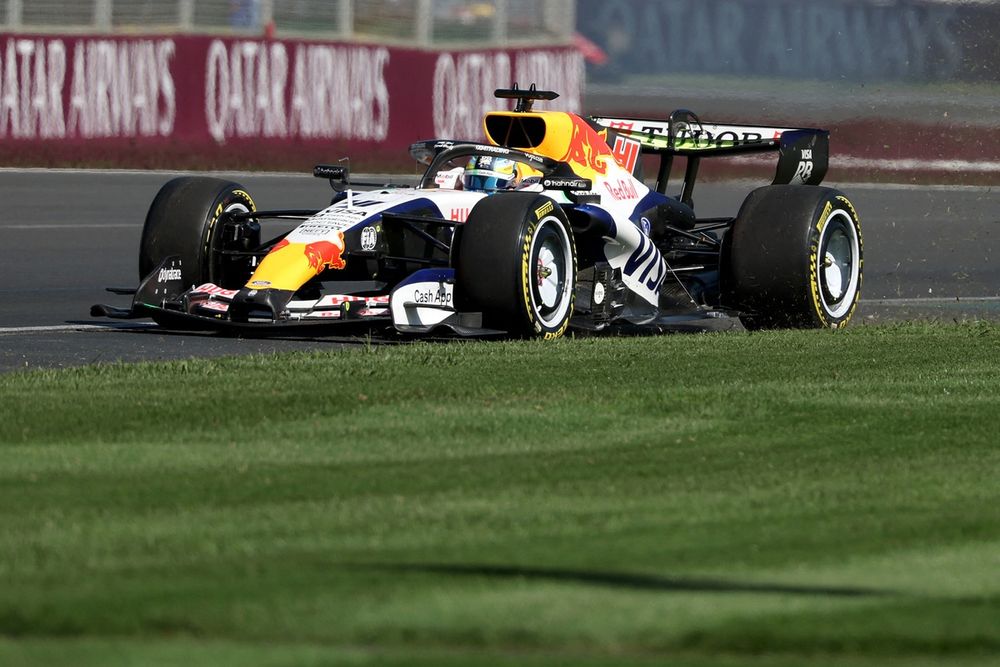
Lindblad caught the eye for Racing Bulls ahead of his F1 race debut
Photo by: Martin Keep / AFP via Getty Images
After Bahrain testing, we had a rough running order of Alpine, Haas, Racing Bulls, Williams, then Audi in a congested midfield pack. While this may still turn out to be true, the early indications are that the midfield pack has either shuffled about or has changed on a very different circuit.
Audi and Racing Bulls were particularly impressive in the first practice sessions. The former, in its first year as a constructor, was often seen in the bridging pack between the top four teams and the rest of the midfield; both Gabriel Bortoleto and Nico Hulkenberg hurled in solid qualifying laps to sit midtable on the timing screens, and Hulkenberg’s race stint on the mediums – averaging 1m25.502s – put him about 0.3s clear of Lawson’s equivalent tyre run. Lindblad’s strong runs to fifth and eighth in FP1 and FP2 respectively were also worthy of credit.
On race pace, Alpine is not far behind – but the French squad showed very little in terms of single-lap pace across the day.
This is the surprising bit, since Alpine had looked revitalised in testing after spending almost all of 2025’s development budget on the Mercedes-powered A526; indications were that the team would be at the tip of the midfield, but neither Pierre Gasly nor Franco Colapinto were able to impress much in their FP2 qualifying simulations in Australia. Gasly had a particularly difficult day without much in the way of mileage, after encountering reliability issues through the day – he noted that Alpine were “fairly far” from being able to extract its maximum pace.
At least the early race pace on the medium tyre suggests that it should be in the mix. Haas, who chose to focus on hard-tyre running through FP2’s long run phase, thus did not have an entirely equivalent run on a like-for-like compound. It sat 0.3s per lap away from Racing Bulls and Alpine, although form does seem to imply that they’ll be on equal terms – and that the qualifying pace does seem to be reasonably accessible.
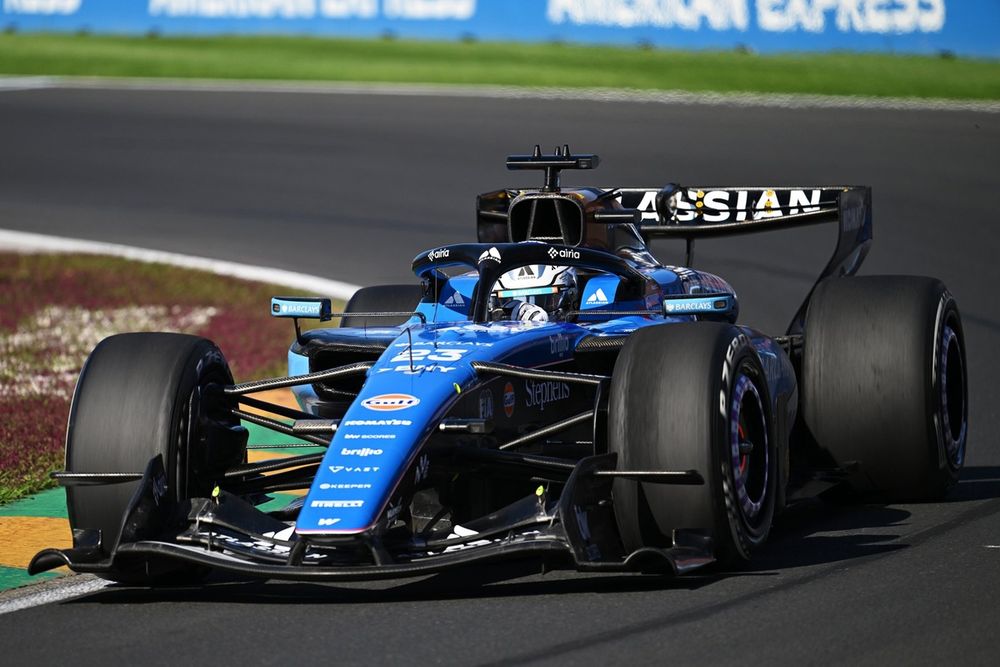
Williams has slipped down the pecking order in the midfield on Friday’s showing
Photo by: Sam Bagnall / Sutton Images via Getty Images
Williams currently sits at the back of this pack. The excess weight of the car is known to be a hindrance, but Alex Albon also pointed to deployment as a key area for the Grove squad to do its homework. GPS data suggests that the drivers are struggling to keep the revs up over a lap, reducing the internal combustion engine’s ability to help with regenerating. Besides, Albon’s stint in this table is an example of the aforementioned piecemeal lap counts, not helped by Carlos Sainz‘s lack of FP2 track time.
Unsurprisingly, Cadillac is a second-and-a-bit away. Valtteri Bottas put together a decent run on the mediums, but metrics at this stage are very much superfluous; the American squad is simply attempting to get its personnel working well together from an operational stance. Perez’s stop came after a lengthy wait to jump into the car, following a suspected sensor issue, and thus the ex-Red Bull driver only managed to accrue a couple of laps.
Aston Martin only pulled three laps together over FP1 and thus needed to use FP2 to bed its car in. Like Cadillac, outright pace is unknown at this stage and barely relevant, given the litany of issues the team has faced with its vibrating Honda power plant and its pile of discarded, well-shaken battery packs. Communication issues between the battery and the ECU effectively rendered two of the energy storage packs it had brought to Australia as useless, leaving it with just two for the rest of the weekend.
Read Also:
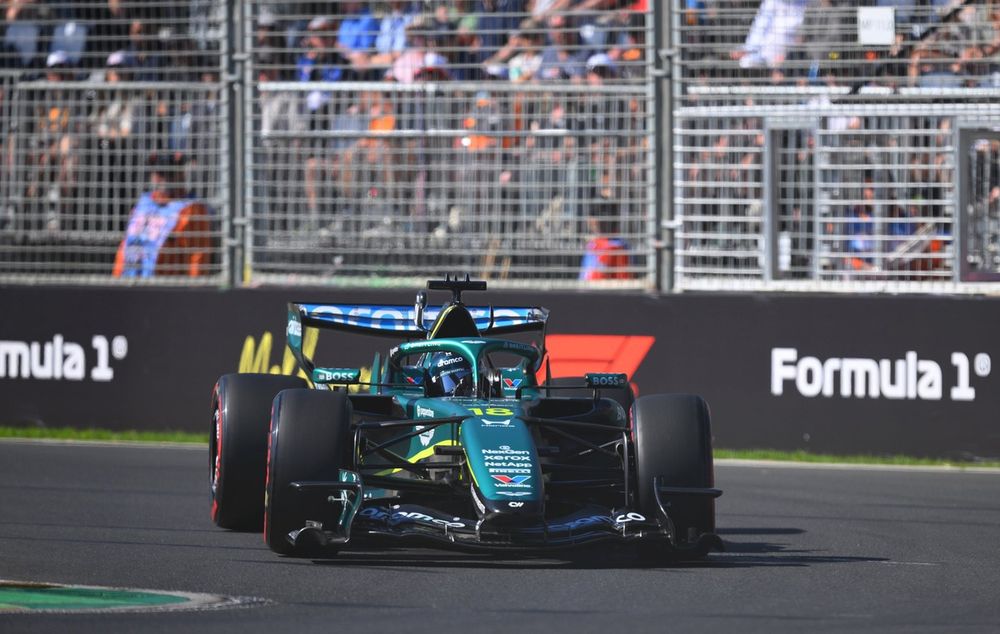
Aston Martin might struggle to even start the Australian GP as it is down to its final two Honda batteries
Photo by: Simon Galloway / LAT Images via Getty Images
We want to hear from you!
Let us know what you would like to see from us in the future.
– The Autosport.com Team