
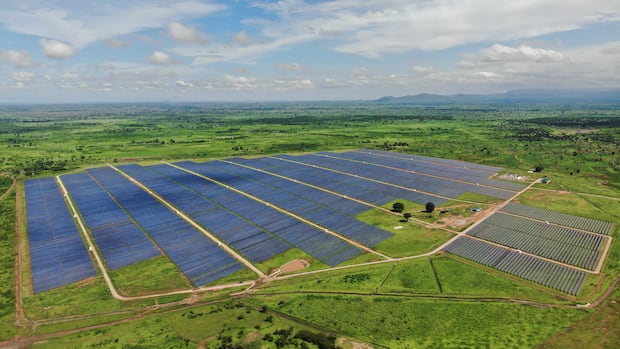
 (CBC)
(CBC)
Welcome to our weekly newsletter where we highlight environmental trends and solutions that are moving us to a more sustainable world.
Hi, it’s Emily. A little while ago, I got an email from Brett Bergmann of the Ontario solar company, Solar Panda, who wanted to talk about his company’s work in Africa. When I talked to another Ontario solar company working in Africa, I noticed a similar thread in their stories.
This week:
How Ontario’s solar boom and bust put more solar in AfricaThe Big Picture: How conservation supports the economyFish make big return after historical hydro dam removed in N.B.Ontario’s solar boom and bust put more solar in Africa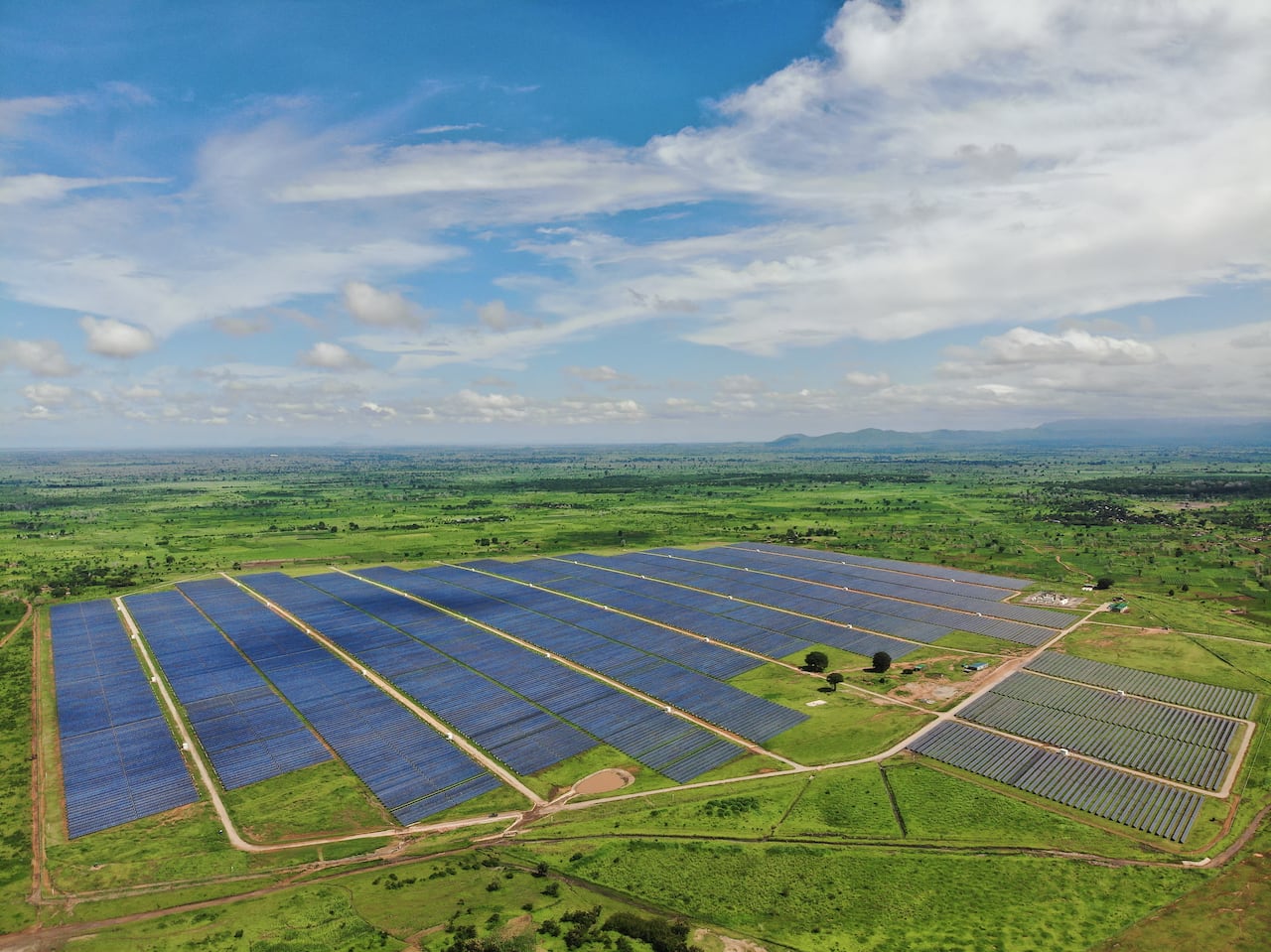 JCM Power’s Salima solar project (above) and its Golomoti solar project in Malawi together provide 10 per cent of the country’s electricity. The company was originally founded as an Ontario rooftop solar installer. (JCM Power)
It can be easy to think that the growth (or not) of clean technologies such as solar is driven by things like electricity prices or how much people care about meeting climate targets.
But recent world events show that there are a lot of other factors that can push people toward or away from a type of energy.
This week, as the U.S. and Israel attacked Iran, disrupting the 20 per cent of global oil and gas shipments that go through the Strait of Hormuz, oil prices soared. Analysts, including Thijs Van de Graaf, energy fellow at the Brussels Institute for Geopolitics, say this could make technologies like solar panels more competitive and attractive, since they reduce reliance on fossil fuels.
Renewable projects jumped sharply for similar reasons after the Russian invasion of Ukraine in 2022, E&E News by Politico reported.
And, since Venezuela stopped oil shipments to Cuba under pressure from U.S. President Donald Trump in January, Cuba has, with Chinese support, been prioritizing the construction of solar parks.
Another place that has seen record solar growth is Africa, which saw a 54 per cent increase in installations in 2025, its fastest ever.
I talked to two Canadian companies who are a part of that growth, and learned they ended up in Africa partly due to changing political and business winds in … Ontario.
Founded during Ontario’s solar boom
Today, Toronto-based Solar Panda offers rent-to-own rooftop solar and battery systems to households in Kenya, Zambia, Benin and Senegal. I recently profiled them in an article about distributed solar in Africa – small, scattered panels installed by individual homes and businesses.
JCM Power, also headquartered in Toronto, installs utility-scale solar and wind projects in Asia and Africa, including two solar facilities that now generate about 10 per cent of the grid power in Malawi.
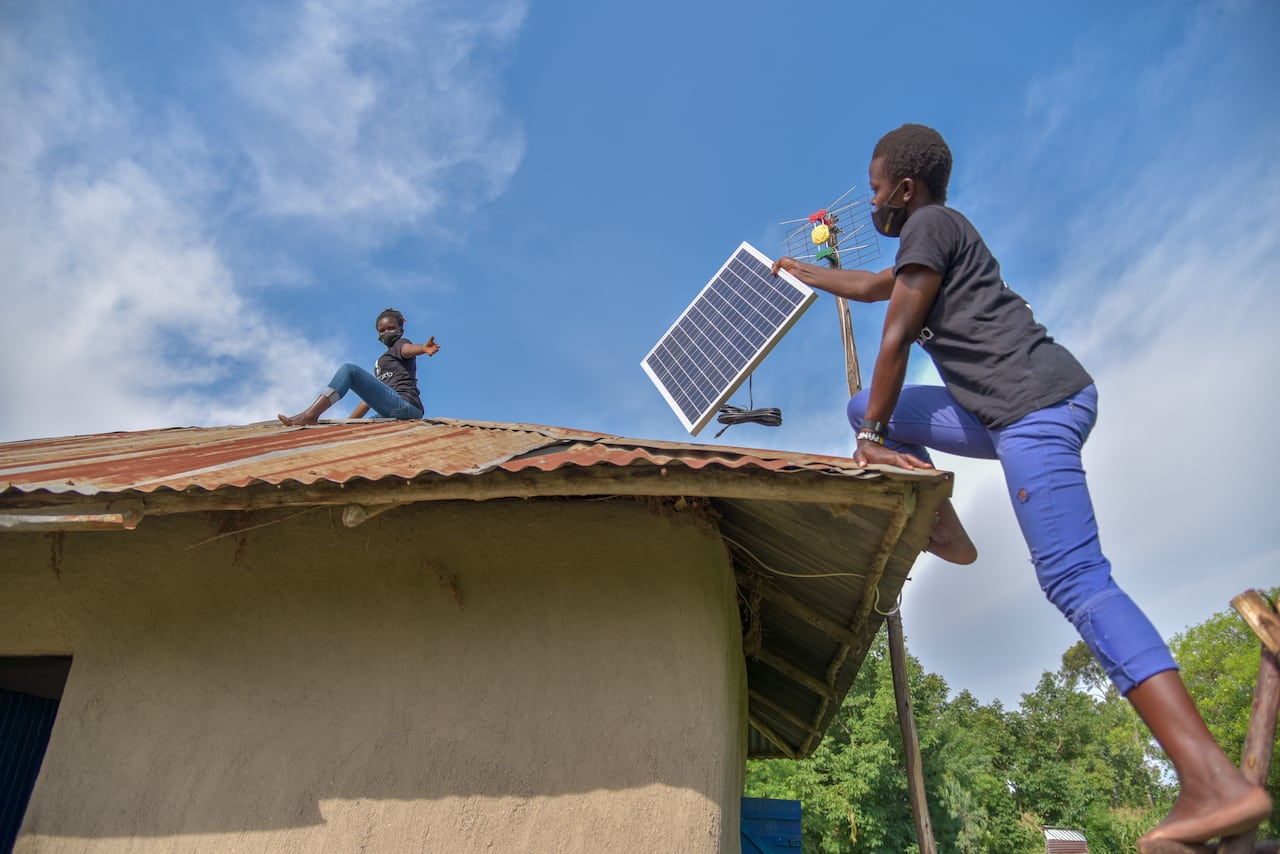 Solar Panda offers rent-to-own rooftop solar and battery systems to households in Kenya, Zambia, Benin and Senegal. (Solar Panda)
But both started out of solar companies in Ontario that launched during a regional boom for the industry.
Brett Bergmann, chief operating officer for Solar Panda, said company CEO and founder Andy Keith got into solar straight out of university, “right around the time Ontario was pushing heavily on solar” and offering generous incentives.
In 2009, Ontario’s Liberal government passed the Green Energy and Green Economy Act. It included a “feed-in-tariff” program with 20-year government contracts to buy electricity at an attractive price from producers of clean energy, including both rooftop and utility-scale solar.
To qualify, projects needed to buy 40 to 60 per cent of their goods and labour from Ontario.
Solar grew rapidly and by 2015, Ontario had close to 2000 MW or more than 98 per cent of the solar capacity in Canada.
JCM Power, started in 2009, was part of that growth. Loris Andrys, the company’s current senior business developer, who is based in Cape Town, said the company was originally focused on rooftop solar installations in Ontario.
Meanwhile, Keith founded two companies that developed utility-scale solar, gaining experience in the solar industry. He later sold them, making enough profit to start a new project.
Ontario ended its feed-in-tariff program in 2016, three years after it lost a World Trade Organization case and appeal over the policy. The WTO and its appeal body had sided with Japan and the European Union, which argued the Ontario purchasing rules violated international trade agreements.
It was no longer a good time for solar in Ontario.
Andrys said JCM “had to evolve to go abroad, find new markets.”
The company decided to target emerging markets “a little bit everywhere,” including Asia, South America and Africa. Then, in 2017, five development banks purchased the company. One of those was FinDev Canada, a federal Crown corporation with a mandate to help create economic growth through the private sector in developing countries, aligned with UN Sustainable Development Goals and the Paris Agreement.
As for Keith, after selling his Ontario companies, he was looking for a new challenge. Thinking back to what he learned while teaching English in Africa during his younger years, he decided to design home solar systems for people in rural Africa who didn’t have affordable or reliable electricity, or even any electricity at all.
Today, both companies are growing their footprint in Africa. Solar Panda recently expanded from Kenya to Zambia, Benin and Senegal. JCM is developing opportunities in Namibia, Botswana, Mozambique, Zambia, Zimbabwe, Malawi, Congo and Tanzania.
They might be homegrown examples showing that political happenings anywhere in the world can provide opportunities and motivation for solar to move to “sunnier pastures” in new areas of the globe.
– Emily Chung

Old issues of What on Earth? are here. The CBC News climate page is here.
Check out our podcast and radio show. In our newest episode: Country star Corb Lund should be rehearsing for back-to-back tours. Instead, he’s wading deeper into the debate over coal exploration and development in the Rockies. It’s been more than five years since the singer-songwriter first set aside his decades-long commitment to an apolitical public image in order to campaign against coal mining in Alberta’s eastern slopes. He has lost fans and received pushback he calls “vile” and “abusive.” But as producer Molly Segal finds out, it’s a fight the musician has no plans of giving up.
LISTEN | A fight over coal has Corb Lund ‘f-ing totally exasperated’:
What On Earth27:49A fight over coal has Corb Lund ‘f-ing totally exasperated’
What On Earth drops new podcast episodes every Wednesday and Saturday. You can find them on your favourite podcast app or on demand at CBC Listen. The radio show airs Sundays at 11 a.m., 11:30 a.m. in Newfoundland and Labrador.
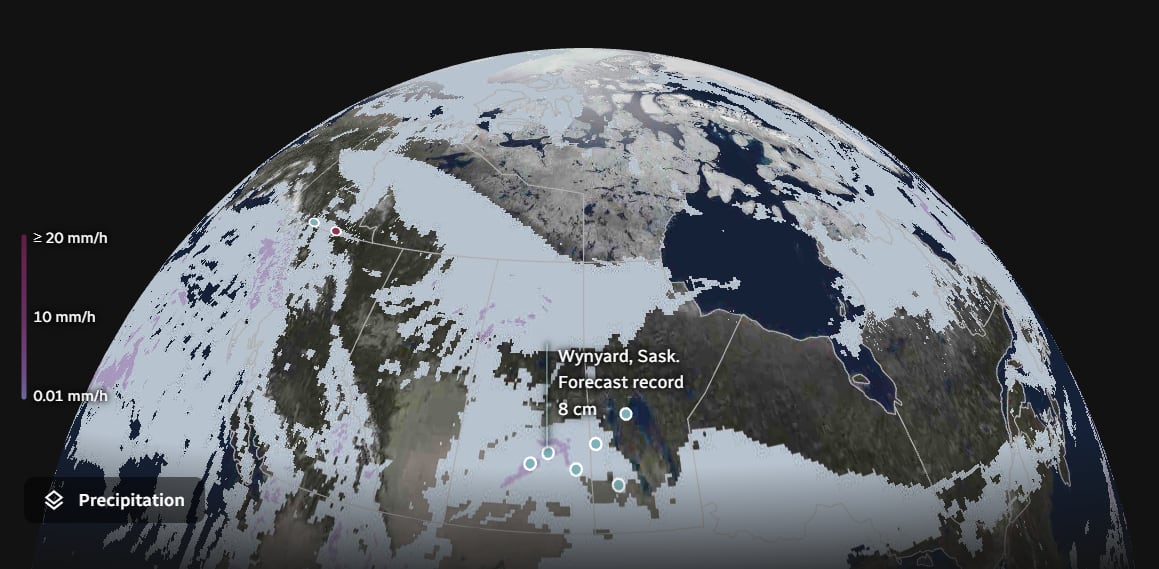
Check the CBC News Climate Dashboard for live updates on record-breaking weather and current conditions across the country. Set your location to find out how today’s temperatures compare to historical trends.
 Reader feedback
A number of readers had opinions about provincial levies being applied to EVs for road maintenance, since they don’t pay gas taxes.
Bruce Batchelor wrote: “IMO, these levies could/ arguably should be replaced by a per-kilometre-travelled fee (a.k.a. PaYD or Pay-as-You-Drive) that applies to all vehicles, and then drop the gas tax – or at least the portion that goes toward highway/road construction and maintenance. Then everyone would be on a level playing field… and this will significantly reduce society’s overall VKT (vehicle-kilometres-travelled), which will in turn reduce road maintenance costs, need for highway expansion, pollution, health costs, environmental impacts, transportation costs [variously the second or third largest household expense after housing and tied with food], anxiety, congestion, etc., etc.”
Eileen Kinley wrote: “While usage of vehicles of all sorts should indeed pay for wear and tear on the roads, people and premiers complain about ICE [internal combustion engine] vehicles having to pay for wear and tear of GHG emissions on the atmosphere and its side effects.”
Write us at whatonearth@cbc.ca (and send photos there too!)
The Big Picture: How conservation supports jobs and the economy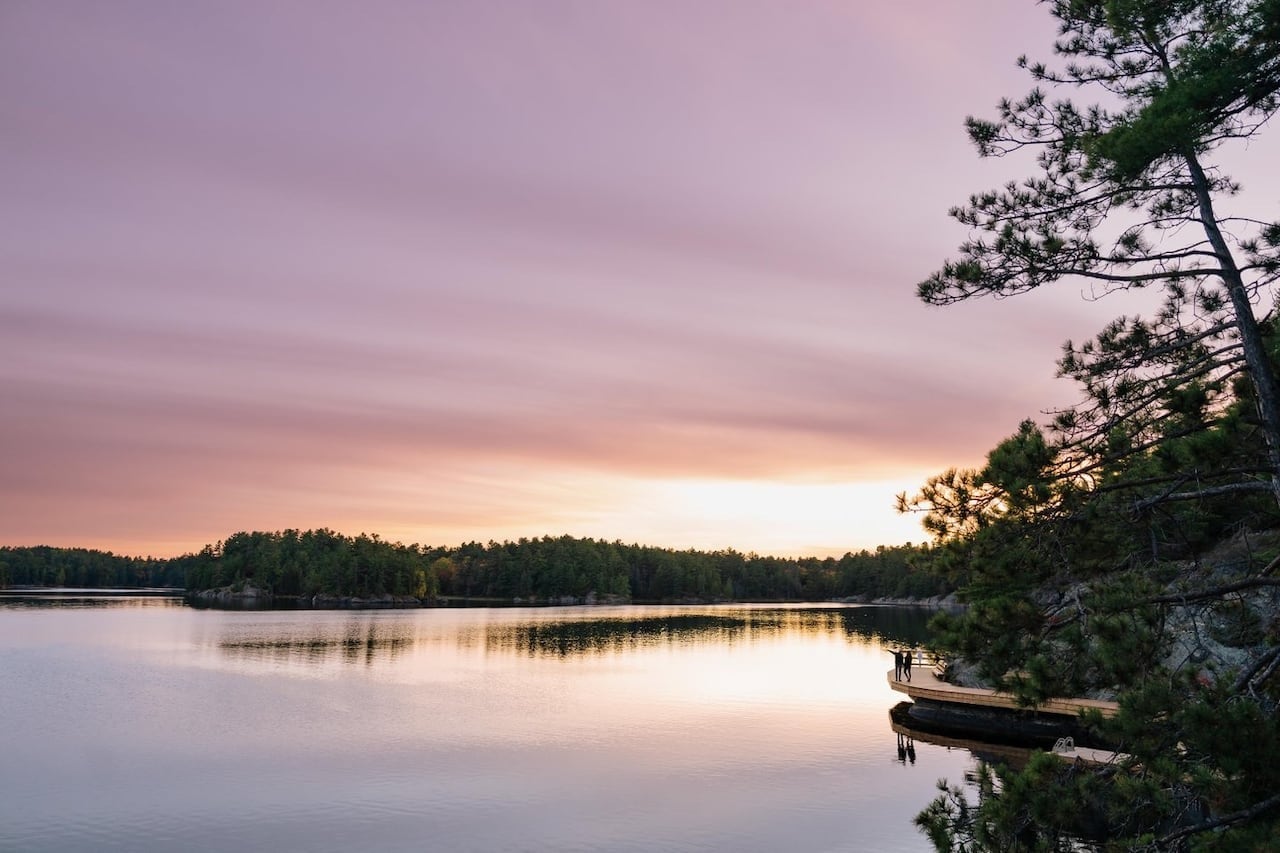 (Submitted by Luke Wassegijig/Point Grondine Park)
This is Point Grondine Park, a privately-run park on the shores of Georgian Bay, just south of Ontario’s famous Killarney Provincial Park.
Just like Killarney, Point Grondine offers camping, paddling routes, and cabins. It is operated by an Ojibwe community that wants to turn it into an eco-tourism destination complete with glamping accommodations and guided tours.
They also want to tap into some of the tourism industry in the area. Killarney and other Ontario provincial parks are notorious for being fully booked in the busy seasons. I spoke with Point Grondine’s park planner, who said that they want to attract travellers who want to escape the crowds elsewhere and try out some Indigenous-led wilderness experiences.
It’s all part of a growing industry centered around Canada’s protected and conserved spaces. A new report says these areas generate over $10 billion for Canada’s GDP every year and support 150,000 jobs in conservation, outfitting and tourism.
Reframing nature conservation as an economic opportunity — rather than a cost to the government — is important if Canada is to reach its conservation goals, experts told me. And it could lead to more beautiful places like Point Grondine, expanding opportunities for people to camp, hike — and support the economy.
– Inayat Singh
Hot and bothered: Provocative ideas from around the webFish make big return after historical hydro dam removed in N.B.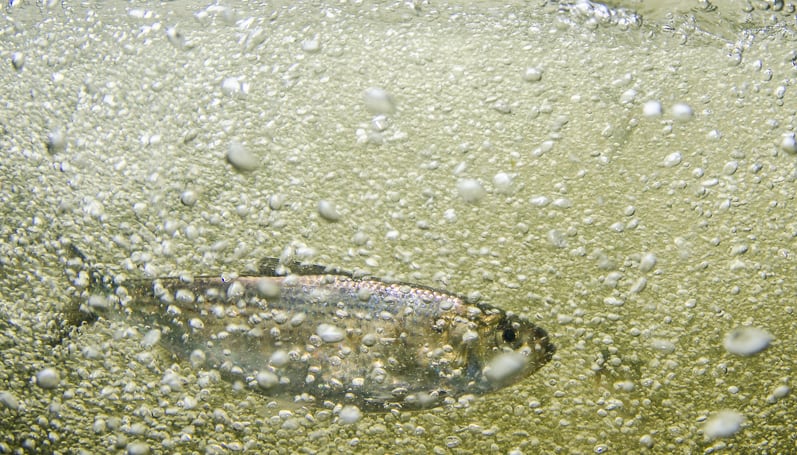 Alexa Meyer says the number of alewife fish in the river has increased since the removal of the dam. (Submitted by Sean Landsman)
Conservationists are reporting that more alewife and blueback herring are returning to the St. Croix River after the removal of a hydroelectric dam two years ago.
The St. Croix River, also known as the Skutik, flows along the southwest New Brunswick town of St. Stephen, and was once home to the Milltown Dam.
The dam was removed with the help of efforts led by conservationists.
“It feels alive again. It feels like its own entity again and it’s really beautiful,” said Alexa Meyer of the Passamaquoddy Recognition Group, an Indigenous-led group representing the interests of the Peskotomuhkati Nation.
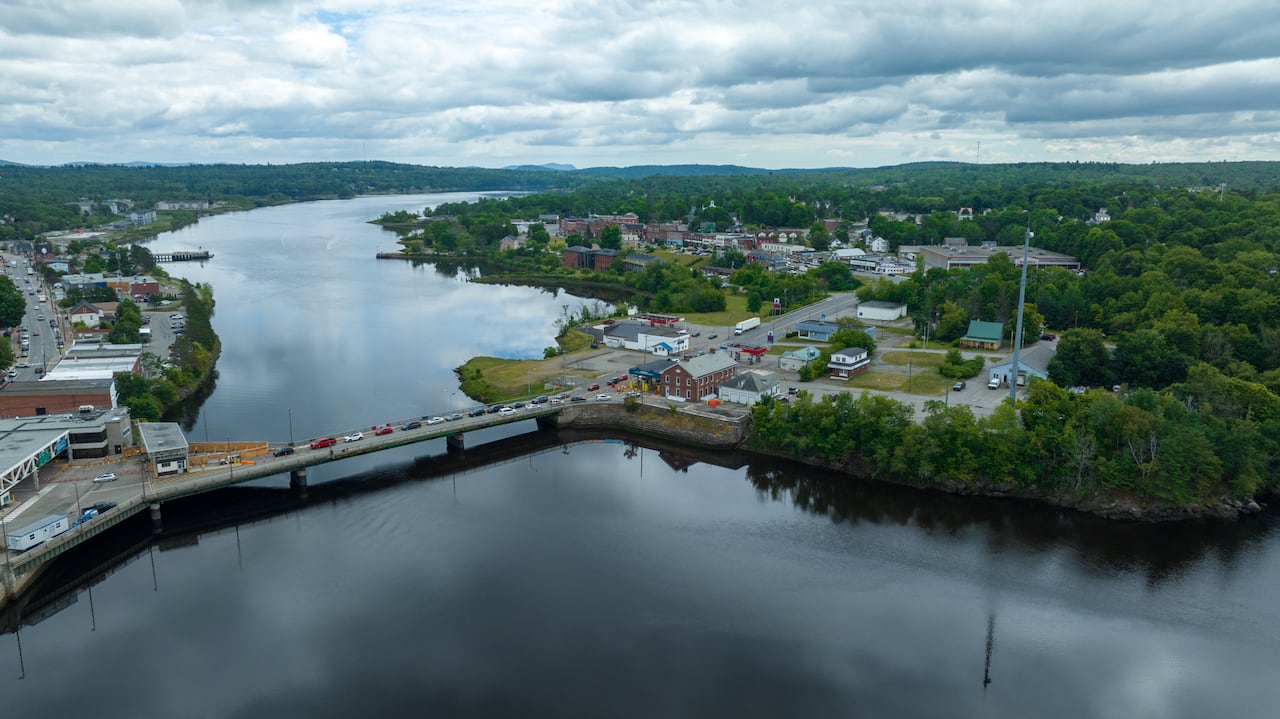 The Passamaquoddy Recognition Group says the fish population has likely reached over one million, up from 800,000 since the last time it was recorded. (Roger Cosman/CBC)
Meyer said she believes there are more than one million fish in the river, up from about 800,000 since the last time the population was recorded.
“But really the amount of fish that should be in the river are estimated between 50 to 100 million,” she said.
“Milltown Dam stood for 140-ish years but before that [the river] was really the heart of the Peskotomuhkati Nation.”
She said this is where families would come together to fish.
“For the nation, it is so special to see that dam reopened.”
Start of cultural restoration
Matt Abbott of the Conservation Council of New Brunswick has been holding discussions at the river, where people can share its history and talk about their personal connection to it.
“We realized that the damage to the fish and damage to the river also caused cultural and social damage,” Abbott said of the dam’s impact.
“As the fish were kept out of the river, as the river’s quality declined, people’s sense of connection to the river also declined,” he said.
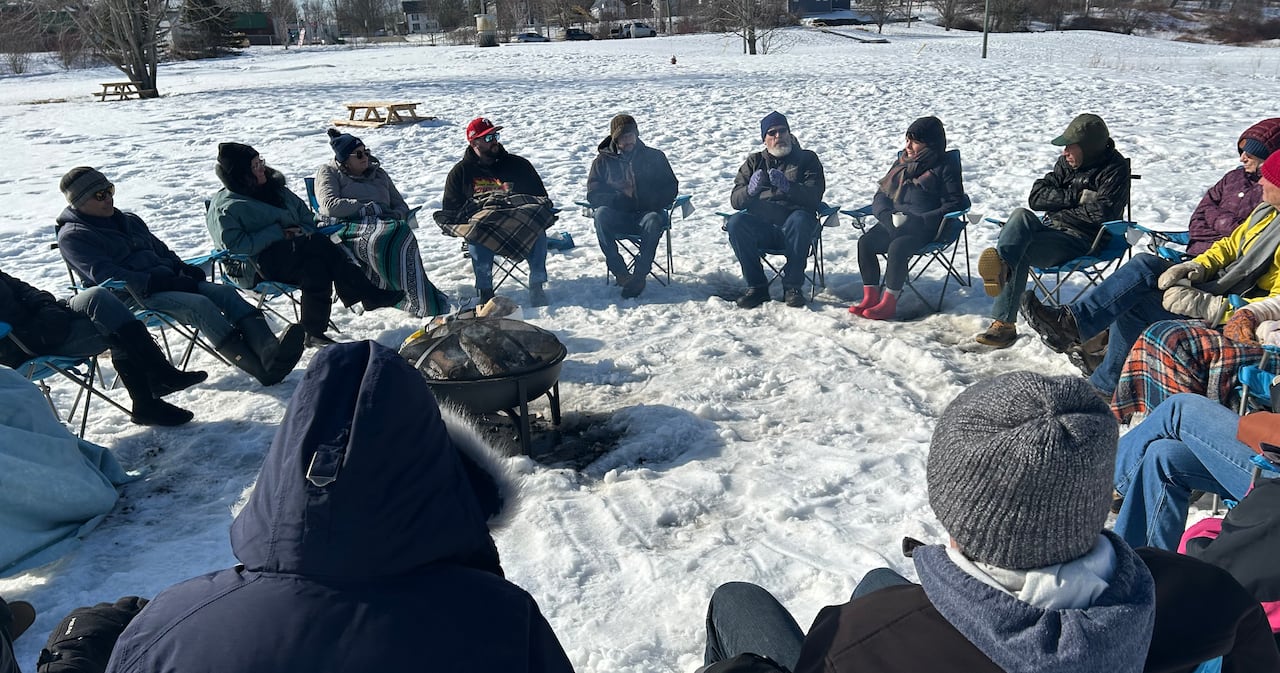 Matt Abbott of the Conservation Council of New Brunswick has been hosting storytelling sessions at the river also known as the Skutik to advance cultural restoration. (Ian Curran/CBC)
Peter Brown, a St. Stephen resident who attended a storytelling session on Saturday, shared his memories of paddling on the river in the summer.
Brown said he was always keen to know what the river would look like without the dam.
But Abbott said some people were also concerned about the dam’s removal because it was one of the first power-generating dams in Canada.
“We heard from people there was a concern that there was a loss of heritage,” Abbott said.
He said the storytelling sessions can help show people that they still belong, and there is still a sense of connection without the dam.
“My hope is that people continue to love this river and continue to fight for it.”
— Hope Edmond
Thanks for reading. If you have questions, criticisms or story tips, please send them to whatonearth@cbc.ca.
What on Earth? comes straight to your inbox every Thursday.
Editors: Emily Chung and Hannah Hoag | Logo design: Sködt McNalty