
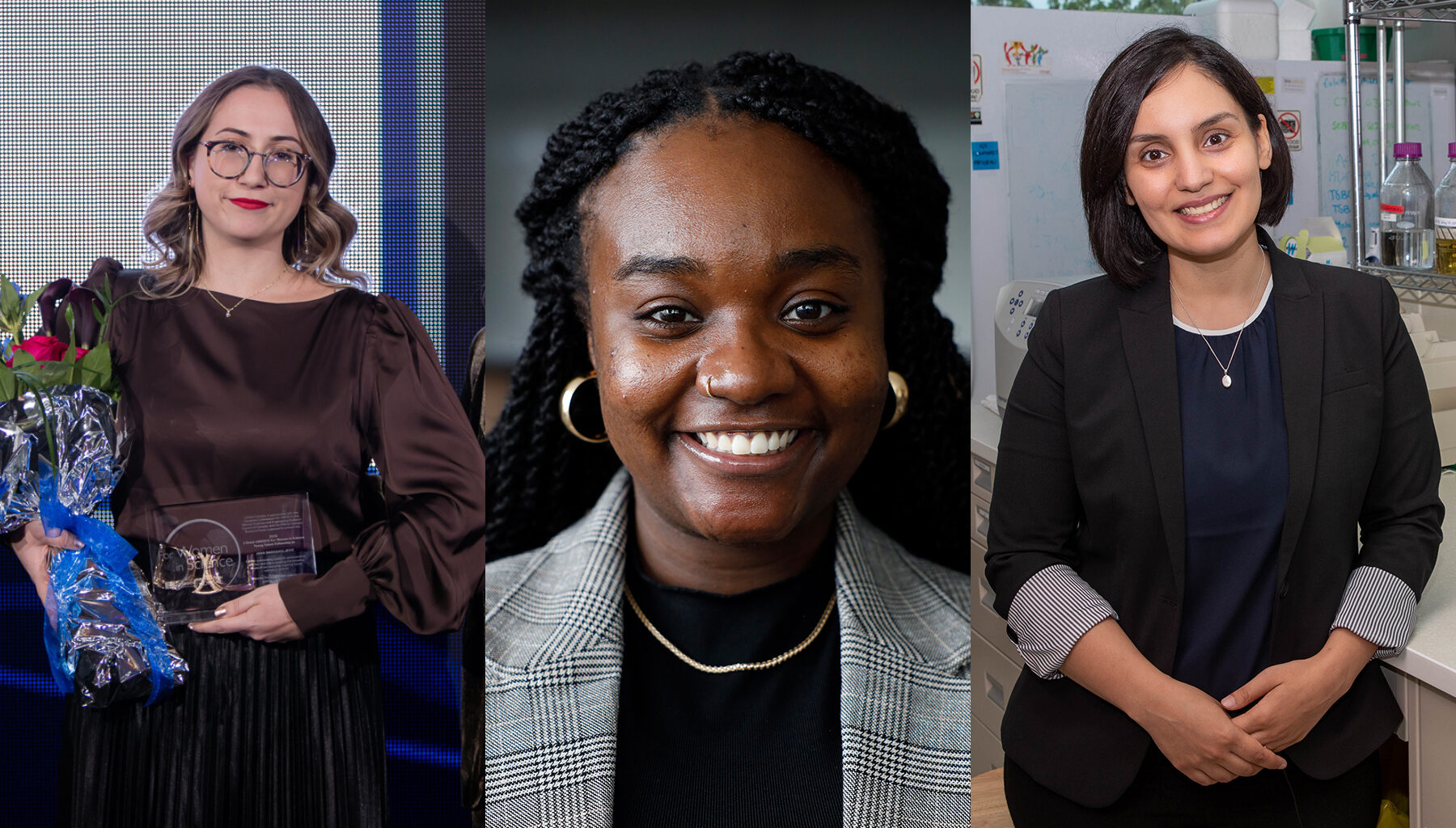
To mark International Women’s Day, McMaster is showcasing women and gender-diverse scholars who are leading research that accelerates gender equity.
From tackling systemic barriers in health care to developing real-world solutions to everyday needs, here are some of the ways Mac researchers are driving change around the world.
 A community health worker is typically a trusted member of the local community who understands the challenges of those who are sick or socially excluded. (Unsplash+ /Getty Images)
Analysis: For women who live on the margins, health care is often out of reach. Here’s how we can build a bridge to access
It’s estimated that 6.5 million Canadians do not have a family doctor or nurse practitioner they see regularly. For women who live on the margins — those experiencing poverty, racism, trauma, care-giving stress or unstable housing — the barriers to care are even greater.
Experts say the current system isn’t designed to address these barriers and are proposing an innovative model to bridge the gap between primary health care and those who experience the greatest obstacles to care.
 The digital harm caused by deepfake images is deeply tied to misogyny and entitlement, PhD candidate Alexis-Carlota Cochrane explains.
AI-generated nude deepfakes are part of a larger system of gender-based digital harms, expert warns
The European Union and U.K. regulators are investigating the role of Grok, the AI chatbot built into Elon Musk’s X platform, in producing nonconsensual sexualized deepfakes, following new analysis showing that Grok generated an estimated three million sexualized images of women and children in just 11 days.
These developments highlight a deeper issue, says McMaster researcher Alexis-Carlota Cochrane: AI-generated nude deepfakes should be understood as part of a long-standing continuum of gender-based violence.
 Jana Radosavljevic, centre, a third-year PhD student in the Department of Psychiatry and Behavioural Neurosciences, is one of five exceptional Canadians to receive the L’Oréal-UNESCO For Women in Science 2025 Award.
PhD candidate Jana Radosavljevic is on a mission to make mental health research inclusive
Jana Radosavljevic, third-year PhD candidate in Department of Psychiatry and Behavioural Neurosciences at McMaster
Early in Jana Radosavljevic’s neuroscience journey, she made an observation that would change the course of her research and career: Most experiments relied on male subjects, leaving women and gender-diverse individuals underrepresented in research.
This observation provided Radosavljevic, now a third-year PhD candidate in McMaster’s Department of Psychiatry and Behavioural Neurosciences, with a mission to change how research is conducted.
 New research from McMaster University may help explain why women, racialized individuals and immigrant doctors often earn less than their peers.
Researchers discover why doctors who are women, racialized or immigrants face a pay gap
A study by McMaster University researchers reveals a chain of influence in primary care: How family physicians perceive expectations from their patients — often shaped by doctor and patient’s race, gender or cultural identity — can affect how they deliver care, which in turn impacts their earnings.
The research, published in the Canadian Medical Association Journal, may help explain why women, racialized individuals and immigrant doctors often earn less than their peers.

New study finds female family doctors spend more time caring for patients, yet earn less
Boris Kralj, Adjunct Assistant Professor at McMaster’s Department of Economics and the Centre for Health Economics and Policy Analysis (CHEPA)
A new study shows female family physicians spend more time with their patients than their male colleagues, confirming what physicians have long reported anecdotally.
The findings, published in the journal Canadian Family Physician, support ongoing efforts to understand and address gender pay inequities in medicine.
 Ebonee Lennord says she hopes her scoping review of maternal and neonatal health disparities in Canada’s Black communities will highlight the need for better data that ensures equitable treatment for marginalized populations in health care.
Medical student calls for better data to address racial disparities in maternal and baby care
McMaster medical student Ebonee Lennord knows Black patients are not getting equitable treatment during pregnancy and childbirth, and she’s doing her part to change that.
She was inspired to lead a scoping review of maternal and neonatal health disparities in Canada’s Black communities, which found that there is a severe lack of race-based data for maternal and neonatal health outcomes. Even with the limited information, the picture was clear: Black individuals were found to have higher rates of preeclampsia, gestational diabetes, and inadequate gestational weight gain.
 A McMaster-led study shows that U.S. infants whose mothers were born in the U.S. have a higher death rate in the first year of life than those whose mothers were born elsewhere. (Stock image)
Babies of U.S.-born mothers face higher risk of death in first year, study finds
Where a mother was born matters for her baby’s chances of surviving their first year of life, a new study led by McMaster University shows. The findings reveal a clear and striking disparity: babies born to U.S.-born mothers die at higher rates than those born to foreign-born mothers.
The research, published in JAMA Network Open, shows that the difference in risk was highest when a baby was born full-term among those who were Black, Hispanic, white and multiracial.
 Left-right: Shaghayegh Moghimi, Lubna Najm, Leisa Hirtz, Tohid Didar and Fereshteh Bayat.
Researchers develop smarter menstrual product with potential for wearable health monitoring
Researchers at McMaster University have developed a new menstrual health product designed to complement and enhance an existing menstrual cup that is safer, easier to use and more environmentally sustainable than current options.
The new component is a flushable tablet made from highly absorbent seaweed-based material, designed to hold menstrual blood and minimize spills during removal – a common barrier to wider adoption of menstrual cups.
The innovation is part of a broader initiative at McMaster to develop wearable technologies that proactively monitor women’s health.
 The results of the study come at a time when Canada considers the future of a national pharmacare plan that would include universal free contraception. (Adobe stock image)
Free, confidential access to contraception boosts use among Ontario youth: Study
Young people who are offered confidential and free access to prescription contraception methods are significantly more likely to use them, according to a McMaster study.
The findings, published in JAMA Pediatrics, offer real-world evidence that providing confidential, free access to contraception increases use of prescription contraception, especially long-acting reversible contraception (like IUDs).
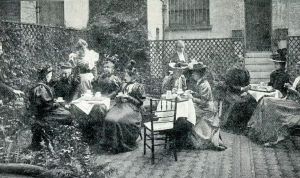 Afternoon tea at the Pioneer Club in London, in an image from a Victorian magazine article, ‘The Ladies’ Clubs of London.’ (Mary Evans Picture Library), Author provided (no reuse)
Analysis: Influencers of a bygone era: How late Victorian women artists mastered the art of networking
Long before the dawn of social media, women artists in late Victorian and Edwardian London mastered the art of building their own social networks.
Although they weren’t the first in history to do so, PhD candidate Triveni Srikaran writes that they crafted a revolutionary style of social networking – not for the sake of fame, but as a means to break down systemic barriers and challenge the gender norms that dominated the English art world.