
Both communities are among 21 First Nations set to receive millions of dollars because of a court ruling that found a $510M lawyers’ bill for the Robinson Huron Treaty annuities claim was unreasonable
Local First Nations are pumping the brakes on receiving millions of dollars in returned legal fees from a high-profile treaty annuities case until they obtain legal advice.
Both Garden River First Nation and Batchewana First Nation have informed members that plans to receive the funds are currently on hold, while they await independent legal advice on documents the Robinson Huron Treaty Litigation Fund have asked them to sign in order to receive them.
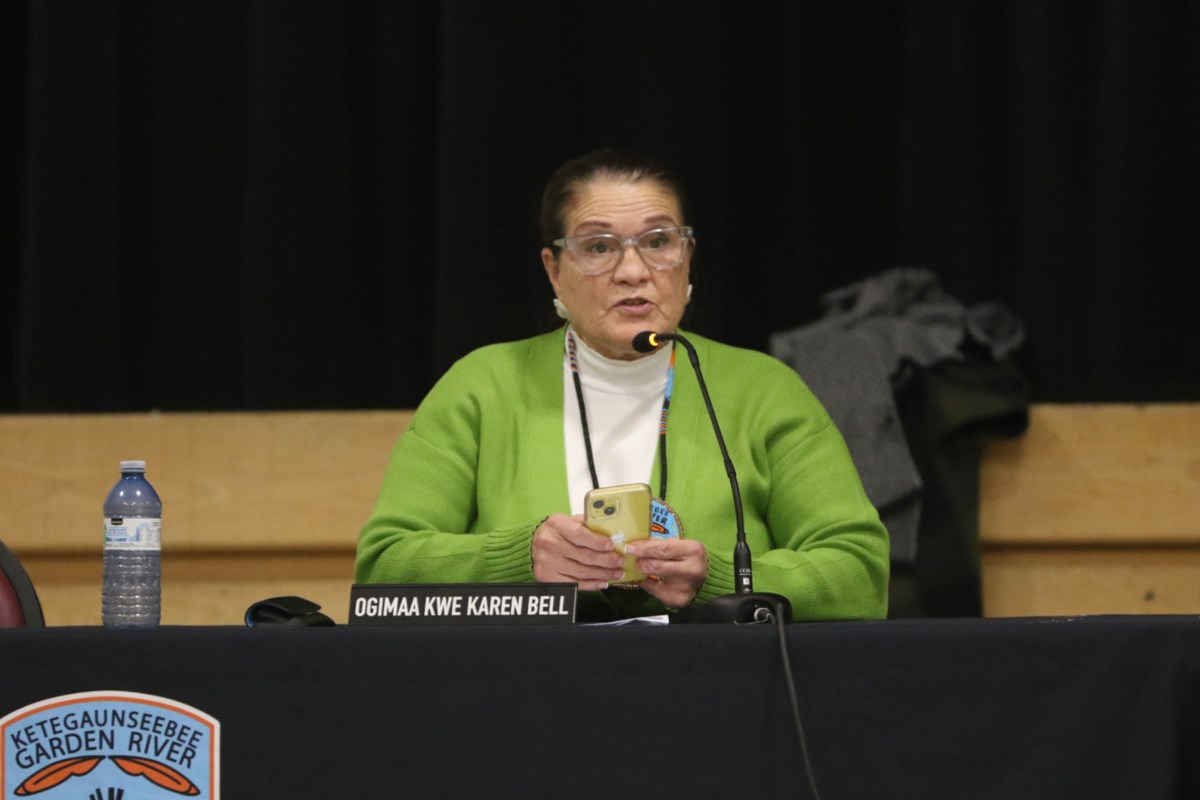
“Although the money’s not coming as quick as people thought it would, we’re making sure that we’re doing the best we can for our members to prevent liability,” Garden River First Nation Chief Karen Bell told SooToday during a recent interview.
The legal fees are being returned as a result of an October 2025 court ruling, where Ontario Superior Court Justice Fred Myers found that a $510-million lawyers’ bill for work on the Robinson Huron Treaty annuities claim was unreasonable — then ordered it to be scaled back to $23 million.
The annuities claim resulted in a $10-billion settlement that was struck in 2023, with a five-per-cent contingency fee going to the lawyers who argued the case on behalf of the Robinson Huron Litigation Fund, a trust representing 21 First Nations and roughly 40,000 treaty beneficiaries.
The litigation fund was represented in court by Orillia-based law firm Nahwegahbow Corbiere Genoodmagejig Barristers and Solicitors.
At first, the lawyers received a total of $510 million in legal fees for their work. But in the days after Garden River First Nation and Atikameksheng Anishnawbek announced they were challenging those fees in court, the lawyers agreed to set aside $255 million — or half — of the lawyers’ bill in order to support collective Anishinbek causes, including future litigation.
In his October 2025 decision, Justice Myers ordered the remaining $232 million in legal fees to be held in trust pending an appeal. The judge also awarded costs to Garden River and Atikameksheng, so they wouldn’t have to pay out-of-pocket legal expenses given that the decision was for the benefit of all communities.
In November 2025, however, the lawyers confirmed they would appeal that decision.
While the $232 million in returned legal fees are ready to be disbursed to the First Nations — plus $16.2 million in interest, minus holdbacks for collective funds, such as a five per-cent collective set-aside and a one per-cent living annuitant fund — both Garden River and Batchewana are hesitant to sign documents provided by Robinson Huron Treaty Litigation Fund.
Bell said Garden River will receive $16.21 million, but leadership there is wary of the language being used in a limited release form that RHTLF has issued to all 21 First Nations.
The provided release form states that First Nations will release RHTLF from all claims, Bell said, including the right to seek a passing of the accounts, which is a formal court process where financial records are submitted for approval by the court.
“In the release it says Garden River agrees and acknowledges that the RHTLF has been properly administered between the date of its inception and the date of the legal fee payment,” Bell added.
“I didn’t like that wording.”
Bell said the documentation also states that Garden River acknowledges it has had an opportunity to seek and obtain independent legal advice.
“It was a pretty short turnaround that they wanted this BCR (band council resolution) signed by chief and council,” Bell contended.
“I didn’t like the fact that they were requiring Garden River to sign a release absolving the RHTLF of liability as a precondition to receiving the return funds, when to the best of my understanding was that we were to receive that those funds free and clear — not with a caveat of some sort of absolving the RHTLF of liability and holding it back.”
Bell told SooToday she had a discussion with Batchewana First Nation Chief Mark McCoy, who also indicated that his First Nation wasn’t comfortable with signing the documentation required by the RHTLF to release the returned legal fees to First Nations.
Batchewana is set to receive more than $15.97 million. According to a document provided by the First Nation, chief and council passed a motion on Feb. 4 to approve a 100 per-cent payout of that amount to membership.
Just two weeks later, leadership passed a band council resolution, directing the CEO to vet and select a legal firm to provide independent legal advice on both the release form and the compensation disbursement agreement from the RHTLF, which is an agreement among the First Nations governing how the funds are disbursed.
Back in Garden River, chief and council are preparing to make a decision on whether or not they will sign the documentation issued by the RHTLF.
“They changed a little bit of the wording, and now it keeps Garden River’s right to challenge whether the legal fees are fair and reasonable, and now only applies to how the amount of your payment is calculated, and how the RHTLF administered the [compensation disbursement agreement],” Bell said.
The next council meeting is scheduled for March 9.
According to Bell, a decision has yet to be made by council with respect to how the money will be used.
“We had some superficial discussion — only internally at the council table — but we have not made any decisions,” the chief said.
Bell added that one of the reasons Garden River hasn’t made a decision on what it’s going to do with the funds is that its membership has ballooned from 3,300 members to 3,700 since the $10-billion settlement was announced.
“These people, based on our interim trust agreement, may have the right to be entitled to this money,” said Bell. “So we have to factor in 400 more people.”
The remaining $255 million that was set aside by the RHTLF legal team for collective purposes of the Anishinabek is currently locked into GICs, which are expected to mature by this spring. It’s expected those funds will then be made available to be distributed to all 21 First Nations as proceeds from the settlement.
But Bell doesn’t want to go through the same process with RHTLF with respect to the $232 million in returned legal fees.
“I can’t see them not doing it a second time,” Bell quipped.
Garden River’s legal counsel is hopeful that the lawyers’ appeal of the Superior Court decision over the $510 million lawyers’ bill will be heard later this year.