
ROCHESTER — One might assume that the greatest risk of death for firefighters happens on the scene of a fire: injuries, heat, smoke inhalation.
Rochester Fire Department assistant chief Caleb Feine says that’s necessarily not the case.
“Firefighters aren’t dying from the things that we typically think they’re dying from,” Feine said.
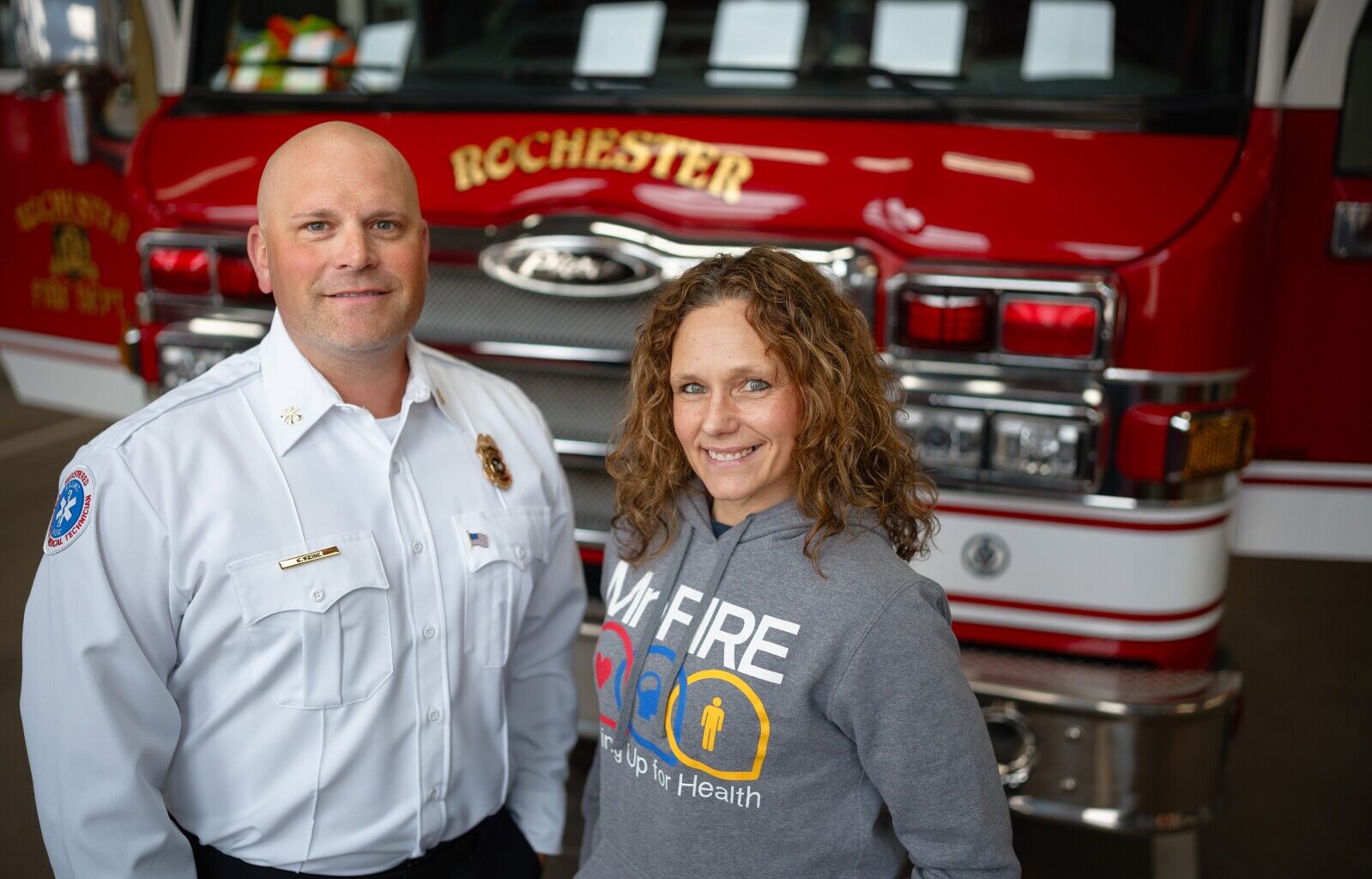
Since 2019, Feine has been involved with the Minnesota Firefighter Initiative, or MnFIRE, to raise awareness for the big three health risks his peers face: cardiovascular disease, suicide and cancer.
Among those three areas, some MnFIRE advocates emphasize mental health, in particular, due to the stigma around it.
“We can lift the weights, we can run, we can do the cardio,” said Mandee Marx, an RFD firefighter. “With cancer, we can go get tested if something’s not right. But with mental health … that’s a different killer.”
Both Feine and Marx are MnFIRE peer supporters. When a firefighter in need reaches out to MnFIRE, they get matched with a trained peer supporter who can listen to them and direct them to different resources.
According to MnFIRE’s
since its inception in 2016, the program has fielded more than 1,000 peer support calls.
It can be helpful, Marx said, to talk with someone who knows the job but isn’t your direct coworker.
“They can open up, and there’s no recourse of … ‘They’re going to go tell somebody else in my department,'” Marx said.
The tough-it-out attitude can persist on the physical health side, too, bringing importance to the cancer risk and heart health sides of MnFIRE.
“Back in the day, the dirtier your gear was, the tougher you were,” Marx said. “That’s not the case anymore.”
Feine said part of MnFIRE’s mission is educating firefighters about how changes in the field — such as the shift in home construction from natural materials to plastics, which let off different chemicals when burned — affect health risks.
“The game has changed,” Feine said, “and if you’re not, as a firefighter, keeping up with what those dangers are, it’s going to hurt you at some point. You need to know how to protect yourself.”
Feine is also an instructor for MnFIRE, which offers free training courses on sleep, heart health, cancer, emotional wellness and more for full-time and volunteer departments.
And some proactive health measures are already built in to departments’ protocols, such as washing gear regularly and wearing masks at fire scenes, even if the flames are out, to limit exposure to toxins in the air.
“While we talk about the big three as individuals, it’s the total body approach to health,” Feine said. “Understanding that your body is this well-oiled machine.”
Other MnFIRE resources include critical illness program that can cover some health care costs and free mental health counseling sessions, funded through
“Frankly, we see things and do things and smell things you’re not supposed to,” Feine said. “But this is the career we’ve chosen — we love it, it’s the best career in the world. But, what’s a safer way to do it?”