
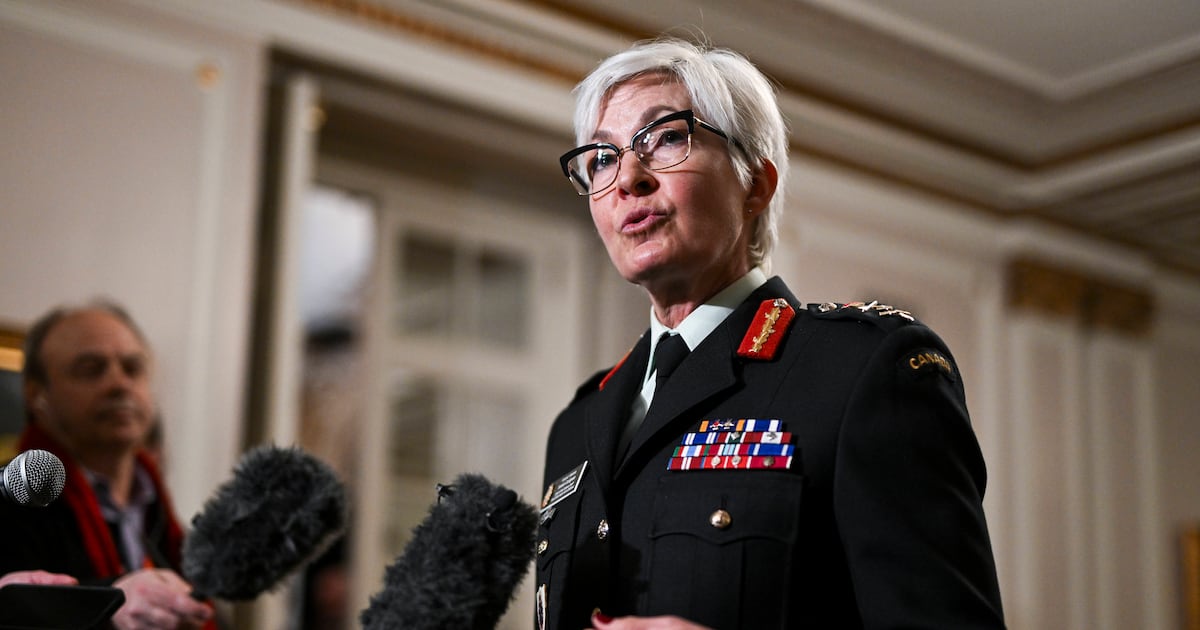
Canada’s Chief of the Defence Staff Gen. Jennie Carignan said Thursday that Canada may provide defence support to its Gulf partners, echoing Prime Minister Mark Carney’s previous comments on the Middle East conflict.
But one expert says if Canada and its allies become involved, the war could go global.
“If Canada gets in, this is likely to widen, because (Iran) has made it quite clear their targeting strategy is to punish (Gulf) States for supporting the United States,” Robert Pape, a political science professor at the University of Chicago who specializes in security affairs, told CTV Your Morning on Friday.
READ MORE: Canada’s military may help defend Gulf states in Iran conflict, defence chief says
READ MORE: Carney says Canadian military participation in Middle East war can’t be ruled out
READ MORE: Canada not engaged in Middle East conflict, PM Carney says
‘Trap of escalation’
Pape explains when Gulf States have attempted to topple regimes in the past, the strategy has never worked.
“You either get a slightly reconfigured regime or you get a much more nationalist, hard-line regime that lashes back aggressively,” he explained.
Pape says Iran has already lashed back aggressively following the killing of Ayatollah Ali Khamenei, the former supreme leader of Iran.
The country’s retaliatory strikes are impacting Israel and the U.S. bases, civilians and infrastructures in Gulf states, as well as halting tourism across the Middle East and affecting the economy, Pape added.
“They’re trying to hold on for their (regime’s) survival. They really don’t have much reason to limit and restrain themselves,” Pape said.
“This is the dilemma we’re in. It’s the trap of escalation, and it’s up to Canada to decide, is it worth the cost to its people to get itself into this war.”
Strategy needed
Pape says if this war goes beyond the current impacted regions, terrorism could be a risk, including to civilian airliners.
However, while countries may “double down” when hit with terrorism, Pape says this strategy only considers the short term impacts and not the long term ones.
“The problem here is that the soft underbellies of democracies is politics, and staying in for the long haul,” he said.
“All of our opponents have known this since Vietnam, and that’s why we lose so many of these conflicts. We don’t take politics seriously.”
As the war in Iran enters its eighth day, Pape says the U.S. could run out of targets and ammunition in around three to four weeks. He says this begs a larger question of what comes next in regard to the country’s regime and its uranium.
Leaders must think about a plan, rather than doubling down, Pape said.
“That’s how democracies get themselves in these sticky wickets, because the leaders don’t want to look weak in front of their public and that’s how you have forever wars that don’t play itself out,” he said.
“History is not kind to not having a true strategy.”