

Overdoses have continued to trend downward trend in Ottawa since peaking in 2023, but there are deadly fluctuations in the trend, according to data from Ottawa Public Health and the Ottawa Police Service.
Police responded to 45 per cent fewer overdose calls in 2025 than a year earlier: 810 calls compared with 1,480 in 2024. That continued a downward year-over-year trend that began in 2023.
But that trend has turned around for the first few months of 2026.
In February, police responded to 51 overdose calls — a jump of 82 per cent compared to the same month a year earlier. There had been a similar year-to-year jump in January. As of the end of February, Ottawa police had responded to 93 calls involving overdoses in 2026.
Ottawa Police Service spokesperson Julie Kavanagh said police calls did not represent a complete picture of overdoses in the city. Ottawa Fire Services and the Ottawa Paramedic Service are also dispatched to medical calls and often take the lead in medical care.
“As a result, fluctuations in police call volumes do not necessarily reflect the total number of overdoses occurring in the community,” Kavanagh said.
“Both the availability and the toxicity of the illicit drug supply play key roles in overdose trends. Increased availability or a more toxic supply can usually lead to more emergency calls, while reduced availability or lower toxicity can result in fewer calls. These shifts can happen quickly and may contribute as to why 2025 saw lower call volumes overall while early 2026 appears to show an increase.”
Overdose-related emergency department visits in Ottawa also decreased in 2025, although significant fluctuations were related to the drug supply and other factors, according to Ottawa Public Health data.
In 2025, 607 people visited Ottawa emergency departments for overdose-related care compared to 941 people in 2024, the OPH data showed, but there was a dramatic increase in emergency room visits between May and September 2025.
Data on emergency room visits is not yet available for 2026, but Ottawa Public Health issued a drug alert on Feb. 20 warning about a significant increase in overdoses linked to suspected orange fentanyl. According to the U.S. Drug Enforcement Agency, rainbow-coloured fentanyl appeared to be a trend in which the drug was brightly coloured to look like candy in order to attract children and young people.
Benjamin Leikin, manager of the community health and wellness branch at Ottawa Public Health, said the majority of overdoses in the city between Feb. 16 and Feb. 20 required emergency medical services responses as well as “substantial and sustained” resuscitation efforts. People became unresponsive and several doses of naloxone were required to improve their condition.
OPH continues to monitor the situation.
Leikin said changes in emergency visits for opioid overdoses were influenced by several factors, including fluctuations in the toxic drug supply, access to harm reduction tools such as naloxone and behaviour changes.
“Overdose numbers may be lower than their peak, but people are still being harmed by overdoses every day,” he said. “The toxic drug supply remains unpredictable and deadly, underscoring the need for continued investments in community based outreach programs, safer community spaces, permanent supportive housing, and evidence-based substance use health and mental health care are required.”
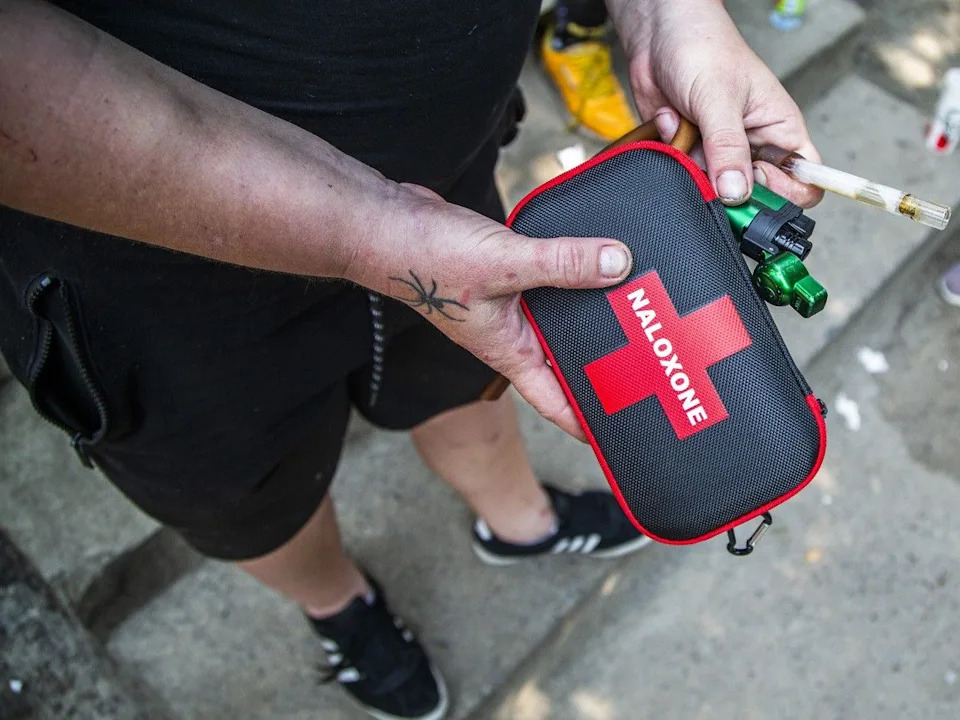
A 2024 file photo of an Ottawa advanced care paramedic displaying a naloxone kit.
Ottawa has lost two of its four supervised drug consumption sites in the past year, including the largest one located at the Somerset West Community Health Centre. The Ontario government ordered that site closed because of its proximity to schools and daycares. Somerset West is now part of a treatment-focused HART Hub being promoted and funded by the province as longer-term solutions to the toxic drug crisis. The province also ended funding for a smaller site operated by Ottawa Public Health in the ByWard Market.
Advocates say Ottawa needs safe consumption areas as well as better access to treatment, supported housing and outreach services.
There have been anecdotal reports of more open drug use in public areas in recent months.
Ottawa Public Health monitors overdoses through Ottawa’s Overdose Overview dashboard and collaboration with the city’s overdose prevention and response taskforce.
The health unit says emergency department visits for drug overdoses may underestimate the true number of overdoses in the city because not everyone seeks help at hospital and not all overdoses are confirmed as opioid-related.
Related
Our website is your destination for up-to-the-minute news, so make sure to bookmark our homepage and sign up for our newsletters so we can keep you informed.