
LISTEN | Clint’s Kitchen brings Olds together one meal at a time:
Daybreak Alberta6:26Clint’s Kitchen brings Olds together one meal at a time
Amir Said visits this pay-what-you-can kitchen that does a lot more than serve meals for the people of Olds.
It’s -25 C outside, but people are warmer than ever within St. Paul’s Lutheran Church.
That’s where Clint’s Kitchen has been serving free suppers in the town of Olds, Alta., every Wednesday evening for the last two years.
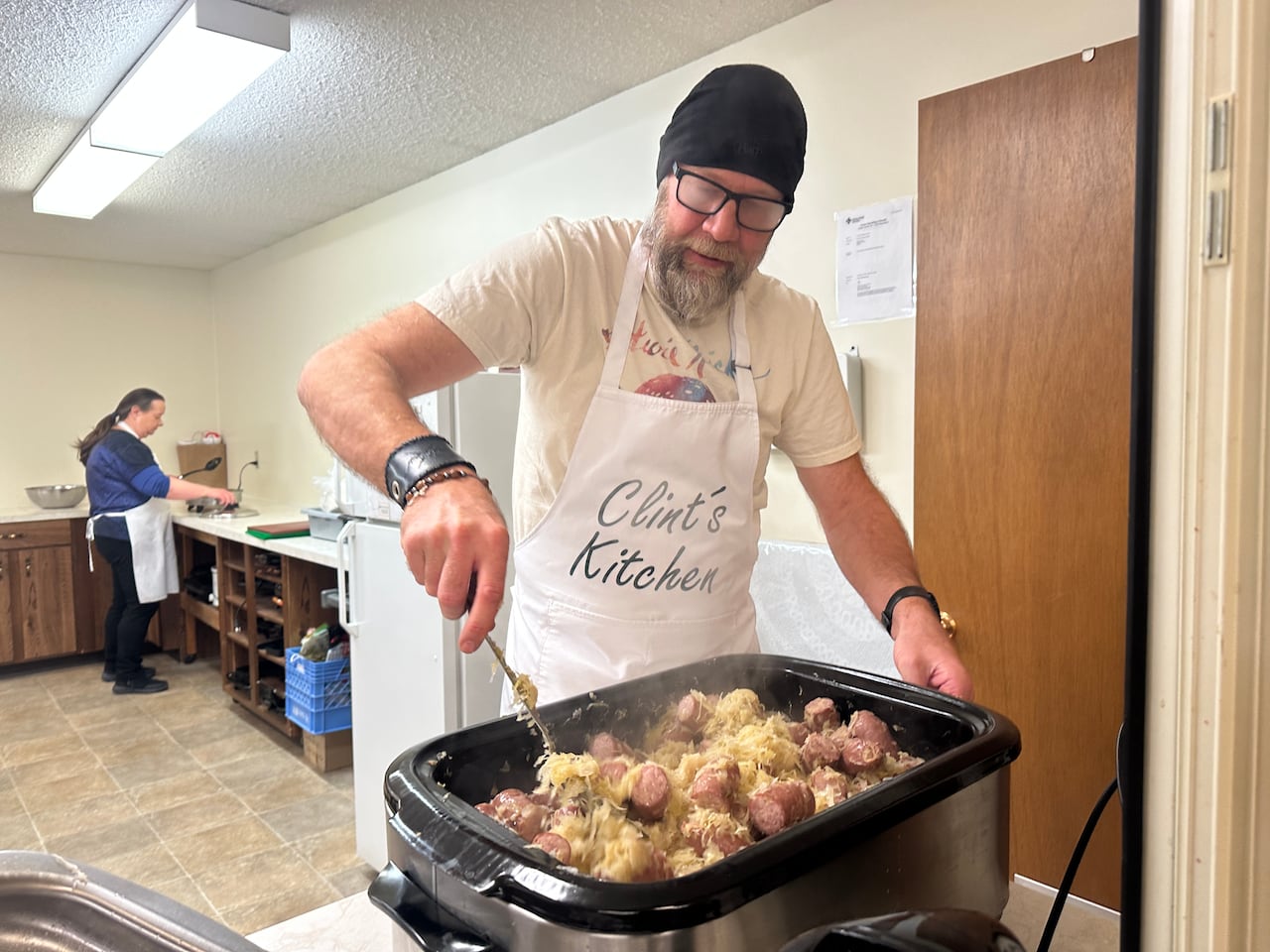
This February, the program held its second anniversary supper with hearty servings of sausage with sauerkraut, perogies, and lazy cabbage rolls, topped off with cake for dessert.
Over the last two years, Clint’s Kitchen has become a community staple for Olds, a town of less than 10,000 people about 95 kilometres north of Calgary.
It’s the brainchild of St. Paul’s Lutheran Church pastor Olav Traa and longtime central Alberta resident Clint Jackson, known to many as the artist behind the iconic carolling Christmas truck of Olds.
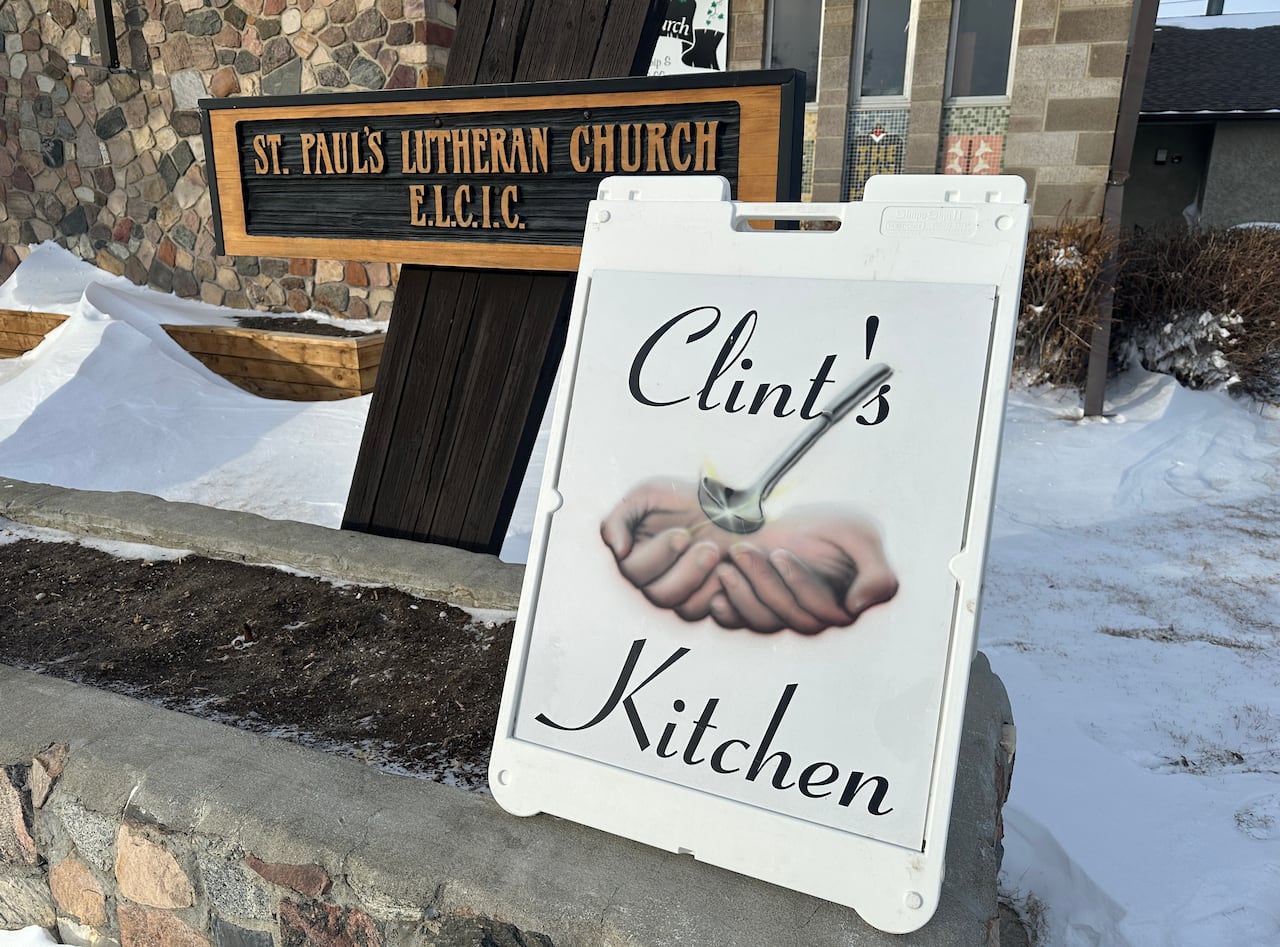 Clint’s Kitchen serves free suppers every Wednesday evening. It’s based in the St. Paul’s Lutheran Church in Olds, Alta., but the volunteer-run program is not religiously affiliated. (Amir Said/CBC)
The volunteer-run program was conceived as “a place where people could gather in Olds, a place that’s non-judgmental,” said organizer Cindy Boffey, who took the reins after the pastor moved to Edmonton.
“People would just come for a light meal and they would be able to mix with other people from the neighborhood,” Boffey said. “And it didn’t matter what denomination, what class people were, that everyone could gather together and just have a communal meal.”
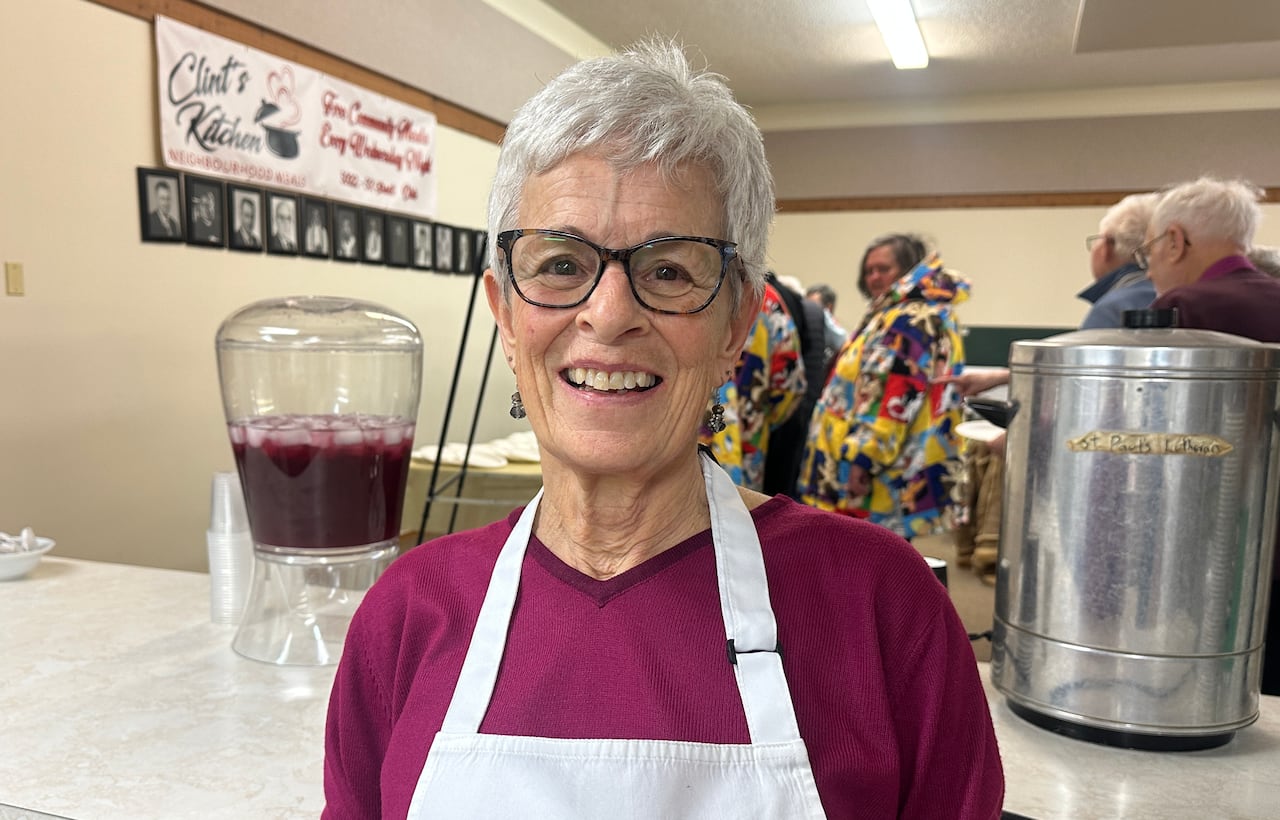 Cindy Boffey welcomes the community to Clint’s Kitchen every Wednesday evening for free suppers and social gatherings. (Amir Said/CBC)
Boffey is the point person for Clint’s Kitchen. Drawing from her experience as a longtime restaurateur, she knows how to steer the ship.
“It’s grown from maybe 20, 25 people when they started, to now we usually have 50 to 60 people come for a supper,” she said.
The kitchen’s annual outdoor summer barbecues can bring in upwards of 600 people. Meals served by Clint’s Kitchen are offered free of charge, but for those willing to pay, there’s a donation box available.
No preaching, no politics
Despite operating within a church, Clint’s Kitchen is not religiously affiliated.
“We don’t talk religion here and we don’t talk politics,” said Boffey.
She says those ground rules keep things civil and allow Clint’s Kitchen to be a welcoming environment for all.
But not being a religious program doesn’t stop volunteers from other church groups from helping out, according to Chris Andrew, who coordinates volunteers.
“The nice thing, even though it’s not a faith-based community, so many of our volunteer groups that do come and help are from different churches,” Andrew said. “Like tonight, we have the Latter Day Saints that are helping with the serving.”
 Chris Andrew helps manage the many volunteers who help out at Clint’s Kitchen every week. (Amir Said/CBC)
Boffey says they never fall short of volunteers. And those volunteers come from all walks of life, whether it’s local school teachers or the Olds Grizzlys U18 hockey team roster.
“There’s not many days that go by when we, Cindy or myself, don’t get a text saying, ‘hey, I’d love to help. How can I help?'” Andrew said. “The volunteerism in this town is phenomenal, and that’s what I love about our small town Olds. You know, we’re starting to get city-size, but we still have the town and country part.”
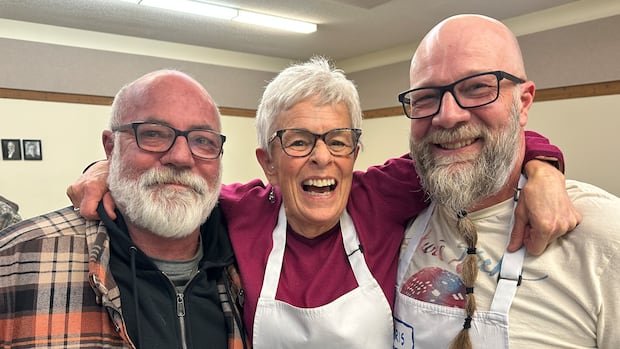
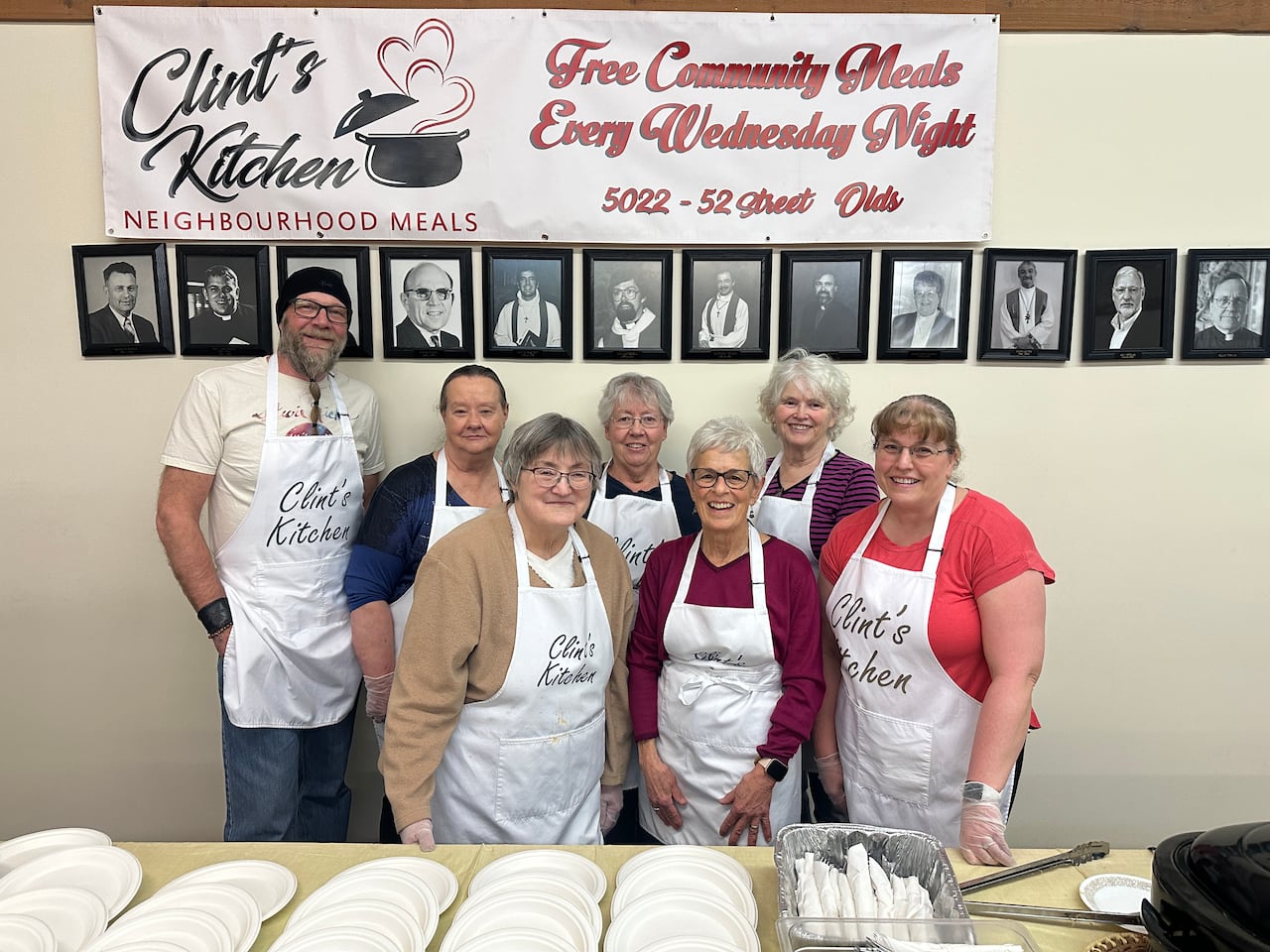 A few members of the Clint’s Kitchen volunteer crew pose for a photo ahead of suppertime. (Amir Said/CBC)
The weather wasn’t the best that February night, but it didn’t stop people from packing the room to mingle and enjoy a meal.
Matthias Leischner is among the youngest regulars at Clint’s Kitchen. For the 21-year-old, economic hardship brings him there every week.
“It’s really hard to find work around Olds,” he said. “It’s a farming community, so farming communities, the worst time to find a job is winter.”
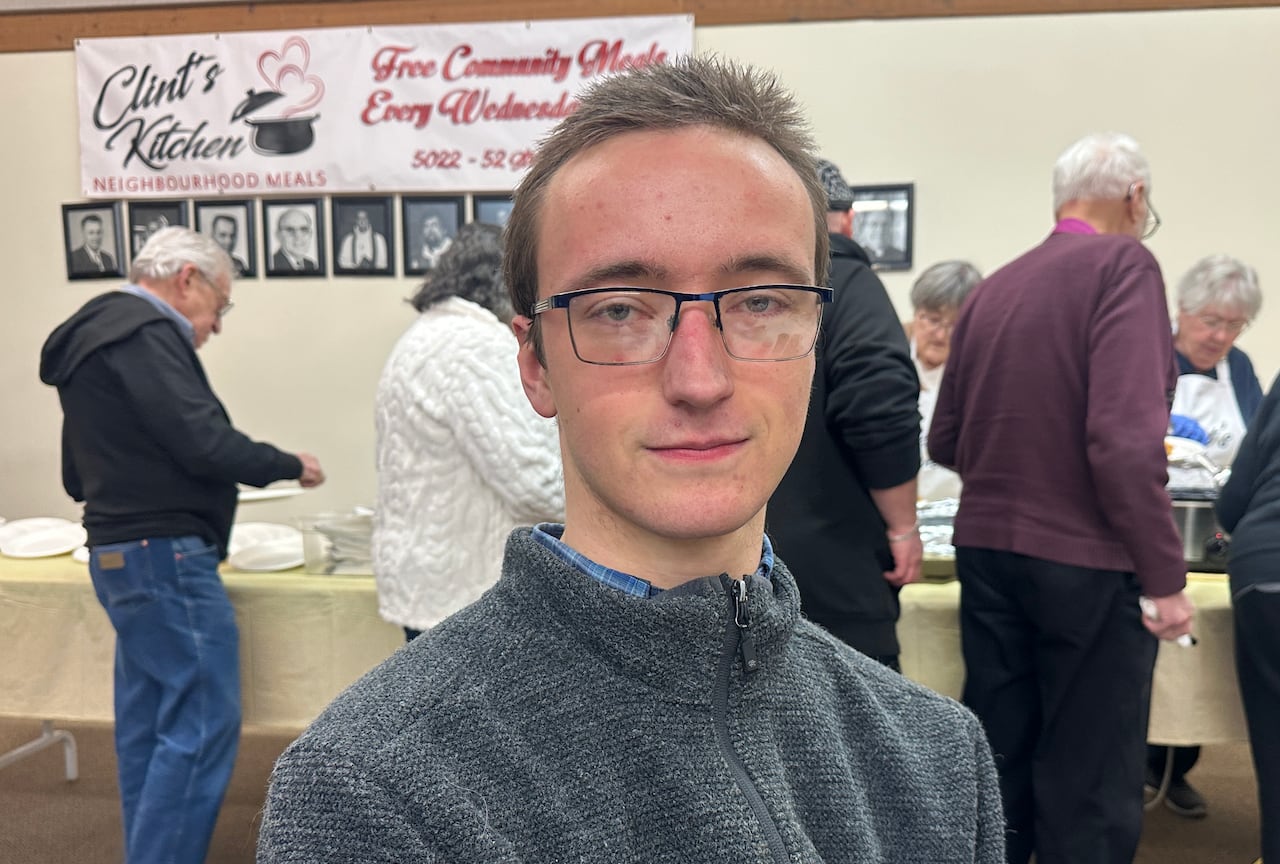 At 21, Matthias Leischner is among the youngest regulars at Clint’s Kitchen. (Amir Said/CBC)
Leishner says his last job was as a handyman, which didn’t pay very well. When he’s not actively job hunting, he spends his time working on a statistics project he hopes to launch in the near future.
“For most people in my age range, [a well-paying job] isn’t an option,” he said. “But then moving to a city is just as problematic, because logistics get really hard. Like, moving to the city, you don’t have a social network. The advantage of a small community is you know everyone, or at least second-degree know of them.”
On the flip side, 97-year-old David Gilchrist is also a regular at Clint’s Kitchen, but he doesn’t go out of need for a free meal.
“This is so great to be able to sit down and eat with other people,” said Gilchrist.
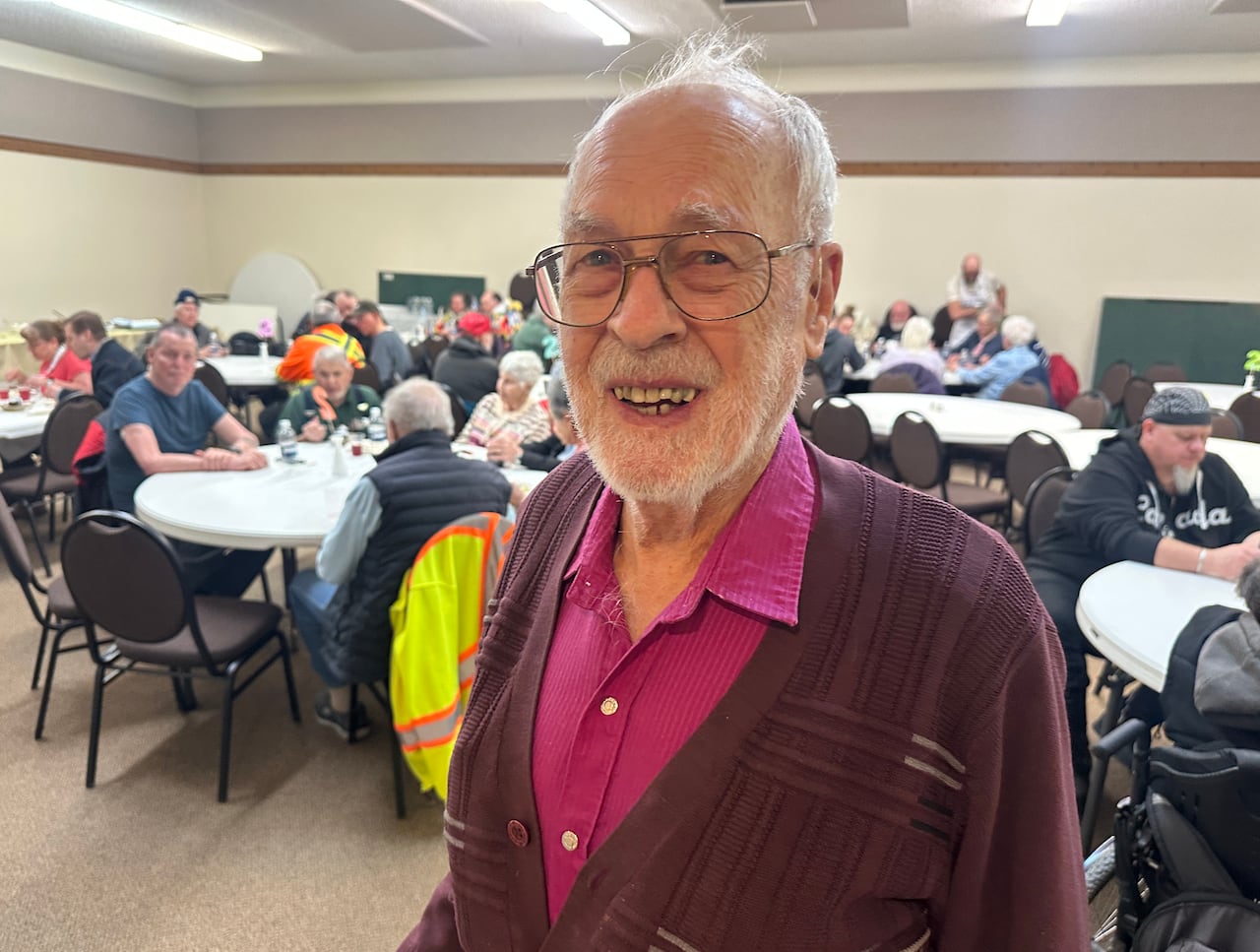 David Gilchrist, 97, looks forward to visiting Clint’s Kitchen every week. (Amir Said/CBC)
“I find that lot of us here … we don’t need a free meal,” Gilchrist said. “So if we put in that box what we would pay for a meal at the restaurant, we’re still helping. So I always put $25 in every time, and then I feel that I’m not sponging.”
Food insecurity in small-town Alberta
Olds is far from the only place in Alberta grappling with food insecurity.
According to Food Banks Canada, food bank use in Alberta has more than doubled since 2019 — marking the largest increase in that timeframe of any Canadian province.
The latest report from Food Banks Alberta, an organization representing 130 food banks, suggests more than 132,000 people in Alberta accessed food banks in March 2025 alone.
More than 36 per cent of last year’s annual food bank users in Alberta were children, the organization says.
Food Banks Alberta board chair Melissa Mullis says while the cost of living may be higher in larger urban centres, a lack of resources can make dealing with food insecurity more difficult in rural and small-town communities.
“Something that we’ve seen [in small-town Alberta] is the community steps up a little bit more to support, and it looks a little bit different in that way,” she said. “I think that they have more volunteer-run food banks and smaller outlets, as opposed to the big corporation food banks in the bigger cities.”
“I think when you have a small community … it’s the person that you know, it’s your neighbor, it’s your friend, it’s your colleague,” Mullis said.
“And maybe the feeling feels a little bit differently because you know the people that are struggling, and you want to do whatever you can to support them in a unique way.”
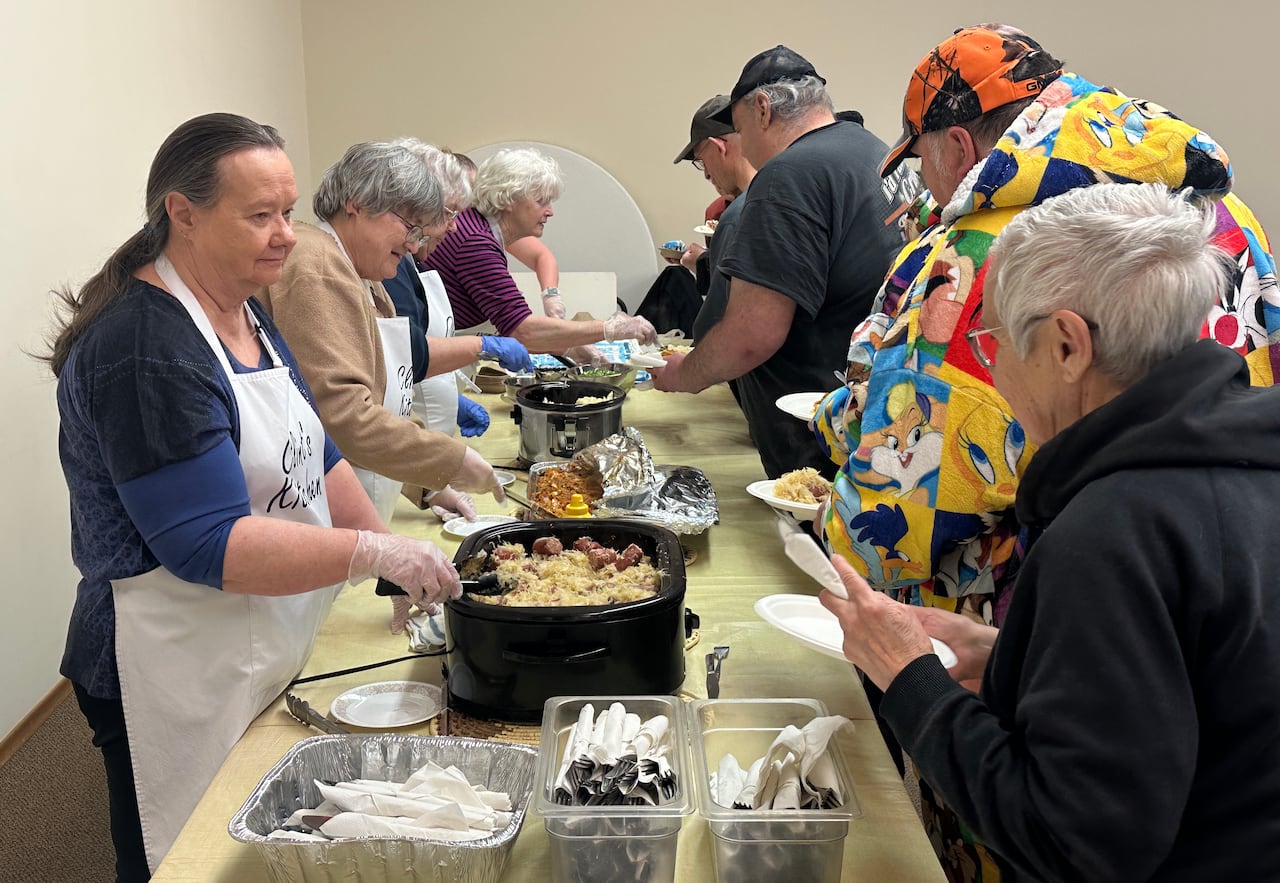 Volunteers serve free meals at Clint’s Kitchen every Wednesday evening. (Amir Said/CBC)
At Clint’s Kitchen, Andrew and Boffey say the program responds to two different types of poverty: “social poverty and financial poverty.”
“We don’t have a homeless population in town, partly because we don’t have the services or the housing or the social means for them,” Andrew said. “So by offering these meals, sure, they may not be homeless, but a lot of people are kind of on that razor’s edge of paying their gas bill or deciding to eat.”
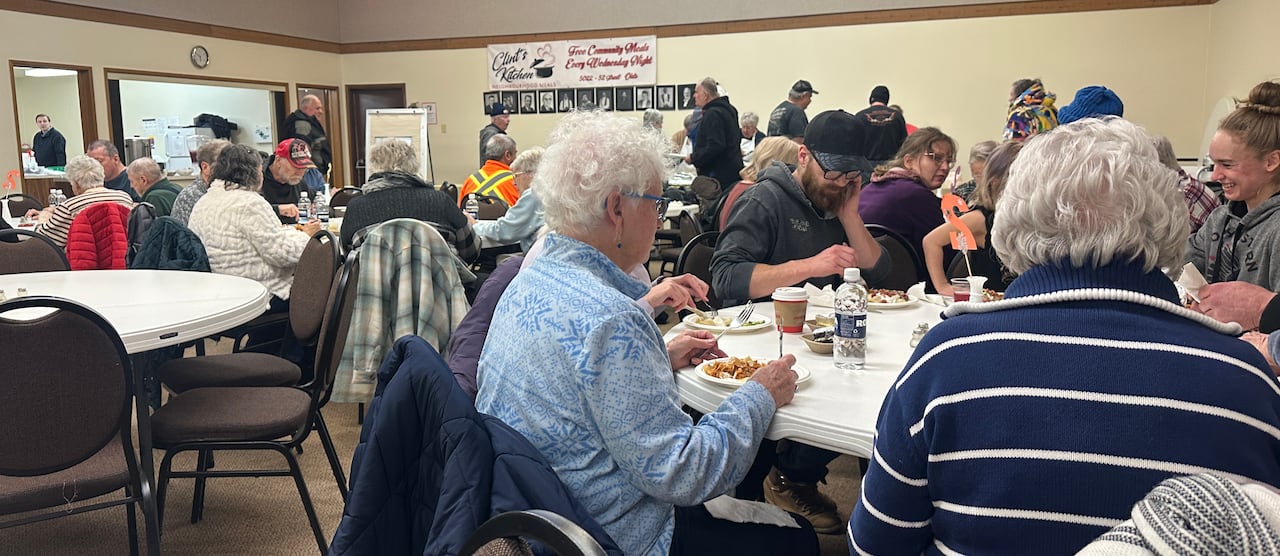 Regardless of weather, Clint’s Kitchen attracts a sizable crowd in Olds every Wednesday evening. (Amir Said/CBC)
For many coming to Clint’s Kitchen, affording food isn’t an issue. That’s where the program’s response to “social poverty” comes into play, says Andrew.
“A lot of these people are socially poor,” Andrew said. “They don’t have the groups or the connections to get together, so a lot of them have made a community here every Wednesday and they all have their their little spots and people that they talk with.”
Fostering that sense of community is one of the key goals for Clint’s Kitchen. Though he’s taken a step back from managing the kitchen, its namesake Clint Jackson is thrilled to see how it’s grown.
“It’s really heartwarming coming in and seeing people of all different walks of life sit down and have a meal together,” Jackson said.