
MELBOURNE, Australia — As Toto Wolff sat for his post-race media briefing at the Australian Grand Prix, he did so with a feeling he had not felt for a long time.
His Mercedes team had just swept to a 1-2 finish at the Albert Park track — George Russell leading home teammate Kimi Antonelli to give the Silver Arrows a perfect start to F1’s new era.
Wolff wore a turquoise celebration shirt, an accessory given out to Mercedes staff when it wins. But this had only been needed a handful of times in the previous four success-starved years that followed Mercedes’ record streak of eight straight titles from 2014 to 2021.
This result mattered to Wolff. It may have been just the first race in a long season, but to start like this was a big statement.
“We still won races and finished second in the championship,” said Wolff of Mercedes’ title-less years. “But a solid 1-2 where you feel a season ahead means you can fight for a world championship, that wasn’t (felt) for a long time.”
The same joy carried in Russell’s voice over his radio to his engineer, Marcus Dudley, after crossing the line. The 28-year-old had won five F1 races with Mercedes, but this one felt different. To Russell, it was a sign of things to come.
“Very nice, very nice!” Russell cried to Dudley. “I like this car, I like this engine!”
Mercedes had entered the season as the favorite, given the anticipated strength of its chassis and engine package under the overhauled design rules. It didn’t shirk the tag with its strong performance in preseason testing.
Its best efforts to downplay its advantage were undone come qualifying, when Russell and Antonelli locked out the front row. The next-quickest team, Red Bull, was 0.8 seconds behind the pole time. And Sunday’s result looked to be a foregone conclusion.
But Ferrari, once Mercedes’ fiercest F1 rival before Red Bull took over in that role at the start of the 2020s, threatened to crash the party once the lights went out.
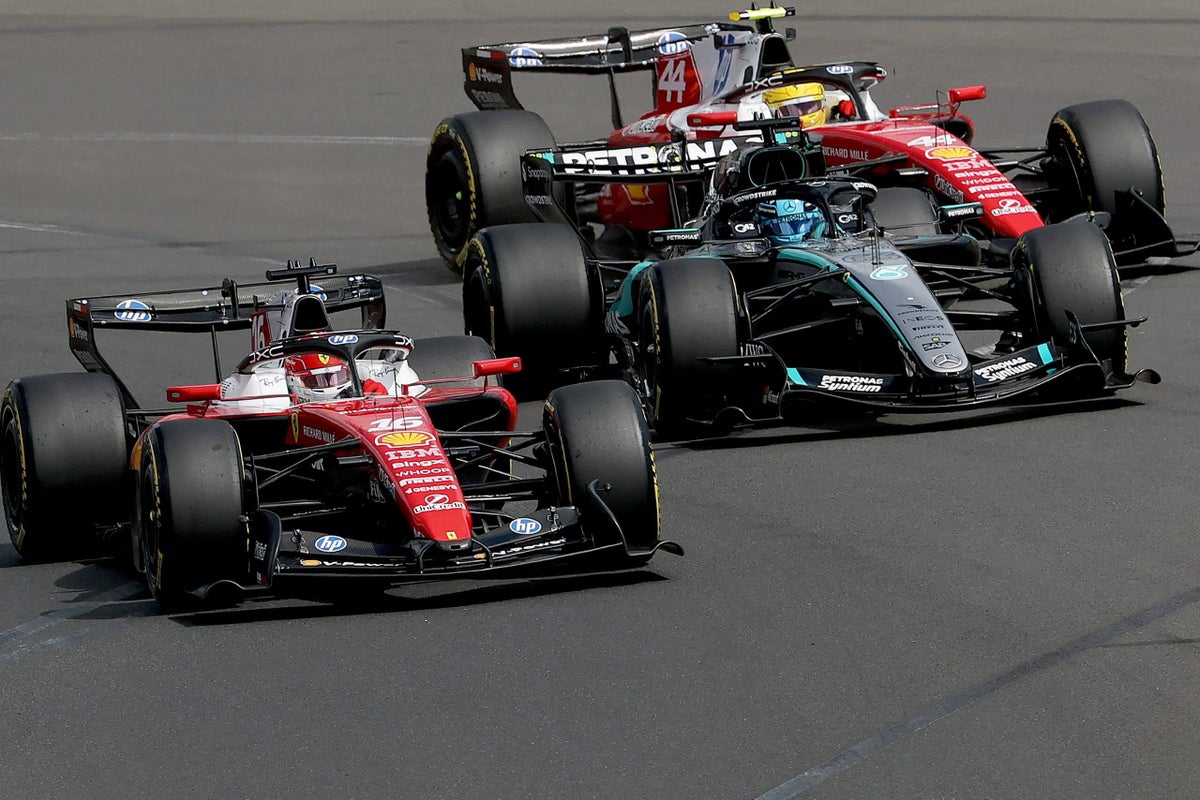
It had looked strong in this regard during testing. Then, for the first time in a real race, the rocket starts by Charles Leclerc, who went from fourth to first by Turn 1, and Lewis Hamilton, from down in seventh, teased a potential fight that would disrupt the Mercedes domination narrative.
“Before the race, people were saying ‘you’re going to disappear into the distance, looking at your long runs,’” Wolff said of Mercedes’ form. “That wasn’t the case. We knew that they were strong on the starts, and that’s what happened.
“It was an out-and-out battle between Charles and George at the beginning.”
The back-and-forth battle between Russell and Leclerc developed quickly after the Ferrari had grabbed the inside line on Lap 1 of 58. They swapped the lead seven times in the space of nine laps, which made for an exciting watch, especially as Hamilton closed to third.
But any hope of that scrap continuing through to the checkered flag soon dissipated.
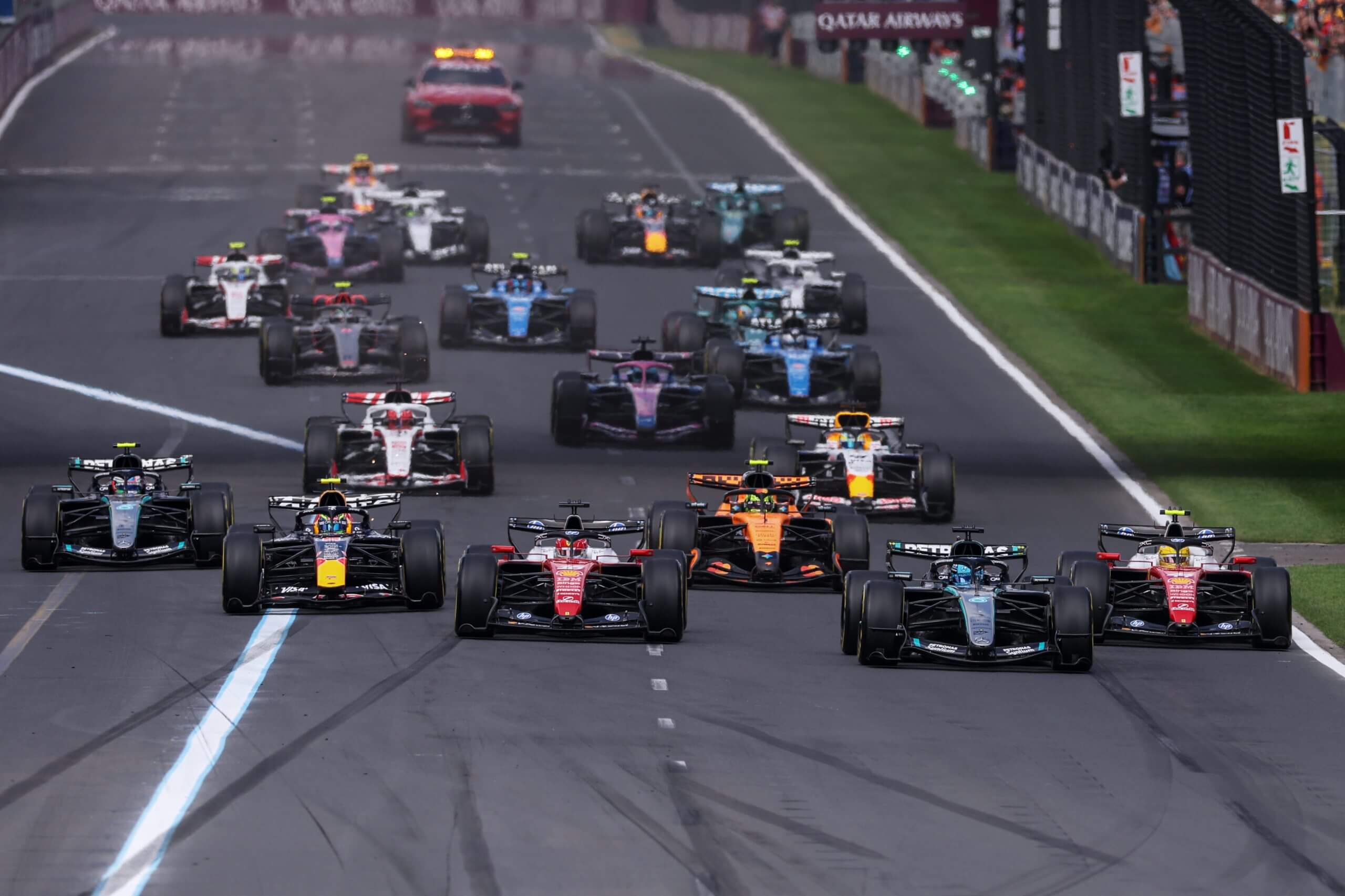
The start of the 2026 Australian Grand Prix. (Lars Baron / Getty Images)
Mercedes used an early virtual safety car (VSC) period starting on Lap 11 to pit Russell and Antonelli, who had recovered from a poor start from second to sit fourth by Lap 6. This saved both drivers time because cars that stay on track during VSCs must run at a reduced speed, which means they don’t gain as much time on rivals that pit when the track is fully green.
Ferrari kept Leclerc and Hamilton out, the latter immediately questioning that call. He was right to. By the time Leclerc pitted 13 laps later, both Mercedes cars were out of sight when Leclerc rejoined the track, and it was the same for Hamilton on Lap 29. First and third became third and fourth.
Ferrari had preferred to keep its cars out to help make a one-stop strategy work. It stuck to its original “Plan A” of pitting at the race’s mid-distance. But Fred Vasseur, the Ferrari team principal, doubted it would have been possible to beat Mercedes even if it had followed its strategy of stopping earlier and dragging out a long second stint on a similar one-stop strategy.
“The pace of Mercedes was better than us,” Vasseur said. “Even when they pitted, they were three to four tenths (of a second) faster, and they kept this pace all the stint.
“Perhaps we are able to fight with them a bit more in the beginning, but probably (by) pushing a bit more on the tires. I have no regrets on the strategy, no regrets on the pace.”
Put simply, Ferrari wasn’t quick enough to win, despite the early battle.
The data proves as much. Despite Leclerc’s 13-lap tire-life advantage over the Mercedes drivers, and his fresher set of hard tires giving him more ability to push than Russell on a worn set, he could only claw back around 2.5 seconds over the first 10 laps of his second stint. The gap grew again.
Russell had the Ferrari’s pace covered right to the end, never losing more than a tenth or two despite his fading tires, which pointed to Mercedes’ overall advantage.
Post-qualifying, it had been reasonable to think this could be a year dominated by Mercedes, given the big gap behind their front row lockout. But Russell still erred on the side of caution on this when speaking after the race. He insists Ferrari was more in the ballpark on race pace compared to single flying laps in qualifying.
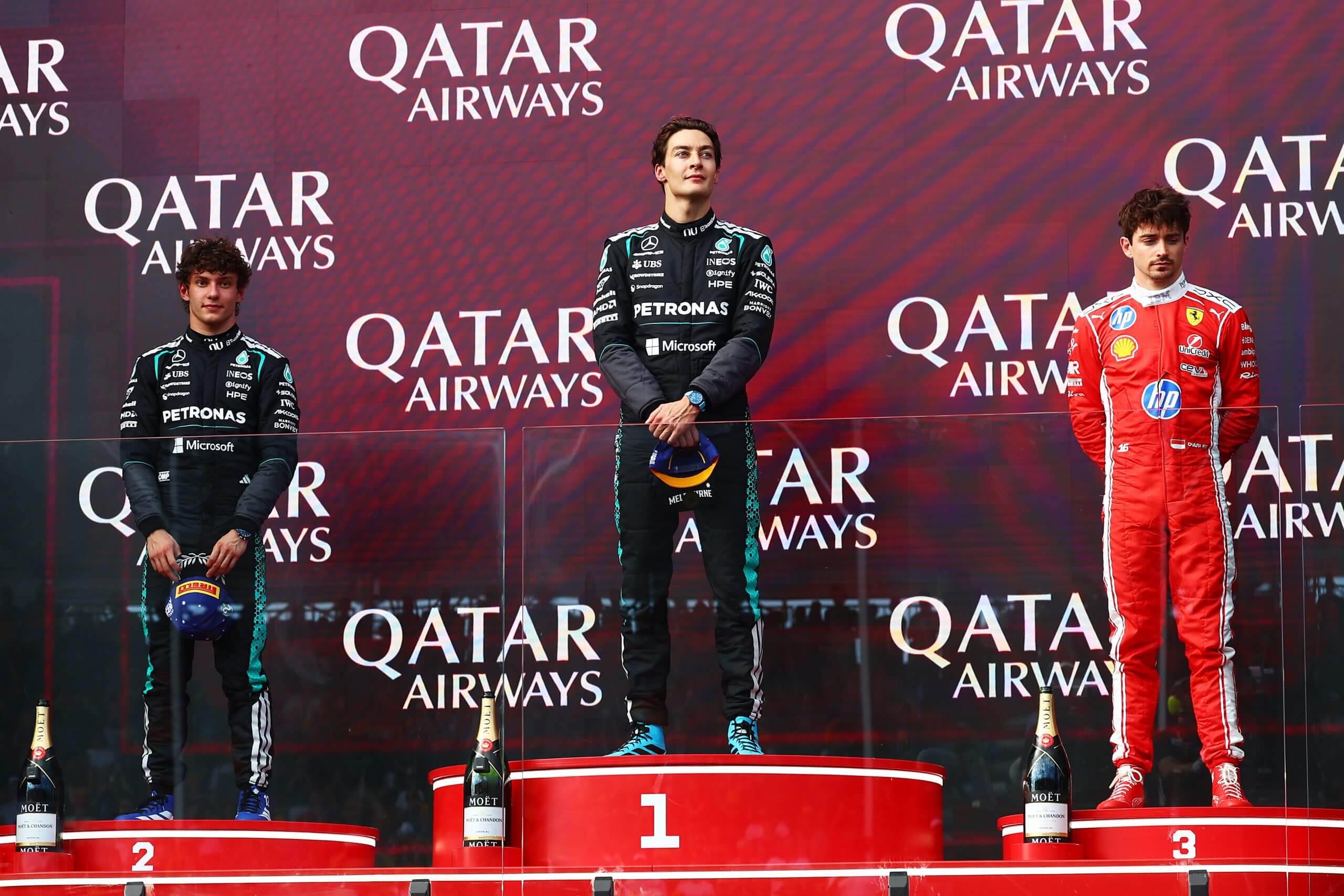
Kimi Antonelli, left, George Russell and Charles Leclerc on the podium after the 2026 Australian GP. (Joe Portlock / Getty Images)
“Qualifying was a real shock,” Russell said. “Ferrari, definitely, they’re in the mix.”
Wolff agreed: “The prevailing feeling is now we have a fight on our hands with Ferrari.”
There are points where Mercedes will feel it can still improve. Neither Russell nor Antonelli arrived at the grid with their engine batteries at an optimal charge level, contributing to their slow starts.
Ferrari’s advantage off the line, chiefly down to its engine’s smaller turbo taking less time to spool up for a fast launch compared to the bigger ones on the Mercedes and Red Bull-powered cars, won’t be possible to replicate exactly any time soon. Mercedes will likely find gains with procedure and software changes, but its turbo hardware size is now locked in.
“We still need to raise our game,” Russell said. “There were a lot of areas that we underachieved, mainly around the race start (and) having the battery in the right place. We were lucky not to come worse off.”
The 15-second gap between Russell and Leclerc at the finish may seem bleak to fans who were disappointed the battle did not go the distance in Melbourne. But whatever Vasseur says about Mercedes’ pace, after factoring in Ferrari’s fumbled strategy call, it may have been smaller.
That was enough for Hamilton — who led more laps in this race than he did in the entirety of last year, with three compared to two — to feel hopeful.
“We’ve just going to keep pushing, and we’ve got to bring upgrades and keep developing, which I know the team is working hard on. To make sure that we look and see where we’re losing (time),” Hamilton said.
“It looks like we’re losing (it on the) straight, because we’re just as good as them on the (chassis, which generally dictates pace in corners).”
Mercedes’ engine advantage is clear when looking at the gap to McLaren, the constructors’ champion and a Mercedes engine customer, on Sunday. Lando Norris crossed the line 51 seconds behind Russell, and told Sky Sports he thought McLaren was 0.5-0.6-tenths-of-a-second per lap slower than Mercedes at this stage.
McLaren may have the same engine hardware as Mercedes, but getting the most out of it is another matter. Mercedes ran the latest specification of its 2026 engine in the final Bahrain test last month, with its customers only getting this in Melbourne. The systems take time to understand.
“Ferrari, from what we see, quite clearly has the best car,” Norris said. “Their cornering speeds are unbelievable. So for us to match that, there’s zero chance at the minute.”
In what seemed like a hat tip to the significance of the Mercedes engine project under these new rules, Hywel Thomas, the managing director of Mercedes High Performance Powertrains, was its team representative on the podium in the aftermath of Russell’s win.
Evidently, Mercedes has found a step that even those using the same engines have not.
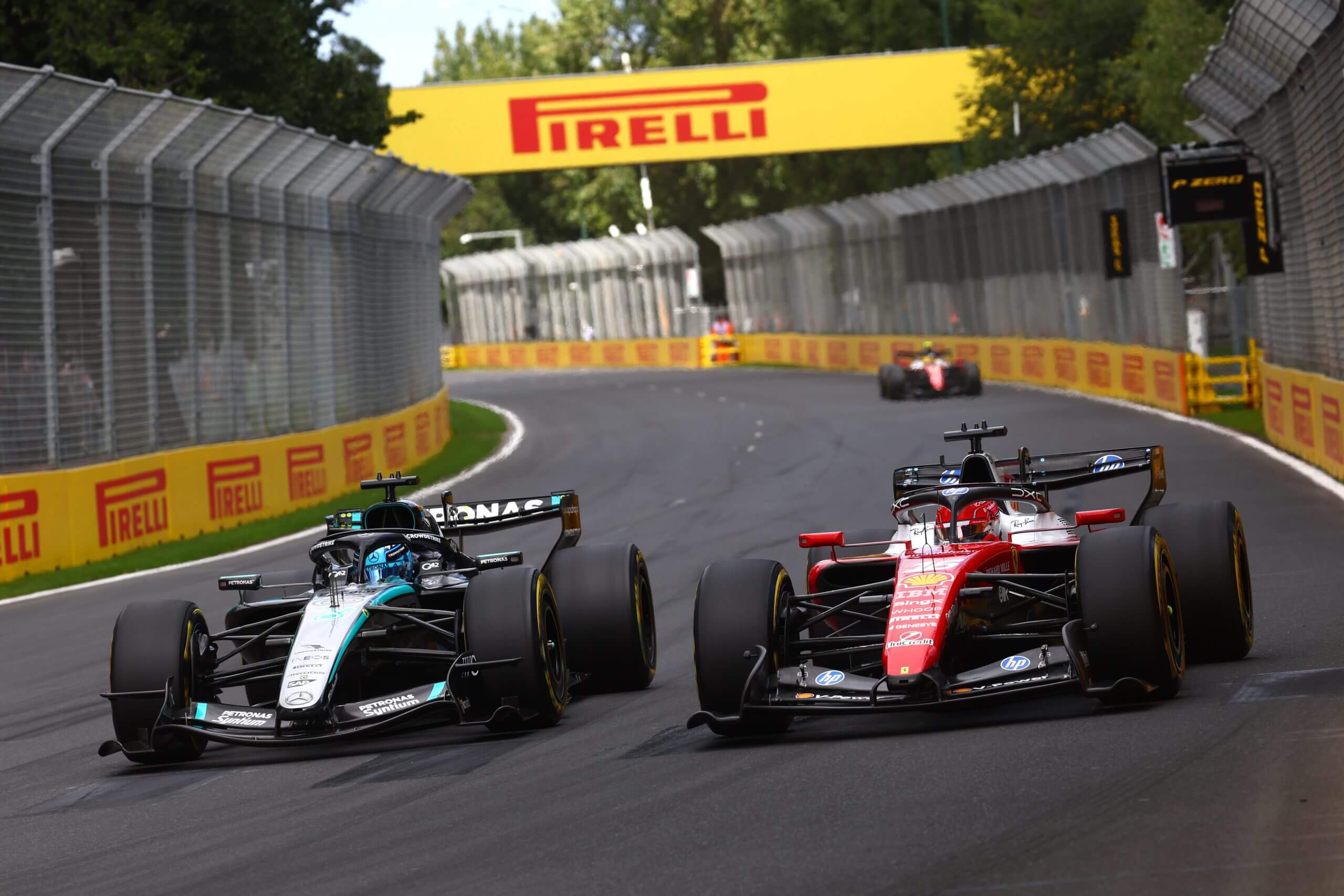
George Russell (left) and Charles Leclerc fight for the lead of the 2026 Australian Grand Prix. (Joe Portlock / Getty Images)
Russell has been waiting four years to get his hands on a car capable of fighting for a world championship since he joined Mercedes for 2022, just when its performance tumbled from leading the F1 pack around the ground-effect car design rules.
But he refused to take anything for granted when soaking in the magnitude of his victory post-race.
“It just feels like another race win,” Russell said. “We’re race one into a very long season. I want to fight for race wins week in, week out, but we’re all here now to fight for a world championship. That’s what we’ve been working so hard towards.”
The competitive picture could swing again in Shanghai next week at the Chinese GP, as Melbourne was one of a small group of tracks where the engines are particularly starved of energy due to a lack of braking zones. It made for some strange compromises for the drivers, such as the engines’ “super-clipping” (harvesting and slowing even with the throttle pinned down) into fast corners.
This makes it hard to know just how big Mercedes’ advantage really is or what threat Ferrari may pose.
But this is shaping up to be a different season from the previous four at Mercedes. And Wolff knew it when describing the emotions in the team hospitality unit after the race, where glasses of champagne sat nearby, waiting to be drunk by team members.
“Most of all, there’s a certain degree of contentment that Mercedes is back,” he said.