
Getty
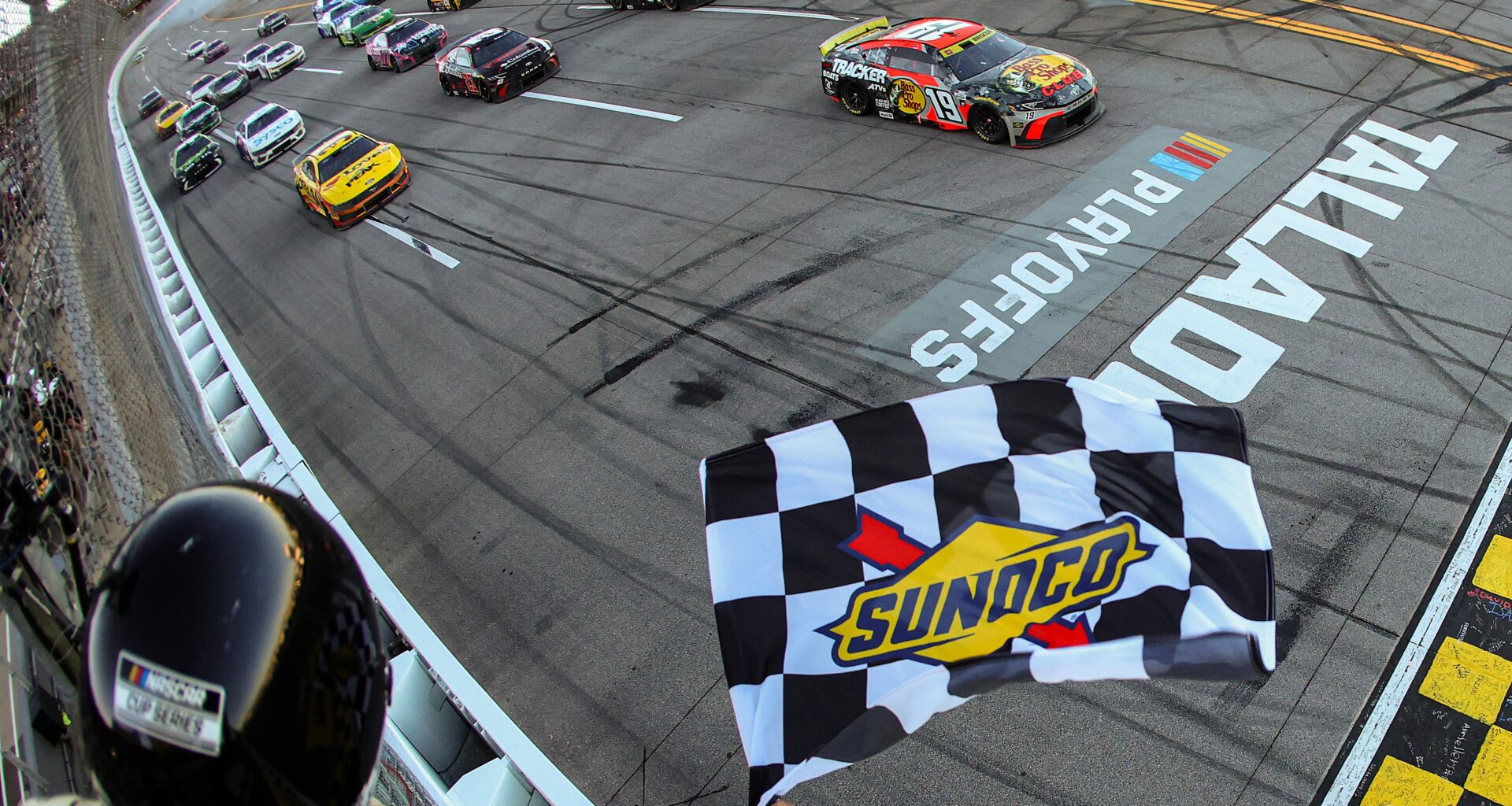
Drivers race toward the finish at Talladega Superspeedway. NASCAR broadcasts often reference terms like drafting, dirty air and loose handling during moments like this.
NASCAR terms can be confusing for new fans watching their first race.
During any given Cup Series broadcast, commentators might say a driver’s car is “loose,” talk about the effects of “dirty air,” or explain that the race is headed to a “green-white-checkered” finish.
For longtime NASCAR fans, those terms are second nature. But for casual viewers or new fans tuning in for the first time, the language of stock car racing can feel like an entirely different vocabulary.
Here are 10 of the most common NASCAR terms you will hear during a race and what they actually mean.
Dirty Air
One of the most commonly discussed concepts during NASCAR races is dirty air.
Dirty air refers to the turbulent aerodynamic wake coming off the lead car, which reduces front downforce on the trailing car and makes it harder for the driver to maintain grip through the corner.
That makes the car harder to control in corners and often prevents drivers from making passes. Drivers frequently mention dirty air after races, especially at intermediate tracks where aerodynamics play a larger role in performance.
Loose
When a driver says their car is loose, it means the rear of the car is sliding or stepping out in the corners.
In racing terms, this is similar to oversteer. The back tires lose grip, causing the rear end of the car to swing toward the outside wall.
A loose car can be extremely difficult to control, especially at high speeds, and drivers often report this condition over the radio so teams can make adjustments during pit stops.
Tight
The opposite of loose is tight, which means the front of the car does not want to turn properly in the corners.
This is comparable to understeer. Instead of rotating through the turn, the car pushes toward the outside wall.
A tight condition can slow a driver down significantly because the car refuses to hold the preferred racing line through the corner.
Drafting
Drafting is one of the most important aerodynamic techniques in NASCAR.
When one car follows closely behind another, it enters a pocket of lower air resistance. This allows the trailing car to gain speed because it is no longer pushing as much air.
When timed correctly, a trailing driver can pull out of the draft and gain a burst of speed, a move often referred to as the “slingshot.”
Drafting is especially critical at superspeedways like Daytona International Speedway and Talladega Superspeedway, where cars often run in tightly packed groups for the entire race.
Bump Drafting
A more aggressive version of drafting is known as bump drafting.
Bump drafting occurs when a trailing driver physically pushes the car ahead to help both vehicles maintain momentum.
Bump drafting is most common on superspeedways, where cars travel in large packs and drivers rely on teamwork to maintain momentum.
Green-White-Checkered Finish
When a NASCAR race ends under caution, officials may extend the race using what is known as a green-white-checkered finish.
This is NASCAR’s overtime procedure. The field receives two laps to race to the finish: one lap under the green flag and the final lap under the white flag before the checkered flag ends the race.
If another caution occurs before the leader takes the white flag, NASCAR may attempt another overtime restart.
NASCAR Overtime
Closely related to the green-white-checkered finish is NASCAR overtime. NASCAR uses overtime to try to ensure races end under green-flag conditions rather than behind the pace car.
During overtime, the field takes the green flag with two laps remaining. If a caution occurs before the leader reaches the white flag, NASCAR will attempt another overtime restart.
Once the leader takes the white flag to begin the final lap, the race is considered official even if a caution comes out before the checkered flag.
Overtime finishes have produced some of the most dramatic moments in modern NASCAR, particularly in playoff races.
Lucky Dog Rule
The Lucky Dog rule, officially known as the Free Pass, allows the first car one lap down to regain a lap when a caution flag comes out.
During the caution period, that driver is allowed to pass the pace car and rejoin the lead lap.
The rule helps keep more drivers competitive deep into a race and prevents early incidents from completely ruining a driver’s chances.
Free Pass
The free pass is the technical term for the Lucky Dog rule.
When the caution flag waves, NASCAR officials identify the first car that is one lap behind the leader. That driver receives the free pass and returns to the lead lap.
However, the rule does not apply to drivers who caused the caution or were penalized during that race segment.
Clean Air
While dirty air creates handling problems, clean air provides one of the biggest advantages in NASCAR racing.
A driver running in clean air is not affected by the turbulent aerodynamic wake coming off another car. This allows the car to generate maximum front downforce and maintain better grip through the corners.
Because of this aerodynamic benefit, track position and leading the race can often be extremely valuable in NASCAR competition.
Why NASCAR Terminology Matters
NASCAR races move quickly, and the sport’s terminology helps explain what drivers are experiencing behind the wheel.
Understanding concepts like dirty air, drafting, and loose or tight handling can make watching a race far more engaging. These terms describe the subtle factors that influence speed, strategy, and ultimately who wins the race.
For fans watching at home, learning the language of NASCAR is one of the easiest ways to better understand what is happening on the track.