
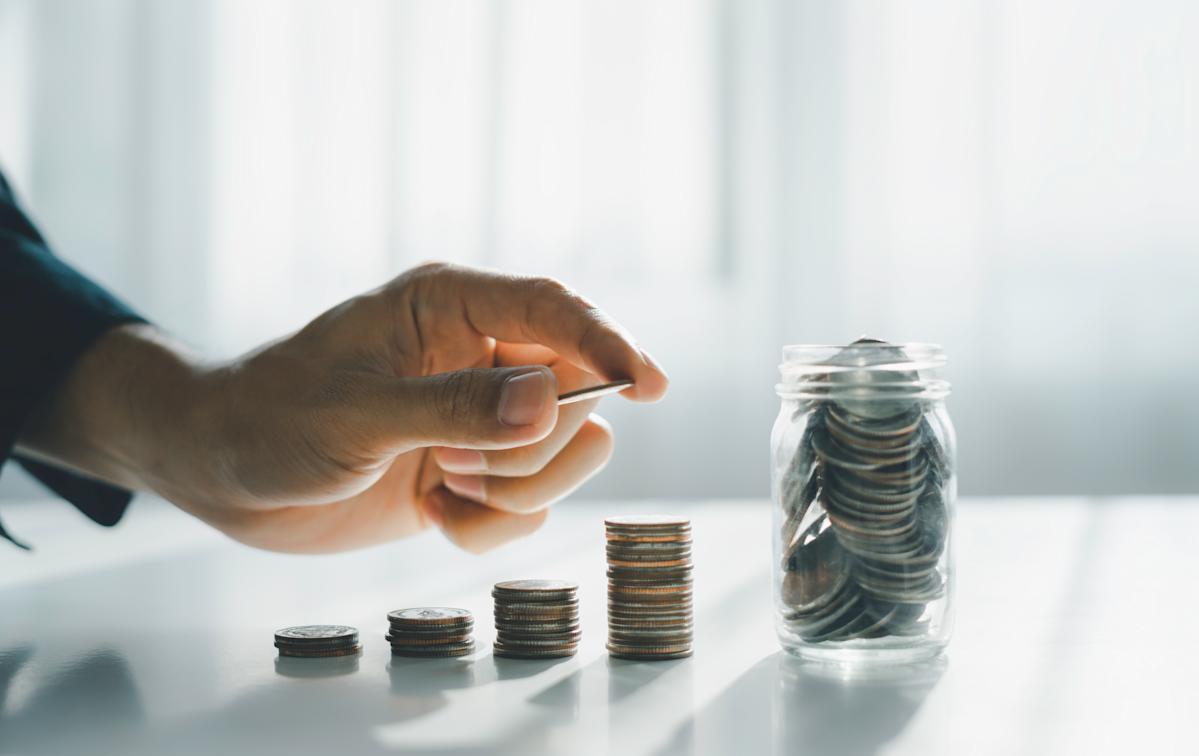
Save, save, save! It’s a message you’ll hear repeatedly from financial educators, gurus, and finfluencers. But many fail to mention that if your savings account isn’t earning enough interest to keep up with inflation, you could actually be losing money despite your efforts.
That’s because the cost of everything from groceries to rent and clothing increases over time. So even if you have the same amount of money in your savings as you did at this time last year, your money won’t stretch as far.
Does that mean you should stop saving money altogether? Definitely not. But it does mean the interest rate you earn on your balance needs to be higher than the inflation rate. Here’s how you can make sure that happens.
Inflation is the measure of how much prices increase over time, including the cost of basic necessities such as rent, utilities, groceries, and gas. As prices for goods and services rise, each dollar you’ve saved buys less than it did before.
For example, in the winter of 2024-25, $911 was enough for the average household to cover their heating bills. But this winter, the average family is expected to need $995. That’s an increase of 9.2%.
What does this mean for your savings? Even if your savings are earning interest, the real value of your money is effectively shrinking if the interest rate isn’t higher than the inflation rate. As a result, you’ll have a harder time affording your basic expenses.
Read more: Does the president control inflation?
In early 2026, the inflation rate is hovering around 2.7%. So if you want your savings to beat inflation, you’ll need to earn more than 2.7% to account for fluctuations in the inflation rate.
That’s why we recommend keeping your cash in a deposit account that earns at least 3% APY. This will help preserve the real value of your savings while still keeping your money safe and accessible.
You’re not likely to beat inflation if you deposit your savings at a major bank. According to the Federal Reserve, the national average rate on savings accounts is currently just 0.39%, for example.
However, many community banks, credit unions, and online banks offer rates above 3%. Here are a few specific account types that are most likely to earn you 3% APY or more.
If your savings account needs an interest-rate upgrade, shop around for a high-yield savings account. HYSAs work just like other savings accounts, but they earn higher interest rates.
These accounts are primarily offered by online banks, which can afford to pay higher rates than traditional banks since they don’t have the overhead costs involved with operating physical branch locations. Today, the best high-yield savings accounts pay around 3%-4% APY.
For money you don’t need access to for at least a few months, try depositing it into a certificate of deposit (CD) account. With CDs, you get above-average rates in exchange for agreeing to leave your money on deposit for a set period of time. Like HYSAs, the best CD rates currently hover around 3%-4% APY.
Just note that if you pull money out of your CD before the maturity date, you’ll have to pay an early withdrawal penalty. So, it’s important to choose a CD term that matches your savings timeline.
Read more: How does inflation impact savings and CD rates?
A money market account is a type of savings account that typically pays a higher interest rate than a traditional savings account while still allowing relatively easy access to your money. Many MMAs include check-writing or debit card access, though they may require a higher minimum balance than a standard savings account. Today, the best money market accounts pay 3% APY and up.
If you’re looking for non-bank accounts that earn 3% or more, consider investing in a Treasury bill. With these assets, which are backed by the U.S. government, you can choose to deposit your money anywhere from four weeks to a year. Right now, T-bills with 8-week terms offer the highest rates available (3.64%).