
Getty
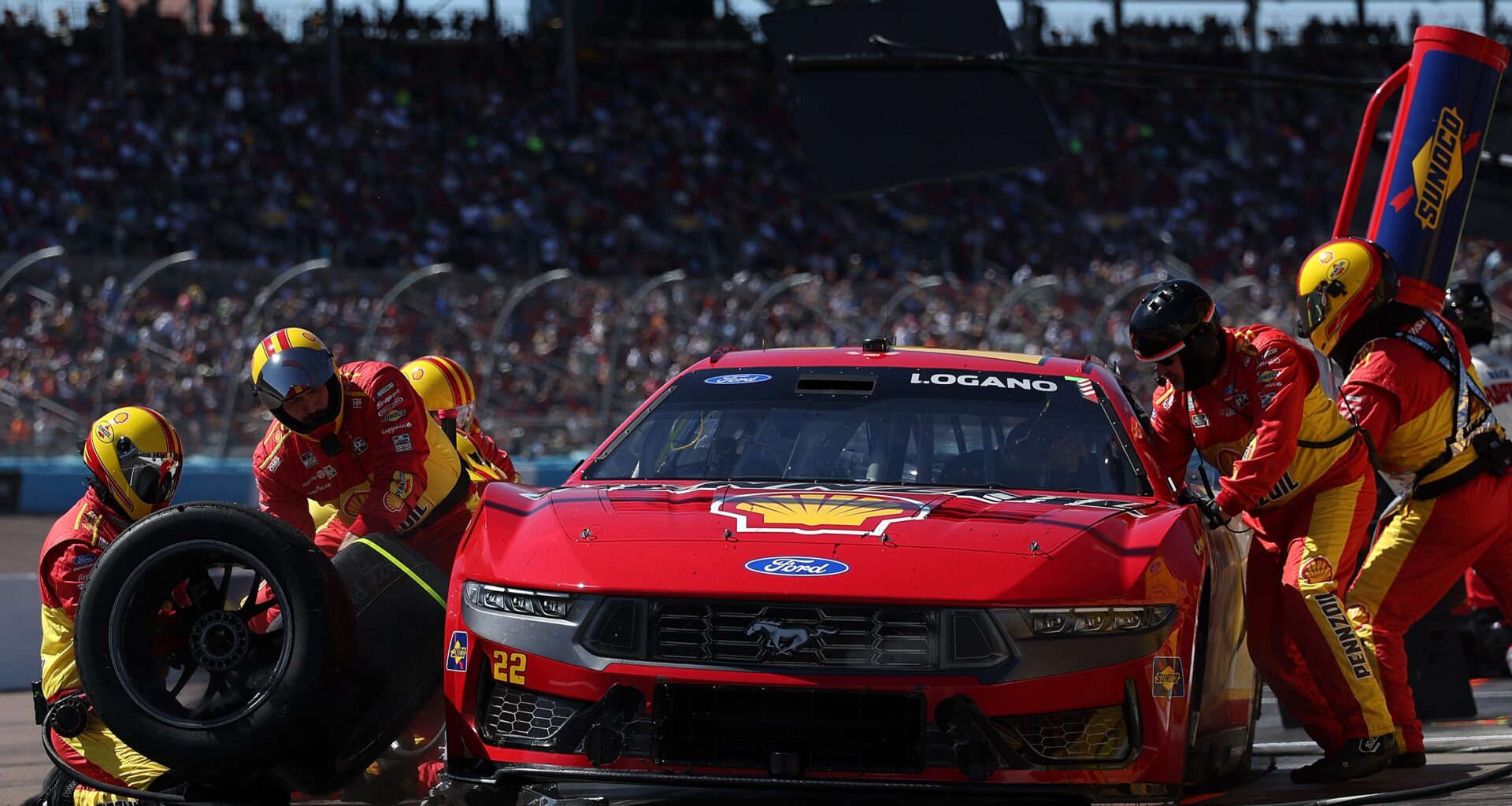
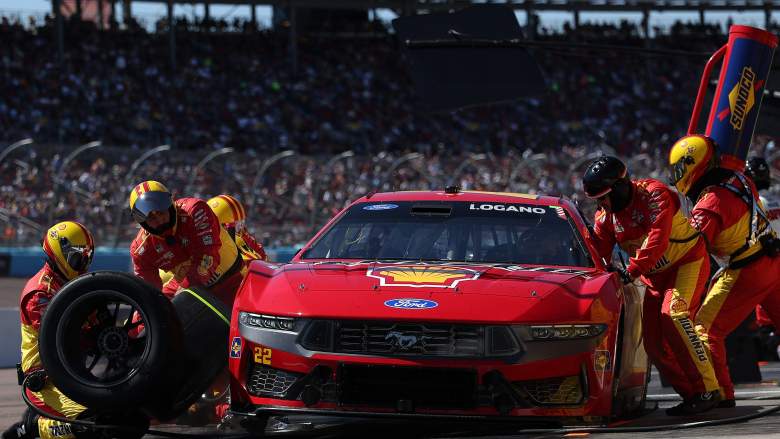
Joey Logano’s Team Penske pit crew services the No. 22 Shell-Pennzoil Ford during a NASCAR Cup Series race. Pit stops typically take about 12–14 seconds when teams change four tires and add fuel.
If you watch a NASCAR race closely, one moment always stands out for how quickly it happens: the pit stop.
Cars dive onto pit road, a crew of specialists jumps over the wall, and seconds later the driver is back on track. For fans watching at home, it can look almost chaotic. But NASCAR pit stops are one of the most important and finely tuned parts of a race.
Teams practice them constantly, and even a fraction of a second can determine whether a driver gains or loses valuable track position.
So how fast are NASCAR pit stops, and what actually happens during those brief moments on pit road?
How Long a NASCAR Pit Stop Takes
A typical NASCAR pit stop takes about 11 to 13 seconds when a team changes all four tires and fills the car with fuel.
At the Cup Series level, elite pit crews regularly complete four-tire stops in roughly 12 seconds, an extraordinary pace considering the amount of work happening around the car.
That time can vary depending on the situation during the race.
For example:
Four tires and fuel: typically about 11–13 seconds for top NASCAR Cup Series teams with 12 seconds being the average
Two tires and fuel: usually around 8–10 seconds
Fuel only: usually about 7–9 seconds, depending on how much fuel the team adds
Because the car cannot leave pit road until fueling is complete, the amount of fuel being added often determines how fast a NASCAR pit stop can be.
Teams sometimes choose to change only two tires late in a race to save time and gain positions on pit road. While that strategy can give a driver better track position, it may also leave the car with less grip than competitors who took four fresh tires.
Because pit stops are so quick, small mistakes can be costly. A slow tire change or a missed lug nut can drop a driver several positions before they even return to the racetrack.
What Happens During a NASCAR Pit Stop
A NASCAR pit stop is carefully choreographed and involves several crew members performing different roles at the same time.
Each member of the crew has a specific job:
Jackman: lifts the car using a hydraulic jack so tires can be changed
Tire changers: remove old lug nuts and secure the new tires
Tire carriers: bring fresh tires over the wall and position them for installation
Fueler: fills the car’s fuel cell using large gas cans
Utility crew member: helps clear tires and assist where needed
Once the car stops in its pit stall, the crew jumps over the wall and immediately begins working. Tire changers remove five lug nuts from each wheel while tire carriers position the new tires.
Meanwhile, the fueler connects the gas can and begins refueling the car. Because NASCAR races still allow refueling during pit stops, the car must remain stationary until fueling is complete.
The entire process happens simultaneously, which is why pit stops can be completed so quickly.
Why NASCAR Pit Crews Are Made Up of Elite Athletes
Many NASCAR pit crew members are former college athletes, particularly football players. Teams recruit athletes for their speed, strength and explosive movement: qualities that translate well to the fast, physical work required during pit stops. Over the past two decades, NASCAR organizations have increasingly built pit crews the way professional sports teams build rosters, focusing on athletic training and specialized roles.
Why Pit Stops Matter So Much
Pit stops are not just about replacing tires or adding fuel. They are often one of the most critical strategic moments in a NASCAR race.
A fast stop can allow a driver to gain several positions on pit road. A slow stop can drop them deep into traffic, where passing may be difficult due to aerodynamic factors like dirty air.
Crew chiefs also use pit stops to make adjustments to the car’s handling. During a stop, the team may adjust tire pressure, add or remove tape from the grille, or make small suspension changes to help the driver improve performance.
Because track position is so important in modern NASCAR, teams treat pit stops almost like a separate competition within the race itself. Strategy on pit road can influence stage finishes, which are an important part of how points are awarded in the NASCAR Cup Series.
How NASCAR Pit Stops Compare to Other Racing Series
NASCAR pit stops are fast, but they are very different from pit stops in other forms of motorsport.
In Formula 1, pit stops often take less than three seconds. However, those stops involve only changing tires. Refueling has been banned in Formula 1 since 2010, which allows teams to complete stops much more quickly.
In NASCAR, refueling is still part of the pit stop process. Because the fueler must empty a large gas can into the car, the stop cannot be completed until fueling is finished.
As a result, NASCAR pit stops typically take longer than Formula 1 stops, but they involve more tasks being performed at the same time.
Precision and Practice Behind the Speed
The speed of NASCAR pit stops does not happen by accident. Teams practice pit stops repeatedly throughout the season, sometimes performing dozens of repetitions during training sessions.
Pit crew members are often former college athletes who train year-round to improve their speed, strength, and coordination.
During a race, the goal is to execute the same precise movements every time. Even the smallest mistake can cost valuable seconds.
For NASCAR teams competing at the highest level, those seconds can determine whether a driver gains the lead or watches a potential victory slip away on pit road.
Maggie MacKenzie Maggie MacKenzie covers NASCAR for Heavy.com. She previously worked for NASCAR.com, where she reported, wrote, and edited race-weekend coverage and traveled to key events throughout the season. She has more than ten years of experience in sports media and is based in Boston, Massachusetts. More about Maggie MacKenzie