
UVic study finds stronger alcohol policies could reduce cancer deaths
Published 3:55 pm Monday, March 9, 2026
Wine, whiskey, beer, rum, gin or cider, Canadians love their spirits. But a recent study finds that this obsession could be deadly, and strong policies around alcohol consumption could save lives.
Although Canada has a high survival rate from cancer, a group of University of Victoria (UVic) researchers found that alcohol plays a major role in cancer-related deaths and came up with what could discourage its use and related cancer deaths.
The study recommends that stronger alcohol policies, such as warning labels and applying a minimum pricing tied to the alcohol content, could prevent hundreds of cancer cases in Canada.
The research was led by the Canadian Institute for Substance Use Research (CISUR) at UVic, and was published in Lancet Public Health. Researchers examined how different alcohol policy scenarios could reduce alcohol-related cancers in Canada using modelling.
According to the study, alcohol consumption was responsible for approximately 9,500 new cancer cases and 3,900 cancer deaths in Canada in 2022. These are cases and deaths that would not have occurred in the absence of alcohol use.
“Alcohol consumption in Canada is quite high, like very high…compared to other countries globally is what I mean by that,” said Adam Sherk, the study’s lead author and scientist with CISUR.
“We were asked to look at how much cancer is caused by alcohol consumption in Canada, and then model what would happen if different alcohol policies were implemented,” Sherk explained.
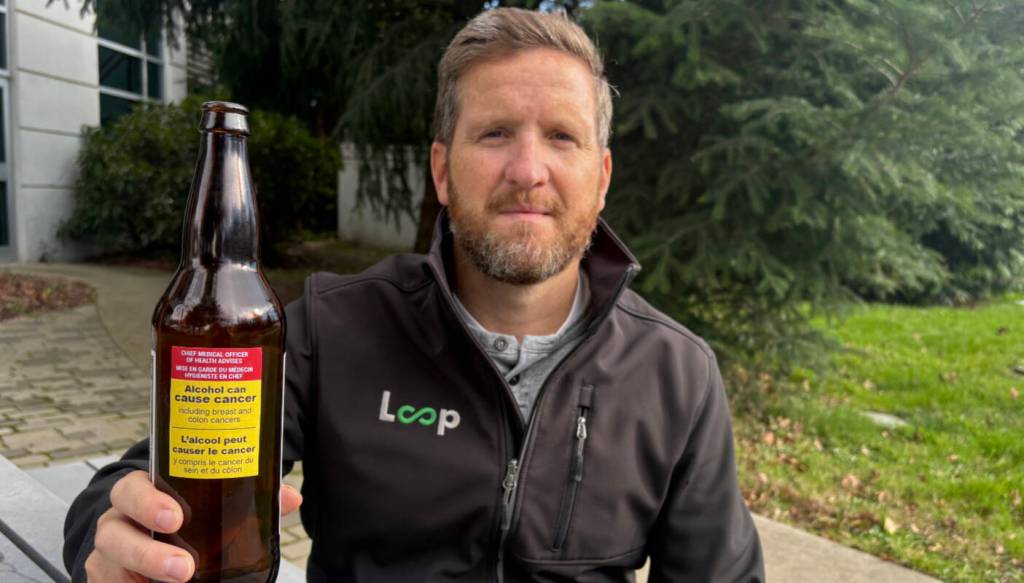
Accordingly, researchers modelled five policy scenarios, setting minimum unit pricing at $1.75 and $2 per standard drink, rotating warning labels on alcohol containers, a warning label specifically about alcohol and cancer risk and a combined policy of a $2 minimum unit price and a cancer warning label.
Sherk said that setting a minimum unit pricing sets a floor price per standard drink, preventing very cheap, high-strength alcohol from being sold below a certain cost. Warning labels, meanwhile, provide information to consumers about health risks associated with alcohol use.
The study found that the strongest reduction in cancer cases and deaths was seen when minimum unit pricing and cancer warning labels were put together. Under that scenario, the model projected 674 fewer cancer cases, dropping from 9,498 to 8,824, and 216 fewer cancer deaths, decreasing from 3,866 to 3,617.
Another interesting finding of the study was that the reductions were more prominent among lower-income populations and younger age groups. People in lower-income groups experienced larger reductions in cancer rates compared to those in higher-income groups, suggesting the policy could narrow health gaps across socioeconomic levels.
“Labels don’t force anyone to change their behaviour, they’re informational. But many people still don’t know that alcohol can cause cancer, despite the strong evidence linking the two. If you included other alcohol-related harms like injuries or liver disease, the reduction in deaths would be even higher.”
Sherk further explained that the federal government is considering stronger alcohol regulations with Bill S-202, which focuses on cancer warning labels for alcohol containers. It is currently before the Senate.
“This modelling study projects what would happen if policies were implemented, but of course, the researchers can’t implement them ourselves, it’s up to governments whether or not they would like to implement these policies or not.”
Minimum unit pricing is a provincial responsibility, Sherk noted, and it has been implemented Manitoba, where as considered in several provinces, including British Columbia.