
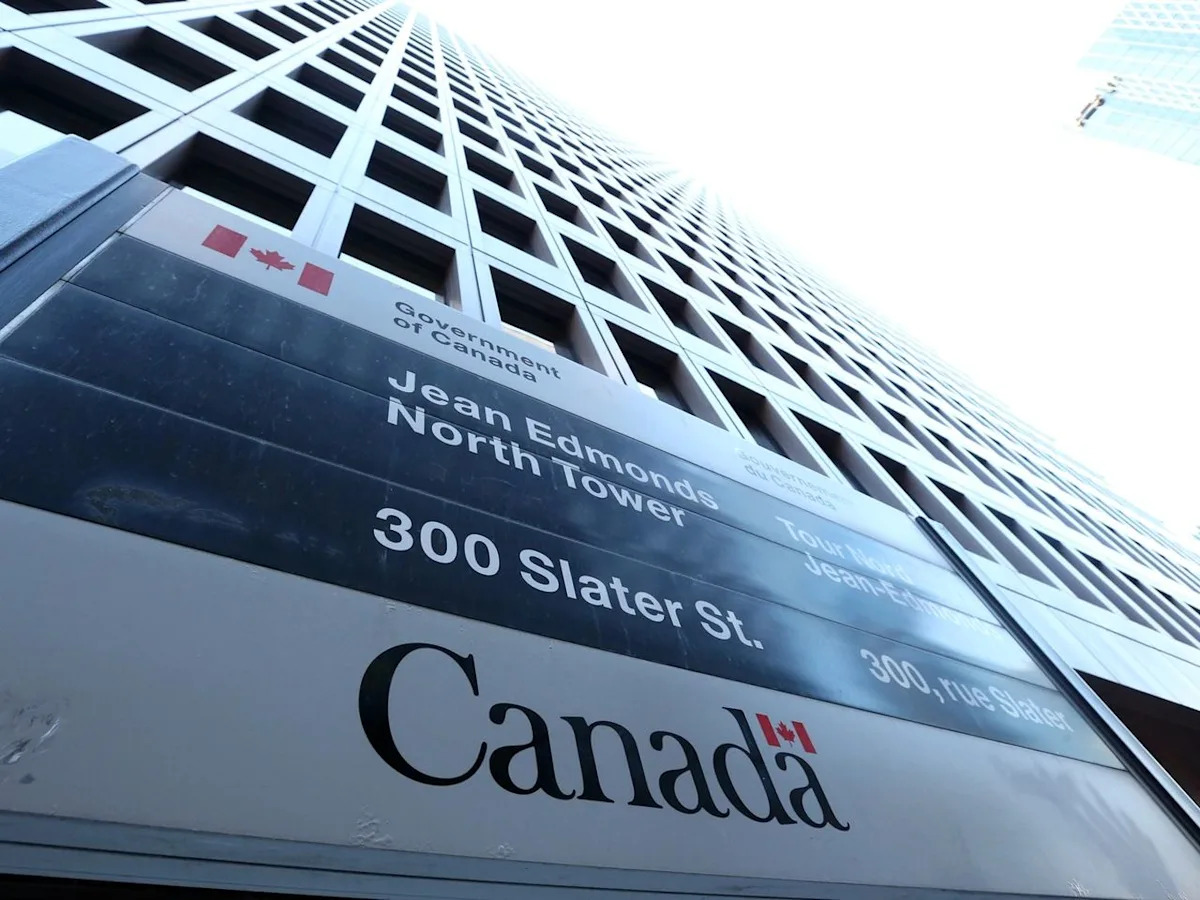
After a report from left-leaning think tank the Canadian Centre for Policy Alternatives revealed that asylum seeker housing is set to be downloaded to municipalities, city officials are questioning how housing costs will be covered moving forward.
In the report, it was shown that Immigration, Refugee and Citizenship Canada (IRCC) funding cuts will impact asylum seeker housing funding for municipalities, as well as health-care cuts for those claimants and program cuts for economic migrants.
Ottawa, Montreal, Toronto and the Peel Region house almost all asylum seekers.
Ottawa received around 10 per cent of funding from the Interim Housing Assistance Program (IHAP) that was meant as a backstop solution for cities housing an influx of refugees.
The temporary program was winding down funding and the federal government was set to split costs with municipalities after 2027.
But with the federal government’s spending review that sought around a 15 per cent cut to IRCC’s budget, that plan was displaced in favour of a complete download to municipalities, according to the report.
Now, cities could face a scramble for funds in an uncertain and unstable world wrought with emerging global conflict.
In a statement, Kale Brown, director of Housing and Homelessness for the City of Ottawa, said the city is aware of the report and is “working with the federal government to better understand the implications for the city.”
Brown did confirm with the Ottawa Citizen that the city signed an agreement for IRCC funding that is required to purchase a vacant hotel at 377 O’Connor St. “to support family transitional housing” for asylum seekers.
However, that signed agreement is subject to council approval.
Council must now make a decision on the vacant hotel with the knowledge that the city could foot the entire bill for future operating costs. In the report, author David Macdonald writes that the city could pay between $14 million and $25 million a year without federal assistance.
“The City has not received any formal communication from IRCC regarding potential reductions to IHAP funding or any plans to transfer operating costs to municipalities, despite recent media reports,” Coun. Laura Dudas, chair of the Community Services Committee, said in an email to the Ottawa Citizen. “That said, we have always understood that this funding was intended to taper over time, and that the federal government would be exploring alternative long‑term funding models.
“Immigration is a federal responsibility. Municipalities simply do not have the fiscal capacity to assume the costs associated with housing newcomers. Any reduction or change to federal funding must therefore be accompanied by a new funding mechanism or a continuation of the existing program.”
Macdonald told the Ottawa Citizen in an email that the reception centre model is a better approach for municipalities than hotels, which are “a very expensive way to house people.”
Still, if a reception centre cannot handle an influx of refugee claimants, “then all that risk is on the cities,” Macdonald added.
“Operating (the reception centre) and paying for any overflow in 2027-28 and onwards will be an entirely City of Ottawa cost it looks like,” Macdonald said in an email.
Jeffrey MacDonald, IRCC spokesperson, told the Ottawa Citizen that internal reforms are set for the asylum system, which will “reduce bottlenecks” and will make “final claim determinations” faster.
Bill C-12, the legislation that will introduce those reforms, has almost reached Royal Assent, and is “expected to affect the volume of future claims and the speed of processing, both of which would affect the demand for interim housing assistance,” MacDonald said.
However, questions remain about whether reforms and tinkering with asylum processing will be enough to absorb the shocks of future refugee crises.
A new war in the Middle East could cause more instability, as was seen with previous wars in Iraq, Syria and Afghanistan. Several ongoing conflicts within other regions in the world, and others that could begin in the future, could cause similar influxes.
A new era of geopolitics in what Prime Minister Mark Carney describes as a fading of the “rules based order” also raises probabilities of further migrant crises.
Then there is climate change, with extreme weather events, rising sea levels and extreme drought possibly causing weather-related displacement to become a reality in the years to come.
Meanwhile, the City of Toronto, which received a majority of the housing funding for asylum seekers, is calling for extended funding beyond what is currently earmarked by the IRCC.
“Extended federal funding and a co-ordinated national response is needed to ensure refugee claimants arriving in Toronto can access timely, appropriate supports,” Gord Tanner, general manager of Toronto Shelter and Support Services, told the Ottawa Citizen in a statement.
In the statement, Tanner said refugee demand has stabilized since 2024, but “Toronto continues to shelter significantly more refugee claimants than other municipalities, creating ongoing financial and operational pressures.”
In the report, Macdonald wrote that Toronto alone could be on the hook for around $91 million to $151 million, depending on if funds remain and how many asylum claims arrive.
Tanner said Toronto is supporting around 2,900 refugee claimants, which is around a third of the city’s total shelter population.
New refugee claimants arriving in Toronto also continue to be referred to the Peel Reception Centre, “which relies on federal funding and is a key component of a co-ordinated regional response,” Tanner said.
The city is also transitioning to a more sustainable shelter model that will use refugee houses and smaller refugee-specific shelters rather than higher-cost lease sites.
“This transition and ongoing refugee supports depend on continued federal funding through IHAP,” Tanner said.
In total, the report from the Canadian Centre for Policy Alternatives points to a possible ballooning cost of $250 million a year downloaded to Toronto, Peel Region, Montreal and Ottawa if asylum claimants climb to 90,000, up from the IRCC-projected 55,000 claimants a year.
The Peel Region did not respond to requests for comment by deadline.
Related
Our website is your destination for up-to-the-minute news, so make sure to bookmark our homepage and sign up for our newsletters so we can keep you informed.