
STORM UPDATE: Tuesday, March 10 – 9:00 PM
Freezing Rain Warnings remain in effect for a wide area from eastern Ontario into southern Quebec.
Winds have veered to the northeast and are increasing Tuesday evening in Montreal, as temperatures slowly drop. Low pressure will move from south of the Great Lakes to near Montreal late Wednesday. Precipitation in the from of showers will develop shortly and switch to freezing rain during the pre-dawn hours as temperatures drop to the freezing point. Expect freezing rain most of Wednesday, before temperatures rise above freezing in Montreal late in the day or evening. We are still on track for 20-30mm of freezing rain.
The hardest it regions are expected to be along and north of the St. Lawrence River and particularly the North Shore and the Ottawa Valley including Lachute and Hawkesbury. Temperatures will rise above freezing sooner south of the city towards the US border, with less impacts likely.
Municipalities are ready, with many sending out emails and posting on social media. Shelters will be made available if necessary. Most major school boards have cancelled classes for the day, as have McGill and Concordia Universities.
Previous Posts :We are still on track for an extended period of freezing rain across southern Quebec into Wednesday afternoon. Amounts will be in the 20-30mm range. Precipitation should begin this evening in Montreal, and change to freezing rain after midnight. The wind forecast has increased to 30-50km/h for Montreal, which is concerning. Hydro-Quebec has 550 crews on standby, representing 1100 employees to deal with any outages.
Freezing rain is forecast to start overnight and change to rain late Wednesday. There is still a chance the system could pass just to our west, allowing slightly warmer air to arrive, resulting in more liquid than frozen precipitation for Montréal.
An Orange Level weather warning has been issued by Environment Canada for a large portion of southwestern and western Quebec including the metro Montreal region. This is the first orange warning for Montreal since the new colour code system was introduced in late November.
For Montreal, the forecast and impact levels are high, but there is still some questions that remain regarding surface temperatures. Strengthening low pressure will develop over the midwest United States on Tuesday, moving towards the Great Lakes and St. Lawrence Valley. At the same time a backdoor cold front will slip south of the Montreal region late today, allowing colder air from the north to filter into our region.
Precipitation from the storm system will begin to override the cold air at the surface later tonight, with showers eventually changing to steady freezing rain after midnight. After a daytime high close to 10C (50F) on Tuesday, Montreal will drop to 0C (32F) by midnight. Winds will shift form the south to northeast, gusting up to 40km/h at times. Temperatures will remain near the freezing point on Wednesday.
Freezing rain will persist into Wednesday across the greater Montreal region and especially the Ottawa Valley. Temperatures may rise above freezing from Montreal south allowing the freezing rain to changeover to plain rain Wednesday afternoon. The rain may be heavy at times. A total of 25-50mm of moisture is available with this system.
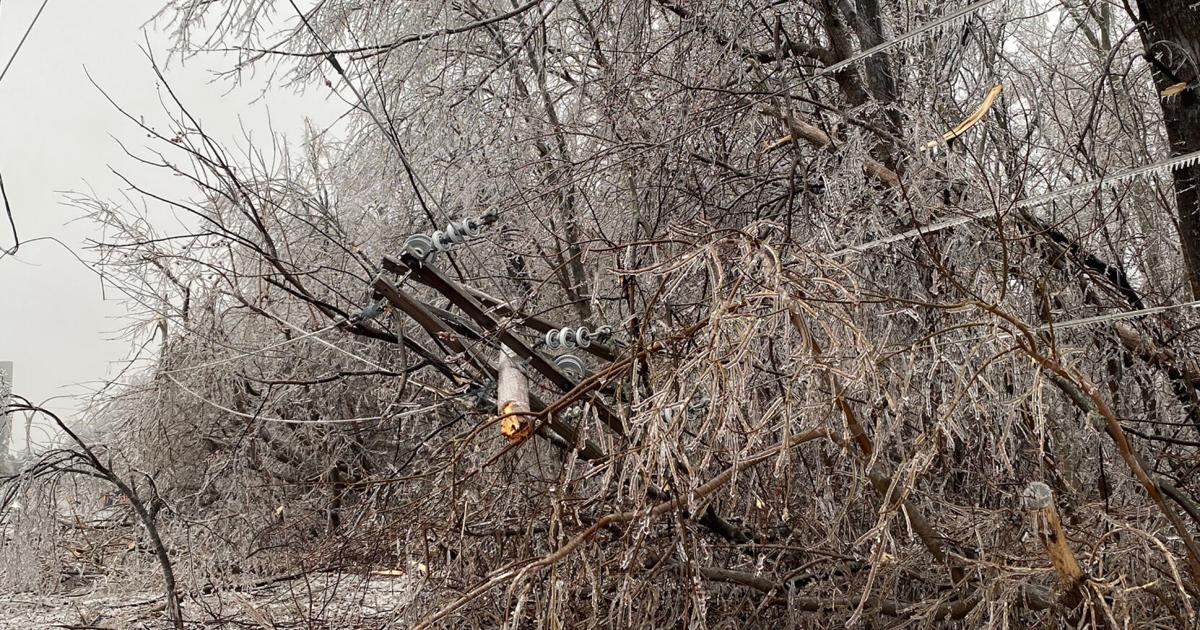
The temperature profile will be very close to the freezing point, with a range of precipitation types possible across the metro region. Another factor will be the warm temperatures that have preceded the storm. This may allow road surfaces to remain just wet, while ice builds up on elevated surfaces such as bridges, trees and power lines, which was the case during the April 2023 storm.
The setup looks very similar to that of the April 2023 Ice Storm, which cut power to over 1 million Quebec homes and businesses, some for up to 5 days. The storm also did tremendous damage to trees and cars.
Expect power outages and travel delays on Wednesday across a wide area from eastern Ontario to northern New Brunswick.
Precipitation will taper off to flurries on Thursday, as temperatures drop significantly behind the storm.