
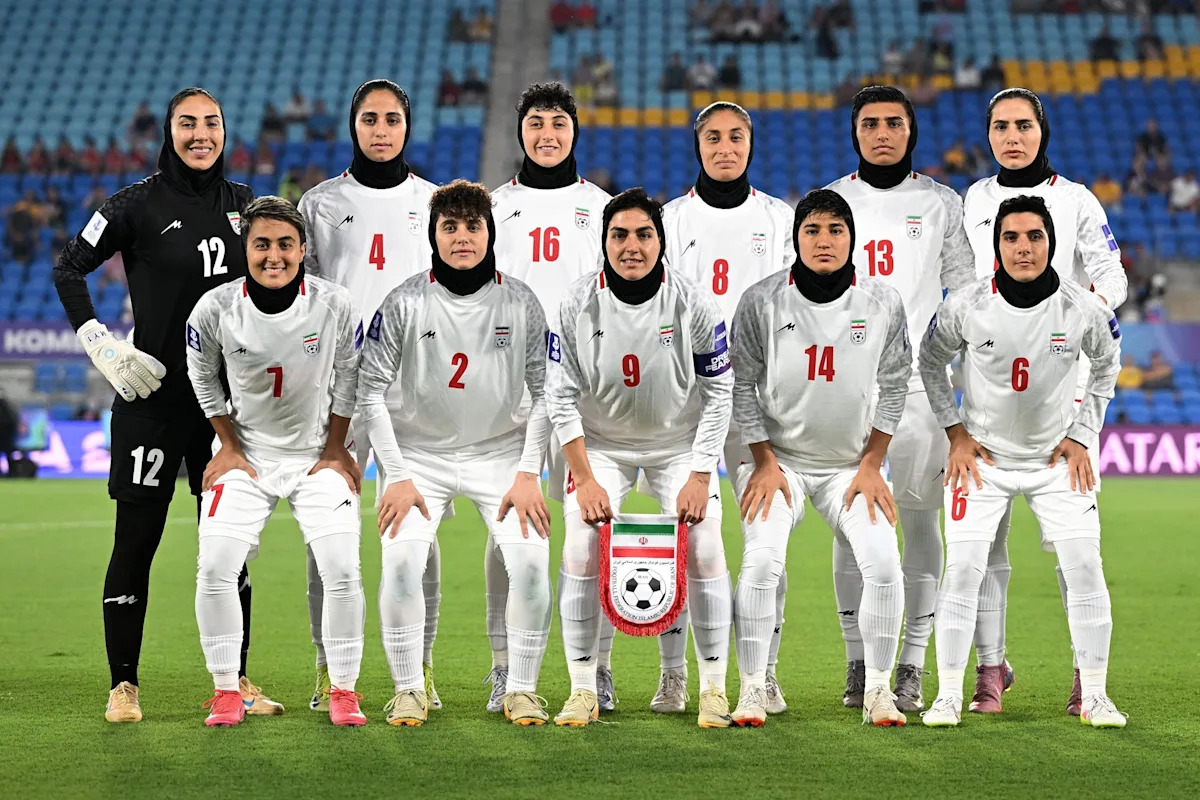
Seven members of the Iranian women’s national soccer team have been granted asylum in Australia as international concern has grown around the fate of the team, who had been playing in a tournament there when the U.S. war with Iran started.
Two more members of the Iranian team were granted humanitarian visas on Wednesday, local time, by the Australian Department of Home Affairs, following five other members of the team receiving permission from Australia to stay in the country on Tuesday, according to Home Affairs Minister Tony Burke.
The team drew harsh criticism from Iranian state television after some refused to sing the country’s national anthem before the March 2 match against South Korea –one presenter branding the women as “traitors.”
Burke later confirmed that the five players who requested asylum were Zahra Ghanbari, captain of the Iranian women’s national football team, Fatemeh Pasandideh, Zahra Sarbali, Atefeh Ramazanzadeh and Mona Hamoudi.
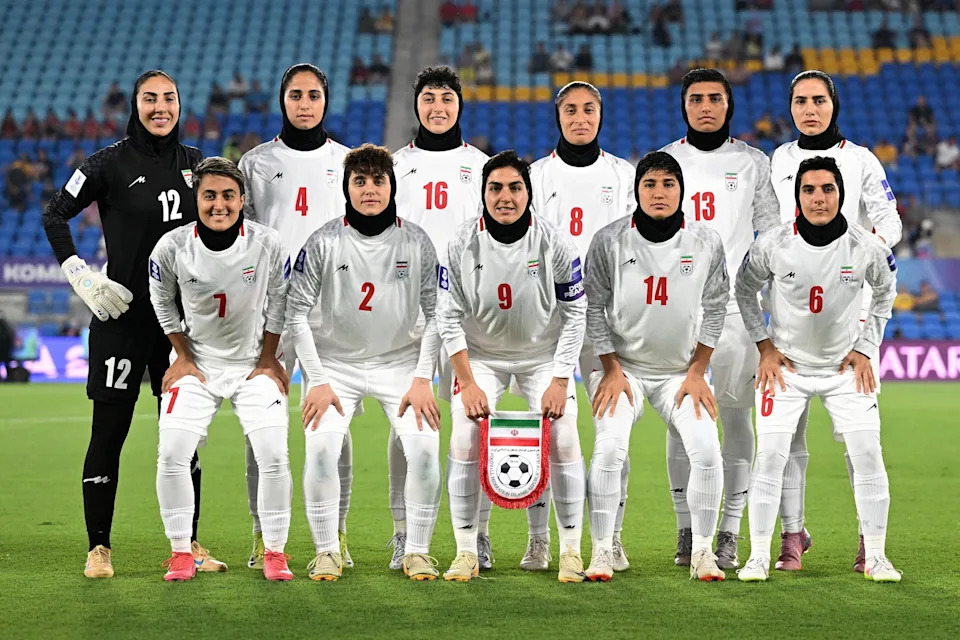
Dave Hunt/AAPImage via AP – PHOTO: Iran players pose for a team photo ahead of the Women’s Asia Cup soccer match between Iran and South Korea on the Gold Coast, Australia, March 2, 2026.
Burke said during a press conference on Tuesday that the Iranian players “are safe here and they should feel at home here” and that the same offer stood for every member of the team. He added that the conversations around potential asylum for some members of the Iranian team started in earnest “in the very early hours” on Monday in Australia.
“Once that happened during the course of [Monday], it was made clear that there were five women who wanted to be able to stay in Australia. They were moved to a safe location by the Australian Federal Police. And last night I met with them at that location,” Burke said. Burke added that he personally signed the players’ applications for humanitarian visas, which were approved by his department a little after 1:30 a.m. local time on Tuesday.
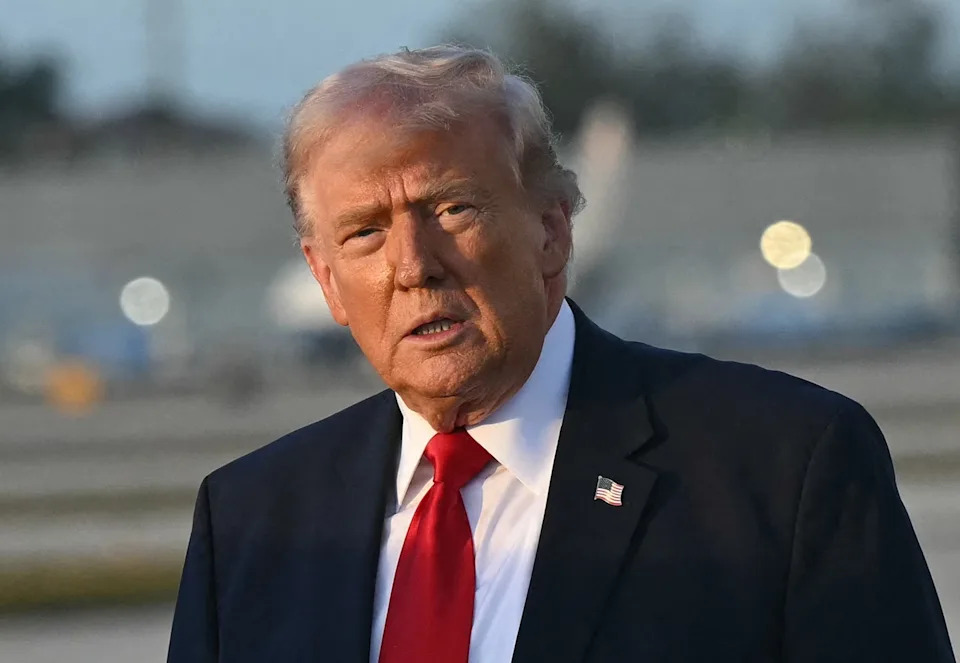
Saul Loeb/AFP via Getty Images – PHOTO: President Donald Trump disembarks from Air Force One upon arrival at Miami International Airport in Miami, Florida, March 7, 2026.
As that process was underway, President Donald Trump took to social media on Monday morning to make an appeal on behalf of the Iranian players, claiming in a post on social media that the women would “most likely be killed” if they were forced to return to their home country
Trump later spoke with Australian Prime Minister Anthony Albanese, and confirmed that “five [players] have already been taken care of, and the rest are on their way.”
Trump noted that while five players had been cleared to stay in Australia, others “feel they must go back because they are worried about the safety of their families, including threats to those family members if they don’t return.”
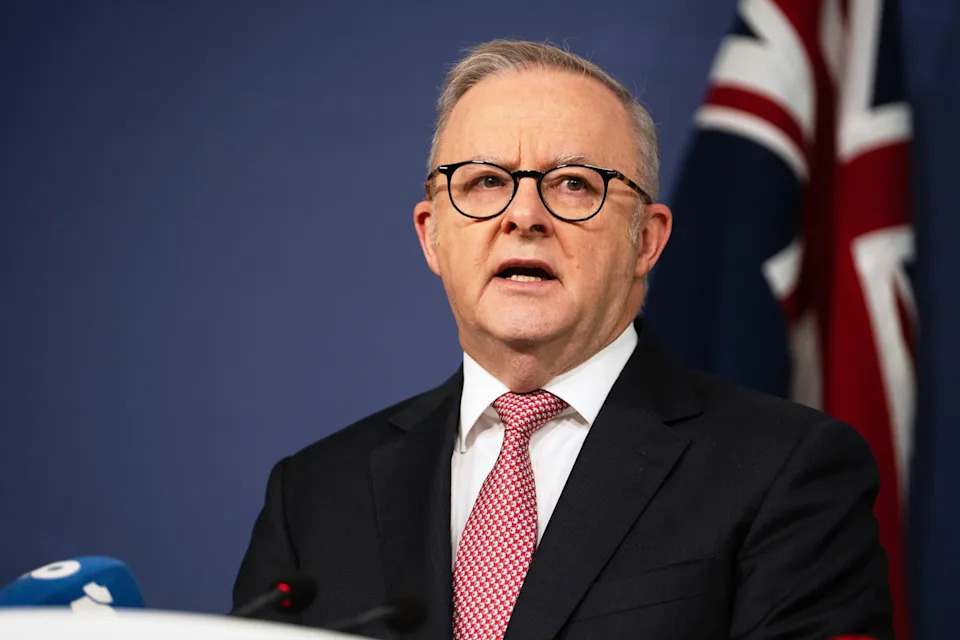
Sarah Wilson/AAP Image via AP – PHOTO: Australian Prime Minister Anthony Albanese addresses the media in Sydney, March 1, 2026.
While Trump appears to have taken up the cause of the Iranian soccer players, his administration domestically has taken a harder line on Iranians living in the U.S.
Since taking office in 2025, the Trump administration has deported some 100 Iranians living in the U.S. back to the country across three flights.
And in October, an attorney representing two people who were deported to Iran alleged that the U.S. removed his clients without due process and claimed they are now at risk of persecution in their home country.
Ali Herischi told ABC News that two of his clients, who he said entered the U.S. through the southern border to claim asylum in the past year, recently “disappeared” from the Immigration and Customs Enforcement detainee locator system and were then deported without notice to Iran, including one who he said was a Christian convert who entered the country in 2025 with his pregnant wife.
ABC News’ Will Gretsky contributed to this report.