
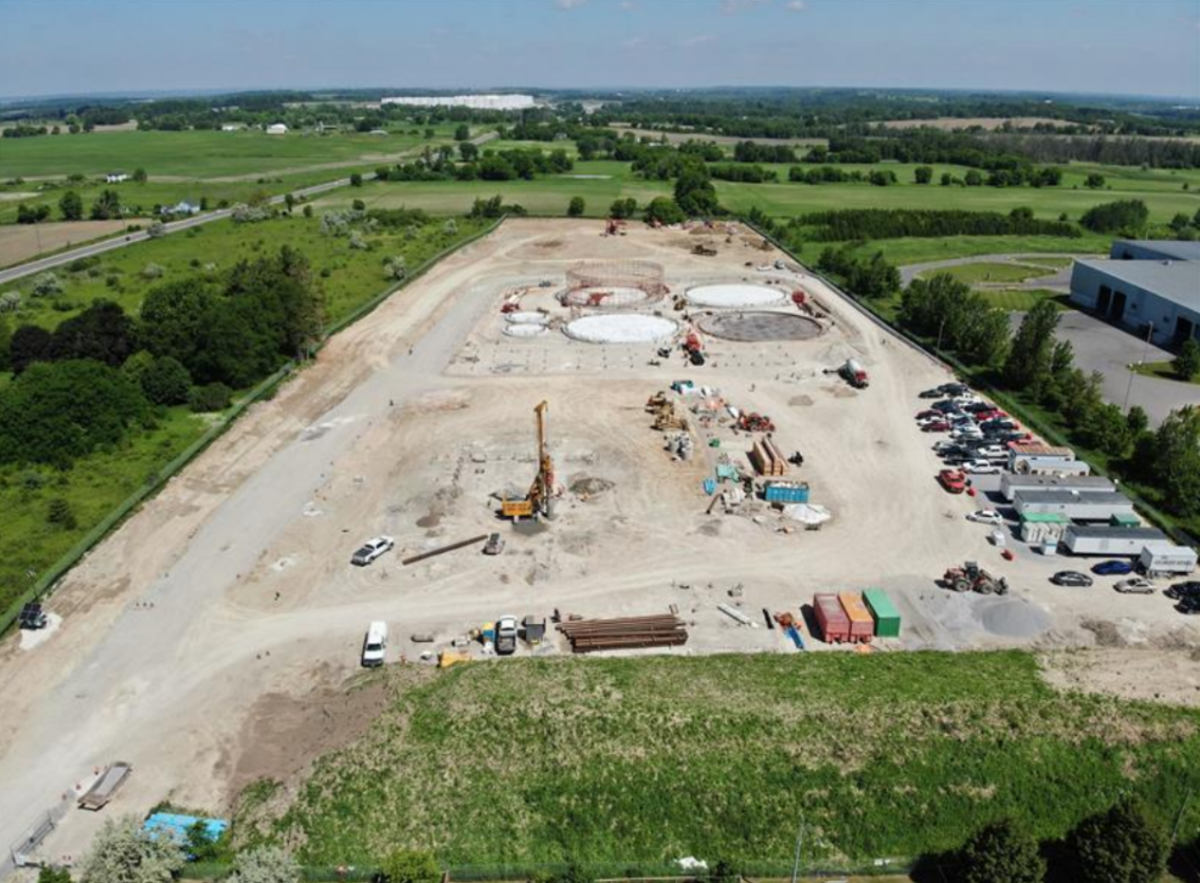
Convertus York will process 200,000 tonnes of organic waste annually, converting it into both renewable natural gas and nutrient-rich organic fertilizer, at a massive facility in East Gwillimbury
The new biofuel facility built to handle York Region’s green bin material has all the approvals it needs to proceed with construction in East Gwillimbury.
Convertus is preparing to build the more than $490-million facility just east of Newmarket at Garfield Wright Boulevard. The company announced it has received all necessary approvals and permits to begin construction of the facility, expected to process and convert regional green bin material into biofuel by 2027.
“These approvals are the result of close collaboration with local and provincial authorities and will ensure we remain on course to deliver a facility that embodies Convertus’ mission to close the loop for a more sustainable and circular approach to waste management,” vice-president of strategic initiatives Arun Gudla said in a news release.
York Region awarded the contract to Convertus to build the facility through a procurement process, breaking ground in October 2024. The region sought a closer facility, as opposed to facilities farther away in London and Moose Creek. The new facility will be contracted over a 20-year term and regional staff projected it will result in $85 million in savings over that time period.
The facility, named Convertus York, will be the first biofuel plant in Canada to incorporate integrated CO2 liquefaction technology, according to the company. The facility will process 200,000 tonnes of organic waste annually, converting it into both renewable natural gas and nutrient-rich organic fertilizer, eliminating thousands of tonnes of CO2 emissions each year.
The company expects the facility to generate between 350,000 to 400,000 gigajoules of natural gas energy each year, enough to meet the heating needs of approximately 5,000 homes. It will connect the energy directly to the local gas grid.
With permitting in place, Convertus said it would now be focusing on constructing the facility, which will “set a new benchmark for sustainable organic waste management and clean energy production in Canada.”