
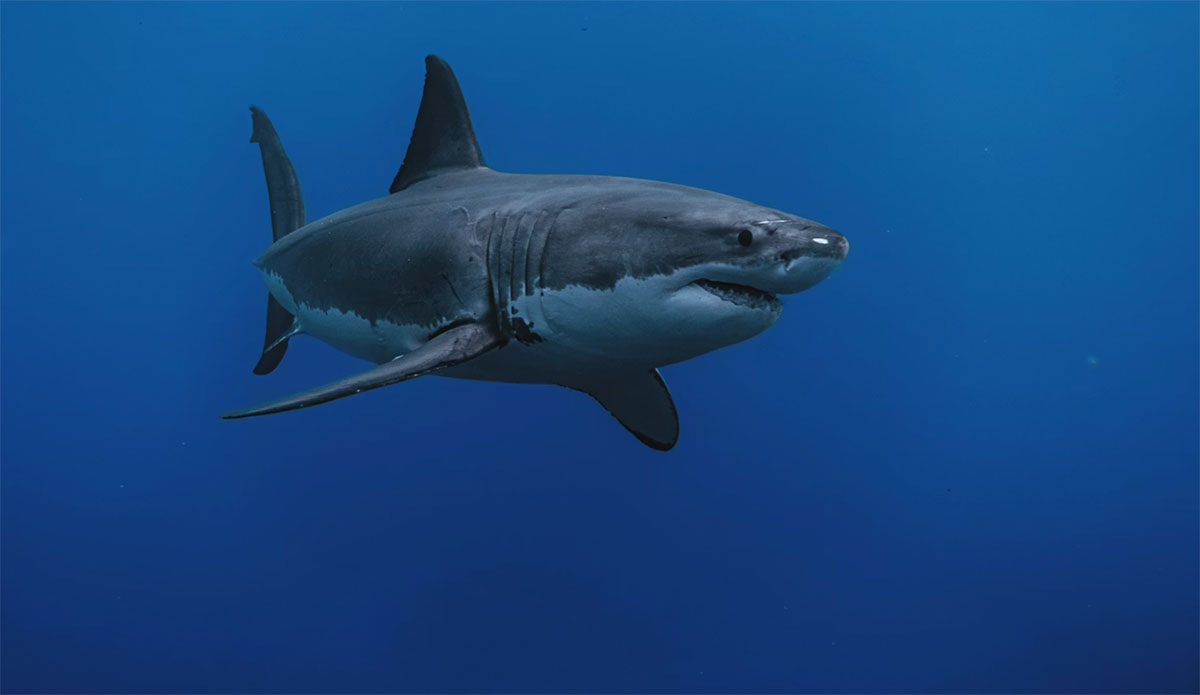
Great white sharks aren’t generally a worry in the heads of island surfers, but it sure is cool to know they might be around. Photo: Unsplash

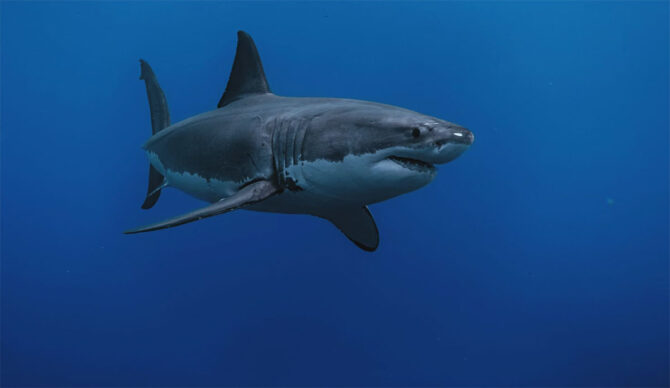
Great white sharks aren’t normally in the heads of surfers off Vancouver Island, but a few days ago, a 16-foot female with a tag pinged in the Canadian waters.
“I’ve been studying these white sharks for almost 30 years,” Michael Domeier, who works with the Marine Conservation Science Institute, told the CBC, “and this is the first one that’s gone this far north.”
The shark in question is named Kara, and she was tagged in October of 2025. Weighing a little over a ton, Kara was first fitted with a tracking device near California’s Point Conception. Her tag pings when her dorsal fin breaks the surface so that researchers following along with her journey can figure out a little more about the daily lives of the world’s most feared and misunderstood shark. This particular tracking program looks specifically at female great whites in hopes of learning where they give birth.
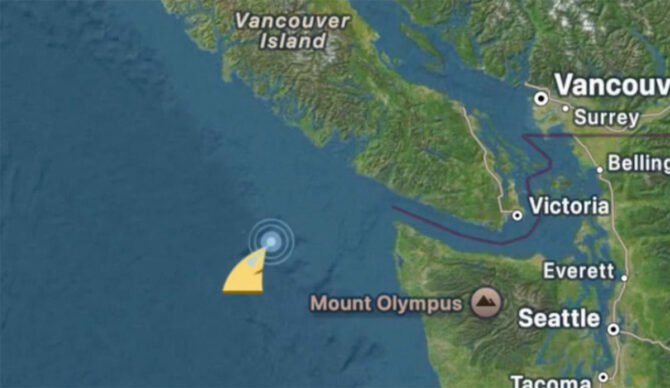
Kara is checking out the coast of Vancouver Island. Image: Expedition White Shark App
While it is indeed rare — I grew up on Vancouver Island and live here now and have never heard of one kicking around the lineups — it’s not a huge surprise. Sharks have been recorded in Alaska, so unless they’re hopping on a plane, they’re swimming through Canadian waters. White sharks have washed up on Haida Gwaii, a stupidly beautiful but remote archipelago off British Columbia’s northern coast. Still, though, researchers were very excited to see Kara on their radars.
“We know they traverse these waters, we just don’t often see them, so it’s newsworthy in the fact that we have evidence of the shark being there,” said Laura Briggs who runs a Facebook group called Field Naturalists of Vancouver Island. That’s uncommon… We actually have no clue how many white sharks are off the coast of B.C. There are no reliable estimates of their population.”
While it’s not clear whether Kara’s presence off Vancouver Island is part of a broader movement in migratory routes or just a shark doing a bit of a walk-about, it’s helpful for researchers to know where she is.
“By understanding sharks, by diving deeper into their research, by knowing more about their movement and their ecology and their biology,” Meaghen McCord, who works with the International Union for Conservation of Nature, told the CBC, “we’re really helping to understand the ecosystem as a whole.”