
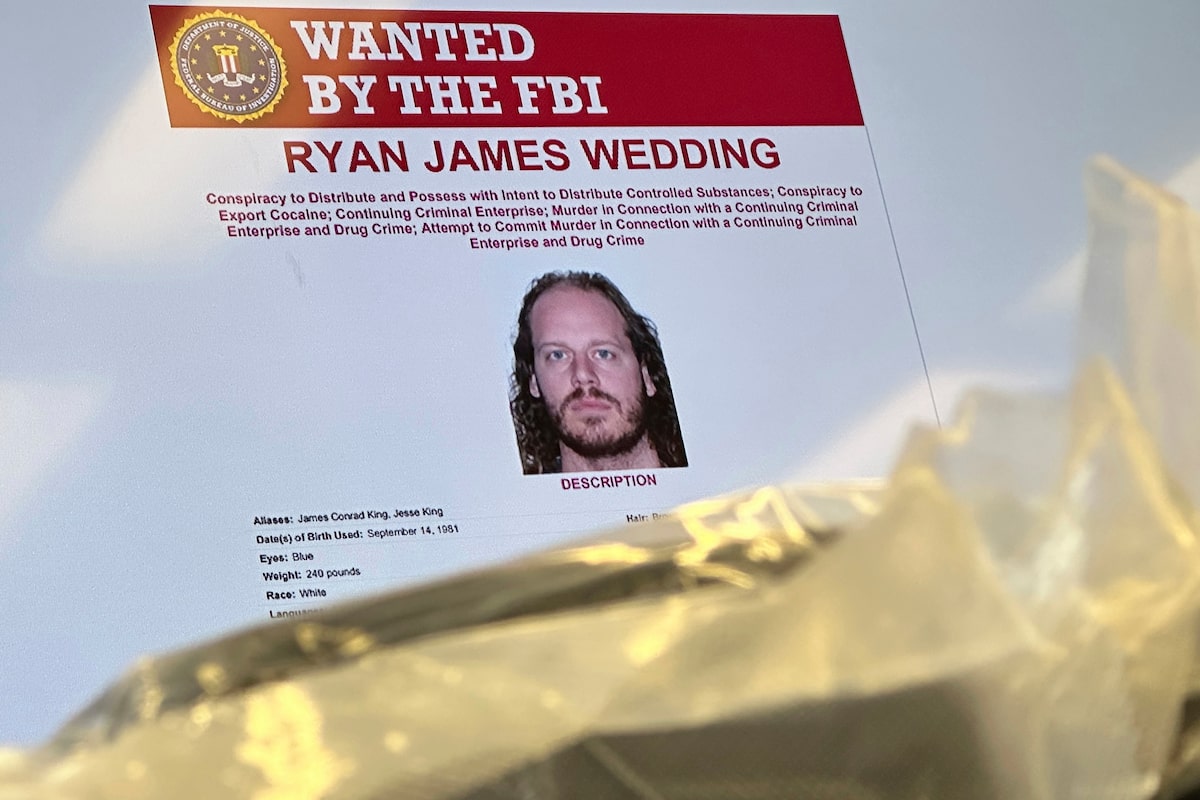
An alleged accomplice of accused cocaine kingpin Ryan Wedding has been moved to a special unit in a Toronto jail for high-risk detainees and people in need of increased protection, after he was linked in court documents to a central figure in a sweeping police corruption probe.
Gurpreet Singh, who allegedly conspired to transport hundreds of kilograms of cocaine into Canada for the Wedding network, has been held at Toronto South Detention Centre since October, 2024. He is currently fighting extradition to the United States, where he faces drug-trafficking charges.
Last week, a court order linked Mr. Singh to Brian Da Costa – an alleged drug trafficker accused of bribing police officers and leaking computer data later used to orchestrate an attempted hit on a Toronto South correctional officer. Mr. Da Costa has been barred from contacting Mr. Singh and 35 other individuals as one of the conditions of his $1.5-million bail plan.
The alleged attempted hit at the correctional officer’s home sparked a police-corruption investigation known as Project South that has resulted in charges against seven Toronto police officers and a retired officer. Charges have also been laid against 19 civilians, including Mr. Da Costa.
Mr. Singh has not been charged in connection with Project South. In a court appearance Wednesday related to the Wedding case, a lawyer for Mr. Singh said he was moved to Toronto South’s special handling unit last Friday where he has had “very limited access to counsel and the outside world.”
“We’ve made inquiries about his transfer to that unit, which have gone unanswered,” Christopher Lutes, a lawyer for Mr. Singh, told the court.
In an e-mailed statement, Ministry of the Solicitor-General spokesperson Brent Ross said he was unable to provide information on individual cases or matters that are before the courts.
An independent review on inmate-on-staff violence conducted for the Ontario provincial government says detainees are sometimes placed in special handling areas because of “behavioural management” issues, but does not describe specific grounds for this more restrictive form of detention.
Mr. Singh has previously raised concerns about conditions at Toronto South. During a bail hearing in March, 2025, Mr. Singh told the court his personal belongings including “religious books” had been damaged during a search of his cell.
“We are regularly getting searched. They wake us up maybe 5 [or] 6 in the morning, take us to the scanners, strip search us,” he told the court, according to an official audio recording of the proceedings.
Mr. Singh said he had twice been denied access to his lawyers at the facility, and denied visits from friends and family on multiple occasions.
Mr. Singh and his co-accused, Hardeep Ratte, conspired to help ship hundreds of kilograms of cocaine from Southern California to Canada in long-haul semi-trucks, U.S. authorities say. The allegations have not been tested in court.
Police have described Mr. Da Costa, the alleged drug trafficker charged in Project South and connected in court documents to Mr. Singh, as a “key figure” in a Toronto-area criminal network with “significant international ties.”
Investigators say Mr. Da Costa worked closely with Toronto Police Constable Timothy Barnhardt, alleging the two men gave confidential information about the Toronto South corrections officer to hit men who targeted the officer in June of last year. The pair is also jointly charged with trafficking in stolen police uniforms, obstruction of justice and public mischief.
Correctional officer safety has long been a point of contention between the Ontario government and the union representing prison staff.
Six years before police allege the database breach led hitmen to a correctional officer’s door, the Ontario government rejected a union proposal to make it impossible to search for jail staff’s personal information in its licence-plate database.
With a report from Molly Hayes