
Getty
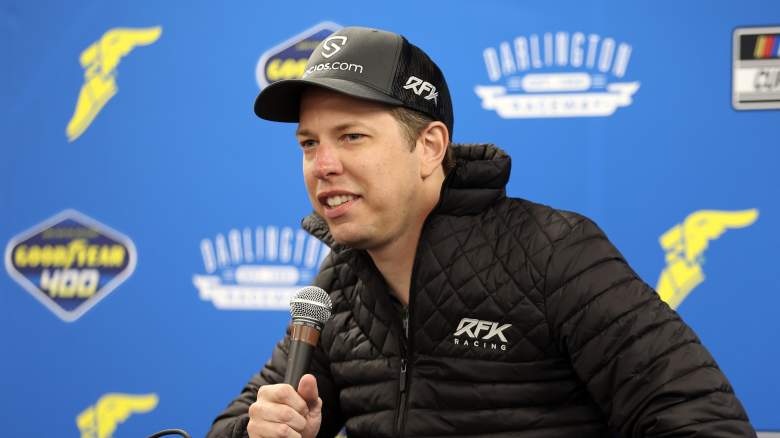
Brad Keselowski meets with media members at Darlington Raceway.
NASCAR built its driver development system around a clear ladder. Drivers started in the lower divisions, gained experience, and moved up once they proved they were ready. Each national series had a specific role. That structure helped produce many of today’s NASCAR Cup Series drivers.
In recent years, the lines between those levels have started to change. The Cup Series still operates with a strong approval system, but questions have grown about how drivers develop in the lower divisions.
The ARCA Menards Series, the Craftsman Truck Series, and the O’Reilly Auto Parts Series no longer look the same as they once did. Brad Keselowski spoke about the issue during an appearance on the Dale Jr. Download podcast and explained how the system has shifted.
Brad Keselowski Says Approval Process Differs By Series
Keselowski said NASCAR’s approval process still works well for the Cup Series. But he believes the situation is different in the other national divisions.
“Is the approval process broken? Yes and no. It’s not broken at the Cup level. Is it broken at those other three levels? Yes,” Keselowski said.
The approval process determines whether drivers can compete in certain NASCAR events. NASCAR reviews a driver’s experience and results before allowing them to enter races at higher levels.
Keselowski’s comments focused on how the system functions across the sport’s different tiers. While the Cup Series remains stable, he said the lower levels have changed from their original design.
Lower Series Once Had Clear Roles
Keselowski explained that NASCAR’s national ladder once had four distinct identities.
“We used to have four very distinct series with four very distinct identities,” Keselowski said.
The ARCA Menards Series often served as the starting point for developing drivers. Teams used the series to evaluate young racers and give them time to learn racecraft on different tracks.
The Craftsman Truck Series had a different reputation. The division became known for its experienced drivers and aggressive racing style.
“The Truck Series was like if you were a 35 or 40-year-old driver who was pretty good but wasn’t quite Cup-level good. That was your home. Arguably the hardest-nosed series,” Keselowski said.
The intermediate level, now called the O’Reilly Auto Parts Series, usually acted as the final step before the Cup Series. Drivers moved there after gaining experience in ARCA and Trucks.
Rule Changes Altered the Development Ladder
Several rule changes have reshaped how drivers move through NASCAR’s system. One major shift came when NASCAR limited how often Cup drivers could compete in the intermediate series.
The rule aimed to give younger drivers more chances to win races. But it also removed direct competition between developing drivers and Cup veterans.
Keselowski believes that change played a role in altering the ladder’s structure.
“For whatever reason, we completely abandoned the identity of those four series. The pecking order has kind of been thrown away. It started with removing the Cup drivers from the O’Reilly Auto Parts Series.”
He also addressed the debate about who should compete in the developmental divisions. Some participants enter those series with limited racing backgrounds.
“Those two series are meant for guys like Cletus. As long as it doesn’t affect Sundays, I think it’s probably fine. Those are supposed to be developmental series,” Keselowski said.
The Cup Series continues to operate at a high level, but the structure of the path leading to it has changed in recent years.
Dogli Wilberforce is a sports writer who covers NASCAR, Formula 1 and IndyCar Series for Heavy Sports. With bylines at Total Apex Sports and Last Word on Sports, Wilberforce has built a reputation for delivering timely, engaging coverage that blends sharp analysis with accessible storytelling. Wilberforce has covered everything from major football transfers to fight-night drama, bringing readers the insight and context behind the headlines. More about Dogli Wilberforce
More Sports
Loading more stories