
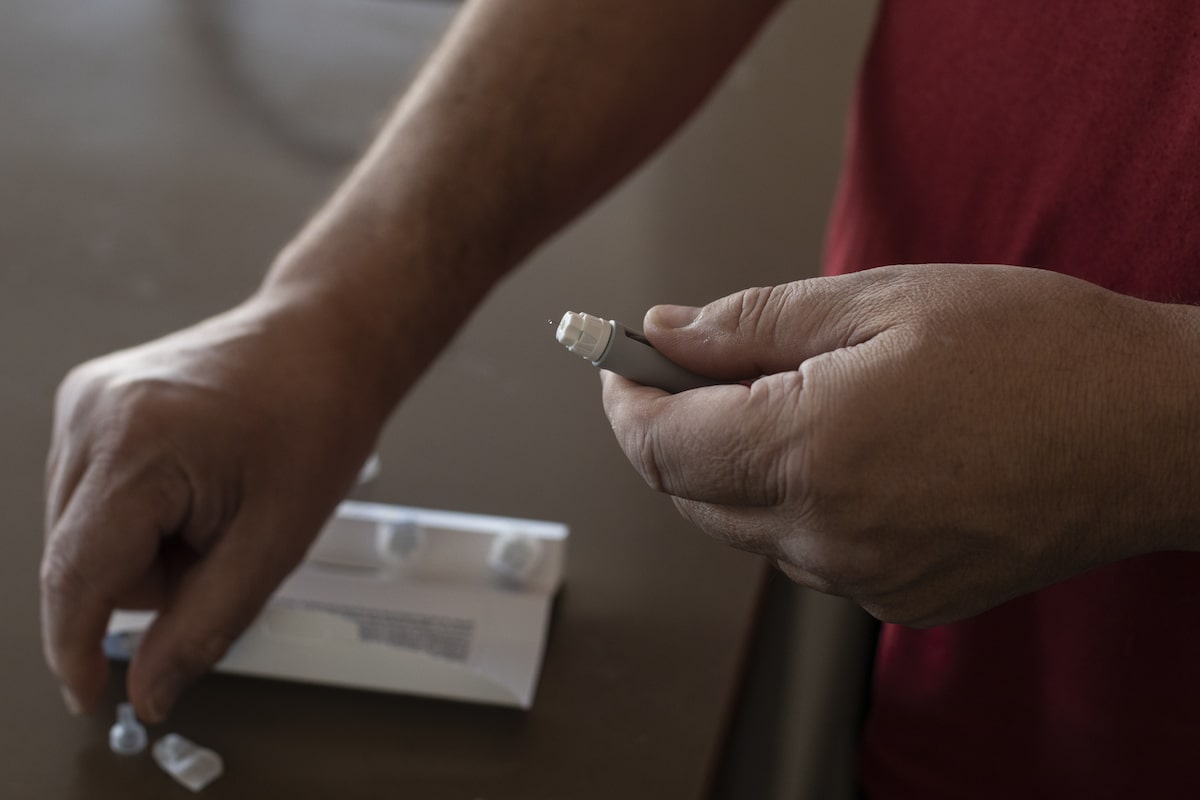
A man prepares a shot of Ozempic. Almost 70 per cent of adults were classified as overweight or obese in 2022-24, an eight-percentage-point increase from 2016-19, according to a Statistics Canada survey.Amber Bracken/The Globe and Mail
The rising rate of obesity in Canada is resulting in massive health and economic ramifications, warn health experts who are increasingly concerned about the failure of Ottawa and the provinces to act.
Leading medical organizations have long advocated for obesity to be formally recognized as a complex and chronic condition, not a lifestyle choice, but only Alberta has adopted that classification. The western province’s announcement last March was seen as a landmark decision that would improve care and potentially sway other provinces and territories to follow suit. However, none have.
Tasneem Sajwani, medical director of the Edmonton Weight Management Centre, said the evidence cannot be ignored much longer, pointing to Obesity Canada’s estimate that failing to treat obesity costs the country nearly $28-billion annually.
“The impact that obesity in itself has on Canadians and the Canadian economy cannot be ignored,” Dr. Sajwani said. “It’s only a matter of time until provinces and territories will be moving forward with accepting this as a chronic disease. It’s almost inevitable.”
Obesity Canada’s 2024 report on the costs of untreated obesity was funded by Eli Lilly, the maker of Mounjaro and Zepbound, competitors of Ozempic and Wegovy.
Almost 70 per cent of adults were classified as overweight or obese in 2022-24, an eight-percentage-point increase from 2016-19, according to a Statistics Canada survey. Half of Canadian adults have abdominal obesity, which is an accumulation of fat around their midsections, up from 39.5 per cent in the pre-pandemic period.
Obesity has been linked to more than 200 downstream conditions, including diabetes, heart disease, stroke and cancer. Aside from costs to the health system, obesity indirectly costs Canadians through reduced workplace productivity and absenteeism.
While obesity care has transformed with the rapid rise of weight-loss medications, such as the blockbuster drugs Ozempic and Wegovy, experts in the field argue that supports must extend beyond pharmacology. They also say that a national, co-ordinated approach is needed to ensure equitable access.
Skinny Inc.: Where does the rise of GLP-1s leave the body positivity movement?
Sylvia Santosa, a Canada Research Chair in clinical nutrition and professor at Concordia University, said that the federal government acknowledging obesity as a chronic disease could push provinces toward a more cohesive approach.
But Ottawa has not taken this position.
Nicholas Janveau, a Health Canada spokesperson, said in a statement to The Globe and Mail that obesity is recognized as a risk condition for chronic disease. He did not outline a federal strategy aimed at addressing obesity alone.
Mr. Janveau said the government invests $20-million annually to “support healthy living” initiatives. He said federal, provincial and territorial health ministers agreed in 2010 to curb childhood obesity.
Experts say it is critical that policymakers are on the same page, shifting the perception of obesity away from personal blame and toward evidence-based medical treatments. But why haven’t other provinces followed Alberta’s lead?
The Decibel: The Canadian connection to Ozempic
Ellina Lytvyak, assistant professor of medicine at the University of Alberta, said provinces may be reluctant to recognize obesity as a chronic disease because of stigma and fiscal priorities.
“Many provinces might be concerned about increasing health care costs,” said Dr. Lytvyak, who founded the university’s Bariatric Medicine Clinic. “Because if you recognize the condition as a chronic disease, then you need to fund treatment, you need to ensure that medications are covered, you need to ensure that you are expanding bariatric services.”
This would also push provinces to improve education and training of health care professionals in an effort to reduce bias and stigma. She said this is especially important because vulnerable communities, including Indigenous peoples and individuals with low socioeconomic status, are disproportionately affected.
The good news, explained Dr. Sajwani, is that the incoming tide of generic forms of semaglutide, the active ingredient in Ozempic and Wegovy, could help make the economic case for provinces. The price will be lowered to 35 per cent of the brand price once at least three generics hit the market.
“Alberta is a trailblazer and always has been in managing obesity, but I feel that this is just the beginning,” she said. “To recognize that obesity is a chronic disease can actually help us move forward for our patients and for the whole health care system.”
Obesity rates increased after start of COVID-19 pandemic, new study shows
The Globe and Mail reached out to all provinces and territories on whether they will formally recognize obesity as a chronic disease. The majority said there are no plans to do so or did not answer the question directly. Manitoba did not respond to a request for comment.
Prince Edward Island said it is currently developing a framework for the prevention, detection and management of chronic diseases to be released later this year. “Within this framework, obesity is considered a chronic disease,” according to a statement from the province’s department of health and wellness.
Medical and obesity organizations worldwide have long recognized obesity as a chronic condition. The World Health Organization, for example, formally recognized it as such in 1997. Obesity Canada and the Canadian Medical Association declared it a chronic, progressive and relapsing disease in 2015.
Alberta recognized obesity as a chronic condition on March 4, 2025, and declared it World Obesity Day.
Maddison McKee, press secretary to Primary and Preventative Health Services Minister Adriana LaGrange, said in a statement that Alberta did so to reflect the complexity of the condition and support “more coordinated, patient-centred” care.
“Since that recognition, the focus has been on strengthening clinical pathways, supporting primary and preventative care, and reinforcing standards that promote respectful, bias-free interactions between patients and providers,” Ms. McKee said.
Albertans continue to have access to obesity treatments, including bariatric surgery, pharmacotherapy and primary-case-based supports, Ms. McKee said.
Alberta-sponsored drug programs do not cover Wegovy and Ozempic is covered for the treatment of diabetes, not weight management. These medications are similarly restricted in all other provinces and territories.
Dr. Santosa said Alberta’s formal recognition is promising but it will take time to transfer into real-world changes. She said other provinces may be allocating resources to obesity management, but a formal recognition goes a long way in reducing stigma.
“In recognizing it as a disease, you recognize that it’s not the fault of the individual,” she said. “It actually takes away the stigma and allows for more appropriate treatment.”