
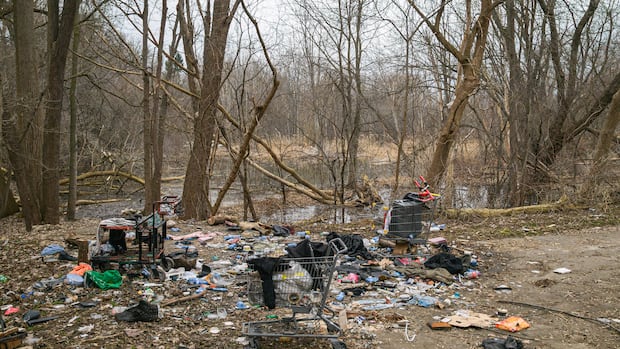
The recent warm spell is giving Londoners a look at a familiar spring eyesore along city roadsides, riverbanks, in parks, and near public pathways—garbage.
Trash and litter, including coffee cups, plastic containers, glass bottles, construction materials, and used drug paraphernalia, have accumulated over the winter, and buried until this week.
“With the snow melting, the city typically sees an increase in debris along the river and in park areas,” including general litter and garbage associated with encampments, city spokesperson Carmen Mallia said in an email.
While the sight of post-thaw refuse isn’t unusual, this winter’s early and abundant snowfall, coupled with a prolonged deep freeze, hindered cleanup, the city said. Rising water levels in the river have also posed a challenge.
“The city’s Coordinated Informed Response team is supporting cleanup activity and working with people living in encampments to address any health and safety concerns. Parks and Forestry crews will also be out in parks collecting debris, with staff capacity increasing as the arena season winds down,” Mallia said.
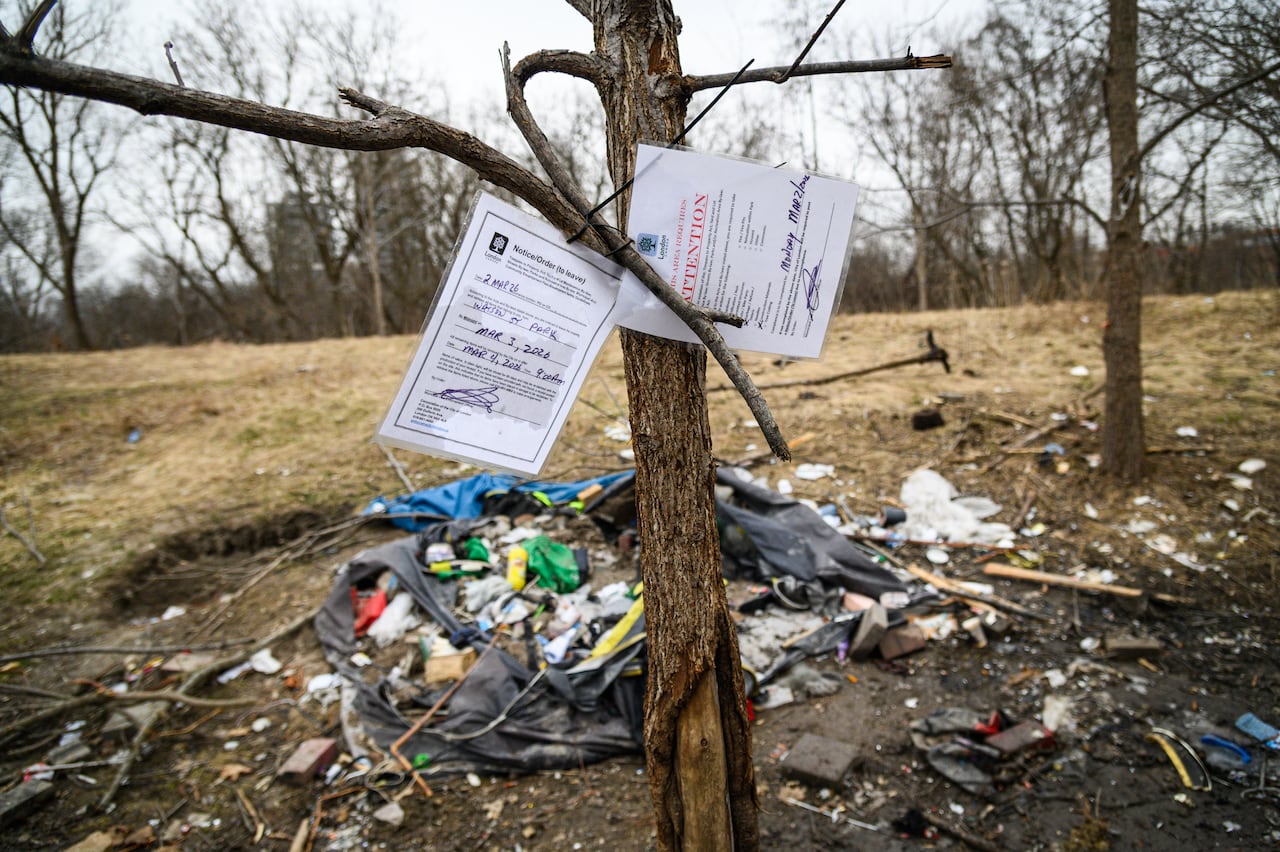 Clearout notices are visible at several abandoned encampments in Watson Street Park. Volunteers say there has been more garbage found near encampments. (Matthew Trevithick/CBC)
The spokesperson added that some public garbage trash bins in parks are temporarily removed during the winter and are reinstalled as parks reopen for the season.
“I think it’s been a major issue for many years, and people are becoming more and more concerned,” Tom Cull said. He’s a community partner specialist at the Upper Thames River Conservation Authority and founder and former director of Antler River Rally.
“Microplastics, for example, are a huge problem in our environment … and a big percentage of that comes from macroplastics that are garbage or litter that are then breaking down and finding their way into our waterways,” said Cull, adding that it’s a growing problem.
Only about 10 per cent of plastics made are recyclable, Cull said, and even then, he wonders how much of that 10 per cent are properly recycled.
“If you think about our recycling that goes out every night, when wind blows over our recycling bins, when garbage transfer stations don’t have lids put on them appropriately, when folks are deciding to dump garbage illegally … this all adds up,” he said.
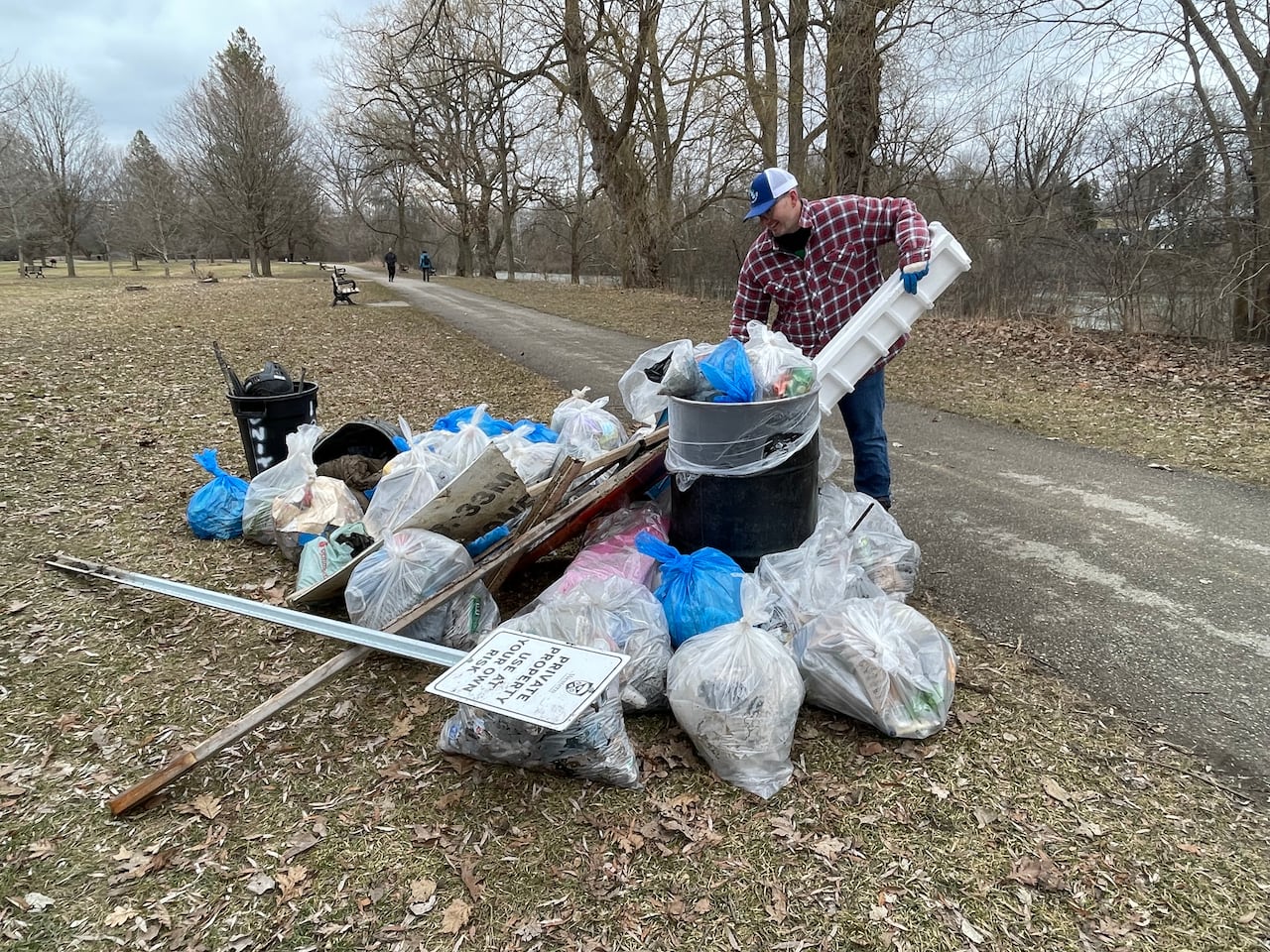 Tom Cull adds a piece of Styrofoam he found in a stream. (Angela McInnes/CBC)
There are several community initiatives aimed at collecting this misplaced garbage, Cull said, including his former Antler River Rally—now with the London Environmental Network—which holds regular cleanups in hotspot area.
The Thames River Cleanup, which is now in its 27th year, is also held in April around Earth Day, drawing as many as 2,000 volunteers.
“It’s a mess. We had a very severe winter,” founder Todd Sleeper said of the current situation.
When the Thames River Cleanup first began in 2000, Sleeper says some of the garbage they found included trucks, steel, tires, and appliances. Twenty-seven years later, roughly 90 per cent is plastics.
“Things started to change, probably 10-15 years ago; we started finding the odd needle,” he added. “That raised a lot of concerns. We had to talk to our community coordinators and offer them training on how to pick up needles and where to take them.”
“We’re seeing a lot more garbage, especially around encampments. We’re asking people not to go into the encampments because that’s just not safe and there are people that are living there. We work around them, and sometimes they even help us out.”
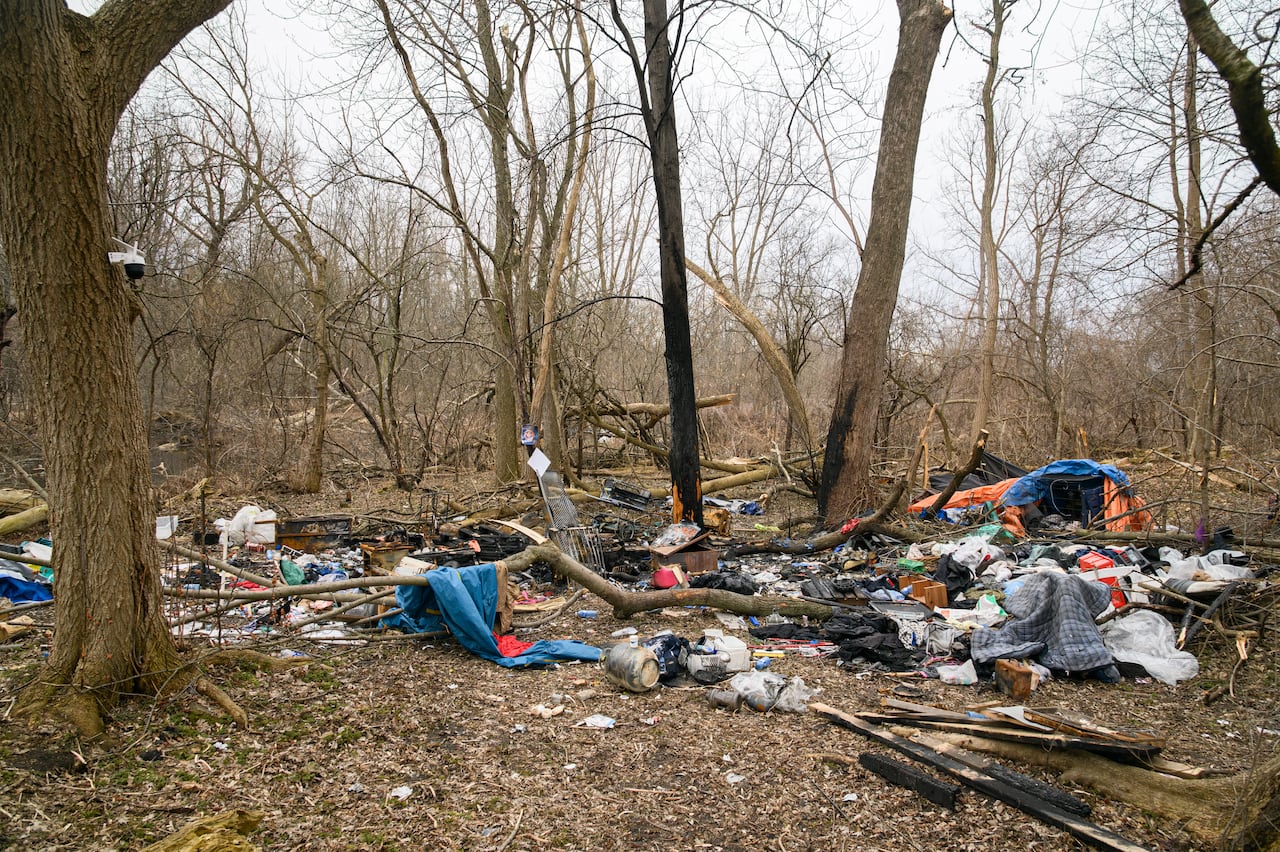 Several community initiatives have been working to cleanup garbage. Many of them hold regular cleanups in hotspot areas such as Watson Street Park (Matthew Trevithick/CBC)
Encampment-related refuse is an ongoing issue at some city parks, including Watson Street Park. When CBC News visited the park on Tuesday, piles of uncollected garbage could be seen across several former encampment sites cleared out by the city, some several months ago, and one as recently as last week.
The park had hosted a service depot providing basic necessities until last spring. A fire involving exploding propane tanks led the city to step up enforcement and encampment clearouts. As of last month, 29 people were living in 22 encampments across London, according to city data.
Cull says people sleeping rough consume less than those housed, but a lack of proper garbage collection means their trash is visible and becomes a “hyperlocal focus of concern, of anger.” No garbage bins could be seen at the park when CBC News visited, only a lone porta-potty.
“Waste bins are typically reinstalled in parks in late April and early May as part of the city’s seasonal operations, including those located at Watson Park,” Mallia said.
“I think sometimes this is a vulnerable population we kind of download these issues on to, because it’s easier when you come into a park and you see an encampment that perhaps has been abandoned … you see a great concentration of garbage,” Cull said.
“At the same time, if we went along Veterans Memorial or Highbury right now and collected all the garbage in the ditches, that pile of garbage would greatly dwarf any encampment’s garbage.”
Cull believes the spring thaw should serve as an opportunity to look at the issue of waste more broadly and the types of materials used in the products we buy and then throw away.