
At 23 Bailey Goldstone is young to be leaving downhill. While it is a young person’s sport, the two-time national champion has a race resume that could see her keep racing for years to come. When the Squamish-based rider made the announcement, she shared that the decision stems back to a serious concussion suffered early last summer.
The concussion wasn’t Goldstone’s first but it came with more complications than in the past. The Squamish racer is looking back on a successful career, happy with what she’s accomplished and ready to move on. But she also wants to help other riders
“I’m proud of myself for what I did, but I’m kind of ready for the next chapter,” Goldstone says, adding, “I’m excited to help push the conversation around concussions forward. I’ve seen a lot of them and seen a lot of them in other people. And I think everyone should be more open to talking about them.”
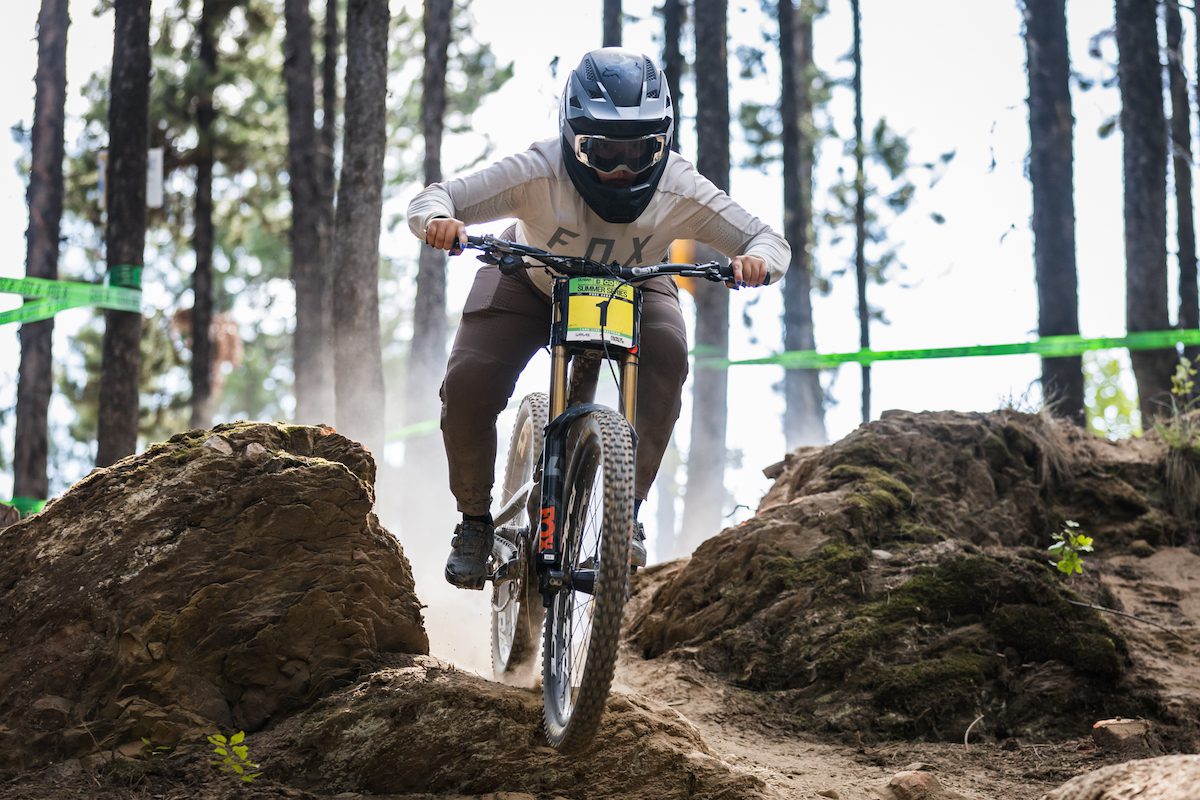 Bailey Goldstone on track at a Canada Cup in Panorama in 2023. Photo: Sarah Kempner
A cumulative effect experienced over a year
Last year’s crash wasn’t Goldstone’s first concussion. She says her first major one was probably around age eight and has had several since. This one, she says, was different.
“The last one in 2025, if felt like the big one,” Goldstone says. “All of the symptoms were unleashed from all of my concussions, if that made sense.”
The list of symptoms Goldstone that came with last year’s crash is harrowing.
“I was fatigued all the time. I needed to sleep all the time. Headaches. I’ve been having a lot of vision problems, with my vestibular system. So when I’m out biking and there’s shifting light, it takes my eyes a really long time to readjust. That one’s kind of freaky because I can’t see for a second or two. I get quite bad vertigo and I have no depth perception.”
While she says some have improved, it’s still requiring a serious shift in her day-to-day life a year on.
“My headaches are a lot better. I only get them sometimes now whereas before it was kind of like 24/7 that I had a pretty bad migraine. I’m less fatigued, but I’m still definitely more fatigued than a should be. I’ve been working on my focus, just how to manage a lot of the symptoms. That’s made them better. But I think a lot of these symptoms are going to be long term, if not permanent.”
Several of the symptoms are already requiring significant changes.
“I’ve slowly developed a speech impediment over the years as well, which seems to be related to the concussions. I’m still noticing headaches quite often, say after I’ve had a big day. I have a hard time concentrating if there’s noise around me. So I have a hard time going out to restaurants if there’s other conversations happening. I’m back at university and staying focuses is quite hard to do, as are screens. Screens give me quite bad headaches. Since the last concussion I’ve actually had to get glasses.”
All of that means that, while Goldstone’s been able to do some activity, she hasn’t raced since the last crash.
“It made the decision to stop racing quite easy, because I just kind of was able to look at how I’m feeling and my symptoms and how they’re not getting better, or like they are getting better, but they’re not completely going away,” Goldstone says. “All but one of my concussions, except for one were in some form of race. The other one was in competition. Regular biking and skiing, even walking down the street, I’m at risk for a concussion. But definitely I think taking away racing will put my risk way down so I can still enjoy doing some sports, hopefully.”
A warning to younger riders
Goldstone says that, while she knows a lot more about concussions now, and how to treat them, she wishes she’d had that knowledge when she was younger and dealing with her earlier injuries.
“Hindsight is 2020, but I just wish I took them seriously, because I really didn’t” Goldstone says. “Concussions are hard because everybody’s different. For me, I find that I actually feel okay after the crash, but then the next week I can look back and see that I was not ok. So I definitely didn’t take them very seriously because in the moment they didn’t feel as serious.”
Goldstone admits that she could have been better informed but also a consequence of a collective changing understanding about concussions and recovery protocols. She adds that the conversation around head injuries in mountain biking, especially in downhill, could still be better.
“That’s why I’m trying to spread the message. So people, hopefully, will take them more seriously and not end up in my position.”
Wear a mouth guard
Goldstone’s adamant that prevention is as important as recovery. One important step to help prevent, or at least minimise the impact of a concussion is a mouth guard.
“I don’t do any sports without a mouth guard. I always wear it biking or skiing. It’s a requirement for me,” Goldstone shares. “I think more people should know that. I think a lot of my concussions could have been way worse if I wasn’t wearing one.”
While Goldstone wears a custom fitted guard from a dentist, even a basic guard could have some benefits.
“A lot of concussions happen when your jaw snaps together and your teeth snap shut when you hit your head,” she explains. “That can have a bit impact on how heavy a concussion is. So a mouthguard can significantly reduct that part of the impact.”
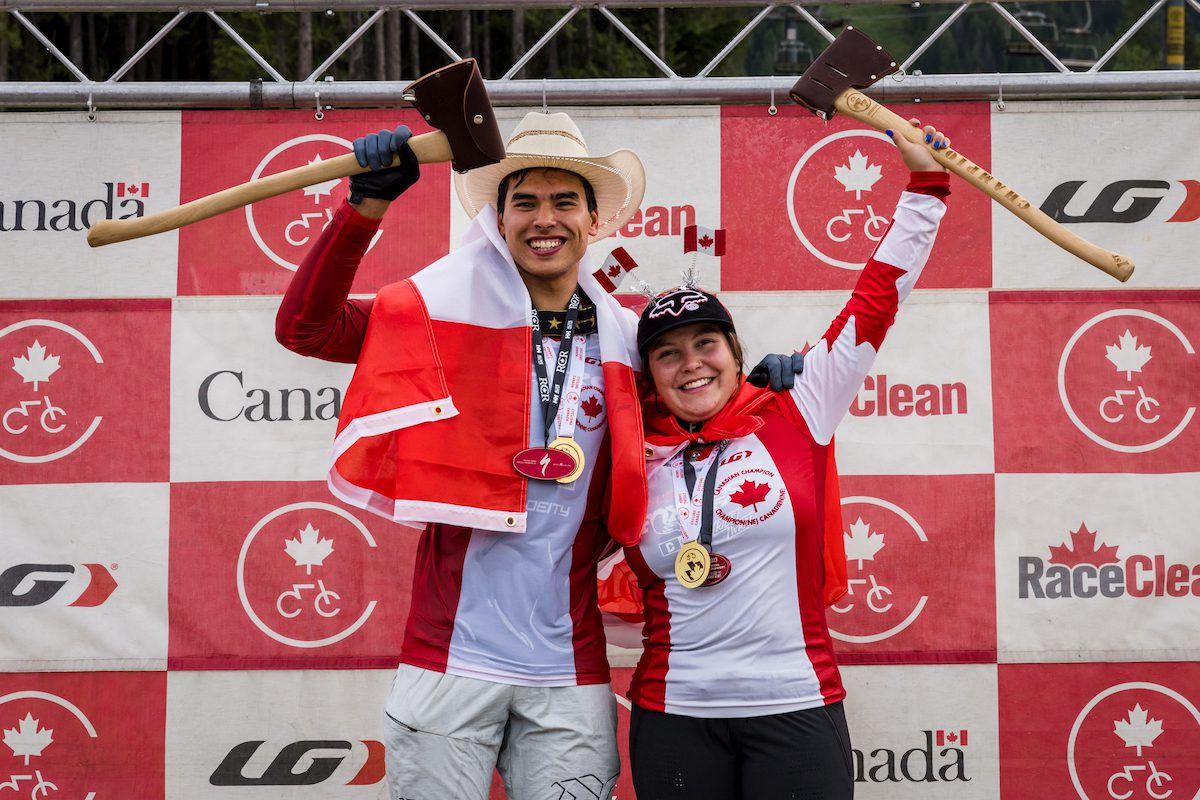 Godlstone earning her first elite title in 2022. Photo: Sara Kempner
Aren’t there protocols for this?
If you’re reading this and thinking, “Don’t they have concussion protocols now?” Well, sort of. First, those protocols didn’t exist 15 years ago when Goldstone started racing (thinking back to my own, single concussion, the advice I was given was nearly the opposite of what is recommended today).
But there’s also a disparity in how those protocols are applied, or enforced. Some riders have teams with enough support staff to notice a crash, and resulting changes, and support a rider in deciding not to race. But if you’re on a smaller team or on your own, there might not be anyone but your friends telling you to sit a race out. That pressure can be different if, say, you’ve invested significant savings to get to just a couple World Cup’s hoping to make an impression.
“So I definitely think that some riders who have coaches or physicians who can tell them to step down, I definitely think they’re at a bit of an advantage,” Goldstone agrees. “I’ve seen a lot of my friends who worked so hard to get to a race, they just push through it. I definitely notice that when I don’t have someone around me whose able to notice my symptoms and tell me to back off, I’m just going to push through them.”
Goldstone adds that there is an effort at the top level to make that kind of support available outside of the team structure, so any rider would have access.
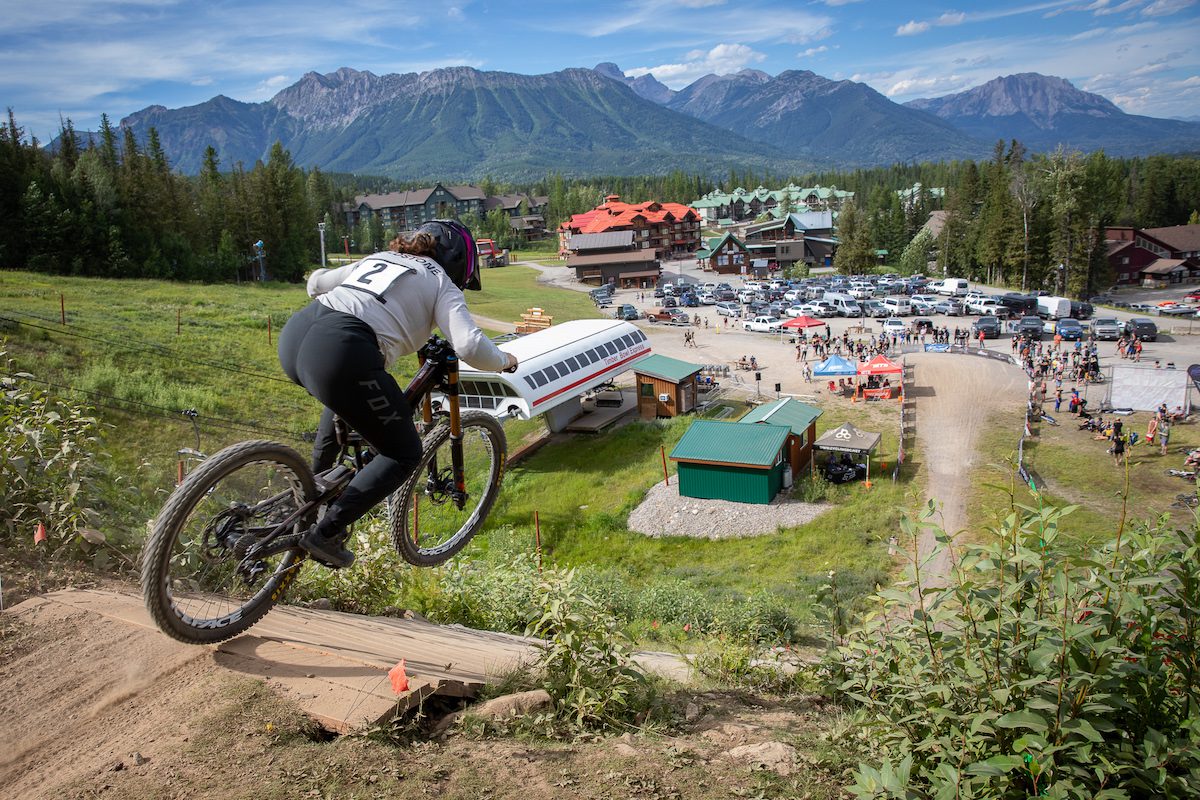 Bailey Goldstone drops towards the finish area in Fernie. Photo: Andrea Heath
Looking back at a career to be proud of
While Goldstone’s step back from racing isn’t by choice, she says she’s proud of what she accomplished and “ready for the next chapter.”
“I’m really really, really proud of myself for everything I did,” Goldstone says, adding “Especially considering I was working a full time job the whole time. I think a lot of people don’t know that.”
Despite carrying full time work along with training, the Canadian accomplished quite a lot during her career. The two national titles stand out the most.
“When I won nationals in 2022, it was a bit of a surprise to myself. I was coming off a six-month-long recovery, where I had a concussion and two broken arms. I had actually kind of written off my career at that point. I raced for fun and ended up doing really well,” Goldstone shares. “It was a huge surprise to me. I was not the most suited for the Kicking Horse track.”
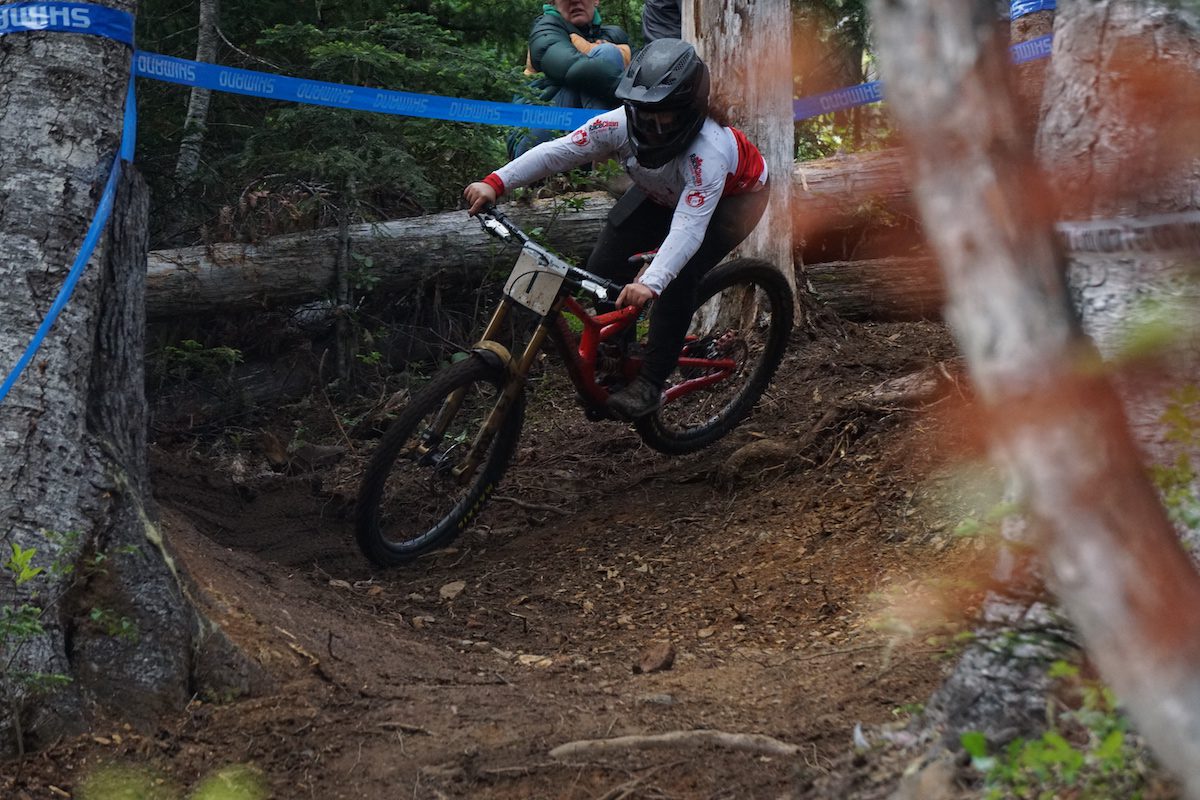 Goldstone racing in the Canada Cup leader’s jersey at Mt. Washington.
While the first win was sweet, defending that her elite national title in 2023 meant just as much.
“”I had barely ridden that summer because I was a team manager for The Union on the World Cup circuit. I just went to nationals for fun and I ended up winning. So I’m really proud of myself for that one.”
While maple leaf sleeves are hard to beat, she says one race stands out among the big wins and international appearances. It’s not even a race she won.
“The other biggest moment for me was in 2023 when I raced Dual Slalom. I ended up making my it all all the way to finals against Jill Kintner. Jill’s been one of my favourite athletes forever. I’ve looked up to her for a long time. So I was in the start gate against her and I was like, you know hat? I don’t even mind what happens right now. Like, I’m going to try for the win, but I’ve already won just because I get to race someone I’ve looked up to for a really long time.”
While Goldstone is proud of what is already quite a long career, she says her focus has changed recently.
“I’d rather go to a race now to see the community, all the people that are there, rather than actually race. So I think I’m in a good place to step away and put it aside. To be proud of myself for what I did.”
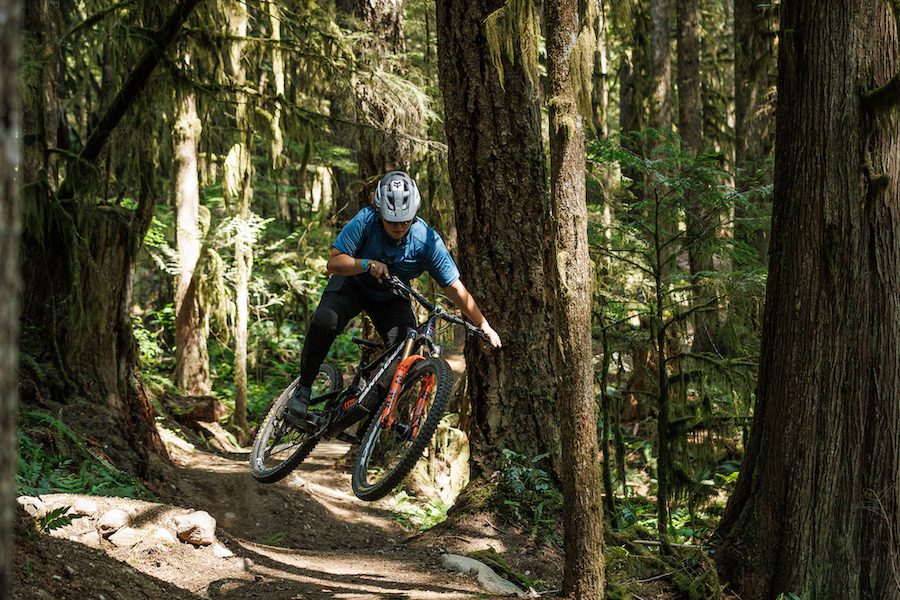 Bailey Goldstone guest coaching at Ride Lab in Squamish. Photo: Rona Nash.
Resting, but already into the second act
For now, Goldstone isn’t sitting still. Not exactly. While the ongoing concussion symptoms have definitely stopped her from racing and are slowing down life significantly, she’s already working on the next steps. Even before the end officially became the end, Goldstone worked as the assistant team manager to The Union, the lovable underdog World Cup downhill team. She says rather than missing racing, she thrived using her experience as a racer to help others.
“That was probably the coolest experience of my life. It was so hard,” Goldstone says. “It was quite fun to be on the other side and help them achieve and make sure they have everything they needed. I wore a lot of hats, and it took a lot, it was a lot of big days, but it was a really, really rewarding experience.”
It’s work that Goldstone would like to get back to in the future. To help make that happen, she’s currently back in school studying for a business degree. The screen time, classrooms and memory required for that are currently a challenge, but one she’s getting through. Her focus is still on getting back to the races.
“It’s always been my dream to be some sort of athlete manager. I really like helping people. But right now, while I’m recovering from this concussion, I’m a bit of a homebody. I think the high impact, high intensity job like that right now wouldn’t be the best for me. But I’d still like to do something like that down the line.”
Outside of school, Goldstone will continue coaching and has some media projects planned.
“I think that’s a nice pivot for me. To still stay in the industry and still be active. Just not in such a risky way.”
In closing Goldstone that while she’s proud of her career, and ready to move on, she really hopes her warning about concussions hits home for young riders.
“I just think everyone should be a little bit more open to talking about them. I think it’s definitely something that people like to keep hush and not talk about. Because it’s an invisible injury, its’ very hard to measure its healing time. So I just want to tell people to be patient with yourself if you do have a concussion. And to be patient with other people who have concussions.”
“You never really know what somebody’s going through.”