
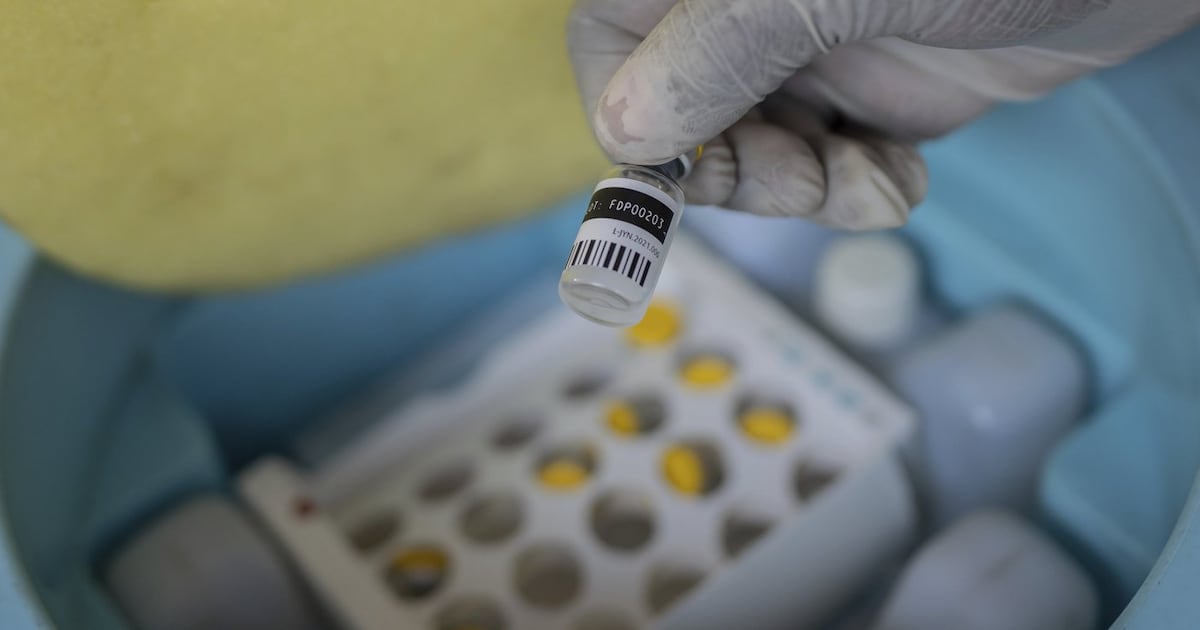
A new mpox variant has been detected for the first time in Toronto but experts say there is not enough data yet to determine whether it is more virulent or transmissible.
Toronto Public Health notified the public earlier this week that there have been two confirmed travel-related cases of the new strain, classified as mpox clade Ib.
Mpox is a virus that spreads through skin contact with another person with infected lesions, skin blisters, bodily fluids or respiratory secretions. It can also be transmitted by contact with any material contaminated with the virus and through bites or scratches from infected animals.
The health agency says mpox most commonly spreads through close, intimate or sexual contact, with LGBTQ2S+ men the most commonly affected. The risk of contracting the virus, TPH adds, remains low for the public.
Up until now, the prevalent clade was clade IIb mpox, which has been circulating in Toronto since 2022.
Clade I originated from the eastern part of the Democratic Republic of Congo, according to infectious diseases specialist Dr. Isaac Bogoch, though it has spread to neighbouring countries. Meanwhile, clade II is from West Africa.
“Historically, it was thought that clade I could cause more significant disease than clade II,” Bogoch said. “It’s not definitive, it’s just some of the data, which is definitely imperfect, would suggest that clade I might be, might be more severe than clade II, but there’s a lot of uncertainty.”
Bogoch says there is a genetic difference between the two clades, and the clade Ib may be—keyword being may, he stressed—more virulent.
“For example, clade II mpox, which has caused the vast majority of cases globally, does that translate into a clinical difference or a transmission risk? I’m on the fence,” Bogoch said. “It’s still all mpox. The prevention for any mpox, clade I or clade II is the same. The diagnostics for clade I and clade II is the same. The treatment for clade I and clade II is the same. The clinical course for clade I and clade II will completely overlap,” Bogoch said, adding there is nothing that needs to be done differently to address this new strain.
Dr. Fahad Razak, an internal medicine specialist at St. Michael’s Hospital, agreed.
“This clade, like the other kinds of mpox we’ve seen before, tends to cause classic symptoms, things like lesions or rashes on the skin. It can be in the mouth or genital region, and then people can generally feel unwell, almost flu-like symptoms,” Razak said.
The internist says there is nothing conclusive yet to determine whether clade I is more virulent or has a higher risk of fatality.
“I think we’re going to know more about whether it has some level of increased severity of spread risk but if it is, it’s probably going to be relatively modest,” Razak said.
Treatment and prevention are the same
Toronto Public Health offers eligible patients the Imvamune vaccine, at no cost, through its clinics and community partners. Two doses are recommended for best protection against both strains of mpox, with vaccines taken 28 days apart.
“Even if you get an infection after you’re vaccinated, they tend to be quite mild, the infection, so it can prevent it all together and you can reduce severity significantly if you do happen to get infected,” Razak said, adding how there is post-exposure prophylaxis also available for those who believe they have been exposed.
Both Bogoch and Razak applauded the response and vaccine rollout to mpox after the virus first began widely circulating in Toronto in 2022.
“A huge credit to the leadership in the men who have sex with men community in Canada because they recognized this early on and they were actively involved in the outbreak response,” Bogoch said, pointing to how they raised awareness and lowered the barriers to vaccination.
“Many vaccine clinics were strategically placed in community settings where people would be comfortable going and people were aware of where to go.”
At the height of the outbreak four years ago, there were 1,541 cases reported Canada-wide. In Toronto last year, TPH confirmed a total of 155 cases, and in Canada this year, so far, Bogoch said there have been at least 14 cases of mpox across the country.
With files from CP24’s Joanna Lavoie