
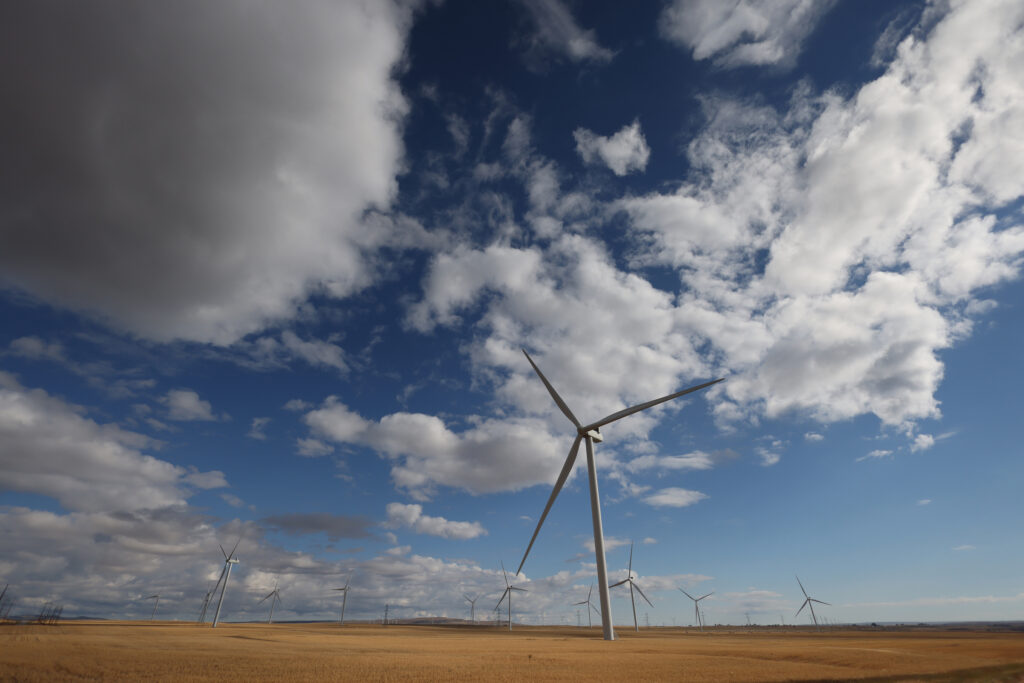
Summary
There have been significant policy changes related to renewables in Alberta — including a seven-month moratorium on clean energy projects in 2023.
There is a considerable decline in the number of renewable projects that are moving through the regulatory process in recent years.
One report showed 44 per cent of renewable projects were cancelled between 2023 and 2025, representing enough power to supply the entire province. That analysis also shows a 32 per cent increase in proposed natural gas projects.
We’re trying out staff-written summaries. Did you find this useful? YesNo
According to some, the state of renewable power investment in Alberta is dire. According to the government, the province continues to be a leader.
Analysts point to investments falling off a cliff, while the Alberta government insists companies are still lining up to build new solar and wind projects in the province.
Sooo, what’s really happening?
There’s no doubt investment has declined significantly since the provincial government first instituted a seven-month moratorium on renewable projects, followed by stiff new regulations and changes to the electricity market.
The real question is just how precipitous the drop is and whether it signals a long-term trend or a short-term blip.
Let’s dig in.
So, wait, what did the government do to impact investment in renewables in Alberta?
To recap: in 2023, the Alberta government surprised just about everyone by declaring a moratorium on all new renewable energy projects for seven months. At the end of that moratorium, it introduced new restrictions on where renewable energy projects could be built and new regulations on those projects (you might remember the government declaring no wind turbines could block what it dubbed “pristine viewscapes,” for example). Last year, the government introduced new rules on building transmission lines that could disproportionately impact new and existing wind and solar projects.
In the wake of all these changes, investments in renewables have declined significantly.
That’s a marked change after years of surging investments that made Alberta the leader in renewable development in Canada over the past five years.
Unlike all other Canadian provinces, Alberta has what’s known as a market-based electricity system. In Alberta, the government sets policy, regulators implement those directions and private investors, well, invest. Or they don’t.
Dive deeper on this topic
What does the data on new renewable energy projects show?
While there are different ways to interpret some of the data, the picture is getting clearer and it points to a significant drop in renewables in Alberta.
One measure is to look at the number of renewable projects that are moving through the regulatory process and listed by the provincial grid operator, the Alberta Electric System Operator. Essentially, proponents of the projects on the list have expressed interest in connecting to the grid. Maybe.
Projects on the list don’t always proceed, and many are in the early stages. But even so, the list is indicative of a change.
Using the month of March as an example, there is a considerable decline.
In March of 2023, there were 179 wind and solar projects on that list. And while there was a slight increase in 2024, as the impacts of the regulations and the moratorium settled in, the figures dropped to 130 in 2025 and then plummeted to 60 in March 2026.
Of those 60 projects currently on the list, 41 applied before the renewable moratorium.
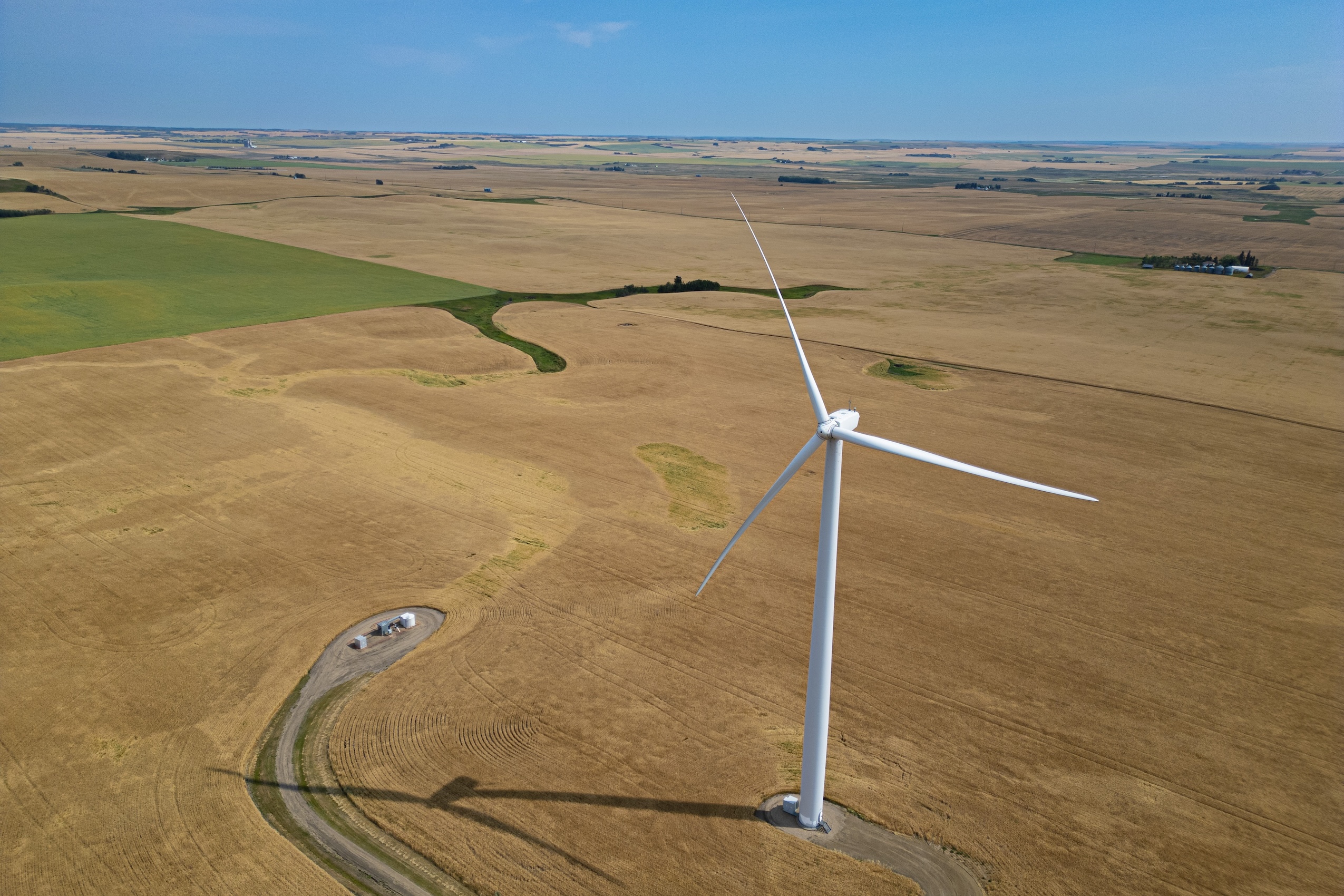 Wind projects have seen a marked decline in Alberta in recent years, likely linked to the province introducing a moratorium on renewable projects in 2023, followed by stricter regulations. Photo: Gavin John / The Narwhal
Wind projects have seen the greatest decline, with eight currently active on the grid operator’s list — two of which were pitched after the moratorium.
In an emailed statement, Nathan Neudorf, the minister of affordability and utilities, pointed to the approval of 16 renewable energy projects in 2025 by the Alberta Utilities Commission, which regulates electricity generation facilities.
Project approvals by the regulator have ranged from 12 in 2023 to 24 in 2024, but even those approvals are not indicative of projects being built. Several of the projects approved in both 2024 and 2025 have since been cancelled by their developers.
An analysis by the Pembina Institute shows 44 per cent of renewable projects were cancelled between 2023 and 2025, representing enough power to supply the entire province. That analysis also shows a 32 per cent increase in proposed natural gas projects.
Another report from the institute says Alberta “added only 137 [megawatts] of solar and no wind or storage” in 2025, down from a high of more than two gigawatts in 2022. As a guide, one gigawatt of power could supply up to one million homes.
What about investments in renewable energy projects?
It appears the private money that drives much of Alberta’s renewable development is drying up.
A recent report by Business Renewables Centre-Canada says the deals the organization facilitates between companies looking to buy renewable power and renewable developers, known as power purchase agreements, have declined.
Power purchase agreements could mean a big company signs a deal to buy power from a renewable energy project, like Amazon did with the largest solar farm in Canada in 2021. That type of deal was a boon for the renewables industry.
But new corporate deals all but evaporated in Alberta in 2025, declining by 99 per cent compared to 2023, according to the report.
Wind generation has been particularly impacted, according to the report, with no new projects announced in 2025. The most recent active project listed by the grid operator is from October 2024.
Neudorf’s office did not respond to questions emailed by The Narwhal asking about the government’s view on declining investment in renewables and its specific concerns regarding the Business Renewables Centre-Canada report. Instead, a spokesperson sent a statement attributed to the minister.
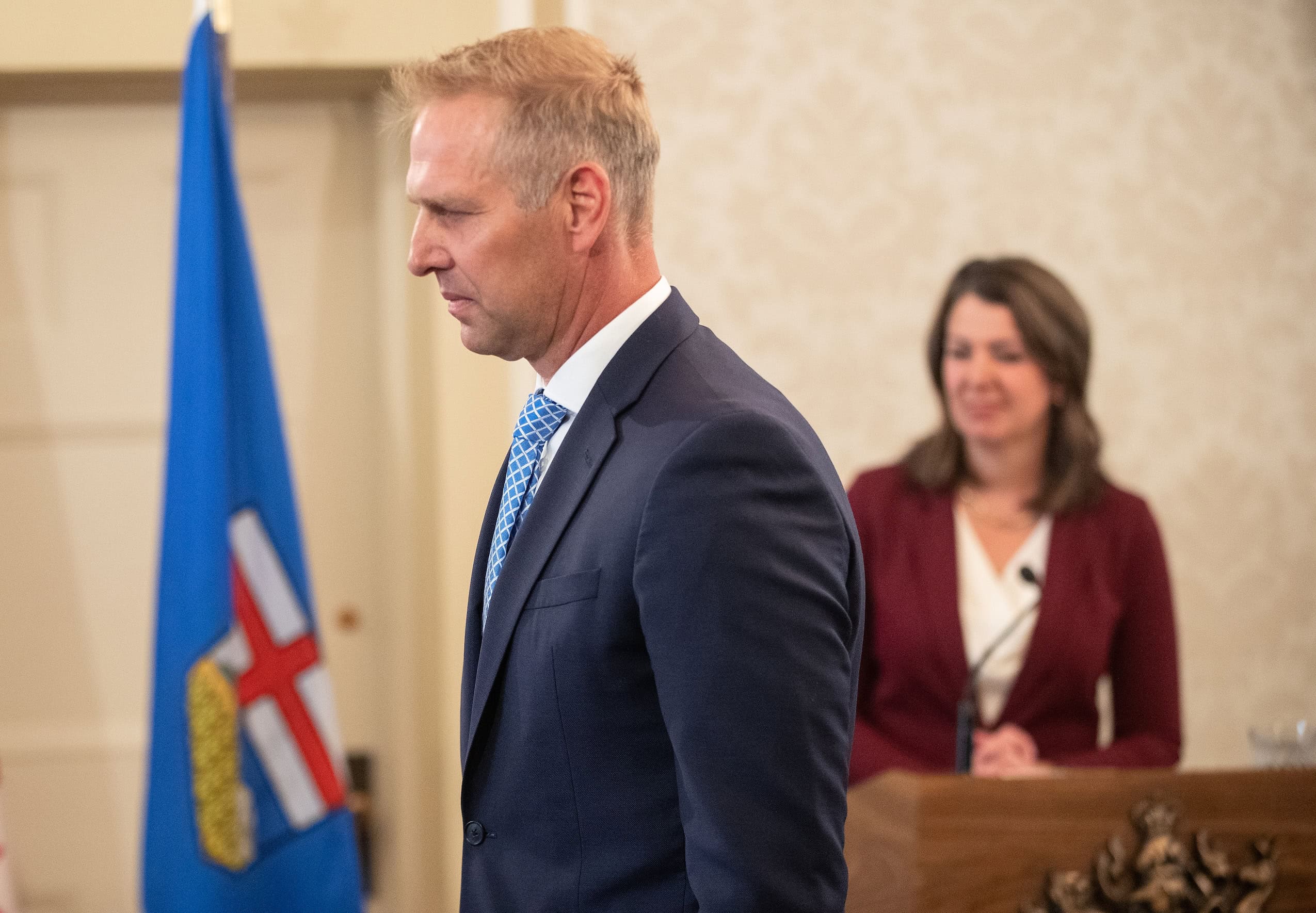 Nathan Neudorf, minister of affordability and utilities, told The Narwhal 16 renewable energy projects were approved by the Alberta Utilities Commission in 2025. But a recent report by the Business Renewables Centre-Canada shows purchase agreements between companies looking to buy renewable power and renewable developers have declined dramatically. Photo: Jason Franson / The Canadian Press
“The report provides a misleading characterization of the renewables sector in Alberta,” reads the statement. “In recent years, Alberta has led Canada in new renewable energy development, representing more than 85 per cent of Canada’s growth.”
The Business Renewables Centre-Canada report shows that, at least in terms of those power purchase agreements, that momentum has ceased. Nova Scotia was the top spot for those contracts in 2025.
Where Alberta is doing well, according to the report, is attracting storage projects, with considerable growth in batteries, which can help smooth the intermittent nature of renewables and alleviate some of the challenges for wind and solar projects introduced with the province’s new transmission rules.
So why is there any confusion about the state of the renewables sector in Alberta?
Renewable projects generally represent significant investments and involve years of planning and consultation prior to construction. In short, it can take a long time for the full impacts of regulatory and policy changes to make their way through the system.
Almost three years since the moratorium, the impacts are starting to show up in the form of less investment and fewer projects.
When the minister points to Alberta leading renewable growth “in recent years,” he focuses on a surge in investment from 2020 to 2023, not on what’s happening now.
There are also projects that continue to be built and the government can point to those as an indication of continued investment. Depending on the region of the province and the specific location of a project, solar and wind projects can still make sense, particularly when paired with storage.
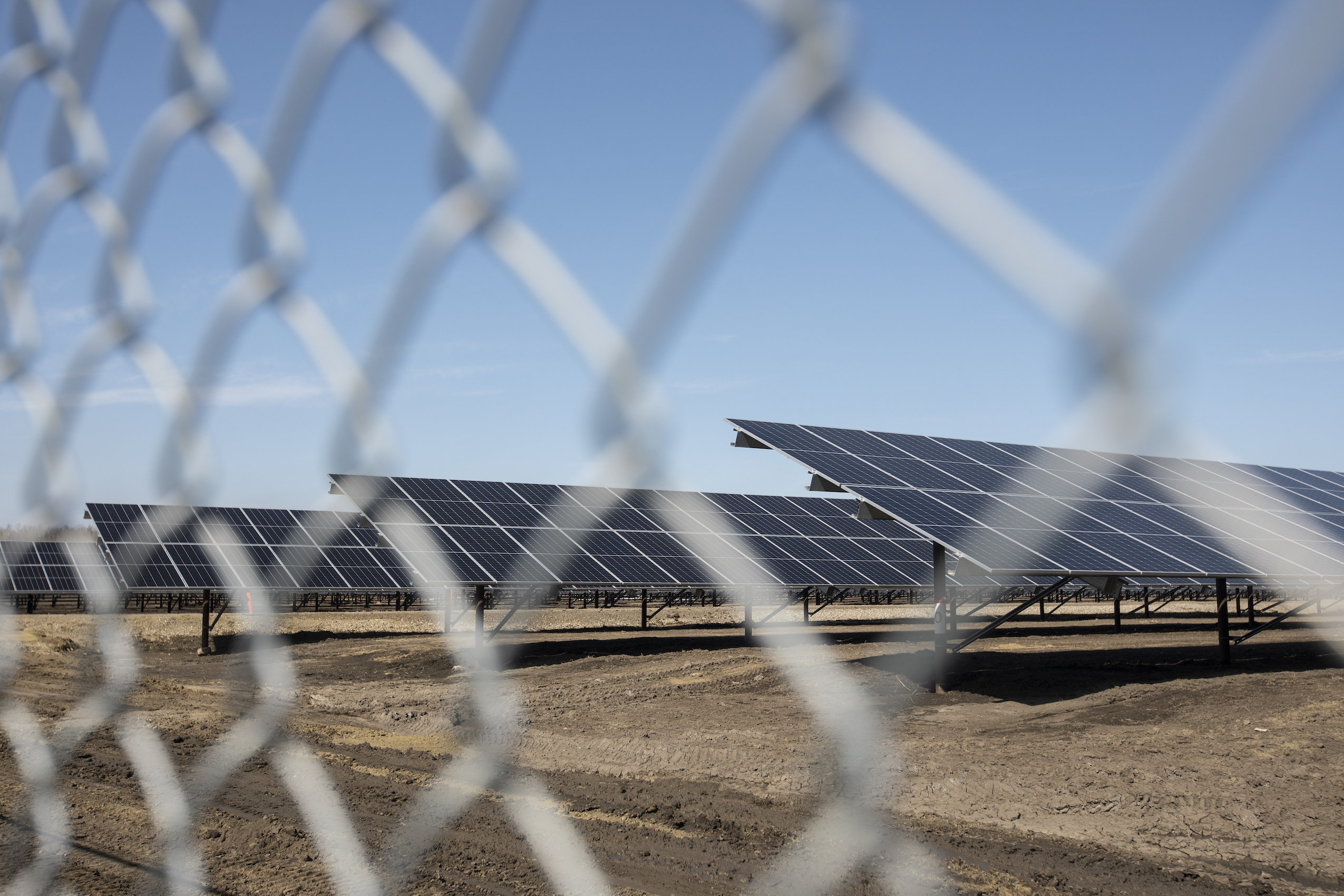 The slowdown in renewables growth and investment in Alberta can’t be attributed to one thing directly, but there’s no question multiple regulatory and market changes are having an impact. Nearly three years after a moratorium on new projects, followed by strict new regulations, the pace of investment has undoubtedly shifted. Photo: Amber Bracken / The Narwhal
But there are also continued headwinds.
For one, market reforms introduced by the grid operator on behalf of the provincial government have also introduced considerable uncertainty for investors looking to build projects, renewable or otherwise.
Then there are the new rules regarding transmission line connections that could make it too expensive for some renewable projects to be built, or continue to operate.
And the government has also made changes to its industrial carbon price and is currently negotiating that pricing with the federal government as part of its memorandum of understanding around a proposed new pipeline to the West Coast.
All of those factors could impact investments in renewable energy generation over the short term and, potentially, for years to come.