
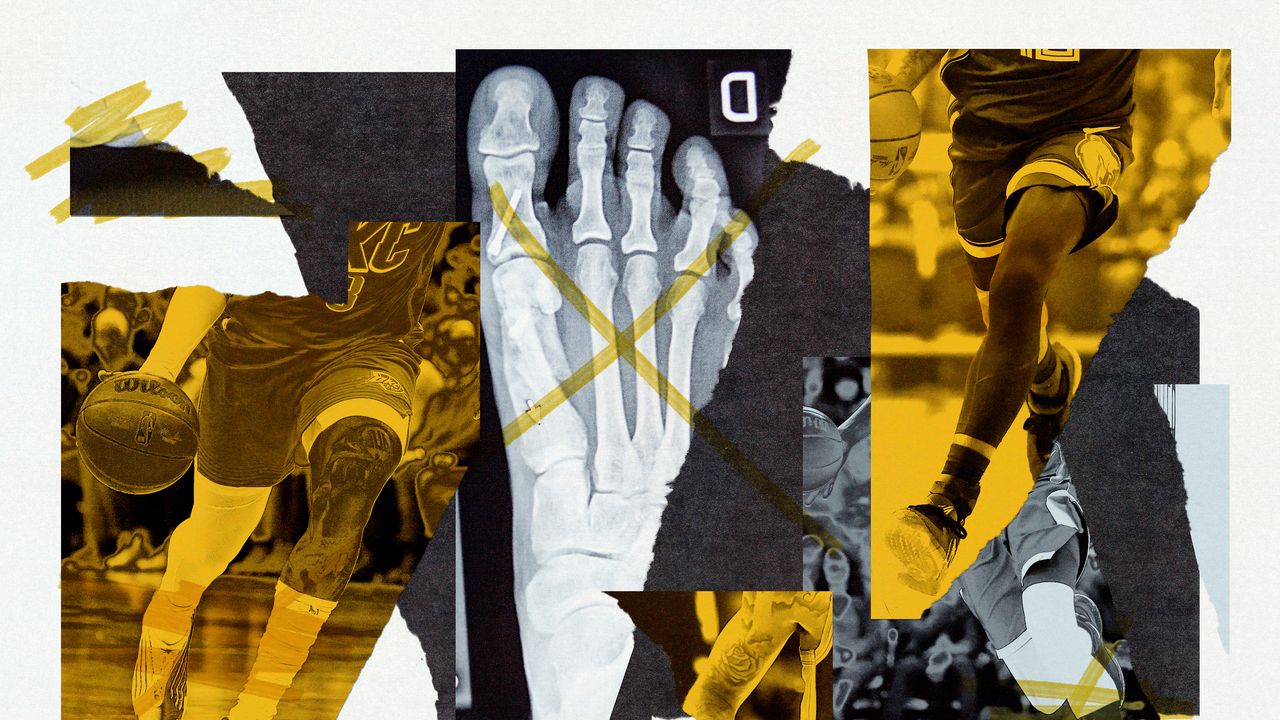
If you’re an NBA fan in 2026, you’ve probably had this exact experience: You settle onto the couch after a long day, pull up that night’s schedule, and see if there are any matchups that catch your eye. Inevitably, there are one or two games between teams that you genuinely love watching, each roster filled with the kind of uniquely thrilling players that make basketball fandom so titillating.
And then you remember: Wait, half those guys are injured right now.
In today’s NBA, you can’t simply turn on a game and expect to see your favorite players on the court. The modern NBA is just as much about strategic withdrawals and managing injuries as it is about hitting threes and grabbing rebounds. Finicky injuries seemingly bite a new superstar every week. Teams controversially rest healthy players to limit their wear and tear (or boost their chances in the draft lottery), and long-term ailments sometimes keep A-listers on the shelf for the entire season.
This season alone, household names like Giannis Antetokounmpo and Victor Wembanyama have been hampered by nagging calf injuries. Jayson Tatum just returned from his Achilles tear during last year’s playoffs, while Damian Lillard and Tyrese Haliburton have yet to play a single minute thanks to the same injury. Steph Curry is dealing with something colloquially known as “runner’s knee.” Defending champion Jalen Williams and electrifying dunker Ja Morant both sustained leg injuries while driving to the rim. Devin Booker strained a muscle in his hip. Joel Embiid is perennially managing knee problems. Aaron Gordon continues to deal with recurring hamstring strains. So on and so forth.
Getting hurt is an inevitable part of sports, but the types of injuries that have taken out most of the players listed above—soft tissue problems in the leg, often the result of a non-contact play—have become much more prominent. In a December 2025 story for Yahoo! Sports Tom Haberstroh highlighted the increased frequency of calf strains and how they’ve caused more players to miss long stretches of the season, but also how young players, in particular, have been affected. (Reigning MVP Shai Gilgeous-Alexander is one of the few stars whose injury during the 2025-26 season was of the non-leg variety, as he was held out for nine games in February with an abdominal issue. Nikola Jokić missed 16 games with a knee injury too, but that was from a teammate crashing into him, not attrition.)
It’s a troubling reality for the NBA, whose popularity relies on the presence of individual players more than any of the other major American sports leagues. Things get dire when fans can’t comfortably ensure that tuning in for a game—or paying exorbitant prices to attend one in person—will mean getting to watch the best players. As a result, the major talking point of the 2025-26 season has been: how do we fix the NBA?
What’s perhaps most puzzling is that the parameters of the game haven’t changed: An NBA season is still 82 games long, and each game is 48 minutes. That was also true in the 1980s, when players hooped in stiff Converse Weapons and boarded commercial flights to and from games, rarely succumbing to the type of bodily harm that’s keeping today’s All-Stars on the training table. So what is it about the way modern NBA games are played that keeps getting players hurt? It might be just that: modernity.
Aaron Nelson, who works in Performance Healthcare Research & Development for the Utah Jazz, has over 30 years of experience in NBA athletic training. He has a theory for why today’s players are constantly pulling, tweaking, or straining something: The game has gotten too optimized. “The speed of the game has picked up,” Nelson says. During his time working with the Phoenix Suns during the fabled Seven Seconds or Less era, he recalls, the performance staff would leave Gatorades on the scorer’s table for the referees, so they could stay hydrated amid the run-and-gun chaos of coach Mike D’Antoni’s offense. But what was considered fast back then is borderline glacial by today’s standards. The NBA tracks a stat called pace, which measures the number of possessions a team has per 48 minutes. In the 2004-05 season, during which the Suns revolutionized basketball by emphasizing quick shots and a frenetic offense, they led the league with a pace of 97.35. This season, that number would comfortably put them in the bottom third of the league.