
New Brunswick is the only Atlantic Canadian province without a gender-affirming care clinic. And the New Brunswick Transgender Health Network wants that to change.
The advocacy group is urging the provincial government to include funding for a gender-affirming care clinic in its 2026-27 provincial budget, which is set to be tabled in the legislature on March 17.
“One of the issues that we have here in New Brunswick right now, nothing is centralized and we don’t even have the ability to pool referrals to ensure that everybody gets access to a practitioner within a similar time frame,” said Dr. Kathleen Taylor, a family physician based in Fredericton who provides gender-affirming health-care services.
Taylor, who is a member of the network, said the cost of opening the clinic would be a fraction of a percentage of the province’s approximately $4 billion in health-care spending.
“The estimation is that the clinic would probably cost about two million dollars, which would be less than one per cent of health-care spending,” she said.
The objective would be to create a centralized place for transgender, non-binary and gender-diverse New Brunswickers to seek out hormone therapy, letters of referral for surgery, and mental health support.
“The goal is to create a centralized clinic where all of these services that patients require are available within a single team, where people work collaboratively in order to reduce barriers for patients,” said Taylor.
“It will give referring providers a single point of entry so everybody knows where they have to refer their patient to, in order to get them the care that they are entitled to and that they require.”
Lack of providers
In the 2021 census, 2,185 people in New Brunswick over the age of 15 identified as either transgender or non-binary.
The Horizon and Vitalité health networks’ navigation page for 2SLGBTQ+ patients lists just three primary-care physicians and two nurse practitioners in the province that provide gender-affirming services covered by Medicare.
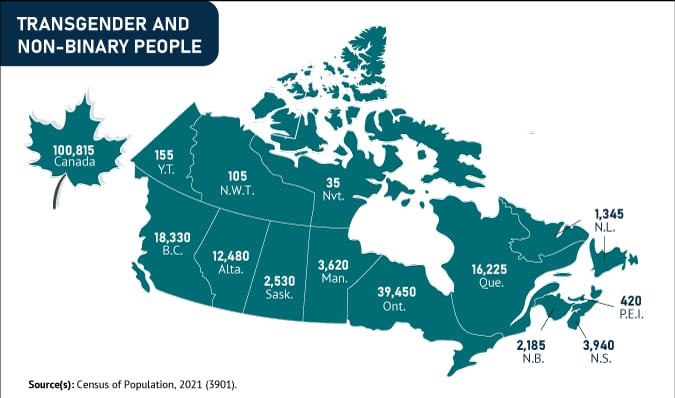 Statistics Canada’s 2021 census data shows that 2,185 New Brunswickers self-reported that they identify as either non-binary or transgender. (Statistics Canada)
“In terms of providing the care, it’s only fairly recent that it started to become more of a routine part of training,” said Taylor. “So people don’t necessarily graduate residency with a feeling of confidence and competency in it.”
Taylor said many of her patients have had to seek her out, because their own family physician won’t provide, or even refer them to, gender-affirming care.
“Sometimes people will end up in front of a provider who will refuse to send the referral for, like, their own personal beliefs,” she said.
WATCH | Advocates say N.B. needs provincial gender-affirming care clinic: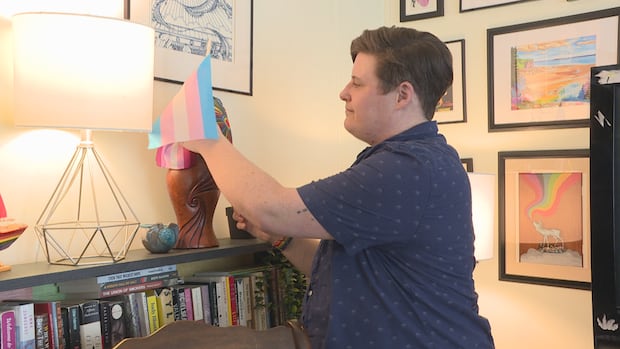
Advocates say N.B. needs provincial gender-affirming care clinic
The New Brunswick Transgender Health Network said the clinic would cost about $2 million, and the group hopes it will be included in the upcoming provincial budget.
The lack of service providers has led to lengthy wait times, said Taylor.
“There can be a huge delay between when someone first presents looking to be referred for hormone therapy to when they actually get seen,” she explained.
Taylor has an estimated 150 patients but said her wait time is half as long as some other doctors.
“My wait time is growing, unfortunately. But in general, usually when I receive a new consultation, we’re able to get that person in for a first visit within three to four months, sometimes more, sometimes less, depending on time of year.”
‘I never heard back’
Raye Organ knows the experience of wait times first-hand. After realizing they were non-binary in 2019 and going through what many people call the “social transition” phase of cutting their hair, changing their clothing and using different pronouns, they first began seeking gender-affirming health care in 2021.
“I spent my years growing up as part of the lesbian community. And while that fit for a while, I always knew there was something else that was kind of missing,” Organ said. “It just sort of clicked one day that non-binary was where I fit.”
Organ got on the waitlist for a mastectomy, or top surgery. The waited for about a year, and would’ve waited longer, but they got a call that someone else had cancelled and there was an open appointment. They travelled to Moncton for a mastectomy in April 2022.
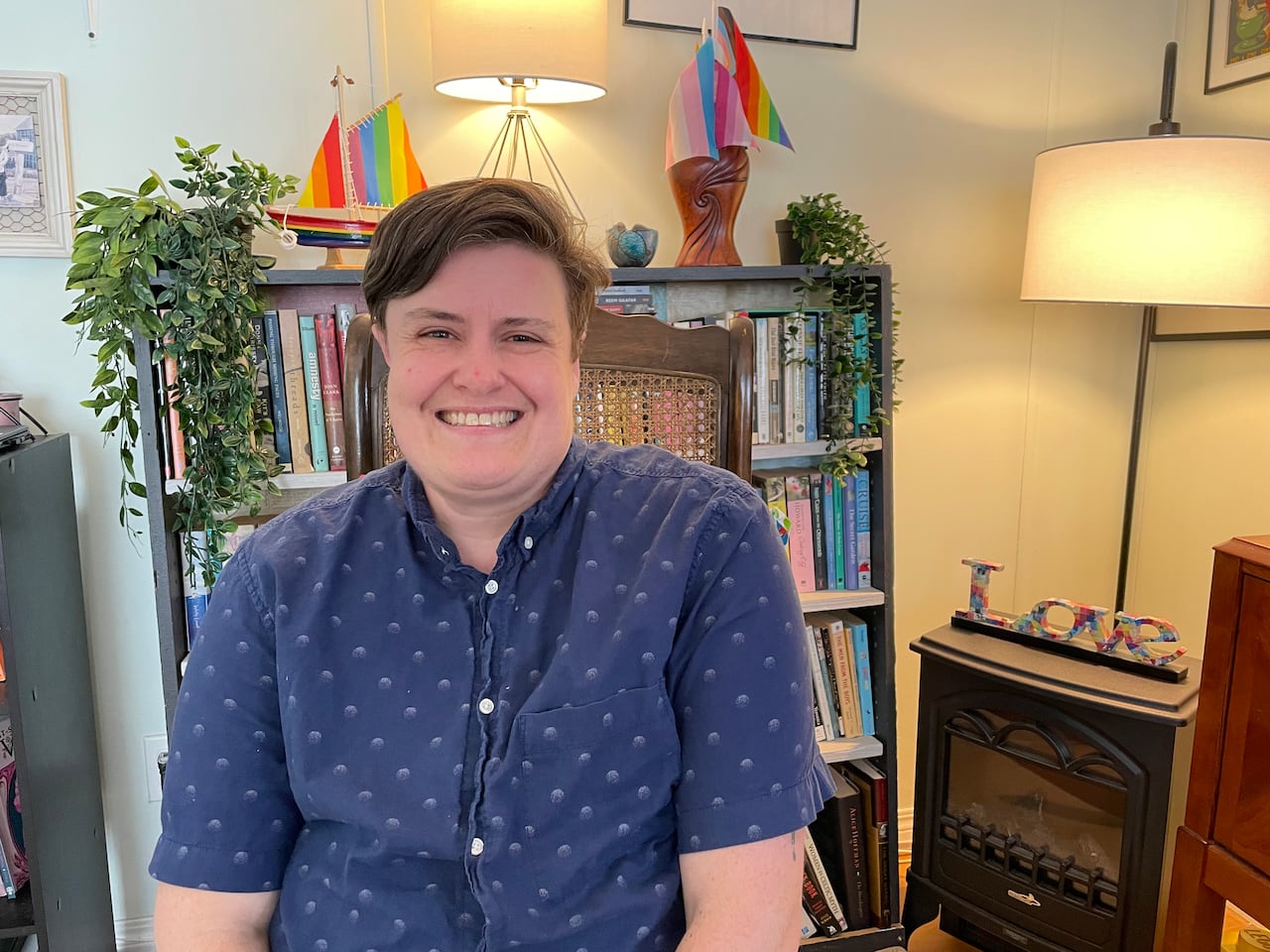 Fredericton resident Raye Organ said they faced a year-long wait time for top surgery and another year-long wait for gender-affirming hormone therapy. (Victoria Walton/CBC)
“I recovered from top surgery and thought, you know, for a while, this is where I’m gonna stay, recover, see sort of what I want my next step to be, or if this has met my gender goals,” they said. “And so it was about 2023, I believe, that I started exploring the option of a hysterectomy.”
But the hysterectomy never happened.
“I did eventually have a referral put in, but I never heard back,” they said.
Instead, Organ sought out gender-affirming hormone therapy to try to get rid of the gender dysphoria they felt about their menstrual cycle. And after another year-long wait, they began taking testosterone in November 2024.
“Once I started the hormone therapy, I did notice such an increase in the way that I was feeling about myself. I still struggle, obviously, because that’s not a cure all, but certainly it seemed to really connect with a lot of pieces that just weren’t connecting before in terms of how I saw myself,” they said.
“The changes that I’ve experienced, I’m incredibly happy with.”
Mental health impacts
Organ said facing the wait times and complexities of navigating the system, combined with some personal circumstances, took a toll.
“It was sort of a perfect recipe for me to not be doing very well. I certainly did have lots of mental health crises where I felt absolutely despondent,” they said. “The gender dysphoria was certainly present a lot.”
It’s something they hope other trans and non-binary people won’t have to deal with if a centralized clinic opens.
“Rather than all of this energy having to go to navigating our health care and trying to advocate to get us what we need, we could actually just start to live in a way where we’re not always worried about, is our access gonna get taken away? Are we going to get this treatment before this provider leaves? Is that wait list just going to keep increasing?” they said.
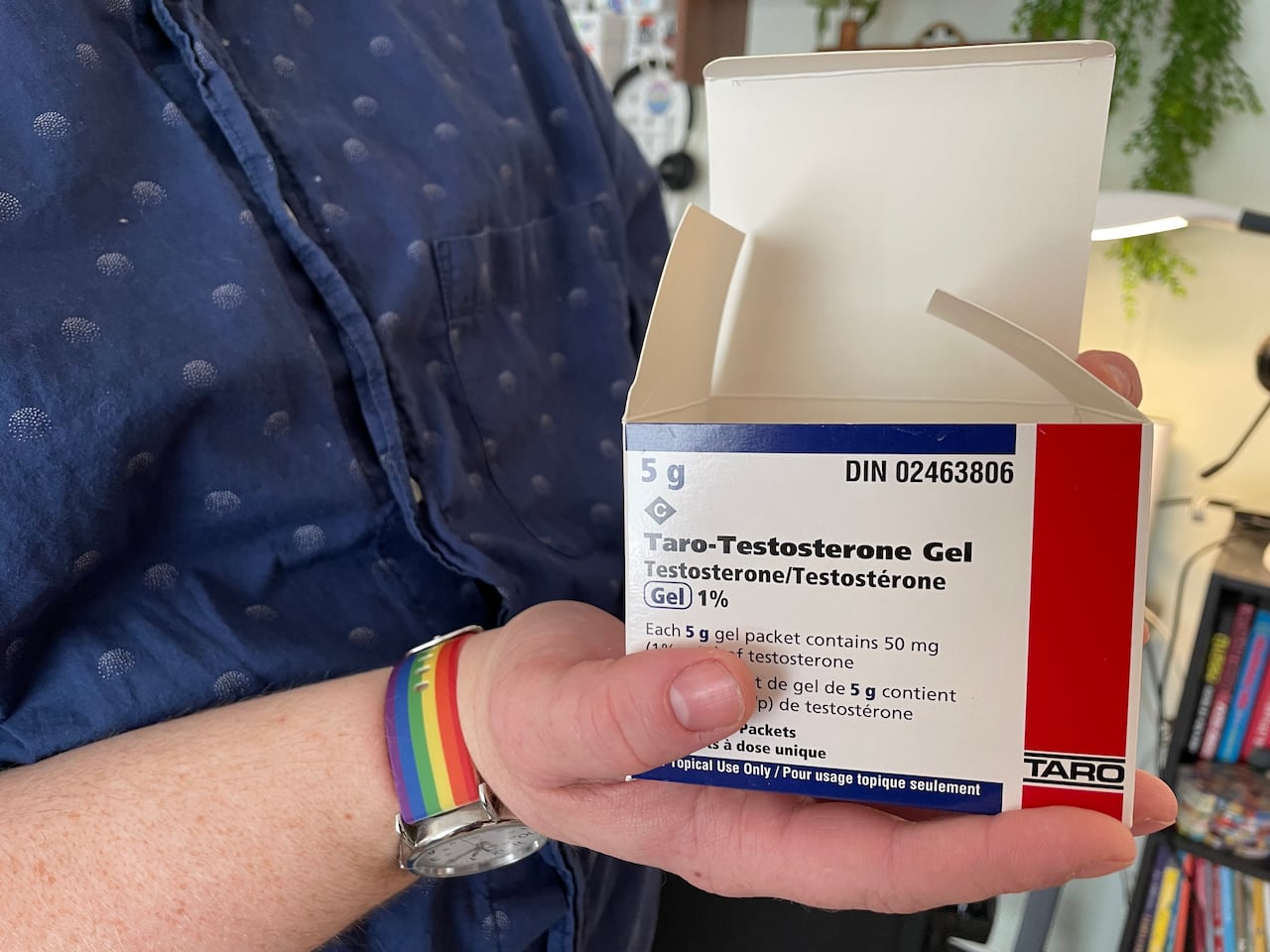 Raye Organ holds their testosterone gel, which they apply daily as part of their gender-affirming care routine. (Victoria Walton/CBC)
Taylor said establishing the clinic, despite the upfront cost, would actually save the health system money.
“For these patients to show up in the ER in crisis because they have not had access to gender affirming care, that costs way more money than having an appointment with a physician would,” she explained.
“So spending $2 million now saves the system a lot of money in other places.”
Organ said the clinic would be a step in the right direction for New Brunswickers and would show that the province supports its 2SLGBTQ+ population.
“I think we’re headed in the right spot. And I think it’s really important that we continue to, because we know that the world outside of New Brunswick right now, there’s a lot of threats to people like me,” they said.
“And one of the ways that we get over those threats is, we come together, we stand up, we speak out, and we do the right thing — which is to advocate for keeping us safe and getting us what we need.”