
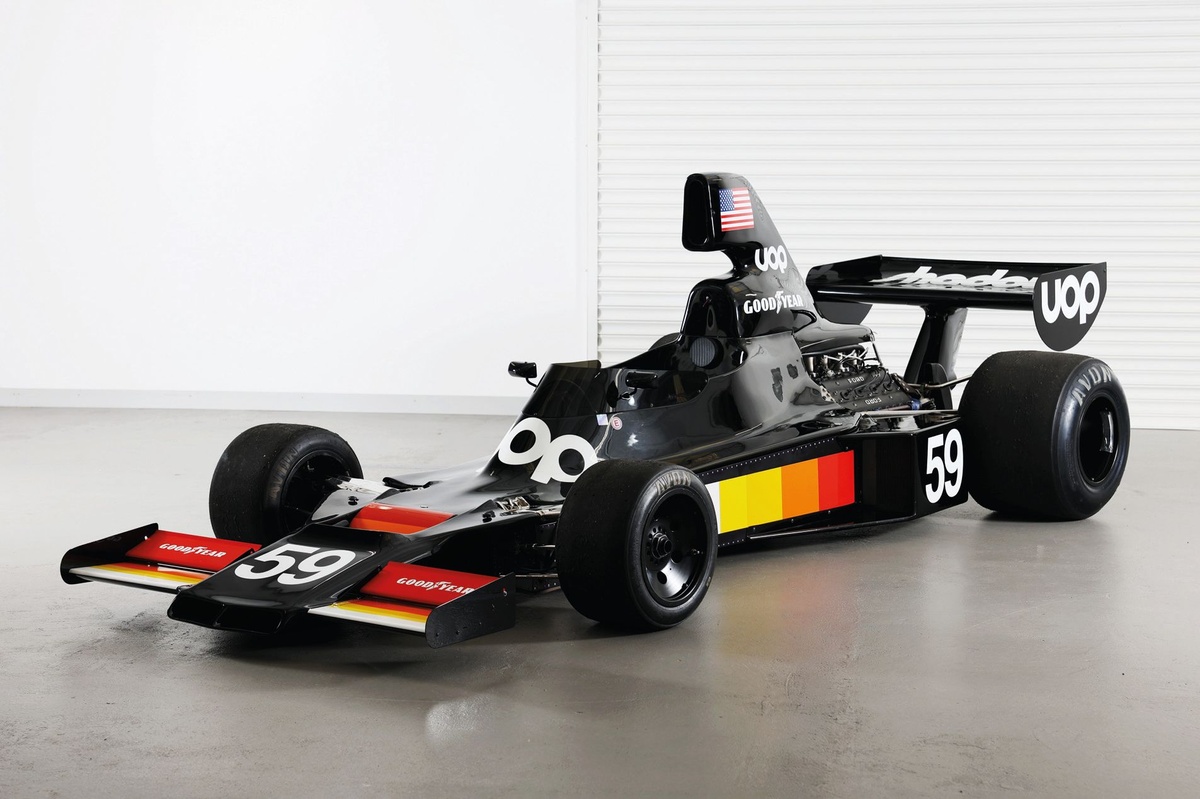
Somehow, Jean-Pierre Jarier flew home to Europe after the South American races that kicked off the 1975 Formula 1 season without a victory. Nor a single point on the board. It’s not fanciful to suggest that the Frenchman could have won in both Argentina and Brazil that January and boarded the plane with a healthy lead in the world championship. Minor glitches put him heartbreakingly out of the race each time when he had the car under him to win. That machine was the new Shadow DN5.
The third Cosworth-powered F1 contender from the Anglo-American Shadow operation was the car at the Argentinian and Brazilian grands prix. Jarier took pole first time out in the DN5 at Buenos Aires by 0.43 seconds. Two weeks later at Interlagos, he topped qualifying by nearly double that margin with the first lap of the original 4.95-mile circuit under the two-and-a-half-minute barrier. The pace of the latest design from a team with nothing better than a third place to its name left the rest of the field reeling.
“Everyone was gobsmacked,” recalls the car’s designer, Tony Southgate. “We went out to South America and were quickest in both races – easily! I remember Roger Penske coming up to me in Brazil and saying something like, ‘Godsakes, Jarier is flat-out through the first corner.’” The brief conversation concerned the old Curva 1 left-hander, high-speed and slightly banked, that led seamlessly into, wait for it, Curva 2.
Come the race, in Southgate’s words, Jarier “just pissed off”. Once, that is, he got past the fast-starting Brabham-Cosworth BT44B driven by Carlos Reutemann on lap five. He was 26s up the road from eventual race winner Carlos Pace in the other Brabham as the 40-lap race approached three-quarter distance. Then the gap started to decrease – “erratically”, reported Autosport grand prix correspondent Pete Lyons – before Jarier ground to a halt out on track on lap 33. The camshaft in the mechanical Lucas fuel metering unit had seized. “How many people have a seized fuel cam?” laments Southgate. “It was annoying because we would have won by about half a minute.”
At least Jarier and the new Shadow had started the race in Brazil. At Buenos Aires, the crown wheel and pinion gave up the ghost as the Shadow driver accelerated out of the pits on the way to the grid. Most galling for the team was the fact that it was a brand-new component fitted overnight. “It was like the metering unit – one of those things that was really nothing to do with the team,” Southgate points out.
Argentina and Brazil are the races for which the DN5 is remembered, but it isn’t quite right to say that the new Shadow’s star plummeted in the immediate aftermath of the meteoric start to its career. It did, after all, claim an F1 victory that year, albeit in a non-points event at which only around half the world championship field was present. Tom Pryce took what would be the only win for the DN5 at the Brands Hatch Race of Champions in March, his second race in the car: he’d had to make do with the previous year’s DN3 in Argentina and Brazil. The Welshman would also put the latest Shadow on pole for the British GP at Silverstone in July and then another pole followed, for Jarier again, at the non-championship Swiss Grand Prix at Dijon in August.
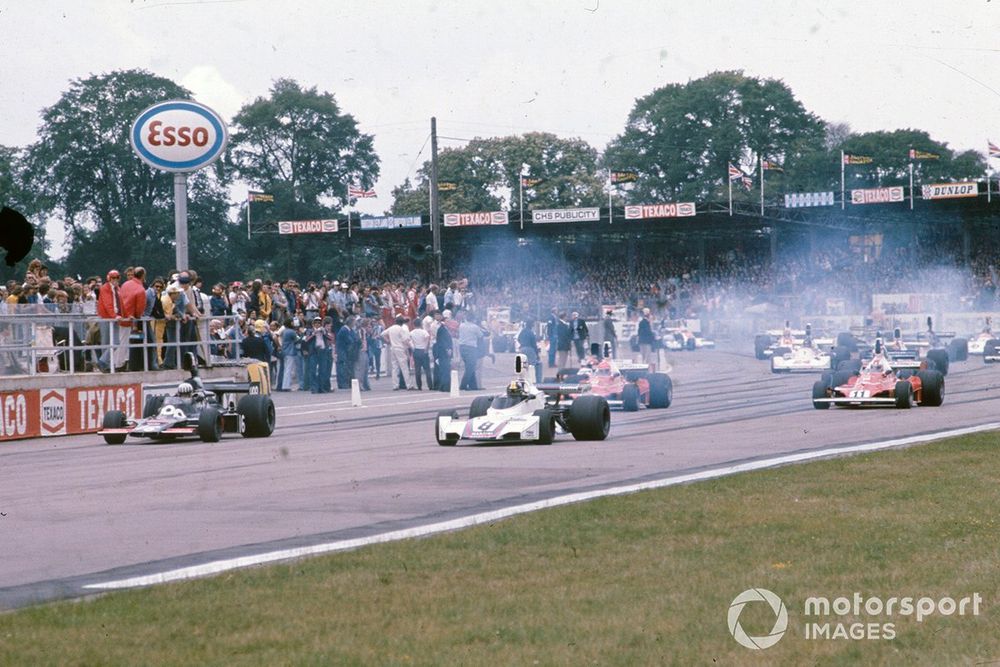
Pryce (far left) briefly led the British GP after taking pole position
Photo by: Motorsport Images
Pryce, like Jarier at Interlagos, was beaten away from the line at Silverstone, but he did lead, briefly, on the mid-race arrival of the rain that would eventually cause a premature end that was both dramatic and controversial. A squall of rain on the already slippery surface put the Shadow in the catch fencing at Becketts.
It was in the rain that the team notched up its best result of the world championship season, Pryce coming home third in another shortened race in Austria in August. It was one of only six points-scoring finishes for the DN5 in its maiden season. Jarier managed to chalk up a score just once, with fourth place at the cataclysmic Spanish GP at Montjuich Park in April.
There is a connection between the high points for the new offering from Shadow in 1975 and the following year, when the B-spec version notched up the DN5’s second and final podium in Pryce’s hands at Interlagos: they all came at circuits where downforce counted. The car was a step forward aerodynamically on its predecessors and, the qualifying results at tracks of the ilk of Interlagos and Silverstone suggest, every one of its rivals on the F1 grid that year. The reason? The installation of a rolling floor at Southgate’s favoured wind tunnel at Imperial College in London.
Southgate designed some adjustability into the car to allow for a variable wheelbase in order to alter the weight distribution, something he had briefly trialled on the DN1
“I’d first used Imperial at BRM back in 1969,” recalls the Briton, who had joined Shadow from BRM ahead of the start of its inaugural F1 campaign in 1973. “They were developing the rolling road and obviously would rent it out to anyone. We were the first ones to use it because I was well in with them. After those early races in 1975 everyone wanted to use it.” In the queue was Team Lotus: it was in the Imperial tunnel that it hit on what would become known as ground effect at the back end of the year.
“It took a bit of fiddling to make it work, but with the wheels revolving on the floor the difference in the readings was significant,” explains Southgate. “It gave us a much greater understanding of the aerodynamic split front and rear. I found that I had between 10 and 20% less downforce on the front than I wanted. I re-engineered the front and rear wings and ground clearances to correct the imbalance. I wanted to produce 40% of the aerodynamic load on the front axle and 60% at the rear. The car definitely had a lot of downforce. I believe we were aerodynamically superior to the rest.”
At the same time, Southgate designed some adjustability into the car to allow for a variable wheelbase in order to alter the weight distribution, something he had briefly trialled on the DN1. A four-inch spacer between engine and gearbox allowed for short and long wheelbase configurations: “I’d worked out over the past years what I wanted for each circuit, whether you needed a bit more weight on the back or the front. The other way of doing it in those days was to build a car that was underweight and move ballast around. But I wasn’t into building flimsy cars.
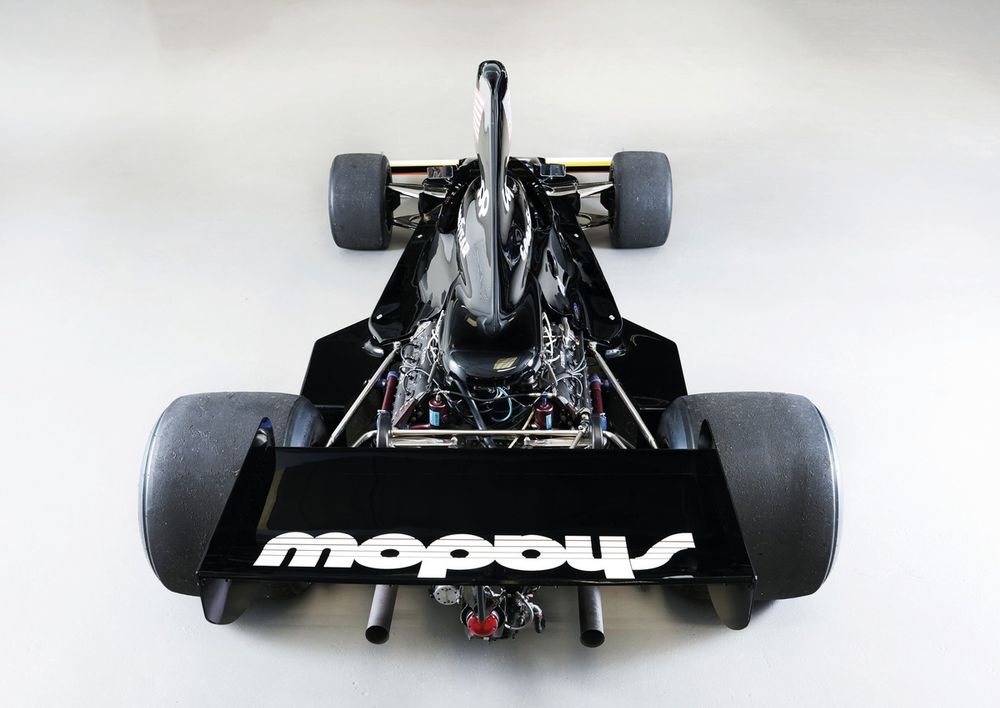
Having an easy way to change the wheelbase gave the DN5 greater set-up flexiblity
Photo by: JEP
“I remember going to Silverstone to test before the GP and we started off in long wheelbase form. Tom was driving and we established a time, and then we changed the wheelbase but left everything else the same. We went to short wheelbase, which put more downforce on the back.”
When Shadow team manager Alan Rees stopped the watch on Pryce after he was up to speed, he thought he’d been trigger happy with his thumb. “He was a whole second faster and then the next lap was the same,” recalls Southgate. “We knew we were going to be quick come the grand prix.”
The DN5 wasn’t so suited to lower-downforce tracks. Third time out at Kyalami, between the South American races and the Race of Champions, Jarier ended up 13th on the grid and Pryce, racing the car for the first time, was 19th. At Monza, for example, the Shadows were more than two seconds off the pace: Jarier, making one of two starts with the Matra-powered version of the car known as the DN7, was 13th again and his team-mate 14th.
“When we got to those kind of circuits we had to get some of the downforce off, and I hadn’t done so much work on that,” explains Southgate. “It was only really tricky on the super-high-speed circuits. As we backed the wings off, the drivers didn’t like the way the car felt. We should have done more work on low-downforce configuration in the wind tunnel.”
Resources were limited at Shadow, even if the team very much looked the part on its arrival in F1 after expanding from Can-Am in North America. Founded by the ‘shadowy’ figure of Don Nichols, who played up to the probably false rumours that he was once a CIA operative, it had backing from Universal Oil Products and was the first to park a motorhome in the paddock. But in reality it was “a mid-grid team in terms of budget”, says Jackie Oliver, who had helped set up the Shadow F1 operation ahead of a season in which he drove along with George Follmer. “The team had good people, but it was a small operation. To put it simply we were always a bit stretched.”
Stretched too thinly. UOP went racing to promote its lead-free petrol and needed a US programme, which meant that, at the end of the original Can-Am series, the team switched over to Formula 5000 for 1975. The result was an F5000 version of the DN5: the DN6, powered first by a Chevrolet V8 and then a Dodge powerplant pushed by Nichols. He reckoned it would give the team a competitive edge, but proved to be overweight and no more powerful than the de rigueur Chevy. It wasn’t the first, or the last, distraction Shadow’s Northampton-based F1 operation had to deal with.
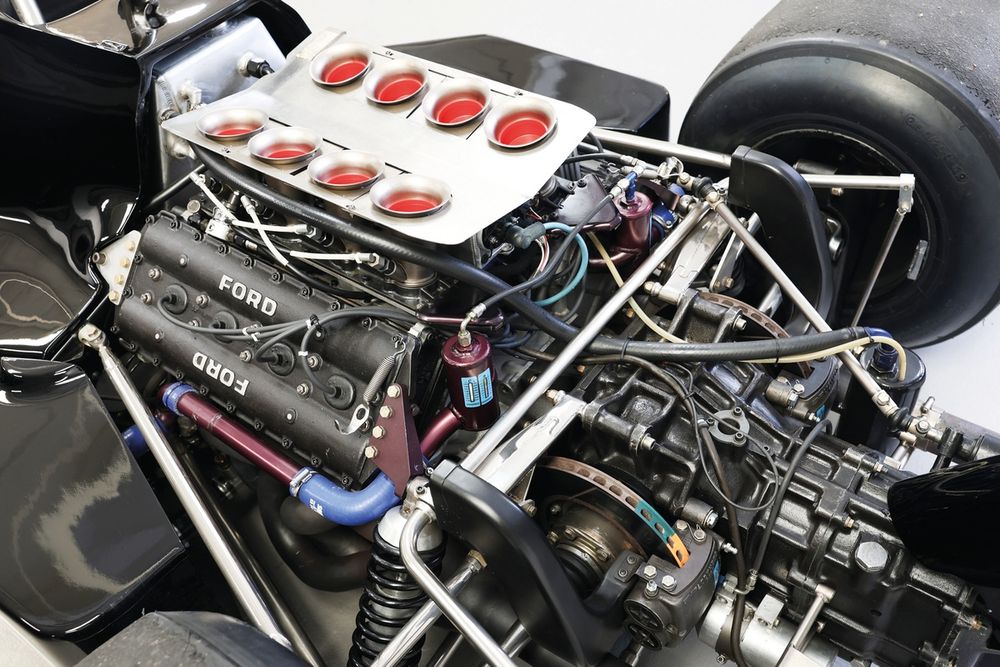
It wasn’t long before the Ford Cosworth engine was back in the Shadow
Photo by: JEP
There was another over the course of 1975: the short-lived Matra-engined version of the DN5. Matra boss Jean-Luc Lagardere had been at the launch of the Cosworth car in a Paris nightclub in December 1974, sparking rumours that a manufacturer out of F1 since the end of 1972 was angling to give Shadow the V12 unit that had just completed a hat-trick of Le Mans 24 Hours victories. The deal came to pass in time for a first appearance of the DN7 in Austria, round 12 of 14.
“Don was flattered to have the Matra people hovering around and at the same time Jarier was convinced that if we had the Matra in the back we would piss on everybody,” recalls Southgate. “It had to be a good engine, he reckoned, because it was French. I told him that I knew about V12s: I’d designed cars for three of them, the Honda when I was at Lola, the Weslake when I was with Dan Gurney and All American Racers, and finally the BRM. I pointed out that we were going to need more fuel and more cooling. Like it or lump it, we were going to end up with a heavier car.
“The DN7 was basically a DN5 with extra tanks on the side and longer radiators, and no spacer between the engine and gearbox. It was fine, just exactly the same speed as the regular car, which is what I had predicted. After the second race at Monza, Jarier turned around to Don and asked if he could have his Cosworth car back.
“Our development programme on the DN5 as steady – it takes money to develop a racing car. We certainly didn’t fling money around, everything was done on a budget” Tony Southgate
“That was always one of Shadow’s problems, or rather Don’s problem. There were always these distractions, like building an extra car for Graham Hill [and his eponymous Embassy-sponsored team] just as we were getting started in the run-up to 1973.” Oliver reckons his most important roles at Shadow circa 1975, alongside racing in F5000, were “keeping the money flowing and Don in check”.
Had that flow of greenbacks been greater, would Shadow have achieved more with its breakthrough car? Southgate thinks so. “I’d describe our development programme on the DN5 as steady – it takes money to develop a racing car,” he says. “We certainly didn’t fling money around, everything was done on a budget.”
The DN5 used Hewland’s TL200 gearbox instead of the British transmission specialist’s ubiquitous FGA400. It was meant to be more robust and didn’t require the ratios to be changed at such regular intervals. But it came with a significant weight penalty. Southgate points out that a team boss such as Colin Chapman at Lotus “wouldn’t have tolerated a gearbox that was something like 20lb overweight”. He recalls Hewland “touting this gearbox around and we were one of the few teams that decided to use it. In hindsight it was probably a mistake.”
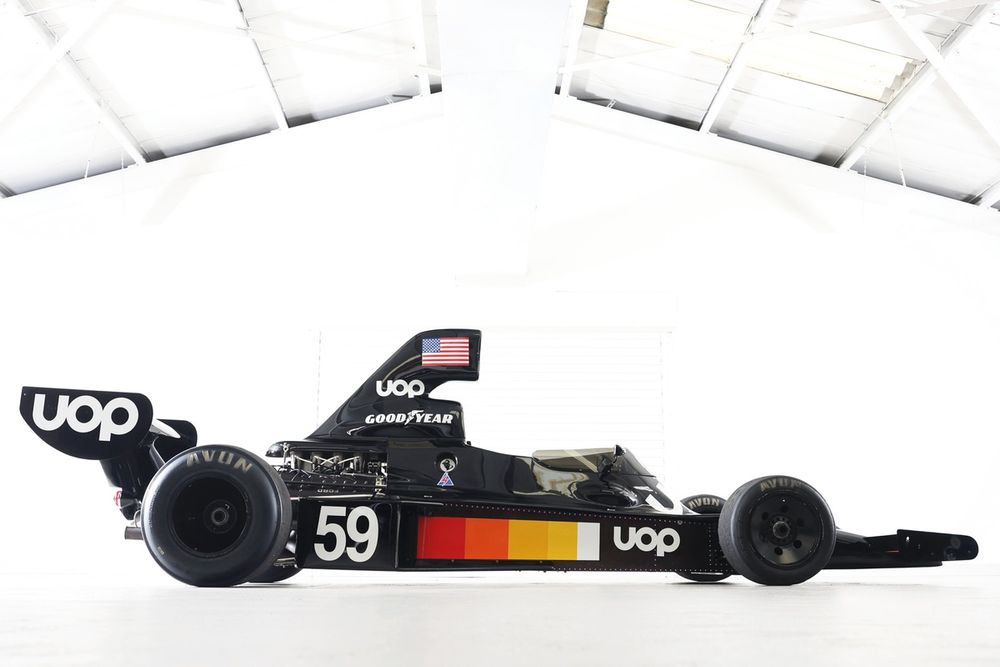
The DN5 was fast but unreliable, not helped by Shadow’s modest financial power
Photo by: JEP
The DN5 never delivered on its South American pace, no matter what Pryce did at Silverstone in the middle of the year. Reliability was always an issue, another problem for a resource-limited team, reckons Oliver: “Small teams always struggle with reliability.” That’s not to overlook that a chunk of Shadow’s 15 world championship retirements in 1975 were down to driver error. Monaco was a case in point: Jarier qualified third and tagged the barrier at Mirabeau on lap one trying to take the lead, making it only as far as Tabac before putting the car out for good. Pryce, who’d been on the front row, needed a new nose mid-race and then crashed on lap 40. “It doesn’t matter how quick your car is if your drivers crash,” rues Southgate.
There was no significant upgrade for 1976, despite the B suffix for the DN5, at a time when Southgate was already hard at work on its successor. (The car pictured started life as an unraced DN5B before being converted to the design’s classic 1975 configuration.) The DN8, a car that would score Shadow’s only world championship F1 win at the Osterreichring in 1977, made its debut at the Dutch GP in August. The biggest change for Shadow early in the season, apart from the disappearance of the high airbox in line with new regulations introduced for the start of the European season in Spain in May, was the end of the UOP sponsorship. It was, says Oliver, “the beginning of the end for Shadow”. At least as far as he was concerned. Oliver would take key members of the team, Southgate and Rees included, with him when he founded Arrows in double-quick time for the 1978 season.
Jarier would race the updated DN5 throughout 1976 and failed to add to his points tally with the car. The design would even be pressed into service for a handful of starts early the following year. Southgate had long since left his creation behind by then, departing – temporarily as it turned out – in the middle of 1976 for a 15-month sojourn with Lotus. He quickly came to understand what a bigger and better-funded team might have done with the DN5.
“At Shadow, I knew I had to compromise, but when I went to Lotus I understood the speed at which they ran,” he recalls. “They were much more aggressive in terms of development than a little team like Shadow. When you came back from a race, Chapman would expect a job list of sixtysomething items. The last one might be ‘polish the cars’, but the first one could be ‘new front suspension geometry’.
“If you’d taken the DN5 and given it to Lotus, they would have maintained the competitiveness, the Old Man would have seen to that. He’d have done whatever it took. Chapman would have gone on and won the world championship with a car like that.”
Read Also:
This article is one of many in the monthly Autosport magazine. For more premium content, take a look at the April 2026 issue and subscribe today.
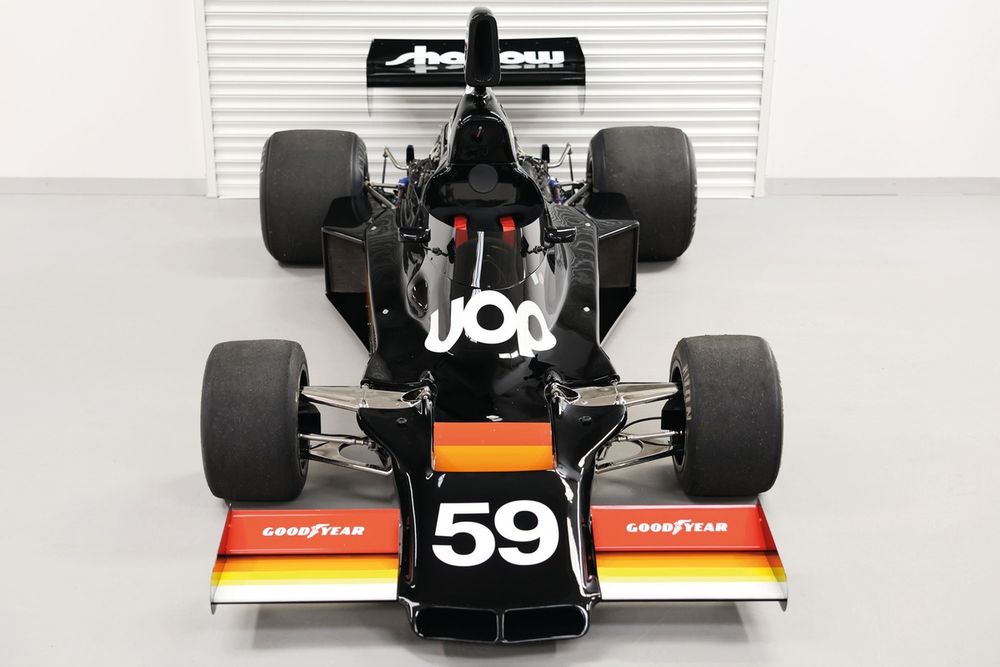
Could the DN5 have won the world championship with a team like Lotus? Southgathe thinks so
Photo by: JEP
We want to hear from you!
Let us know what you would like to see from us in the future.
– The Autosport.com Team