
Ontario Construction News staff writer
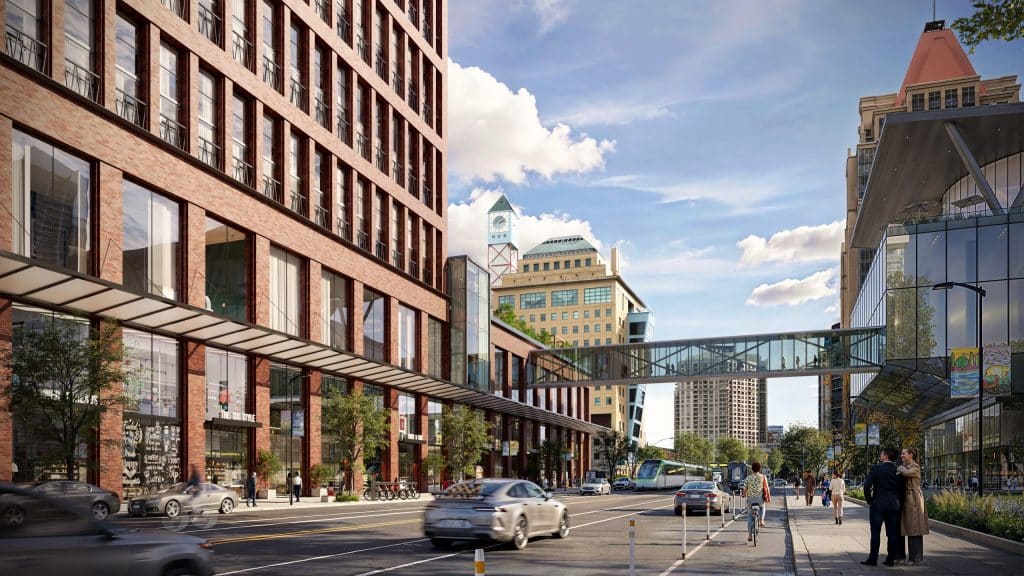
MISSISSAUGA – Mississauga city council has endorsed a “once-in-a-generation” redevelopment plan that aims to transform 12 acres of municipal land into a dense, mixed-use cultural and economic hub.
The vision, unveiled Tuesday, moves away from the downtown’s suburban roots toward a high-density urban core. The project, centered on city-owned lands adjacent to City Hall, is expected to generate approximately 28,000 job-years in construction, engineering, and professional services, while injecting an estimated $4 billion into the local economy.
“Municipally owned lands in our City Centre should be optimized to enhance job creation, reinvigorate our creative industries, attract more tourist spending, and place our city firmly on the map for international conventions,” Mayor Carolyn Parrish said in a statement. “Bold vision has grown our city. Bold vision will propel us even further ahead.”
The plan targets five parcels of land currently occupied by the Living Arts Centre (LAC), surface parking lots, and underutilized open spaces. While the LAC remains a cultural staple, city officials noted the facility is “outdated” and requires significant investment to meet modern urban standards.
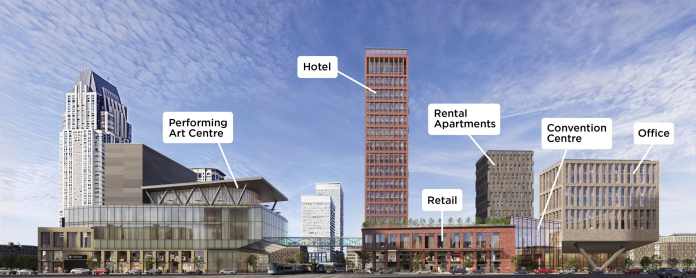 Key components of the proposed development include:
Tourism and hospitality: A 400,000 to 500,000-sq. ft. convention centre paired with a 400-room hotel. The facility will be supported by 1,500 to 3,000 underground parking spaces.
Cultural infrastructure: A new “music hub” featuring a performance venue with a capacity of 2,500 to 5,000, alongside recording studios and a music school.
Residential and office space: A nine-storey office building and a 20-storey purpose-built rental tower designed to address housing affordability and transit-oriented density.
Public realm: The introduction of a “Sky Park”—a signature elevated green space—and a redesigned, widened Princess Royal Drive featuring “atrium-style” retail and pedestrian zones.
The redevelopment is strategically positioned to leverage the upcoming Hurontario LRT and a potential downtown loop extension. City Manager Geoff Wright described the plan as a comprehensive approach rather than the incremental development typically seen in the core.
“By revitalizing City-owned lands in a comprehensive way, we’re creating new opportunities for tourism, employment, housing and creative industry growth,” Wright said.
The city estimates the project will significantly bolster its tourism sector, which already generates approximately $493.6 million in annual government revenue. The new hotel and convention capacity is projected to add between $1.7 million and $2 million in annual Municipal Accommodation Tax (MAT) revenues.
Timeline and next steps
The endorsement by Council establishes the guiding framework, but several technical hurdles remain. City staff are now tasked with developing a formal project plan, which will include detailed business cases, financial strategies for delivery, and further land appraisals.
The Living Arts Centre will continue to operate normally throughout the procurement and visioning process.
City staff are expected to provide a detailed update on the project’s technical analysis and financial delivery strategy in June 2026. Public engagement sessions will be scheduled as the project moves into the refinement stage.