
As research continues to reveal the biological complexity of attention-deficit/hyperactivity disorder (ADHD), scientists are questioning whether a single diagnostic label can truly capture the condition’s diversity.
A recent study from West China Hospital of Sichuan University used brain network modeling and AI to identify three biologically distinct ADHD “biotypes,” each associated with different brain patterns, symptom profiles, and developmental trajectories.
To better understand how these findings were made and what they could mean for the future of ADHD diagnosis, Technology Networks spoke with Dr. Nanfang Pan, a postdoctoral researcher in the Department of Radiology at West China Hospital of Sichuan University and lead author of the study.
In this Q&A, Pan explains the limitations of current diagnostic frameworks, how his team used brain imaging and ML to identify ADHD biotypes, and how brain-based biomarkers could one day help move the field toward more personalized care.
Rhianna-lily Smith (RLS):

Science Writer and Editor
Technology Networks
Rhianna-lily is a Science Writer and Editor at Technology Networks. She holds an honors degree in biomedicine from the University of East Anglia and a masters degree in microbiology. Before joining Technology Networks she researched maternal health and the microbiome.
What are the biggest limitations of current diagnostic frameworks that your study aims to address?
Nanfang Pan, PhD (NP):

Postdoctoral researcher
West China Hospital of Sichuan University
Dr. Nanfang Pan completed his MD in Radiology in 2022 and PhD in 2026 in the Department of Radiology at West China Hospital of Sichuan University, where he currently continues as a postdoctoral researcher.
The current DSM-5 framework of ADHD symptoms may not capture the full complexity of what we see in clinical settings. It assigns a single diagnostic label to what is fundamentally a heterogeneous syndrome arising from diverse neural mechanisms.
In terms of this, supervised approaches that define subtypes using checklist thresholds tend to produce only severity-based cognitive subgroups rather than neurobiologically meaningful subtypes.
Many previous subtyping attempts have failed to distinguish normal variation from truly atypical deviations.
RLS:
Science Writer and Editor
Technology Networks
Rhianna-lily is a Science Writer and Editor at Technology Networks. She holds an honors degree in biomedicine from the University of East Anglia and a masters degree in microbiology. Before joining Technology Networks she researched maternal health and the microbiome.
How did you use brain imaging to identify ADHD biotypes?
NP:
Postdoctoral researcher
West China Hospital of Sichuan University
Dr. Nanfang Pan completed his MD in Radiology in 2022 and PhD in 2026 in the Department of Radiology at West China Hospital of Sichuan University, where he currently continues as a postdoctoral researcher.
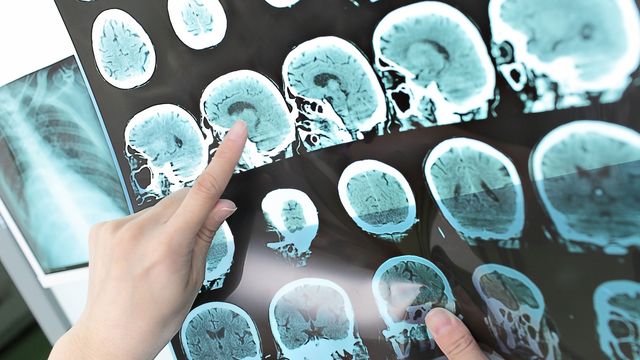
From each child’s structural MRI, we constructed morphometric similarity networks, which capture how similar brain regions are to each other in terms of their morphological features. We then calculated three topological metrics of the brain connectome to characterize the “hubness” of each brain region.
Next, we built normative models using data from typically developing children, essentially creating brain network growth charts. This allowed us to quantify how much ADHD’s hub organization deviated from normative expectations.
We then fused the three metrics to summarize these robust findings above.
Finally, we applied HYDRA, a semi-supervised clustering algorithm, to create multiple hyperplanes separating controls from ADHD cases, with each facet of the resulting polytope representing a distinct biotype.
RLS:
Science Writer and Editor
Technology Networks
Rhianna-lily is a Science Writer and Editor at Technology Networks. She holds an honors degree in biomedicine from the University of East Anglia and a masters degree in microbiology. Before joining Technology Networks she researched maternal health and the microbiome.
Your study identified three ADHD biotypes. Can you briefly describe how they differ?
NP:
Postdoctoral researcher
West China Hospital of Sichuan University
Dr. Nanfang Pan completed his MD in Radiology in 2022 and PhD in 2026 in the Department of Radiology at West China Hospital of Sichuan University, where he currently continues as a postdoctoral researcher.
Biotype 1 was characterized by widespread medial prefrontal cortex–pallidum alterations, labelled “severe-combined with emotional dysregulation.”
Biotype 2 was characterized by anterior cingulate cortex–pallidum circuit alterations, labelled “predominantly hyperactive/impulsive.”
Biotype 3 was characterized by superior frontal gyrus alterations, labelled “predominantly inattentive.”
RLS:
Science Writer and Editor
Technology Networks
Rhianna-lily is a Science Writer and Editor at Technology Networks. She holds an honors degree in biomedicine from the University of East Anglia and a masters degree in microbiology. Before joining Technology Networks she researched maternal health and the microbiome.
Were there any results that surprised you?
NP:
Postdoctoral researcher
West China Hospital of Sichuan University
Dr. Nanfang Pan completed his MD in Radiology in 2022 and PhD in 2026 in the Department of Radiology at West China Hospital of Sichuan University, where he currently continues as a postdoctoral researcher.
It is really interesting that these biotypes, defined in a completely brain-driven way, aligned well with DSM-defined presentations.
The Biotype 1 (“severe-combined with emotional dysregulation” group) exhibited the most widespread brain deviations. This alignment to some degree supports the validity of the DSM presentations, which may also reflect genuine neurobiological entities.
While our neuroimaging-derived subgroups broadly align with existing DSM presentations, our brain-first approach provides the first biological validation of these subtypes, hence our designation of these clusters as “biotypes”.
Another surprise was about the potential cancellation effects between symptom dimensions. The right caudate demonstrates precisely this pattern: Biotype 2 shows predominantly positive deviations, Biotype 3 shows predominantly negative deviations, while Biotype 1 exhibits neutralized deviations. This cancellation effect exemplifies how opposing neurobiological mechanisms can mask meaningful neural signatures in combined presentations, supporting the validity of our biotype distinctions.
RLS:
Science Writer and Editor
Technology Networks
Rhianna-lily is a Science Writer and Editor at Technology Networks. She holds an honors degree in biomedicine from the University of East Anglia and a masters degree in microbiology. Before joining Technology Networks she researched maternal health and the microbiome.
Which brain regions stood out the most in distinguishing the different ADHD groups?
NP:
Postdoctoral researcher
West China Hospital of Sichuan University
Dr. Nanfang Pan completed his MD in Radiology in 2022 and PhD in 2026 in the Department of Radiology at West China Hospital of Sichuan University, where he currently continues as a postdoctoral researcher.
Three regions most consistently distinguished the biotypes: the anterior cingulate cortex, pallidum, and superior frontal gyrus. We speculate that these regions may constitute a shared circuit whose differential disruption underlies the divergence among ADHD biotypes.
RLS:
Science Writer and Editor
Technology Networks
Rhianna-lily is a Science Writer and Editor at Technology Networks. She holds an honors degree in biomedicine from the University of East Anglia and a masters degree in microbiology. Before joining Technology Networks she researched maternal health and the microbiome.
How could these findings improve how ADHD is diagnosed or classified in the future?
NP:
Postdoctoral researcher
West China Hospital of Sichuan University
Dr. Nanfang Pan completed his MD in Radiology in 2022 and PhD in 2026 in the Department of Radiology at West China Hospital of Sichuan University, where he currently continues as a postdoctoral researcher.
Our findings suggest that integrating normative modeling with data-driven clustering could complement existing diagnostic frameworks by providing biologically grounded stratification of ADHD.
Rather than relying solely on behavioral symptom counts, clinicians could potentially use brain-based biomarkers to identify which biotype a child belongs to, which carries implications for management. For instance, Biotype 1, marked by the most widespread deviation patterns, reveals a clinically valuable subgroup with distinct developmental trajectories requiring early interventions.
However, there is still much work to be done before these findings can be directly applied in clinical practice.