
Ottawa announces $14.3M for Yukon arts, heritage and Indigenous languages
Published 7:00 pm Friday, March 13, 2026
Ottawa is allocating more than $14.3 million for arts, culture, heritage and language initiatives across the Yukon, announcing the funding during an event at the Yukon Arts Centre on March 13.
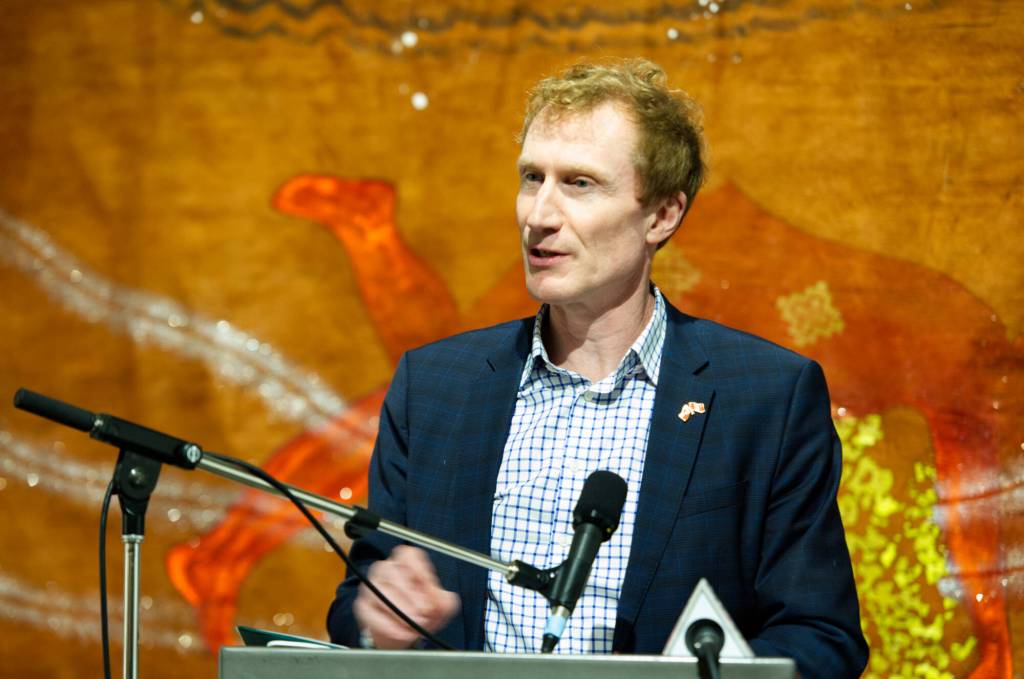
Canadian Identity and Culture Minister Marc Miller said the investments will support 30 organizations across the territory. Miller framed the funding as part of a broader effort to strengthen cultural expression and preserve stories that shape national identity.
Miller acknowledged that the Yukon’s place within Heritage Canada’s national funding picture remains fluid. Asked how the department allocates support across provinces and territories, he said it isn’t based on an easy per‑capita model or any simple mathematical formula.
“There is no one-size-fits-all,” he said, adding that the sector is oversubscribed and that funding decisions are influenced by longstanding relationships and shifting government priorities.
Miller pointed to Indigenous language revitalization as a clear example of the pressures facing the system. Federal spending has increased in recent years, yet “the slices have gotten smaller” as more communities work to rebuild languages with only a handful of remaining speakers.
A scheduled review of the Indigenous Languages Act is underway this year, alongside ongoing work by the Indigenous Languages Commission, which has been developing a long‑term funding model aimed at helping communities reach greater language vitality.
The funding package reaches communities across the territory, supporting festivals, theatre series, cultural centres, museum upgrades and local publications. Projects span Beaver Creek to Dawson City and Watson Lake, with support for events such as the Yukon Riverside Arts Festival, the Blue Feather Music Festival and Cypherfest.
Several First Nations governments and cultural organizations are also receiving support for heritage and community-driven initiatives, including collections management, cultural programming and truth and reconciliation events. Those investments sit alongside a cluster of language‑focused projects in Ross River, Watson Lake and Whitehorse, where communities are working to strengthen fluency and preserve traditional knowledge.
Council of Yukon First Nations Grand Chief Math’ieya Alatini said the funding will strengthen youth‑elder language work through the Youth Today, Language Leaders Tomorrow program, administered by the Yukon Native Language Centre. She said the initiative aims to build a critical mass of fluent speakers across Han, Tlingit, Southern Tutchone and Kaska languages.
“It’s not just about language, it’s really about preserving and being part of our cultures and keeping that alive,” Alatini said
Support is also going toward a range of performing arts initiatives, including the Klondike Institute of Art and Culture Performing Arts Series in Dawson City, Gwaandak Theatre’s Awaken Festival and Jazz Yukon’s long‑running Jazz on the Wing program.
Jazz Yukon president Duncan Sinclair said federal support has helped the group expand programming, partner with rural and First Nations communities, and stage more than 120 events a year.
Publishing and Francophone programming are also included, with What’s Up Yukon, L’Aurore boréale and Yukon, North of Ordinary receiving support through the Canada Periodical Fund. The Association franco‑yukonnaise secured multi‑year funding for its community programming.
Cultural infrastructure projects round out the list, including upgrades for the Yukon Film Society’s theatre, planning work for the Little Salmon/Carmacks First Nation cultural centre and new collections management systems for Kwanlin Dün First Nation.
The Department of Canadian Heritage’s mandate covers Canadian identity, cultural development and heritage. Its programs support arts, official languages, multiculturalism, sport and community participation across the country.
Miller said the federal role remains essential as governments and communities debate whether funding should go through territorial or Indigenous organizations and how to structure language‑funding models.
“There’s probably a lot of other organizations that don’t get the support that is totally deserved,” he said, but argued the investments will help ensure Yukon stories “thrive and survive.”
Contact Jake Howarth at jake.howarth@yukon-news.com