
Rachel Mason’s excellent 2019 documentary feature Circus of Books took us inside an ordinary mom and pop business with a difference. Starring her own mother and father, Barry and Karen, it told the story of the Masons’ flagship store, a bookshop that was, for a while, at the heart of the West Hollywood gay scene, famous for its vast stock of sex toys, pornographic magazines and DVDs. Mason’s film, however, went deeper than its premise might suggest; alongside the story of Barry’s persecution on obscenity charges by Ronald Reagan’s FBI, the doc also offered a chilling reminder of the lethal effects of the 1980s Aids crisis.
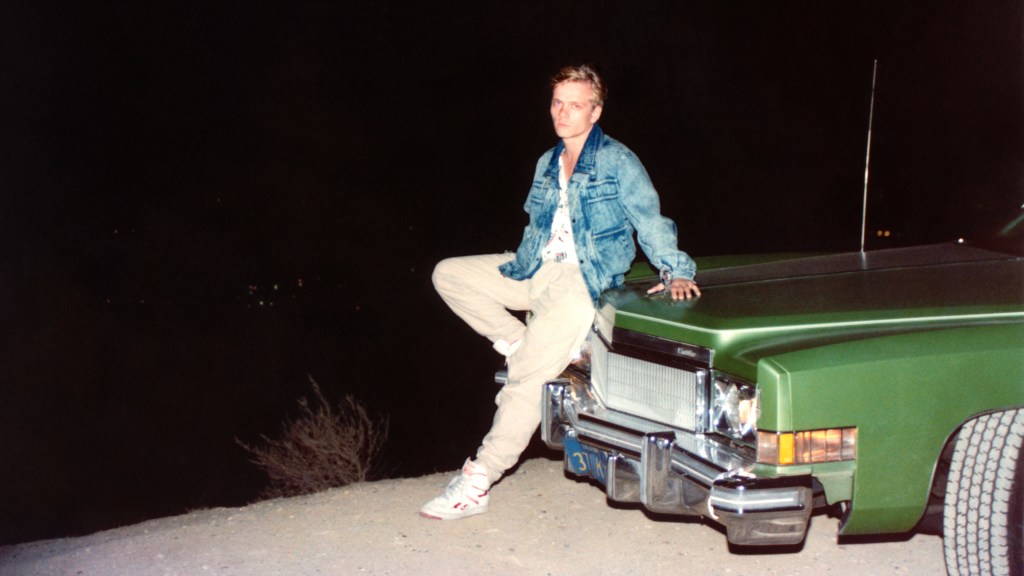
My Brother’s Killer is an unofficial sequel of sorts, and it begins with Mason asking her mother about an unsolved murder that happened around the same time. Billy London (AKA William Arnold Newton), 25, a patron of the store and sometime porn actor, had gone missing in the run-up to Halloween in 1990. A few days later, his severed head and feet were found in a dumpster in the area around La Brea and Santa Monica Boulevard; the rest of him was never found.
The murder sent shockwaves through the local community, not just because Billy was well known around town but because as Chi Chi LaRue — director and new owner of the now-relocated Circus of Books — says, “It was so gruesome, so dastardly, and so macabre.” The crime went unsolved for many years prompting Mason to start making this movie in the early 2000s, and the immediate conclusion to jump to is that the LAPD maybe wasn’t too fussed about it. But the first (but not biggest) surprise in this riveting doc is just how much time and effort the police actually did put in, notably detectives Wendi Berndt, who never gave up hope, and John Lamberti, who reopened the investigation as a cold case.
The first thing Mason does is to take us back to that incredibly volatile time, when murder rates were through the roof — LA’s overall violent crime rate hit 1,758.4 per 100,000 residents in 1990, which is roughly double what it is now. Gay men were vulnerable to unprovoked attacks, and cruising was especially dangerous, which is why when Billy first disappeared it was assumed that he simply “got in the wrong car”. Mason evokes the vibrant street scene vividly, with archive footage of the area’s teeming bars and even a nod to the Donut Time store immortalized in Sean Baker’s transgender High Noon story Tangerine.
The initial suspect was Billy’s partner Marc Rabins, and to be honest, though even the investigators say they’re sure he didn’t do it, his guilt doesn’t seem entirely out of the question, even when Jeffrey Dahmer briefly enters the frame. While exploring that very promising lead, Mason — aided by podcasters Christopher Rice and Eric Shaw Quinn — discovers social worker and empty nester Clark Williams, who steps forward to help investigate Billy London’s backstory, being of a similar age to the victim and from the same part of Wisconsin (Bronski Beat’s song “Smalltown Boy” opens the film for a very good reason).
Williams turns out to be the film’s star player, filling in the blanks of London’s short, sad life, and his powers of perception lead the film to its extraordinary conclusion, smoking out a killer who was hiding in plain sight at every step of the way. Not only do Billy’s remaining friends and family finally get their closure, though, My Brother’s Killer is an overdue valediction for the victim, a romantic loner whose haunting and horribly prophetic poem “A Piece of Me” bookends the film, offering a poignant glimpse of a future that might have been but never was.
Title: My Brother’s Killer
Festival: SXSW (Documentary Spotlight)
Director: Rachel Mason
Sales: Submarine Entertainment/UTA
Running time: 1 hr 35 mins