
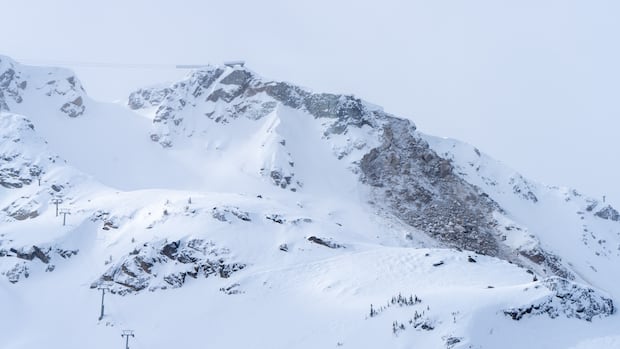
A rockslide at the Whistler Blackcomb ski resort has resulted in the closure of Whistler Peak with no plans of reopening.
Vail Resorts, which owns and operates Whistler Blackcomb, said the rockslide occurred around 6:30 a.m. Thursday before the resort was open.
No one was injured in the slide that occurred on Whistler Peak near the double black diamond run West Cirque.
The day before the slide, the area was open and people were skiing on the slope.
Vail Resorts confirms the Whistler Peak and the Peak Express Chair will remain closed over the weekend, which is also the start to spring break.
It could take until summer to determine cause
It might take months, and once the snow has cleared, to determine what caused the rockslide, said consulting geoscientist Pierre Friele, who has worked in the Sea to Sky region for more than 30 years.
“I can imagine it would be quite difficult to determine anything at this stage because there’s 2.5 metres of snow up there,” Friele said.
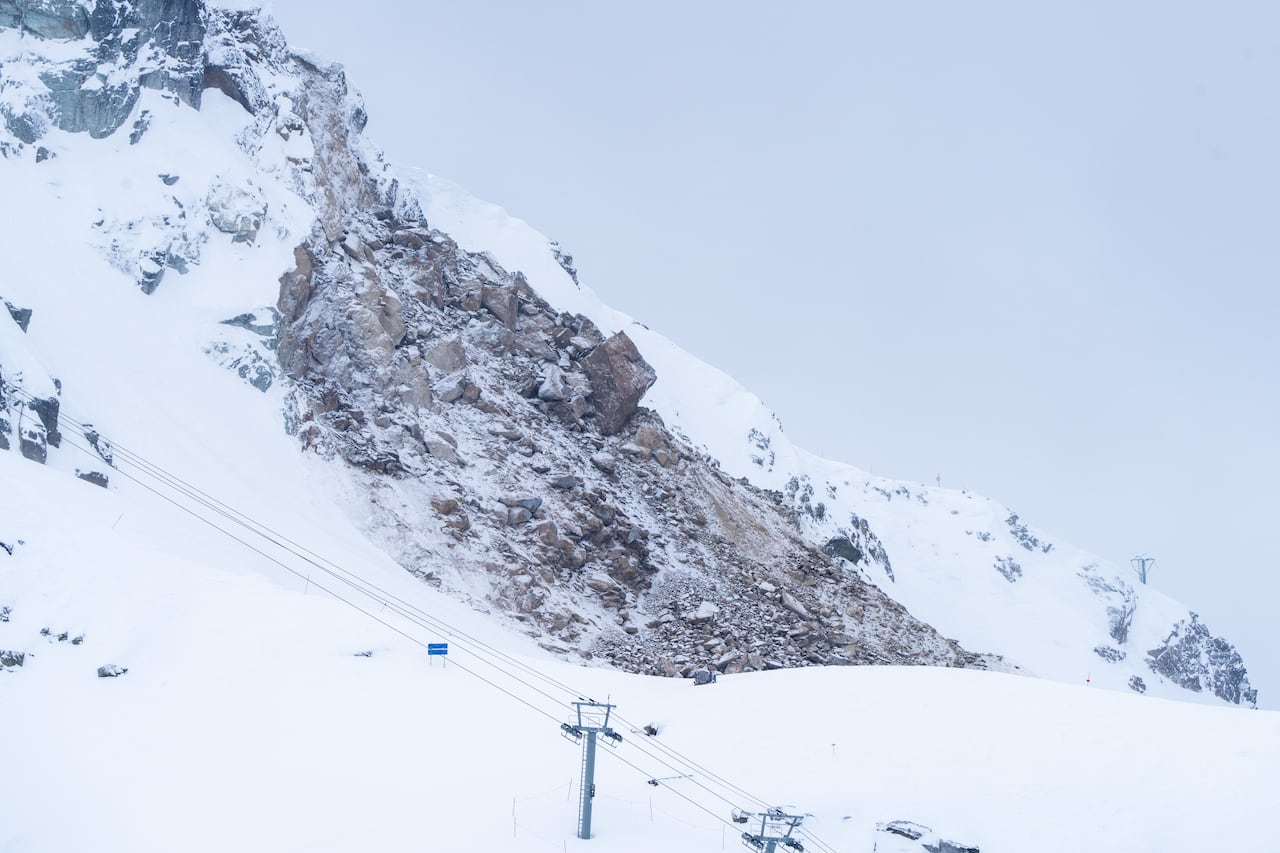 Vail Resorts, which owns and operates Whistler Blackcomb, said the rockslide occurred around 6:30 a.m. on March 12, 2026. (Matthew Sylvestre)
Studying photographs of the area taken prior to the slide, Friele said he was able to see joints, also known as cracks, that can be described as weakness in the structure.
“There are stress cracks in the rock that are created for various reasons,” Friele said.
Over time, these cracks can weaken and then ultimately fail, he said.
“Getting a clear picture of the potential future risk at that site, we’ll have to wait until summer at least.”
Seismograph caught rockslide
At 6:36 a.m., the Whistler Seismograph Station captured the rockslide.
“Often when a landslide happens, they don’t just happen once … there might be a precursor signal,” Friele said.
Motion was also detected on Wednesday.
“A lot of these things raise questions, and they need further analysis before you can kind of answer,” he said.
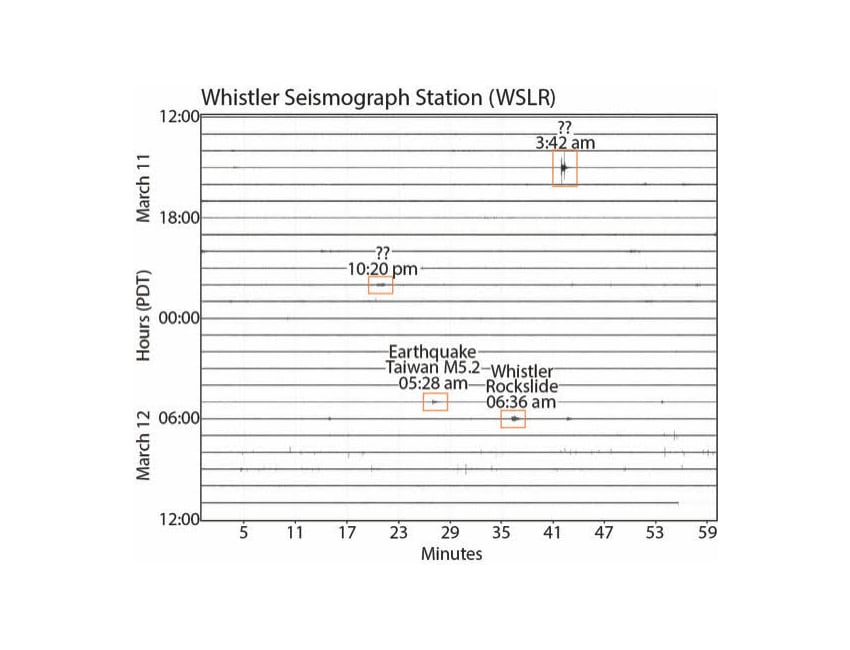 (Pierre Friele)
Friele said in the southern Coast Mountains climate warming is melting alpine permafrost, which he explains is the glue that holds the mountains together.
“Ultimately, the cause of the event is the unfavourable bedrock structure and then the trigger is likely this intense cold that we had,” Friele said.
He added that there were 180 km/h winds at the location and temperatures of –23 C with the wind chill.
“That intense cold temperature could have contributed to ice expansion in the joints and, ultimately, breaking loose that rock,” said Friele.
Whistler Mountain is composed of what are known as Gambier Group rocks, he explains.
“They’re really poor quality rocks and so it’s not surprising that there’s instability there,” he said.
Whistler Glacier receding
Jeff Crompton is a research scientist at the Geological Survey of Canada doing fieldwork in the Joffre Lakes area, where a number of large landslides occurred in 2019. He has studied the glaciers in the surrounding area, and says Whistler Blackcomb glaciers have dramatically decreased in area over the last five decades.
He said the area underneath the cliff that failed in the rockslide used to be buttressed by glacier ice, which disappeared in the early 2000s.
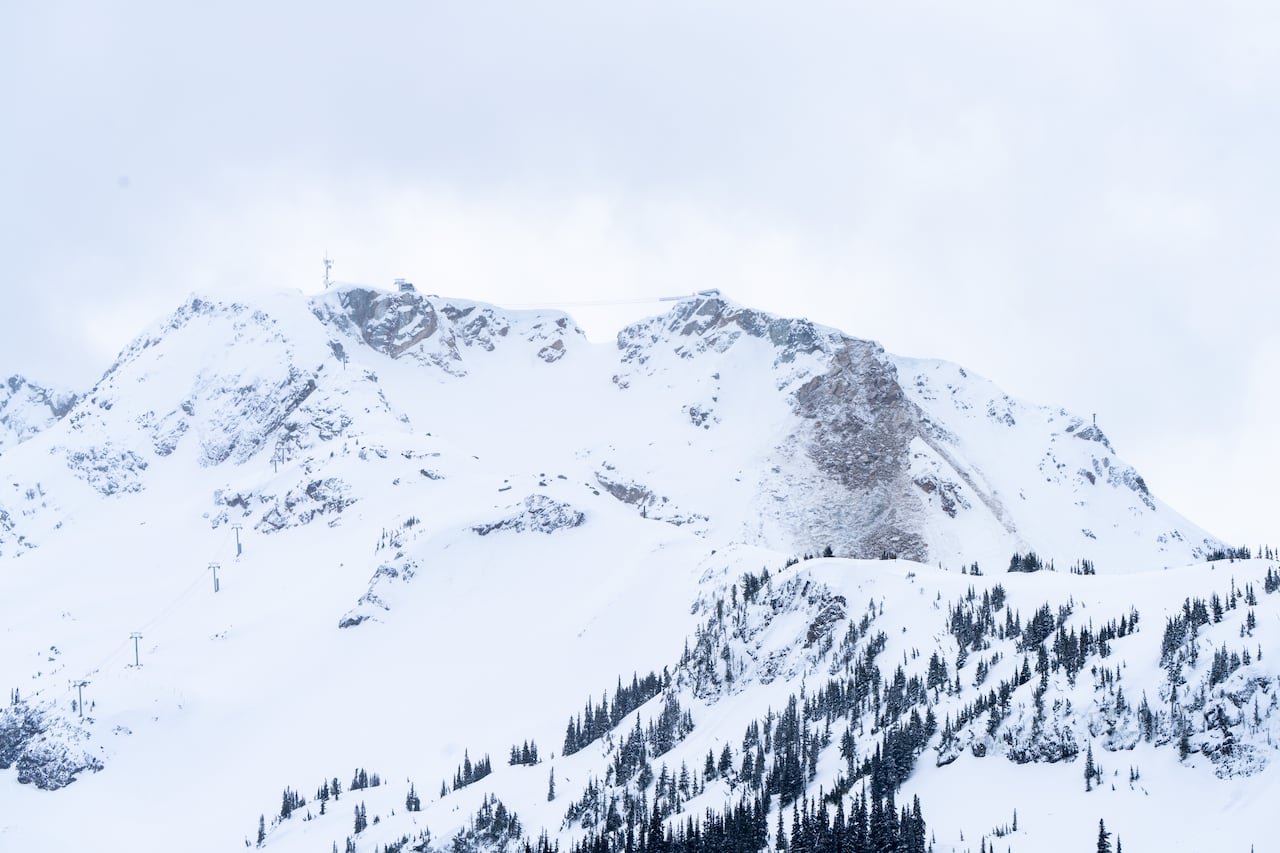 It may take months, and not until after the snow has cleared, to determine the slide’s cause, according to geoscientist Pierre Friele. (Matthew Sylvestre)
“Because the ice is thinning so rapidly, it’s [a] really steep entrance,” Crompton said.
The rockslide was not surprising to him.
“We’ve seen Whistler Glacier recede, it’s becoming buried in debris because there is a lot of rockfall happening onto the glacier,” Crompton said.
He noted that similar events have been occurring in the southern Coast Mountains amid climate-change-related warming, which causes deglaciation and permafrost degradation.
“There are the weather events that can act as triggers,” Crompton said.
He said recent rain and warmer weather also potentially added a lot of water to the rock, which may have frozen when temperatures dropped Wednesday night.
Landslide events in Sea to Sky region
There have been a handful of major slides in the Coast Mountains over the last five years.
“There’s been like five or six major landslides that have occurred that can be attributed to this phenomenon,” Friele said. “We’re just seeing a lot of change happen in the alpine environment.”
Friele said the occurrence of rockfalls and rockslides is accelerating.
“Where are they going to happen specifically? We don’t really know, unless we’re actually monitoring and we’re not monitoring our landscapes.
“We live in such a big place, we can’t monitor it.”