

Listen to this article
Estimated 5 minutes
The audio version of this article is generated by AI-based technology. Mispronunciations can occur. We are working with our partners to continually review and improve the results.
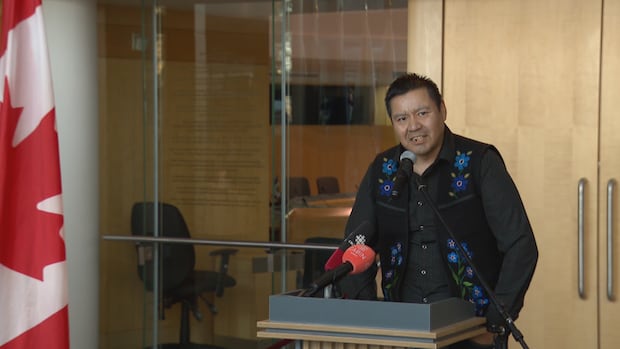
Chief Jamie Moses of Pehdzeh Ki First Nation enthusiastically welcomed news on Thursday that Ottawa is supporting the Mackenzie Valley Highway. And he spoke of the potential it has to transform his community in Wrigley moving forward.
“That’s the one thing we’ve been really trying to secure at home,” he said at an event held at the Legislative Assembly in Yellowknife Thursday evening. “Not only better services, but opportunities for the future and for now.”
Moses was one of many Indigenous government leaders from the Sahtu who publicly supported the highway project following Prime Minister Mark Carney’s announcement that construction on the highway would begin this summer.
The announcement was part of a larger one about major project support.
Carney also pledged $35 billion in defence and infrastructure investments for the North, with the N.W.T. set to receive a significant part.
A major project
The Mackenzie Valley Highway project was one of four northern projects referred to the Major Projects Office (MPO) Thursday by Ottawa. Three of them are in the N.W.T., placing the territory second only to British Columbia for the number of major projects referred to the office.
The four projects join 11 others across the country billed as “nation-building” in announcements last September and November.
The MPO’s role is to help fast-track nation-building projects by clearing red tape and securing private investment.
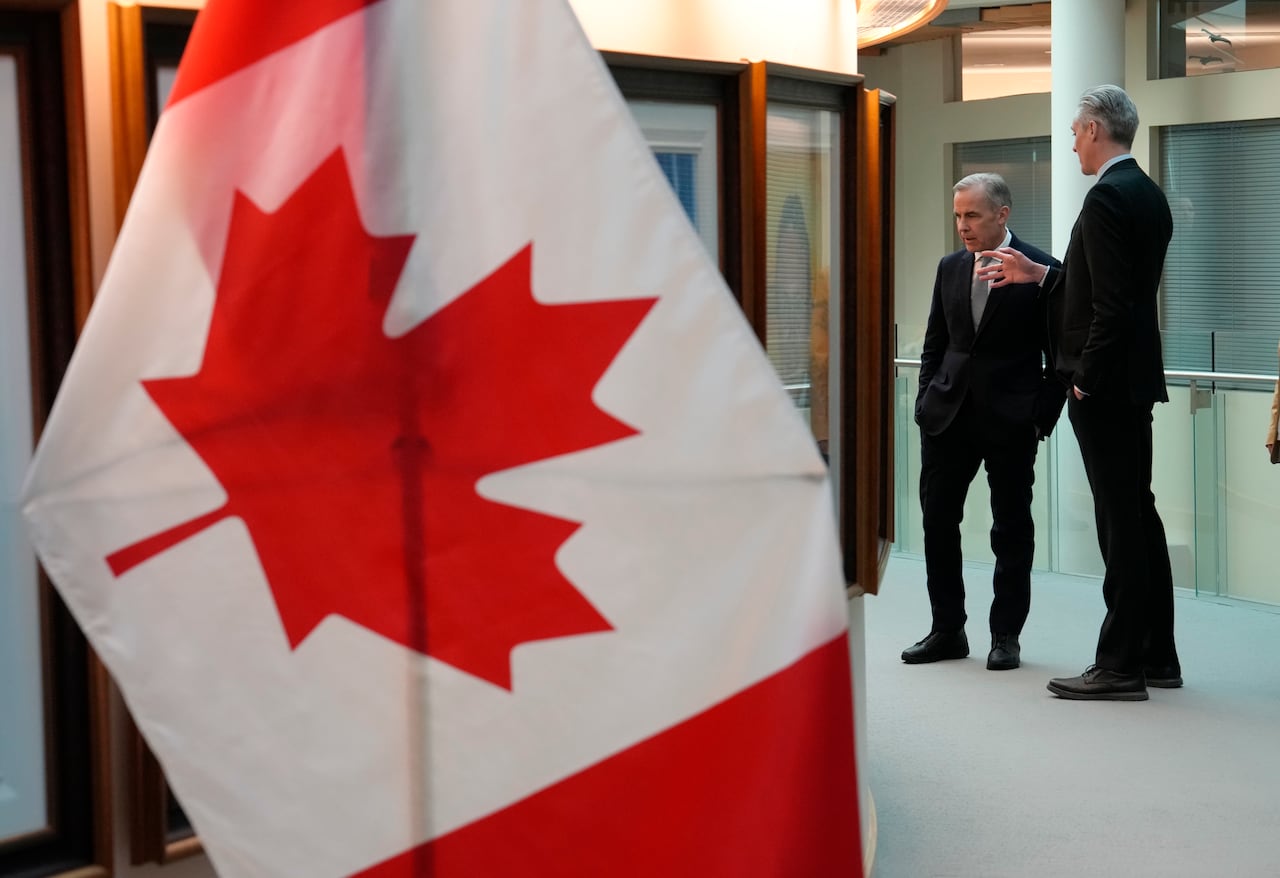 Prime Minister Mark Carney meets with Northwest Territories Premier R.J. Simpson at the legislature in Yellowknife, N.W.T., Thursday, March 12, 2026. THE CANADIAN PRESS/Adrian Wyld (The Canadian Press)
The referral does not guarantee the projects will happen, Premier R.J. Simpson said Thursday, and work remains to be done to deliver them.
That includes clarifying how much of the costs Ottawa is willing to pay and at what speed.
Nevertheless, Carney said construction on the Mackenzie Valley Highway’s first phase connecting Wrigley to Norman Wells will begin this summer.
A form of leverage
He said it marked the end of a record of “false starts” over decades for the highway, a project he said has been envisioned since the late 1950s.
Moses said the project does not only signal economic opportunity, but also a way to enhance services in the communities.
“We’re using this as sort of a leverage too to talk with government,” he said. “We know that we’re the gateway nation to this project, and we don’t have any nurses, we don’t have no RCMP.”
He said as much as there might be a will to enhance services at home, there just aren’t the numbers to make it happen, but the highway could change things.
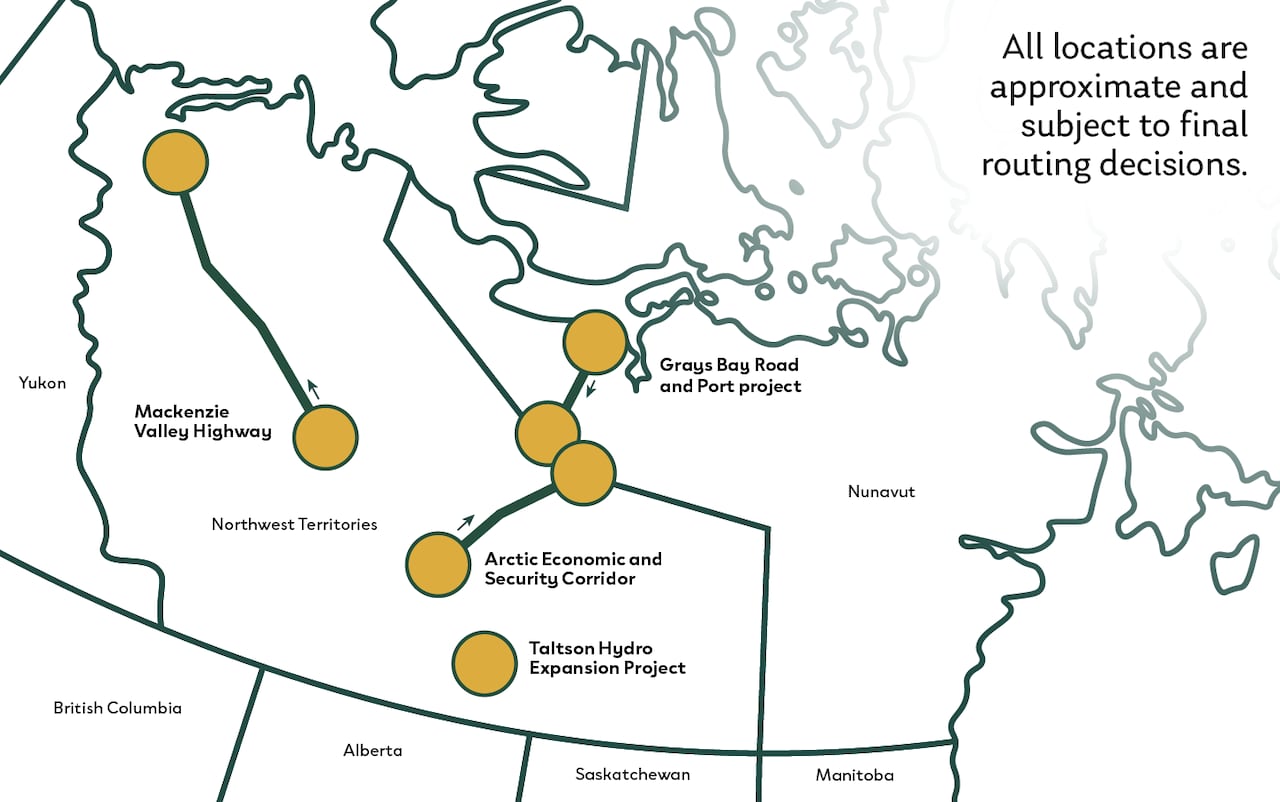 The Office of the Prime Minister shared a backgrounder document on March 12 with a map of the approximate locations of the major projects referred to the Major Projects Office. (Office of the Prime Minister)
He said it could also lead to his First Nation being able to rely less on government sources of income and to diversify.
Until then, he said, work on the project has renewed his community’s relationship with the territorial government.
“The way we’re being consulted, we’re not being left out of anything,” he said. “It feels like reconciliation, but it’s that economic reconciliation we’re after too.”
New economic opportunities
Sahtu Secretariat Inc. (SSI) chairperson Charles McNeely said a lot of contractors in the Sahtu are struggling and need work.
“This is a great opportunity for everyone all the way down the valley,” he said.
He also said he expects the highway will help people struggling with the cost of living in the Sahtu, with airfares going up and barges being disrupted by low water levels in the Mackenzie River.
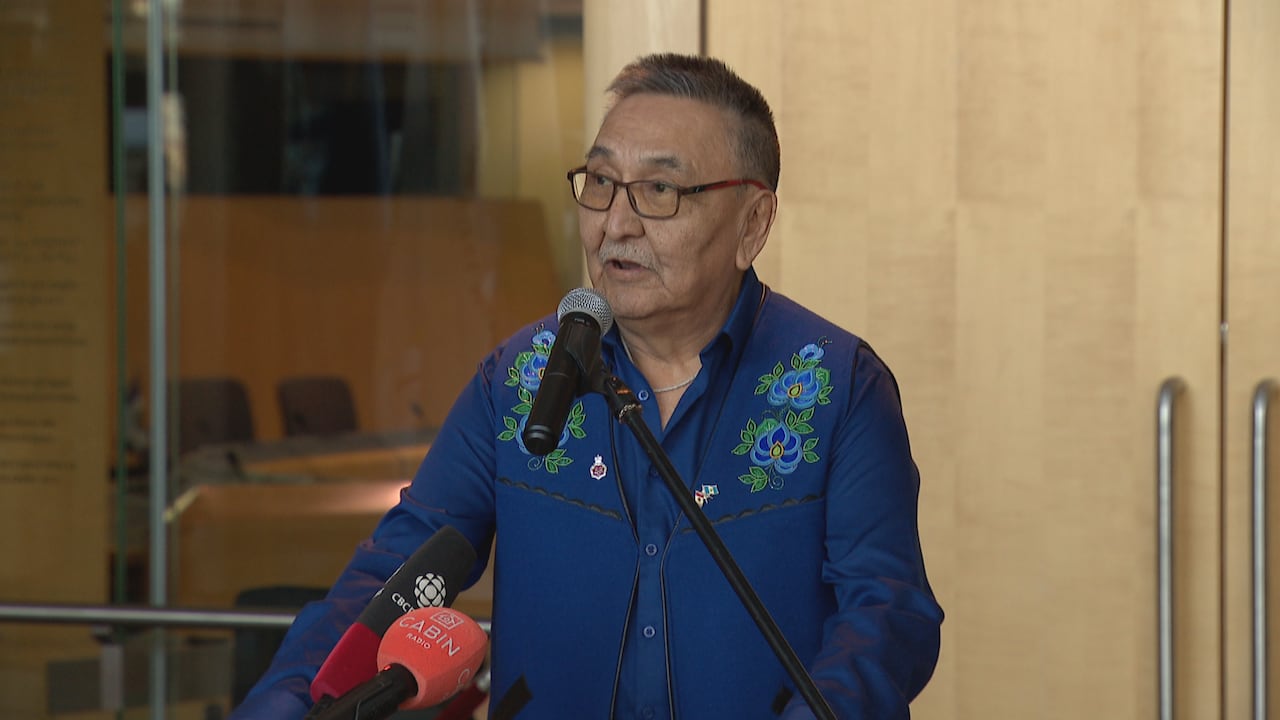 Sahtu Secretariat Inc. chairperson Charles McNeely spoke at an event at the Legislative Assembly in Yellowknife on March 12, 2026. (Allister Mccreadie)
He said a memorandum of understanding involving SSI, Pehdzeh Ki First Nation and the Gwich’in Tribal Council supporting the project will be signed in the days to come.
Gwich’in Tribal Council Grand Chief Frederick Blake Jr. said the project represents “significant opportunities for Gwich’in.”
“Indigenous governments, by working together and asserting our constitutionally protected rights, can both support Canada’s national defence goals and also achieve positive community, economic and social development outcomes for our nations,” he said in a recorded video message played at Thursday night’s event.
Ɂekw’ahtı̨dǝ́ Danny Gaudet of the Délı̨nę Got’ı̨nę Government said Thursday was a “historic” day, but, he said, he remained cautious in his optimism.
“Like the elder that I sat with for 18 years at the table,” he said, “He always said, ‘We’ll see.'”
Still, he said things looked “pretty gloomy” in the Sahtu following Imperial Oil’s announcement that it was shutting down its operations this summer.
“I think this will help us sustain ourselves in the North,” he said.
Gaudet said now comes the time to figure out how to keep the money Ottawa plans to invest in the North.
“We need to build capacity with our people,” he said. “We need to bring them to the jobs. We need to train them. We need to educate them,” he said.