
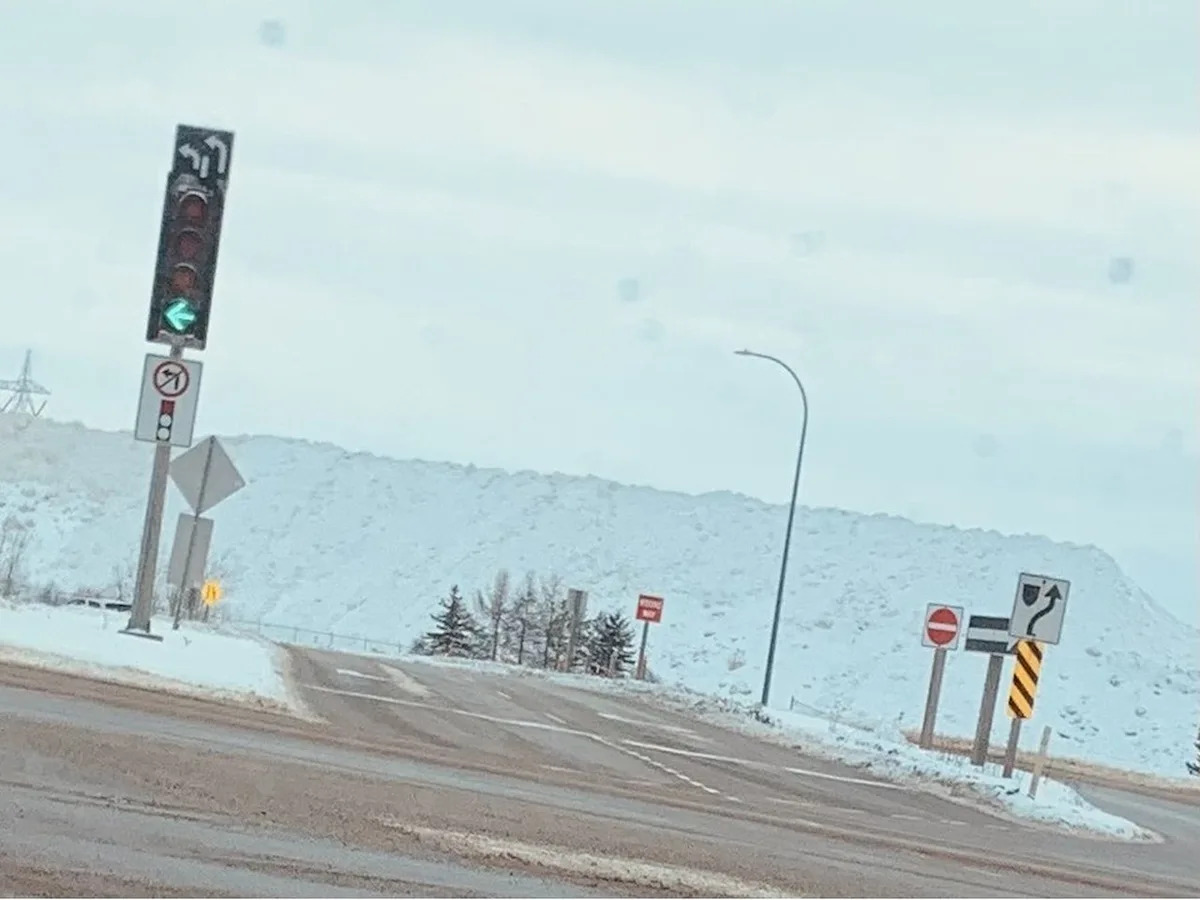
Municipalities and private contractors may soon have to pay to dump snow at Edmonton facilities — a service the city has long provided for free.
The idea surfaced Friday as Edmonton’s parks and roads service department briefed councillors during a deep dive into department operations.
Should the plan go ahead, dumping snow at city facilities will include a fee by 2030.
Officials estimate 60-70 per cent of the snow hauled to city dumping sites comes from the private sector. The city operates five snow disposal grounds designed to protect the environment and provide public safety protections.
“I was quite shocked,” said Ward papastew Coun. Michael Janz. “We all want to live in a city with very efficient snow removal that helps all of us get through the winter.
“While I appreciate the generosity that Edmonton has been sharing to regional partners and private contractors, given our fiscal situation every dollar Edmonton spends subsidizing private contractors or regional municipalities is a dollar we can’t spend enhancing service.”
Administration is also considering automated parking enforcement during parking bans, which branch manager Caitlin Zerebeski said would give officials another tool to get vehicles off the street during heavy snowfalls.
Where those vehicles go remains a question, however.
Council had previously heard during a Tuesday public hearing that alleyways are the last sections of roads cleared during snow removal operations. Mayor Andrew Knack said the city would need to improve service across the board regardless of how much snow actually drops.
“Alleys do still get cleared — I think they could get done more quickly,” he said. “But at the end of the day, I use my back alley all the time during winter. It’s not great, I have a small car. But it still allows me to access my home.
“The large snowfall we saw in late December and early January made that particularly challenging — this is why I want to have a service level conversation. We want people to use their garages during a parking ban. Most alleys are still accessible during the winter, even after a snowfall. When you see an extreme snowfall event, that’s when we have to have a conversation about how quickly are we responding to those needs.”
An audit of the city’s snow and ice removal operations will be presented to council in August.
Proactive traffic signals back in the spotlight
Another idea under consideration is proactive traffic signals, where lights change based on which vehicles are waiting at the intersection.
“I think anywhere you can get to a place in operations where you can be as proactive as possible means that people’s experience with the roadway and how they navigate is optimized,” said Zerebeski. “We’ve removed signaling along the Yellowhead. Signals typically go in when there’s an intersection of a collector road to an arterial road to allow for safe access.
“When you have a traffic signal that’s already place, how can you time it in such a way that allows you continuous movement without a disruption while factoring in things like transit and LRT and allowing for that priority service?”
Administration had previously proposed updating the city’s proactive traffic signal retiming to integrate modern automation technology, but council rejected the proposal at the time citing budget concerns.
But following the fifth heaviest snowfall on record, councillors expressed renewed interest in the technology.
“There’s some intersections with sensors that can change the light when vehicles are stopped there,” said Ward O-Day’min Coun. Anne Stevenson. “That’s an example of adaptive and responsive signaling which can help our roads be much more efficient.
“I think we’ve all had those moments where it’s late at night and there’s not another car in sight but we’re still stuck at a red light for two minutes. This type of technology can help avoid that.”
She also noted an automated system would help officials redirect traffic in the event of a major car accident to minimize traffic backups if a major intersection is blocked.
City officials told Postmedia converting a four-way intersection to a proactive signal system costs between $45,000 and $50,000. Fewer than five per cent of traffic lights are currently considered proactive.
Related
Bookmark our website and support our journalism: Don’t miss the news you need to know — add EdmontonJournal.com and EdmontonSun.com to your bookmarks and sign up for our newsletters here.
You can also support our journalism by becoming a digital subscriber. Subscribers gain unlimited access to The Edmonton Journal, Edmonton Sun, National Post and 13 other Canadian news sites. Support us by subscribing today: The Edmonton Journal | The Edmonton Sun.