
Breadcrumb Trail Links
Moncton to MiramichiNew BrunswickThe IssuesHealth care
N.B. neurologist, researcher have differing views on whether independent investigation into atypical neurological symptoms is needed
Published Mar 15, 2026 • Last updated 17 hours ago • 7 minute read
You can save this article by registering for free here. Or sign-in if you have an account.
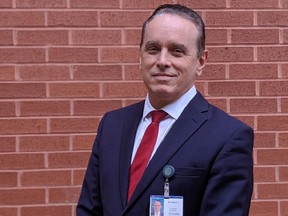 Dr. Alier Marrero, a Moncton neurologist seeing patients with atypical neurological symptoms, says an independent investigation is needed into environmental concerns after sharing his frustration with the province’s own investigation into the matter. Photo by Sarah Seeley/Brunswick NewsArticle content
The neurologist at the centre of the so-called “mystery disease” is disputing a recent provincial report into his cluster of patients. But another researcher, who authored a peer-reviewed study on the alleged illness last year, says any further investigation would be a waste of time and an “unnecessary cost.
Advertisement 2
This advertisement has not loaded yet, but your article continues below.

THIS CONTENT IS RESERVED FOR SUBSCRIBERS
Subscribe now to read the latest news in your city and across Canada.
Unlimited online access to articles from across Canada with one account.Get exclusive access to the e-Edition, an electronic replica of the print edition that you can share, download and comment on.Enjoy insights and behind-the-scenes analysis from our award-winning journalists.Support local journalism and the next generation of journalists.
SUBSCRIBE TO UNLOCK MORE ARTICLES
Subscribe now to read the latest news in your city and across Canada.
Unlimited online access to articles from across Canada with one account.Get exclusive access to the e-Edition, an electronic replica of the print edition that you can share, download and comment on.Enjoy insights and behind-the-scenes analysis from our award-winning journalists.Support local journalism and the next generation of journalists.
REGISTER / SIGN IN TO UNLOCK MORE ARTICLES
Create an account or sign in to keep reading.
Access articles from across Canada with one account.Enjoy additional articles per month.Get email updates from your favourite journalists.
THIS ARTICLE IS FREE TO READ REGISTER TO UNLOCK.
Create an account or sign in to continue with your reading experience.
Access articles from across Canada with one accountShare your thoughts and join the conversation in the commentsEnjoy additional articles per monthGet email updates from your favourite authors
Article content
New Brunswick’s most recent investigation had been prompted by Dr. Alier Marrero, the specialist behind the theory of a novel illness affecting patients with unexplained symptoms. Marrero had raised concerns about elevated levels of heavy metals and pesticides, such as glyphosate, metabolites and glufosinate in those patients.
Chief medical officer Dr. Yves Léger’s office produced a report released in January with findings that determined neither herbicides nor heavy metals have contributed to the symptoms of more than 200 patients in New Brunswick. It also found no evidence of unknown or new brain diseases.
Now, Marrero is asking for an “independent, multidisciplinary, scientific investigation” under the Public Health Agency of Canada and the Canadian Institute of Health Research.
He wrote a letter dated Feb. 17 obtained by Brunswick News addressed to the provincial and federal chief medical officers, health ministers for both levels of government and Premier Susan Holt. In the letter he shared his frustrations with the province’s investigation and those of his patients and their advocates that no patients were met or tests conducted during the investigation process.
Advertisement 3
This advertisement has not loaded yet, but your article continues below.
Article content
“Not only did Public Health New Brunswick not provide answers but also chose to ignore most of the facts and extensive clinical data, extraordinarily requested and painfully provided to you,” he wrote.
A scientific paper from last year, published in the Journal of the American Medical Association, had reached the same conclusion as the province based on a review of 25 cases.
The JAMA study concluded all of the patients had well-known conditions, such as Alzheimer’s and Parkinson’s, functional neurological disorder, traumatic brain injury, or metastatic cancer.
Dr. Anthony Lang, one of the study’s primary authors, said in an interview New Brunswick residents should accept the findings and recommendations of Leger’s investigation and that the patients should have a second clinical assessment in order to work towards getting a proper diagnosis for their symptoms.

Morning Email Telegraph-Journal
Thanks for signing up!
Article content
Advertisement 4
This advertisement has not loaded yet, but your article continues below.
Article content
The province’s report had three recommendations, including follow-up care for patients, having a process in place to support patients in receiving a diagnosis for their illness, and ensuring that a formal process is in place to have two specialists review and agree on any report of undiagnosed neurological illness in a patient.
Lang disagrees with Marrero and does not believe an independent investigation or a PHAC review is warranted.
“I really believe this is unnecessary and is also going to be a source of unnecessary cost to the government and the health care system and to us as taxpayers,” he said.
He also criticized Holt’s decision to have PHAC review patient data. In August the federal agency agreed at the request of the province to undertake an independent review of the available data, including the data Léger’s office analyzed and other data collected in the course of New Brunswick’s investigation.
Advertisement 5
This advertisement has not loaded yet, but your article continues below.
Article content
“She’s passing the buck and in the process, this is going to cost a lot more bucks to everybody involved,” said Lang.
The premier’s office deferred questions to the Department of Health.
Health Department spokesperson Tara Chislett said in an email that as part of the province’s study, costs for the environmental review were limited to a consultant engaged early in the process and “minor administrative expenses,” but did not confirm an amount. Questions about the cost of clinical testing requested by Marrero were deferred to the health authorities.
Nicholas Janveau, a spokesperson for PHAC, confirmed the department had received Marrero’s letter and remains “actively engaged” with Léger’s office.
He added PHAC is undertaking an independent epidemiological review and analysis of available data at a group/population level, not individual patient-level analysis.
Advertisement 6
This advertisement has not loaded yet, but your article continues below.
Article content
“The review has begun with the first set of data received, and further data is expected from the province,” Janveau said. “The estimated duration of the review and analysis itself is several months, after all the data has been received.”
Lang noted the hours of work Léger’s and provincial and federal health staff put into the investigation and the additional diagnostic scans and testing for heavy metals and pesticides that Marrero ordered for his patients likely came with a steep price tag.
“If you’re going to do these tests you’ve got to have a good reason for doing it. You don’t go on a broad fishing expedition with the belief you’re going to find an underlying environmental cause,” Lang said.
Marrero said in his letter he was “appalled” by the province’s report’s messaging and alleged the blame was shifted on him and the patients, which he called “incomprehensible.” He added placing blame on a reporting physician makes it difficult for other physicians to report cases.
Advertisement 7
This advertisement has not loaded yet, but your article continues below.
Article content
The neurologist said he had reported 408 cases to Léger’s office with another 166 under investigation for a total of 574 patients. Marrero noted 138 of them were under 45 years old and emphasized 80 households had more than one case, which includes non-blood relatives like spouses and in-laws.
A total of 309 patients showed “abnormal autoimmune antibodies panels” including several rare antibodies related to autoimmune encephalitis, autoimmune neuropathies and myopathies.
“This is crucial as these conditions are treatable, but some are potentially deadly if left undiagnosed,” he said. “Whatever is causing this phenomenon should be understood in a scientific manner, particularly in potential environmental exposures or if triggers could be identified.”
Marrero pointed out there were geographical clusters, such the same town or rural area, same water source or part of the city.
Advertisement 8
This advertisement has not loaded yet, but your article continues below.
Article content
“These communities expect you to analyze these facts and investigate accordingly,” he said noting no environmental testing has been done of the water, soil or air.
Neurologist describes ‘openly hostile environment’ for meeting with medical officer
Marrero said in the letter he had been invited to take part in a meeting with Leger to talk about the report and its recommendations but called it an “openly hostile environment” where he did not feel safe.
“For unexplained reasons, the meeting has been scheduled to be in a law firm office, in the presence of my employer, as well as lawyers,” he said. “Is this a respectful way to meet with a reporting physician or to analyze any Public Health report? Is this a way to provide answers to patients and families?”
Vitalité Health Network confirmed in a statement the meeting had taken place but did not address the newspaper’s question about if or why lawyers were involved.
Advertisement 9
This advertisement has not loaded yet, but your article continues below.
Article content
The health authority said it accepted the recommendations in the province’s report and is committed to implementing them.
“Meetings were held with our specialist physicians and representatives from Public Health to develop an action plan,” said Vitalité. “Each affected patient will be contacted and, with their consent, will be offered support and an appropriate clinical reassessment.”
Additional information will be sent directly to patients as soon as the details of the process are finalized, said Vitalité.
Chislett said the meeting was organized by Vitalité as an “employer–employee discussion.” It was held Feb. 18 at the Dr. Georges‑L.‑Dumont Hospital.
“The Office of the Chief Medical Officer of Health did not set the meeting, select the location, or determine attendees,” she said. “The Chief Medical Officer of Health attended briefly only to answer potential questions about the report.”
Advertisement 10
This advertisement has not loaded yet, but your article continues below.
Article content
‘Patients are dying and getting lost in all of this:’ advocate
Sarah Nesbitt, a patient liaison and one of Marrero’s patients, said the back and forth “bickering” between the neurologist and the province is distracting from patient care and wasting time that could be spent on getting treatment, therapies, and support.
“The attention should be on getting help for the patients,” she said. “Patients are dying and getting lost in all of this.”
Nesbitt said she hasn’t heard from patients who have been contacted by Léger’s office or Vitalité to discuss the next steps in their care, or a second clinical diagnosis.
Brit Mockler, a senior advisor in Holt’s office, told Nesbitt in an email dated Feb. 26, obtained by the Brunswick News, that the patient care, specialty physician signoff recommendations are “aiming to be ready” in mid to late March, though it did not give a deadline for the second clinical assessments because it required further discussion with the health authorities.
Advertisement 11
This advertisement has not loaded yet, but your article continues below.
Article content
Chislett said “work on the patient‑care and specialty physician signoff recommendations remain on track, with actions expected to begin by the end of March or early April.”
Nesbitt noted in her own situation she has had a “rough winter” and has regressed with her symptoms, sometimes not being able to leave her bed.
“If you say we have alternative diagnoses, then why haven’t you given them to us yet?” she said. “The longer this drags out the more suffering that’s happening.”
Lang told Brunswick News neurological diseases can be difficult to diagnose, and he pointed to a shortage of neurologists in a province like New Brunswick.
Diagnosable biomarkers are available for some illnesses, but others still require further research, he said.
“We are reaching a point in the foreseeable future that we’re going to be better at making these diagnoses or at least more reliable,” he said.
Marrero declined a request for interview.
Article content
Share this article in your social network