
The question is no longer whether the technology works – it’s whether cycling will ever create the conditions for it to succeed.

Focus, Revved Carbon, CSS Composites
Thermoplastic carbon fibre has been pitched for years as a cleaner, more modern alternative to the thermoset composite bike frames and components that dominate high-end cycling. Those frames are labour-intensive to make, hard to recycle, and built around supply chains that extend far from the riders buying them – and often far even from the brands designing them. Thermoplastic composites, by contrast, offer almost the opposite.
Yet cycling’s thermoplastic projects continue to fail. And after more than two decades of projects that have taken off but never succeeded long-term, the question is no longer just why, but also what, if anything, would make the timing right for the material.
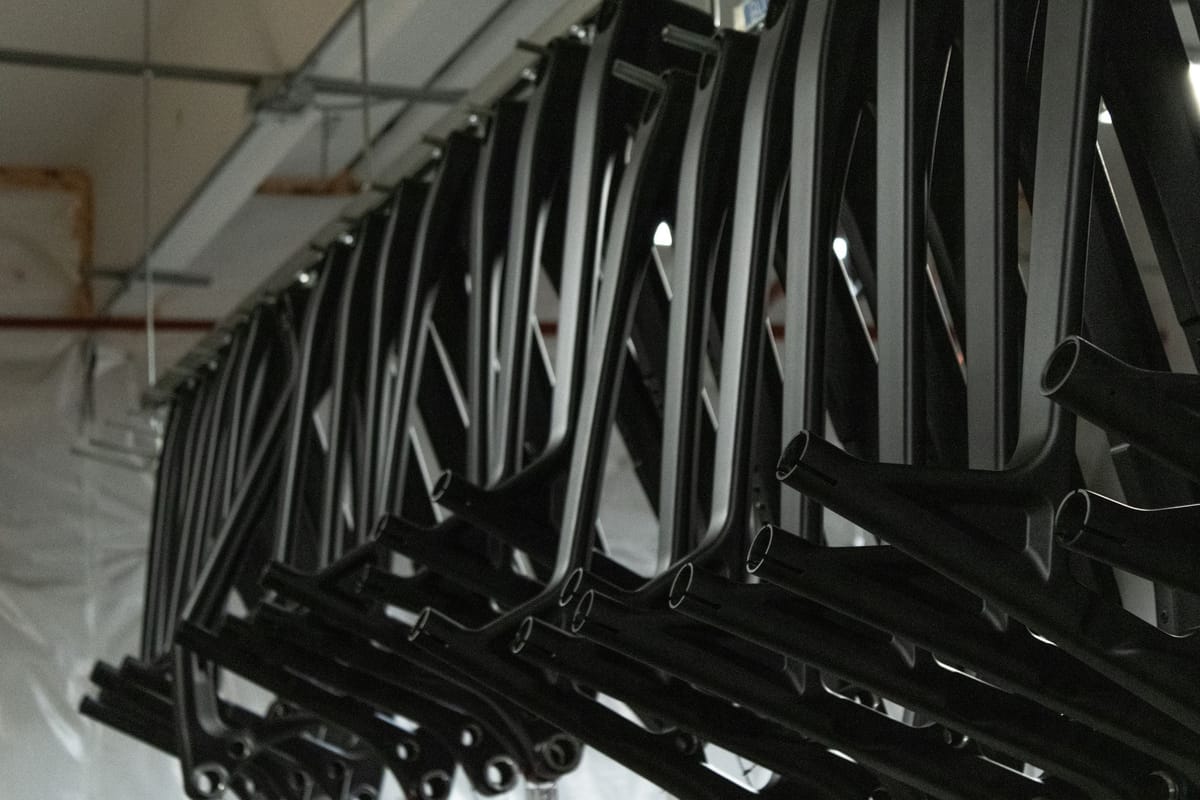
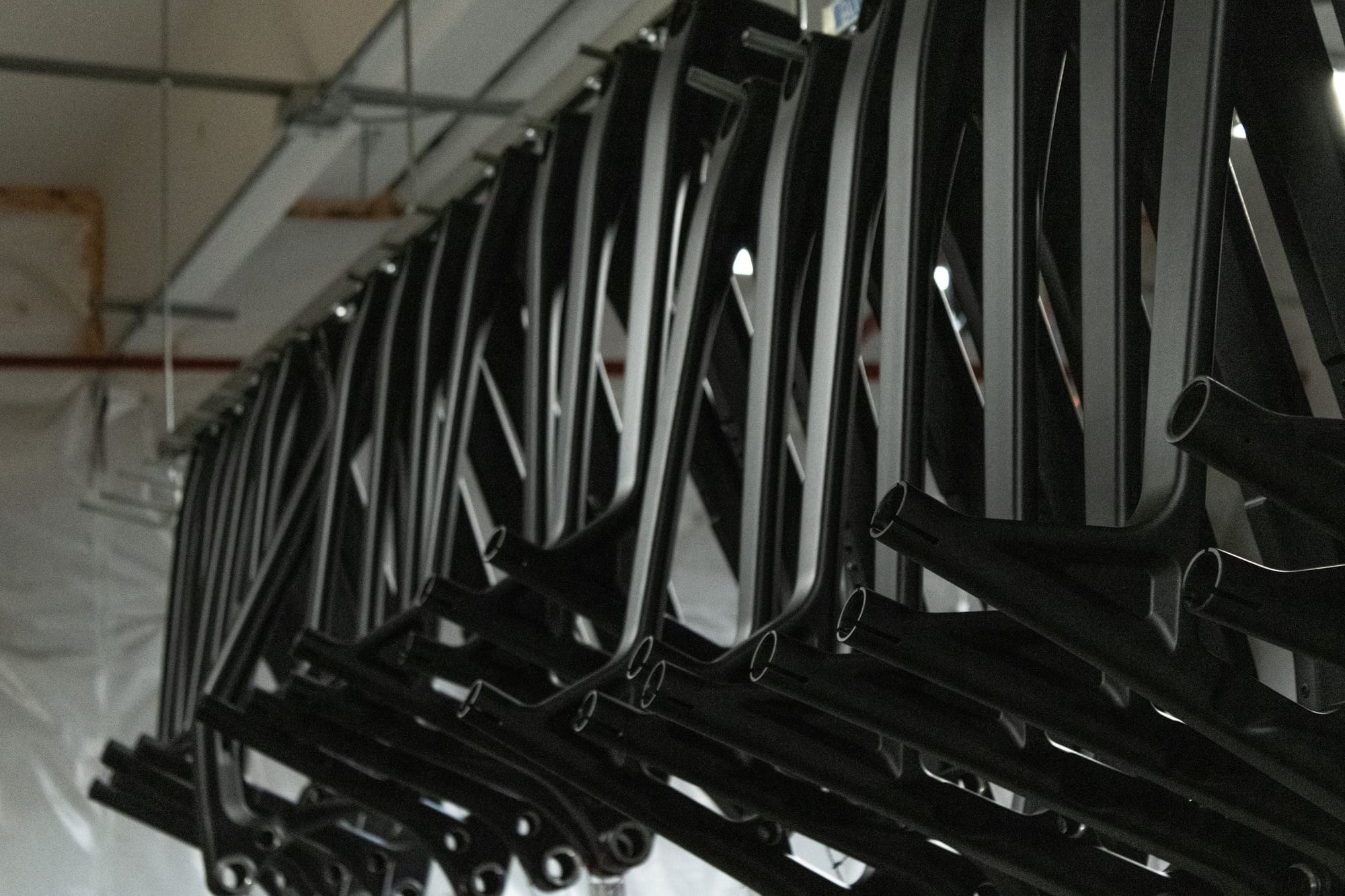
The latest project to reach the brink of production was Focus’s JAM² NEXT, a thermoplastic carbon fibre e-MTB developed with Belgian composites manufacturer Rein4ced. That bike was meant to hit the markets just last week. “We have 15 bikes downstairs. They’re all good to go. We should have started production this week,” Patrick Laprell, Focus’s head of sustainability, told Escape Collective soon after the news about Rein4ced’s bankruptcy broke, just days before production was due to begin in January 2026.
“It came truly as a surprise to us that they had to file bankruptcy,” Laprell admitted. “We were confident enough that it would be workable, but it turned out not to be.”
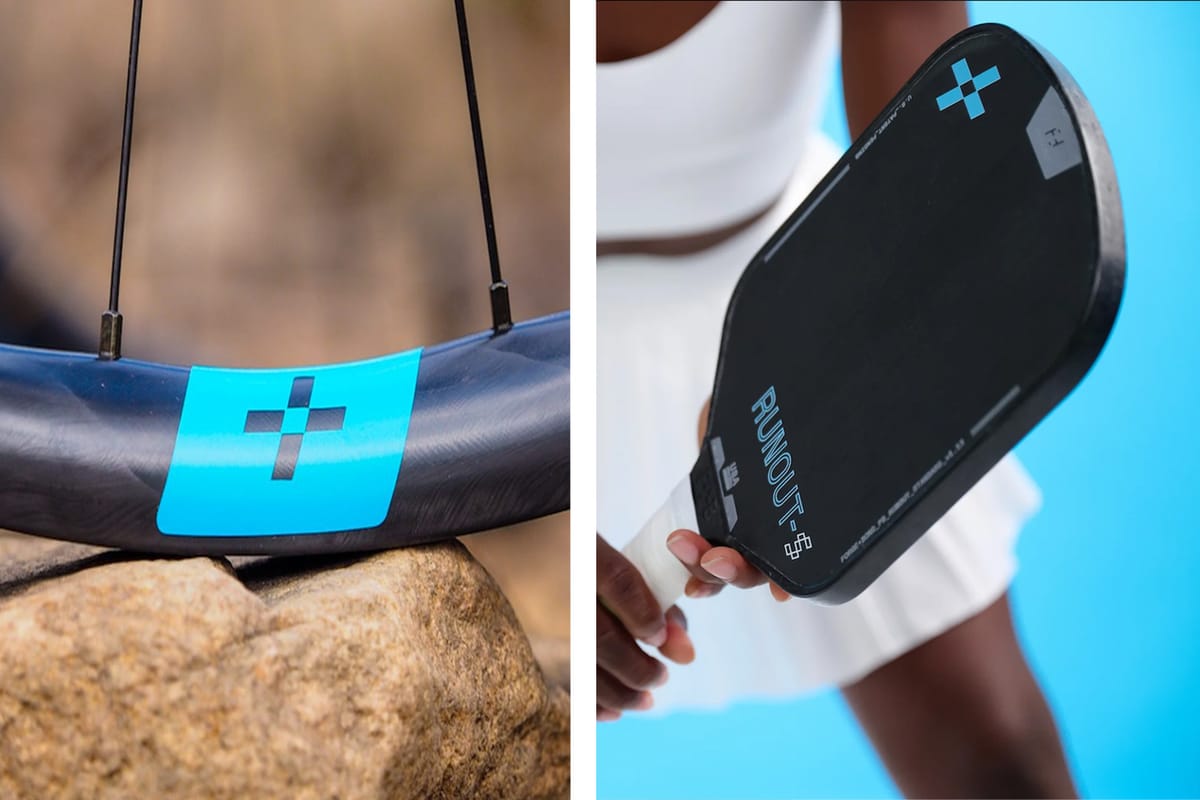
Rein4ced’s closure follows other thermoplastic companies’ demise. Late last year, CSS Composites LLC – the parent company of wheel brand Forge+Bond and the manufacturer of thermoplastic carbon rims used by brands including Chris King, Revel, Bontrager and Evil – shut down abruptly. CSS’s collapse was arguably a higher-profile failure; the wheels manufactured by the company had reached the market, and its closure left multiple brands scrambling and customers with unanswered questions over warranty and repair.
CSS never gave a public account of why it failed, but from what most in the space have described to Escape, it seems to have been plagued by an industry-wide struggle: not enough revenue coming in to sustain the capital intensity the technology demands. In the letter announcing its closure, CSS cited “the enduring economic challenges facing the bike industry,” and the parent company quickly pivoted the underlying technology, manufacturing facilities and even some of the branding into a different fitness market with, presumably, better prospects.
How a high-end wheel brand crashed … then came back as a pickleball company
The collapse of CSS Composites left multiple brands and hundreds of consumers high and dry. Less than a month later, the company’s Forge+Bond branding and other IP has returned in a new field.
Now, the JAM² NEXT has become the latest thermoplastic frame project that may fade into the history books. And with it, the technology seems to be fading away again and many might as if this material is cursed? The short answer is no, but after more than 20 years, the cycling industry has yet to provide the conditions for it to thrive.
What thermoplastics are trying to offer
To understand why these projects have failed, it helps to understand what draws brands to try thermoplastic products in the first place. The default carbon fibre bike is made by hand, a lay-up of thermoset prepreg carbon fibre, cured in an autoclave or oven, assembled by skilled labour in Asian factories, and shipped to brands and then consumers who will, at the end of the bike’s life, have no meaningful way to recycle it. The supply chain is long, the labour share is high, and the epoxy resin that makes carbon strong also makes it essentially impossible to reprocess.
Beneath the paint: Decoding the bike industry’s carbon fibre jargon
What really matters in the design and manufacturing of the bike industry’s most widely used performance material?
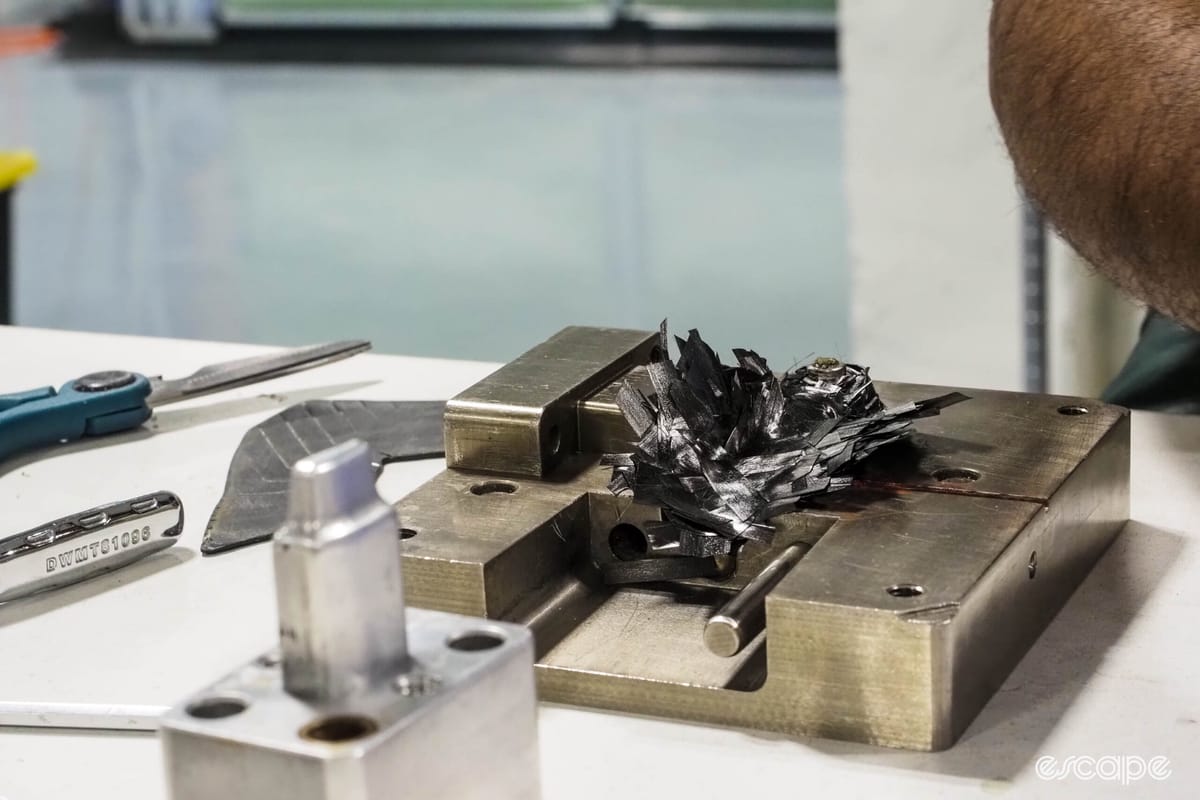
Thermoplastic carbon is not a magic ingredient, but it changes two aspects of the conventional thermoset frame at once: how the composite can be processed in manufacturing, and what becomes possible after the bike’s life as a bike is over. Unlike thermoset carbon, thermoplastic composites can be reprocessed mechanically. That does not (at least, yet) mean closed-loop recycling back into new high-end frames – thermoplastics can be downcycled, recovering material for lower-grade applications. But that is still a meaningfully better outcome than a cured epoxy product, for which in the current processing landscape offers very little at the end of life. It also opens the door to more automated manufacturing – and that, not sustainability, was the primary motivation for Rein4ced.
“We did not select the thermoplastics because of the sustainability,” Michaël Callens, founder of Rein4ced, told Escape Collective, speaking publicly for the first time since the brand’s collapse. “We really selected it to be able to be less dependent on manual labour and to automate the process.”
Focus came to the project from a different angle. Laprell said the company viewed the frame as one of the few parts of a bike brand’s footprint it could actually control, and the project was designed around circularity from the start. Focus and Rein4ced explored a take-back concept, ways to reuse production scrap, and carried out a life-cycle assessment to quantify potential emission gains from both materials and European manufacturing.
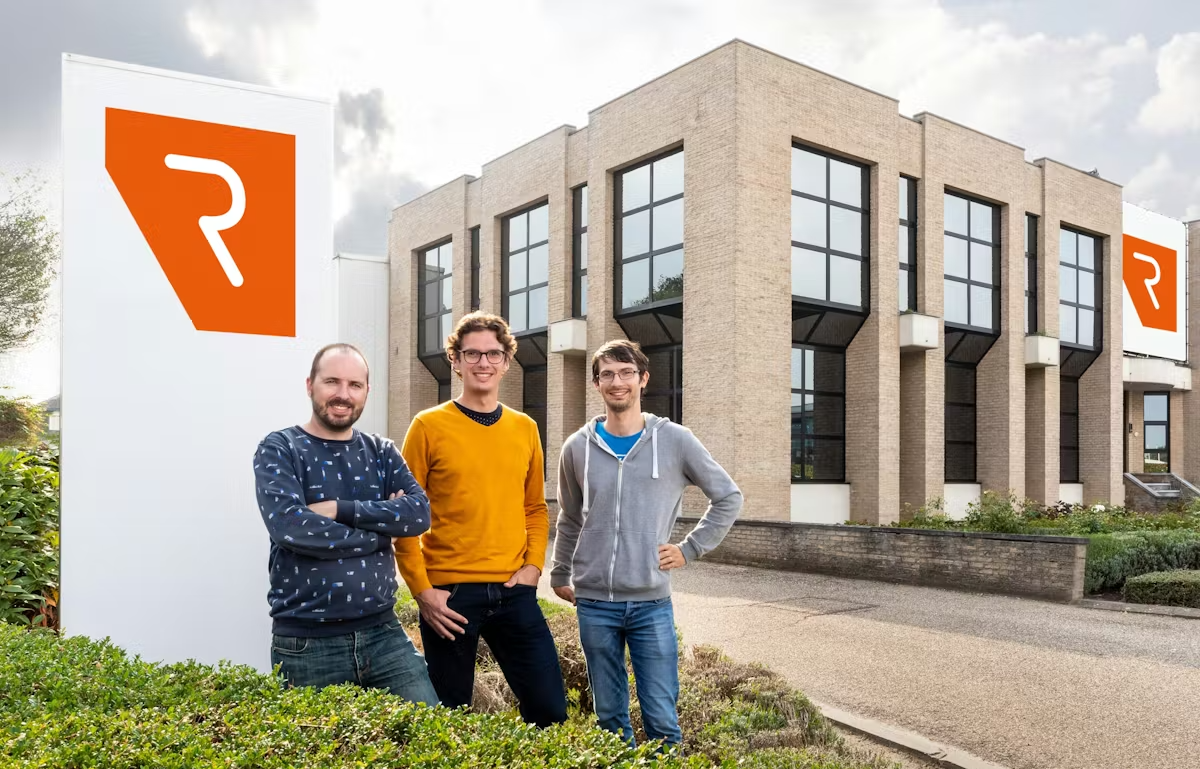 From left: Rein4ced’s former CPO Dave Luyckx, COO and co-founder Niels De Greef and CEO and co-founder Michaël Callens at the Leuven factory.
But Laprell was also candid about the limits of the sustainability argument. An e-MTB is not a car replacement – most riders drive to trails to ride them, and a mountain bike is an addition to a lifestyle, not a substitute for a more polluting one. “We tried to make something that is really unsustainable and try to make it a bit better,” he said. The goal wasn’t to claim a clean conscience, but to prove that a high-performance bike could be made with a shorter supply chain, more local manufacturing, and a more sustainable end-of-life.
This post is for paying subscribers only
Subscribe now
Already have an account? Sign in
Did we do a good job with this story?
👍Yep
👎Nope