
Read: 4 min
A group of Christian organizations are seeking to intervene in a Quebec court case that asks if governments can define religious worship.
In July, a Montreal church hosted a performance by the controversial American Christian musician Sean Feucht.
Feucht, who has supported U.S. President Donald Trump, became well-known in 2020 for hosting events that violated Covid restrictions. He also vocally opposes abortion and same-sex marriage.
The City of Montreal fined the church $2,500, saying it violated a bylaw that allows them to operate as a place of worship.
In September, the church sued the city, arguing the fine violated the church’s freedoms of religion and expression.
“This is a case of blatant abuse of power, so foreign to the rule of law that it discredits the administration of justice,” the church’s lawsuit says.
Now, three Christian organizations are asking to join as interveners in the case. Governments, they say, should not be allowed to decide what is considered religious worship.
“Forms of worship are varied across Christian traditions and governments should not presume to dictate what’s proper worship and what is not,” said Bruce Clemenger, director of legal affairs for the Evangelical Fellowship of Canada (EFC), one of the Christian organizations.
Purpose of the bylaw
The July event, hosted by the Montreal church Ministerios Restauración, was controversial before it began.
During the summer of 2025, Feucht tried to tour across Canada, but his shows kept getting cancelled.
The cities of Charlottetown, Moncton and Quebec City cancelled his shows, often citing safety concerns. Parks Canada also cancelled his permit to play at York Redoubt National Historic Site at the Halifax Harbour.
Ministerios Restauración offered to host Feucht for a free event on July 25. Four city inspectors came to the church that morning, warning the church would be punished if it hosted the event, the church’s lawsuit says.
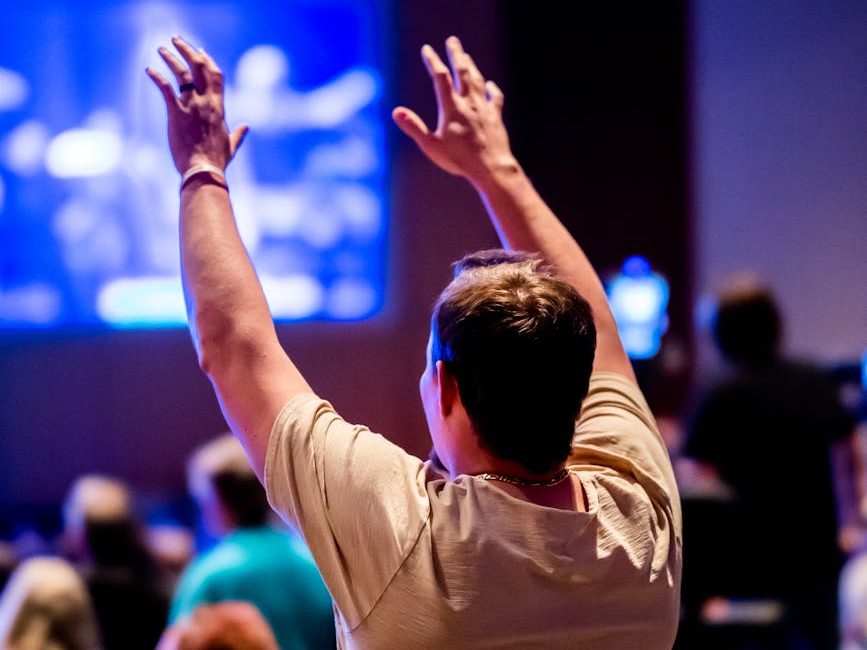
The church held the event anyway, while police were stationed outside. About 150 people gathered to sing songs, led by Feucht and his band, hear a sermon and take the Lord’s Supper, a Christian sacrament.
The only disturbance during the event, which lasted just over two hours, was when a protester threw a smoke bomb, the church’s lawsuit says.
In August, Ministerios Restauración was fined for using its building in a way not allowed by the city’s bylaws. The bylaws say the church property is to be used as a religious establishment, particularly as a place of worship.
Thank you for being a paid subscriber. Your support makes our original and Canadian-focused journalism possible. 🇨🇦
Subscribe to Editor’s Picks. Receive our free Saturday newsletter featuring our best stories from the week.
In media reports at the time, spokespeople for Montreal’s mayor said the church was fined because the event “goes against the values of inclusion, solidarity, and respect that are promoted in Montreal.”
But Olivier Seguin, Ministerios Restauración’s lawyer, says the city used a law for a reason other than its intended purpose.
“They tried to use a bylaw that is meant to regulate noise [and] parking to silence, to impede on free speech,” he said.
The city’s statements in the media show they issued the fine because they disagree with Feucht, he says.
“[The church] basically wants to be free to worship the way they want and say the things they feel, without having to fear that the city will use bylaws that are meant for different purposes in order to silence them.”
The city declined to comment on this story, saying it cannot say anything because the case is before the courts.
Misunderstanding religion?
The fine shows that Montreal’s government does not understand that different Christian traditions worship in different ways, says Corentin Messina, communications and public relations director at Réseau évangélique du Québec, another one of the Christian organizations seeking to intervene in the case.
Many people in Quebec associate Christian worship with the formal Catholic Mass, he says. They may not think a band leading a congregation in song is a form of religious worship.
“There is really a misunderstanding of what’s religious and what’s not, and the rights of religious minorities,” said Messina. Evangelical Protestants make up only about three to five per cent of Quebec’s population, he says.
Messina does not think the government has an “agenda” to target evangelicals.
“They don’t understand religion and the laws about religious liberty.”
Nevertheless, cases like this have some Quebec pastors worried about what governments may do if they preach religious teachings that contradict common societal views, he says.
Clemenger, at the EFC, agrees the fine reflects misunderstandings about religion. “What took place at the church is perfectly consistent with the form and style of worship of churches across the province,” he said.
The EFC is asking to intervene in the case so that churches, and all other places of worship, “have the freedom to do what they’re intended to be able to do.”
Interveners are organizations that provide information to the court about legal questions and issues raised by a case. They are not directly involved in the case, although their arguments may align with one of the involved parties.
‘Clear violation’
Both Clemenger and Messina say their interventions are not to be taken as personal endorsements of Sean Feucht.
“Our intervention is not in any way indication of an endorsement of him,” said Clemenger.
The case is a clear example of a government violating a church’s freedom of religion and freedom of expression, says Richard Moon, a retired law professor at the University of Windsor who has written extensively about freedom of religion.
“Our courts have understood a religious practice to be really anything that a person, that an individual considers to be spiritually significant,” he said in an interview.
“I don’t think there would be any question, at least in my mind, that this performance by this Christian singer would count as a form of worship.”
No one was forced to go to Ministerios Restauración to hear Feucht, he says. No one was being exposed to his views unwillingly.
Moon says he personally disagrees with Feucht’s opposition to same-sex marriage. But the singer is still allowed to express his moral beliefs, as long as he is not vilifying LGBTQ people or saying they are less than human.
“Simply holding the view and expressing the view that homosexuality is sinful or immoral would not count as hate speech under our law,” he said.
The church’s case is set to be heard before the Superior Court in Quebec. The trial date has not yet been set.
Canadian Affairs is one of the few outlets in Canada offering reported coverage of religion and faith. Our coverage is made possible in part thanks to the financial support of contributing community members.
Related Posts