
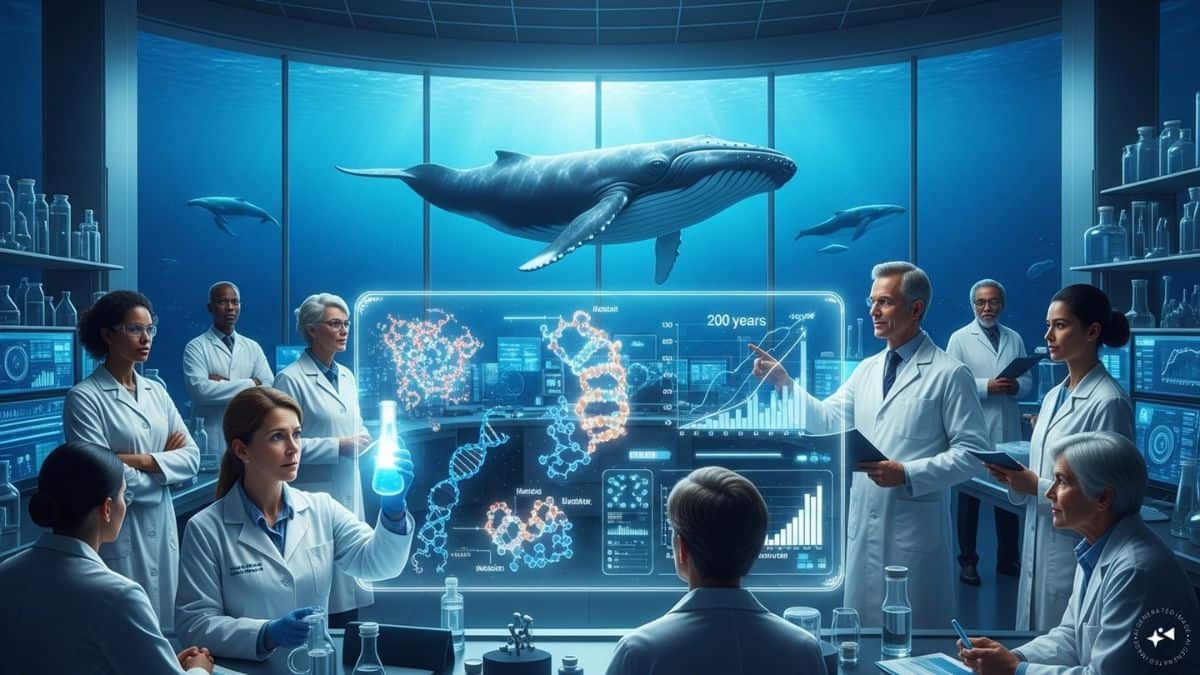
Whale proteins in DNA repair and cell protection may help extend human lifespan and reduce cancer risk
For centuries, humans have been on a struggle to extend their lives. From ancient tonics and elixirs to modern biotechnology, the goal of significantly increasing human lifespan continues to inspire researchers.
Recently, scientists have turned their attention to an unlikely source of inspiration: whales.
These massive ocean mammals possess remarkable longevity and resistance to disease, and researchers believe a special “whale protein” could hold clues to healthier, longer lives for humans.
Why whales?
Whales are among the longest living creatures on Earth. The bowhead whale, for instance, can live more than 200 years! Even more impressive, whales rarely develop cancer despite their enormous size and long lifespans – a puzzle scientists call Peto’s paradox.
Normally, animals with more cells should have higher cancer rates, but whales somehow avoid this problem.
STORY CONTINUES BELOW THIS AD
Researchers studying whale genomes discovered that certain proteins involved in DNA repair and cell protection work differently in whales compared to humans. These proteins help maintain the integrity of cells over decades, preventing mutations and slowing the aging process.
The ‘whale protein’ that could increase human life
Research says that the specialized proteins that improve the body’s ability to repair damaged DNA and control inflammation are abundant (and efficient!) in whales.
Scientists believe that this enhanced cellular maintenance system is a key reason whales can live so long while remaining relatively healthy.
Laboratory studies suggest that introducing or mimicking similar proteins in human cells could potentially boost the body’s natural repair systems.
In theory, this might slow the biological aging process, reduce cancer risk, and extend healthy lifespan.
Could we actually live for 200 years?
Long story short, it is complex but there could be hope.
While headlines often suggest that a “whale protein” could allow humans to live for 200 years, experts say the reality is far more complex.
Longevity depends on many factors, including genetics, metabolism, lifestyle, and environmental influences.
However, whale research is helping scientists better understand how aging works at the molecular level.
If researchers can replicate the protective mechanisms found in whales, it might lead to new therapies that improve and repair DNA, slow cellular aging, and reduce age-related ailments.
Follow Firstpost on Google for the latest lifestyle updates including stories on travel and tourism, culture, health, and more. Stay informed with in-depth coverage of global developments, right from geopolitics and diplomacy to major world news with the latest perspectives, only on Firstpost.HomeLifestyleScientists reveal ‘whale protein’ can extend human life to 200 yearsEnd of Article